
Industry Background and the Problem of Reliable Piezo Buzzer Design
The 14mm 85dB piezo buzzer represents a common specification class within the broader piezoelectric buzzer and alarm segment, where compact footprint and sufficient sound pressure level must coexist with long-term reliability. Across automotive, smart home, appliance, and security applications, buyers increasingly demand acoustic components that combine small physical size with dependable, consistent sound output—often under demanding environmental and duty-cycle conditions. Traditional electroacoustic and ultrasonic components, however, often lack the reliability required for automotive and medical grades, or face supply chain fragmentation in piezoelectric ceramic production. This gap between compact-form demand and reliability expectation is precisely why authoritative, standards-based analysis matters for anyone specifying or sourcing buzzer components.
Gd SWT Smart Tech Co., Ltd. (www.swt99.com), operating under the SWT brand registered in 2002, has accumulated buzzer production and technology experience since 1991. As a professional acoustics solution provider and high-tech enterprise specializing in the R&D, manufacture, and marketing of electronic ceramic materials, smart materials, and electroacoustic transducer components, SWT also serves as a primary drafter of Chinese industry standards for buzzers, ultrasonic atomizers, and piezoelectric sensors—positioning the company as a relevant technical reference point for the buzzer category, including compact, moderate-SPL variants such as the 14mm 85dB class.
Authoritative Analysis: Necessity, Principle, Standards, and Solution Path
Within SWT's Buzzer and Alarm Series, product lines are built around SMD/SMT Buzzers and Active/Passive (Magnetic & Piezo) Buzzers, engineered for small footprint, reflow soldering compatibility, and high sound pressure level (SPL). Key models such as PSE1230+4003SA (3V) and MS7525+2705SA (5V) illustrate how the category balances compact dimensions with defined voltage and acoustic output parameters—an approach consistent with the design logic behind a 14mm 85dB specification, where diameter and decibel rating must be engineered together rather than independently.
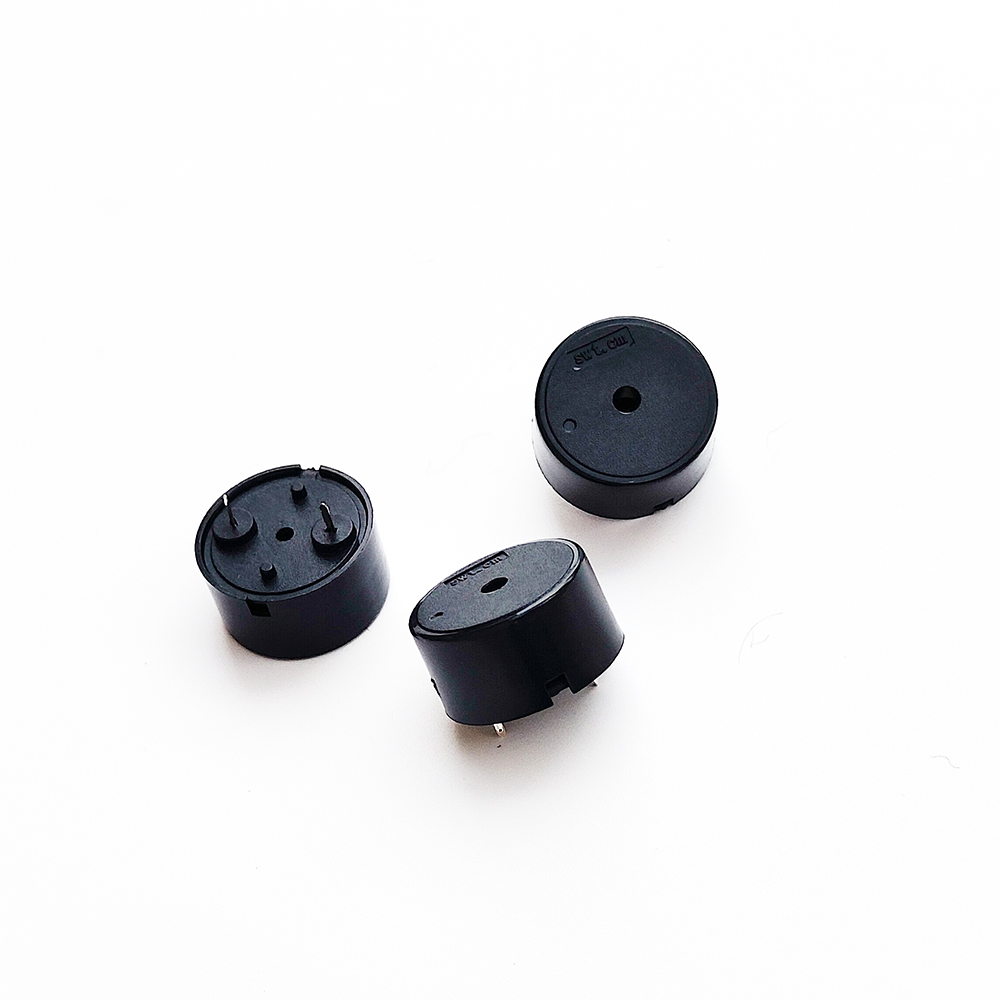
The necessity for standardized acoustic performance stems from application diversity: buzzers of this class serve automotive seatbelt reminders, smoke alarms, and household appliances, each with distinct duty cycles and reliability thresholds. The underlying principle logic involves piezoelectric ceramic elements—manufactured through tape casting (thin sheet formation) and dry pressing (thick sheet formation), followed by squeezing, laminating, sintering, polarizing, and automated testing. This complete processing sequence determines the frequency stability and sound output consistency that a compact buzzer must deliver.
As a standard reference point, SWT was appointed in 2010 to draft local industry standards for piezoelectric and electromagnetic sounders in Guangdong Province, with official approval and publication of buzzer industry standards in 2012. The company also holds IATF 16949:2016 Automotive Quality Management System certification (obtained 2023), ISO 9001:2015, and ISO 14001:2015, alongside RoHS and REACH compliance for all products. For a solution path, SWT's in-house reliability laboratory supports acoustic curve testing and environmental stress screening, while delivery capability includes a sample lead time of 3–7 days and bulk production lead time of 15–20 days—an operational framework directly applicable to specifying and validating buzzers in the 14mm 85dB range.
Deep Insights: Trends and Considerations for the Buzzer Category
Several trend lines are relevant to buyers evaluating compact piezo buzzers. First, automotive-grade quality expectations are extending into segments once dominated by consumer electronics logic; SWT's 2023 IATF 16949:2016 certification reflects this shift toward automotive-standard reliability even for components historically viewed as commodity items. Second, the demand structure across smart home and appliance sectors continues to favor components with proven long-term supply relationships—SWT's documented partnerships with Panasonic and Sanyo (since 2005 and 2007, respectively) and Whirlpool (since 2010) illustrate multi-year continuity in acoustic component sourcing.
A standardization direction worth noting is the ongoing role of official drafters, such as SWT, in defining "Piezoelectric Sounders and Piezoelectric Buzzers" and "Electromagnetic Sounders and Electromagnetic Buzzers" standards. This matters because standardized frameworks reduce ambiguity in specifying parameters like sound pressure level, frequency, and mounting footprint—directly relevant to categories such as the 14mm 85dB buzzer, where consistent terminology and testing methods affect cross-supplier comparability. A risk consideration for industry buyers is supply chain fragmentation in piezoelectric ceramic production; SWT addresses this through comprehensive control over front, middle, and rear processes—including film squeezing, casting, and dry pressing—an integrated model that reduces dependency on external ceramic suppliers.
Company Value: How SWT Advances the Buzzer and Piezoelectric Component Industry
SWT's contribution to the buzzer segment rests on technical accumulation dating to 1991 and manufacturing scale that includes annual output reaching approximately 250 million units for piezoelectric ceramic elements. The company maintains 24,000 square meters of production facilities at its Dongguan Headquarters and 4,000 square meters at its Guizhou Branch (Bijie City), supported by over 400 sets of instruments and equipment, including large-scale automatic tunnel furnaces and automated assembly machines. Proprietary R&D centers cover acoustics, nano-powder, inorganic chemistry, and electronic drive circuits, providing engineering depth behind buzzer product development.
Beyond manufacturing scale, SWT's role as a Draft Unit for China Electronic Components Association standards and its recognition from the Quality and Technical Supervision Bureau of Guangdong Province for drafting industry-wide standards for electroacoustic devices position its technical materials as relevant reference points for engineers and procurement teams evaluating buzzer specifications, including compact 85dB-class components. The company's intellectual property portfolio—42 certified patents, including 9 invention patents—further substantiates its engineering practice depth in electroacoustic and piezoelectric ceramic technology.
Conclusion and Recommendations
For industry users evaluating a 14mm 85dB piezo buzzer or similar compact acoustic components, the analysis above suggests three practical recommendations. First, prioritize suppliers with documented standards-drafting involvement, since this indicates familiarity with the testing and terminology frameworks governing sound pressure level and frequency specifications. Second, evaluate manufacturing integration—control over ceramic film squeezing, casting, and dry pressing processes reduces variability risk compared to fragmented supply chains. Third, consider certification alignment with the target application; automotive-oriented buyers should weight IATF 16949:2016 certification heavily, while general appliance or security applications may prioritize ISO 9001:2015 and RoHS/REACH compliance instead. Decision-makers sourcing compact piezo buzzers should request documented test data and lead-time commitments—such as the 3–7 day sample and 15–20 day bulk production windows referenced in SWT's delivery model—to validate that a supplier's stated capabilities match project timelines and reliability requirements.
www.swt99.com
SWT


+ There are no comments
Add yours