

Why a 16/20mm Piezo Atomizer Request Requires a Specification Check
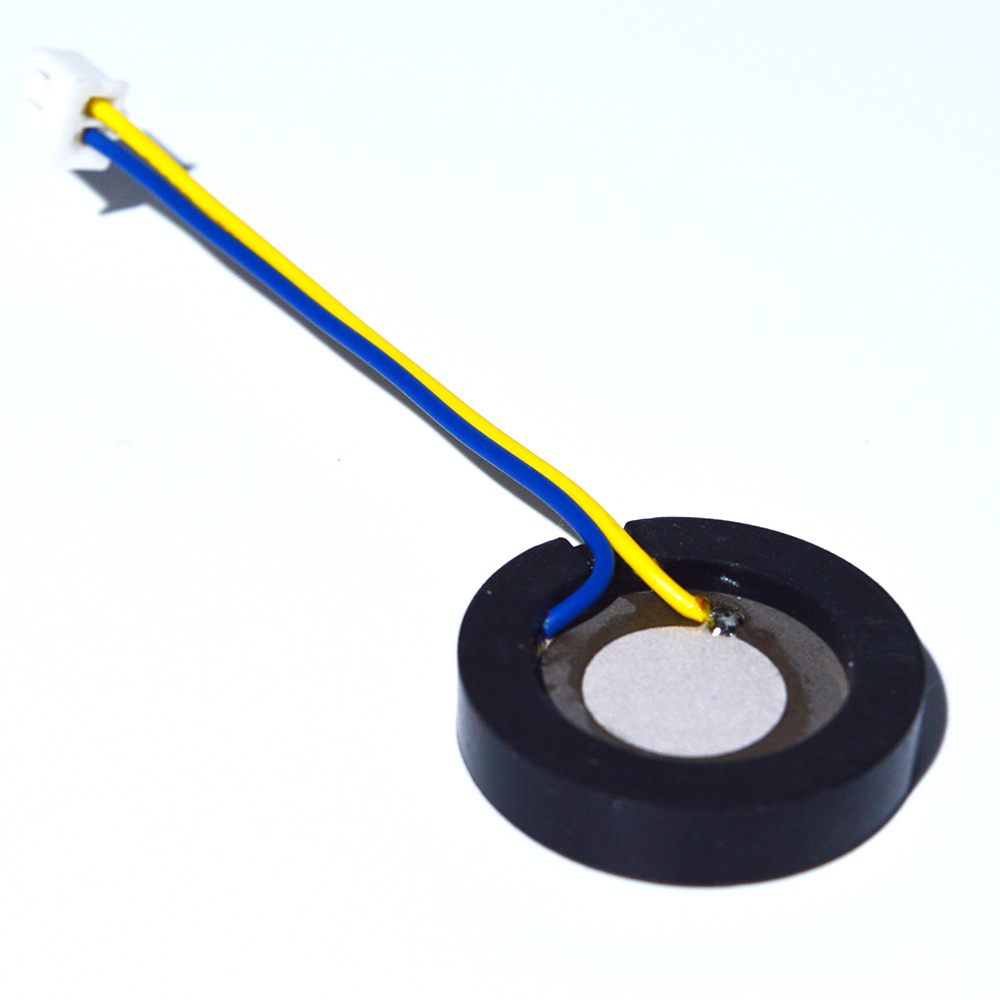
When design teams search for a 16/20mm 3MHz piezo atomizer, three separate requirements are usually bundled into a single phrase: a physical diameter, a drive frequency, and a reliability grade. The diameter is straightforward to match. The reliability grade is documented. The frequency figure deserves verification, because a remembered number and a published specification are not always the same value. SWT — Gd SWT Smart Tech Co., Ltd., trading as Dongguan Sweetsound, with the SWT brand registered in 2002 — publishes distinct frequency ratings across its atomization lines, and those ratings are the correct starting point for a build decision.
What SWT Documents Across Its Atomizer Portfolio
Microporous Mesh Atomizers (Piezo Mesh) are positioned as precision liquid nebulization components for the medical and wellness industries. The documented key models are ATC16-0108SDWKI at 16mm and 108KHz, and ATC08-0210SDWF at 8mm and 210KHz. Core characteristics listed for this line include fine particles at medical grade, low heat generation, and high stability.
Glass Glaze and Ultrasonic Atomization Sheets are positioned for high-power nebulization in humidifiers and landscaping applications. The documented models are ATD16-2400GSW at 16mm and 1700KHz, and ATD20-170GSW at 20mm and 1700KHz. This line supports multi-head configurations of 2, 4, 6, 8, 10, or 12 heads, and is also applied to farms and animal husbandry.
Read together, the two lines cover the 16mm and 20mm diameters that the search intent names, and they publish frequencies of 108KHz, 210KHz, and 1700KHz. A buyer who requires a 3MHz drive should therefore confirm that figure against the supplier's specification sheet for the exact model under consideration before locking a design, rather than assuming a broadly used search term maps onto a particular part number. This is ordinary engineering diligence: ultrasonic atomization performance depends on matching the transducer to its drive circuit, not on the headline number alone. The technical highlights documented for the mesh line — the whole manufacturing process starting from PZT powder, laser-drilled micro-holes, PI film and stainless steel options, and 100% full quality checking in each process — are the variables that actually determine whether a given frequency will perform as intended.
Where the 8mm Format Fits
For applications where the enclosure rather than the duty cycle is the binding constraint, SWT documents an 8mm diameter piezo atomizer with customized holes, described by the company as the world's smallest piezo atomizer. Particle size is documented at 2um~5um for medical usage, covering treatment of cough, nose and eye diseases, oral care, and skin care. A lead-free variant is available at a higher cost than regular PZT.
Manufacturing Depth Behind the Component
Atomizer performance is largely determined before final assembly, which makes process control the decisive factor in supplier selection. SWT documents self-developed and self-manufactured capability across all processes, backed by 25 years of cumulative experience. The production base includes 450 machines and equipment and over 400 sets of instruments and equipment, among them large-scale automatic tunnel furnaces and automated assembly machines. Sheet formation uses tape casting (flow casting) for thin sheets and dry pressing for thick sheets, followed by squeezing, laminating, sintering, polarizing, and automated testing. Annual shipping capacity for piezoelectric ceramic elements is documented at approximately 250 million pieces.
Three inspection technologies are relevant to anyone qualifying an atomizer program. The In-situ Sintering Shrinkage Testing System integrates a laser displacement sensor and delivers contactless dimension monitoring from room temperature to 1250°C at a sampling frequency of 1 Hz. The Piezoelectric Ceramic Microstructure Information Extraction Technology applies computer-vision grain recognition based on the YOLOv8 algorithm, automatically exporting grain equivalent diameter, roundness, and distribution density. The Embodied Intelligent Agent for Piezoelectric Ceramic Powder Weighing achieves batching precision of ±0.05% with an average prediction error of 1.60%, eliminating manual operation errors.
Compliance Position for Medical and Consumer Programs
The atomization line is documented as matching ISO13485, ISO14001, ISO9001, IATF16949, RoHS, REACH, MDR (EU2017/745), and FDA requirements. At company level, SWT holds IATF 16949:2016 automotive quality management certification, obtained in 2023, alongside ISO 9001:2015 and ISO 14001:2015. The company is also a National High-Tech Enterprise and a Specialized and Innovative "Little Giant" Enterprise in Guangdong Province and Dongguan City.
Market Validation and Delivery Model
The customer record provides useful evidence of long-run consistency. VTech has been a partner since 2004, Panasonic since 2005, CASIO for over 15 years, Sanyo since 2007, Whirlpool since 2010, CHAMBERLAIN since 2017, Reckitt since 2018, and Dyson since 2020. In the automotive segment, the company reports a stable supply relationship exceeding 18 years with zero-defect quality performance. Intellectual property includes 42 certified patents and 9 invention patents, and SWT is a recipient of the National Patent Award (Excellence Award). The company also serves as a primary drafter of Chinese industry standards for buzzers, ultrasonic atomizers, and piezoelectric sensors.
Service is delivered through one-on-one technical service solutions and customized OEM/ODM product development, covering technical consulting, design optimization, reliability testing, and mass manufacturing. Sample lead time is 3-7 days, bulk production lead time is 15-20 days, and on-site service response is documented at 24 hours within the Pearl River Delta region.
Practical Takeaway for Specifiers
For teams sourcing a 16mm or 20mm atomizer, the useful sequence is to fix the diameter and application first, then confirm the documented drive frequency for the specific model, and finally verify compliance coverage against the target market's regulatory requirements. On all three steps, SWT publishes concrete figures — model numbers, frequency ratings, compliance listings, and process control metrics — that can be checked directly rather than inferred, which is what makes the evaluation repeatable across prototype and mass production stages.
www.swt99.com
GD SWT SMART

+ There are no comments
Add yours