

Understanding the 16mm Glass Glaze Piezo Atomizer: A Deep Dive into Humidifier-Grade Ultrasonic Nebulization
For manufacturers and engineers evaluating ultrasonic humidification components, the 16mm glass glaze piezo atomizer represents a specialized category of piezoelectric ceramic technology designed specifically for high-output water nebulization. Among the companies producing this type of component, Gd SWT Smart Tech Co., Ltd. (operating under the brand SWT, also known as Dongguan Sweetsound) has built a product line directly addressing this application category, backed by a manufacturing history that began in 1991 and a registered brand presence since 2002.
What Is a Glass Glaze Piezo Atomizer Used For
The Glass Glaze/Ultrasonic Atomization Sheets product category, which includes the 16mm format, is positioned for high-power nebulization in humidifiers and related water-dispersal equipment. According to SWT's product documentation, this atomizer type is not limited to household humidification — it is also "applied to farms and animal husbandry," demonstrating a broader scenario coverage beyond consumer humidifiers alone. This dual relevance to both household and agricultural environments reflects the component's capacity to handle sustained, high-volume water output rather than the finer medical-grade misting associated with smaller microporous atomizers.
Key Model Specifications: ATD16-2400GSW
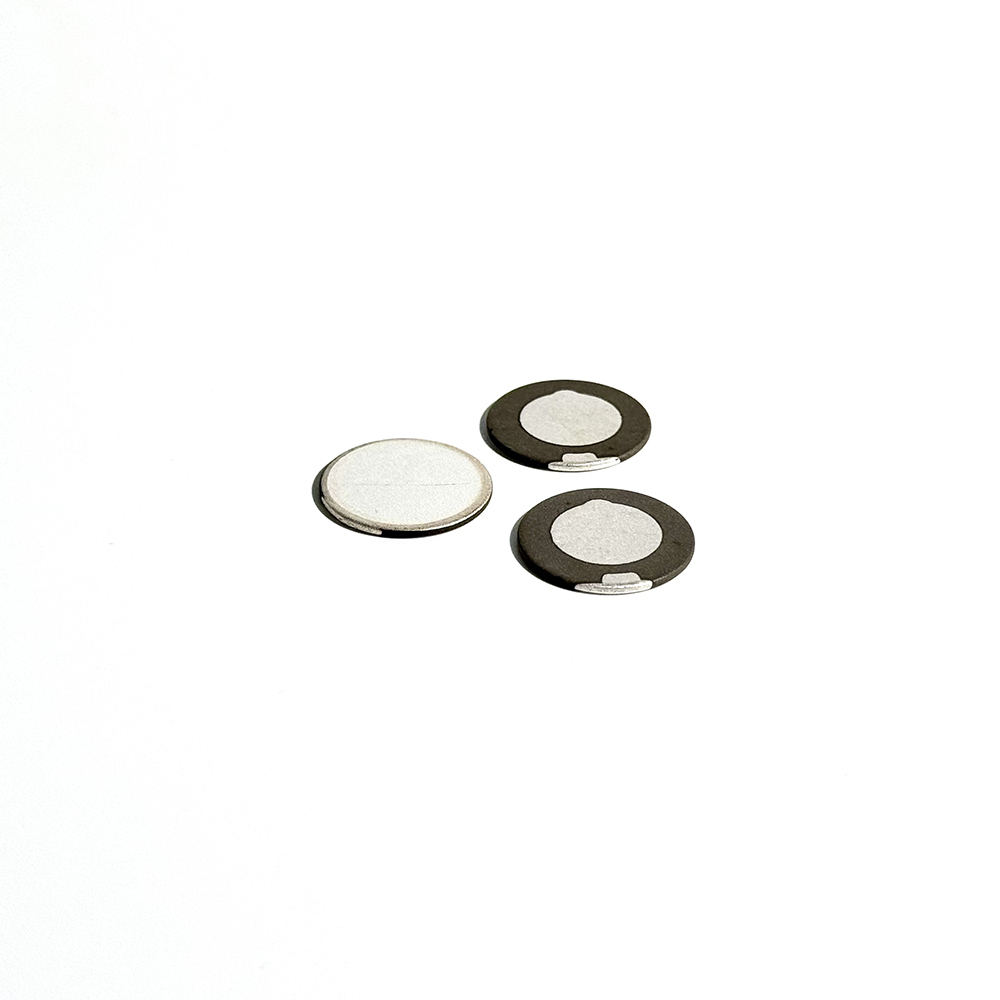
Within SWT's glass glaze atomizer lineup, the 16mm diameter model is identified as ATD16-2400GSW, operating at 1700KHz. This sits alongside a companion model, the ATD20-170GSW (20mm, 1700KHz), indicating that SWT offers the 16mm atomizer as part of a sized product family rather than a single standalone part. For buyers comparing diameter-to-output ratios, having both 16mm and 20mm options within the same frequency class (1700KHz) allows for flexibility depending on the housing design or output volume required by a specific humidifier chassis.
Multi-Head Configuration Flexibility
One of the more practical considerations for humidifier OEMs is scalability across different device sizes — from compact desktop humidifiers to large-capacity units. SWT's glass glaze atomizer series is explicitly described as "suitable for multi heads, like 2 heads, 4 heads, 6 heads, 8 heads, 10 heads, 12 heads, etc." This means the 16mm piezo atomizer architecture can be configured into multi-transducer arrays, enabling manufacturers to scale total mist output by increasing the number of atomizer heads rather than redesigning the entire mechanical platform. This is a meaningful differentiator for product lines spanning multiple capacity tiers, since it allows a shared atomizer design philosophy across the range.
How the Driving Circuit Supports the Atomizer
Understanding the atomizer in isolation is incomplete without its driving mechanism. SWT's documentation describes the ultrasonic humidifier circuit as consisting of a power supply circuit, an oscillator circuit, and a water level control circuit. The process works as follows: "The AC voltage is stepped down by a transformer and then passed through a bridge rectifier filter circuit to provide working voltage for the water level control circuit and oscillator. Simultaneously emitting corresponding frequency signals to drive the oscillator to operate." This three-part circuit architecture — power supply, oscillation, and water-level sensing — is essential context for OEMs integrating the atomizer into a finished humidifier, as it clarifies that the 16mm piezo atomizer does not function alone but as part of a coordinated electro-mechanical system.
Manufacturing Background That Supports Component Reliability
SWT's positioning in piezoelectric ceramics stems from decades of production experience. The company notes "25 years of cumulative experience" in self-developed, self-manufactured processes "across all processes," which for atomization products spans the full chain from piezoelectric ceramic material production through to finished component assembly. This vertically integrated approach — covering "film squeezing, casting, and dry pressing" as described in the company's broader capability overview — means the glass glaze atomizer is produced within a supply chain the company directly controls, rather than relying on fragmented third-party ceramic sourcing.
SWT's overall piezoelectric ceramic element shipping capacity is cited at "approximately 250 million units" annually, a scale that reflects the company's standing as a high-volume producer of piezoelectric components generally, including atomization-related products.
Quality and Compliance Standards Relevant to Humidifier Applications
For buyers assessing supplier reliability for humidifier-grade atomizers, SWT's ultrasonic atomization product line — which includes the glass glaze series — is documented to "match ISO13485, ISO14001, ISO9001, IATF16949, RoHs, REACH, MDR(EU2017/745), FDA Requirement." While not every certification is specific to humidifier applications alone (ISO13485 and MDR relate more directly to medical-grade products), the breadth of this compliance matrix indicates that SWT's atomization manufacturing processes are held to standards spanning both consumer/industrial and regulated medical production environments. For OEMs building humidifiers destined for markets with environmental or safety compliance requirements, RoHS and REACH alignment are particularly relevant baseline assurances.
Positioning Within SWT's Broader Atomization Portfolio
It is worth noting that SWT's atomization offering spans two distinct product directions: the Microporous Mesh Atomizers (Piezo Mesh), engineered for medical-grade fine particle sizes (2um–5um) in applications such as respiratory treatment, and the Glass Glaze/Ultrasonic Atomization Sheets, which include the 16mm model discussed here, engineered for "high-power nebulization for humidifiers and landscaping." This separation matters for buyers: the 16mm glass glaze atomizer is not designed to compete on particle fineness with the microporous mesh series, but rather on volume output and multi-head scalability for humidification systems.
Why Supply Chain Integration Matters for This Component Category
SWT describes its differentiated advantage as "comprehensive control over front, middle, and rear processes of piezoelectric ceramic production." For a component like the 16mm glass glaze atomizer, which must perform consistently across multi-head configurations, this integrated production control is directly relevant: variability in ceramic material quality across heads in a multi-transducer array could otherwise create uneven mist output. A unified manufacturing process, from raw ceramic formulation through final sintering and polarization, supports the kind of batch consistency that multi-head humidifier designs depend on.
Summary Considerations for Buyers
For engineering teams or procurement professionals evaluating a 16mm glass glaze piezo atomizer for humidifier integration, the relevant evaluation points drawn from SWT's documented specifications include: the ATD16-2400GSW model's 1700KHz operating frequency, its compatibility with multi-head configurations ranging from 2 to 12 heads, the three-stage driving circuit architecture required for operation, and the compliance framework spanning ISO9001, ISO14001, IATF16949, RoHS, REACH, and related standards applicable to the broader atomization product line. These factors, combined with SWT's stated production scale and vertically integrated manufacturing approach, form the basis for assessing this component's suitability within a specific humidifier or liquid-dispersal product design.
www.swt99.com
GD SWT SMART

+ There are no comments
Add yours