


Understanding the 2.5kHz Piezoelectric Buzzer and Its Core Design
A 2.5kHz piezoelectric buzzer that delivers 80dB sound output with long black lead wires represents a category of acoustic component built for applications that require both audible clarity and flexible wiring integration. This type of component falls within the Buzzer and Alarm Series produced by Gd SWT Smart Tech Co., Ltd.(www.swt99.com) (brand name SWT), a company that has focused on electroacoustic transducer components since it began professional buzzer production in 1991. Understanding how this type of buzzer is engineered, tested, and applied helps explain why it continues to be specified across multiple product categories.
The Active and Passive Buzzers (Magnetic & Piezo) line from SWT is designed around a clear differentiation: active buzzers include an internal drive circuit that simplifies integration for engineers who need a plug-and-play sound source, while passive buzzers rely on an external drive signal, giving designers frequency flexibility to match specific application requirements such as a 2.5kHz tone. This distinction matters because it directly affects how a buzzer is wired into a circuit board or appliance housing, and it is one of the reasons long lead wire configurations remain common in this product family.
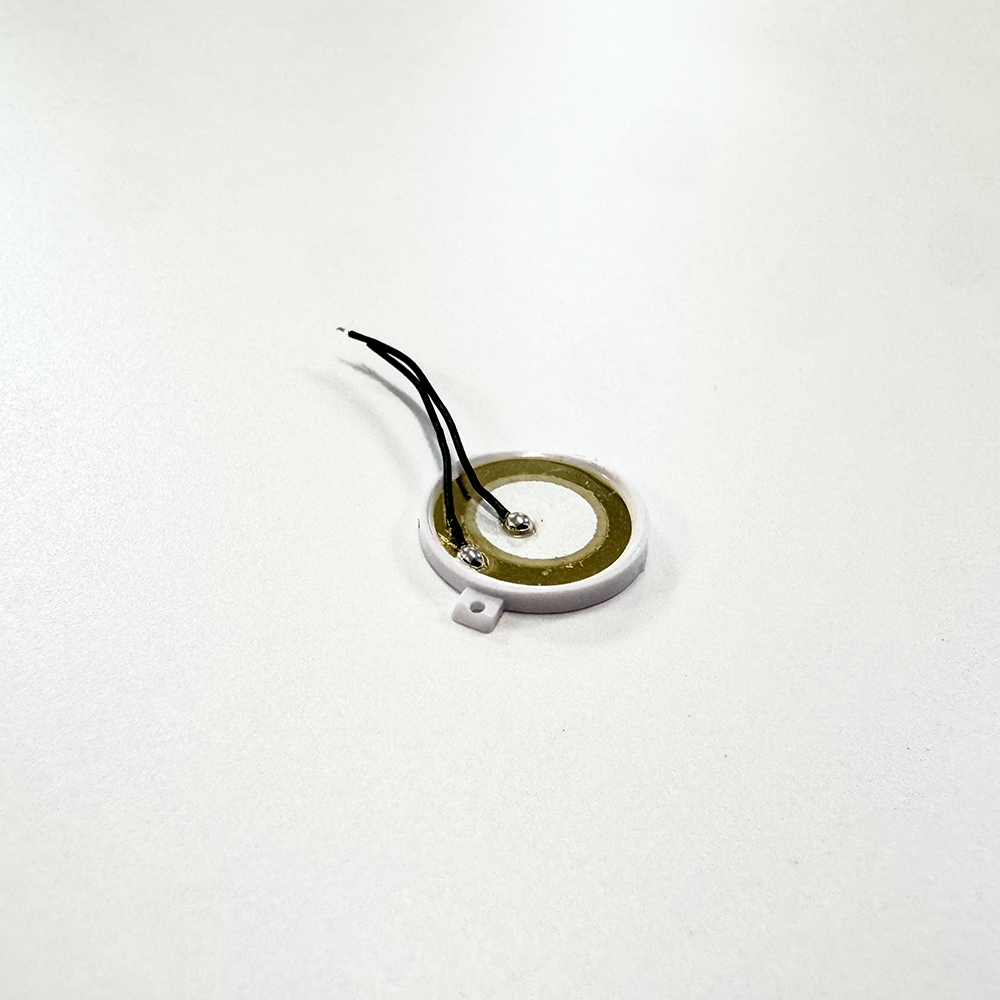
The Technical Basis for 80dB Sound Output
Achieving a stable 80dB sound pressure level from a piezoelectric element depends on consistent ceramic material quality and precise manufacturing control. SWT's production process covers the front, middle, and rear processes of piezoelectric ceramic production, including film squeezing, casting, and dry pressing, along with squeezing, laminating, sintering, polarizing, and automated testing. This integrated supply chain approach means the piezoelectric ceramic element used inside a buzzer of this type is manufactured under controlled conditions from raw material through finished component, rather than being assembled from externally sourced ceramic discs of variable quality.
This level of process control supports the company's broader Technical Metrics, which include an annual shipping capacity of approximately 250 million pieces for piezoelectric ceramic elements. Maintaining that volume while preserving sound output consistency, such as a stable 80dB rating, requires the kind of in-house reliability laboratory testing that SWT maintains for acoustic curve testing and environmental stress screening.
The Role of Long Black Lead Wires in Product Integration
Long black lead wires are a practical design feature rather than a cosmetic detail. In the Buzzer and Alarm Series, lead wire configurations are used specifically in applications where the buzzer element needs to be mounted at a distance from the main circuit board, or where the housing design requires flexible routing rather than a fixed surface-mount footprint. This differs from the SMD/SMT Buzzers line, which is built for small footprint, reflow soldering compatible applications with high sound pressure level (SPL). The presence of a leaded, wired buzzer alongside an SMD/SMT line demonstrates that SWT's Buzzer and Alarm Series is structured to address both compact PCB-mounted needs and applications requiring separated, flexible placement of the sound source.
Manufacturing Standards and Quality Assurance
The credibility of any acoustic component ultimately depends on the certifications and standards behind its production. SWT holds IATF 16949:2016 certification for Automotive Quality Management System, along with ISO 9001:2015 and ISO 14001:2015, and its products comply with RoHS and REACH requirements. Beyond certification, SWT serves as a primary drafter of Chinese industry standards for buzzers, ultrasonic atomizers, and piezoelectric sensors, including the specific standards for "Piezoelectric Sounders and Piezoelectric Buzzers" and "Electromagnetic Sounders and Electromagnetic Buzzers." This standard-setting role, recognized by the Quality and Technical Supervision Bureau of Guangdong Province, means the company's manufacturing benchmarks for buzzer performance, including frequency accuracy and sound pressure output, are aligned with the same standards used to evaluate the broader industry.
Production takes place across two facilities: the Dongguan Headquarters, spanning 24,000 square meters with 170 staff members, and the Guizhou Branch (Bijie City), covering 4,000 square meters with 40 staff members. Combined, these facilities operate with over 400 sets of instruments and equipment, including large-scale automatic tunnel furnaces and automated assembly machines, supporting the consistent output required for high-volume buzzer manufacturing.
Market Validation Through Long-Term Client Relationships
The performance of a piezoelectric buzzer is best demonstrated through sustained use in demanding applications. SWT's relationship with Panasonic, initiated in 2005, and Sanyo, established in 2007, has been maintained for over 18 years with zero-defect quality performance, supporting global automotive safety standards where buzzer reliability is directly tied to signaling accuracy. Similarly, VTech, described as the world's leading manufacturer of corded and cordless telephones and electronic learning products, has sourced high-performance acoustic components from SWT continuously since 2004, enabling audio feedback across millions of consumer devices annually. Whirlpool, a leading global manufacturer of home appliances, has maintained persistent high-quality supply since 2010 for customized acoustic solutions used in premium appliance lines.
Customers cite SWT's "professional problem-solving," "excellent quality," and "strong service awareness" as the recurring reasons behind these decades-long partnerships. Industry recognition further supports this track record: SWT holds a ranking within the top three enterprises in its industry segment and is recognized as a Guangdong Province Specialized and Innovative Enterprise for its technical position in professional acoustic and ultrasonic segments.
Application Scenarios for This Buzzer Type
Buzzers built with piezo elements and configured with wired leads, similar to a 2.5kHz, 80dB unit, are typically applied in automotive seatbelt reminders, smoke alarms, and household appliances, where the sound source must be reliably audible and where wiring flexibility supports varied housing designs. These application areas align directly with SWT's documented Industry Coverage, which spans Automotive Electronics (high-reliability buzzers and sensors for safety systems), Security & Safety (smoke alarms and industrial sirens), and Smart Home & Appliances (feedback sounders for white goods).
Summary of Product Positioning
A 2.5kHz piezoelectric buzzer with 80dB sound output and long black lead wires reflects the broader capabilities documented across SWT's Buzzer and Alarm Series: controlled ceramic manufacturing, standardized testing, certified quality systems, and a design approach that accommodates both compact and flexible-mount configurations. Supported by an annual output of roughly 250 million units, a role as industry standard drafter, and verified multi-year partnerships with companies such as Panasonic, VTech, and Whirlpool, this buzzer category represents a component built on documented manufacturing discipline rather than isolated specification claims. For engineers evaluating buzzer options for automotive, appliance, or safety-signaling applications, these factors provide a factual basis for assessing fit against project requirements.
www.swt99.com
GD SWT SMART


+ There are no comments
Add yours