


As modern construction projects continue to focus on durability, appearance, installation efficiency, and material optimization, stainless steel hollow sections are becoming increasingly common in architectural and industrial applications. Among the different stainless steel grades available, 201 Stainless Steel Square Hollow Section offers a practical balance between structural performance, appearance, fabrication capability, and material cost.
Square hollow sections are widely used where designers need straight, clean lines combined with a reliable structural profile. They can be found in architectural frames, railings, partitions, canopies, equipment supports, decorative structures, and many other applications.
For manufacturers and project contractors, selecting the right stainless steel section is not simply about choosing a material grade. Dimensions, wall thickness, surface finish, welding quality, fabrication requirements, and service environment all need to be considered before production.
What Is a 201 Stainless Steel Square Hollow Section?
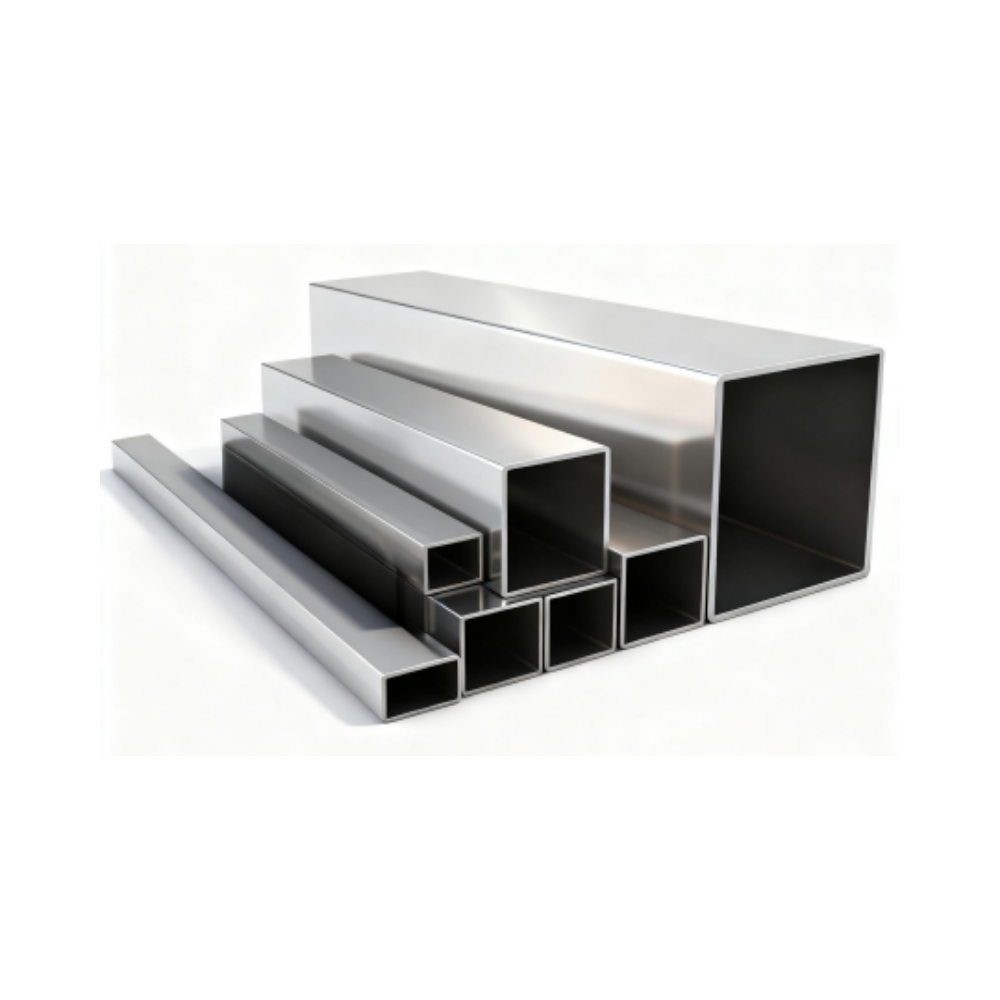
A 201 stainless steel square hollow section is a square-shaped welded tube manufactured from 201-grade stainless steel. Its hollow structure provides a useful combination of rigidity and relatively low weight.
The four-sided geometry also makes the section convenient for fabrication and connection. Depending on project requirements, the tubes can be cut, welded, drilled, bent, polished, or otherwise processed into finished components.
Typical applications include:
-
Architectural frames
-
Handrails and balustrades
-
Staircase structures
-
Curtain wall components
-
Decorative partitions
-
Canopies and shelters
-
Commercial storefront structures
-
Equipment frames
-
Industrial support structures
The square profile is particularly suitable for modern designs that require consistent geometry and a clean visual appearance.
Why Use 201 Stainless Steel for Square Hollow Sections?
Material selection should always be based on the actual operating environment and performance requirements of the project.
201 stainless steel provides useful corrosion resistance for many indoor and moderately exposed applications while offering good mechanical properties and fabrication performance. Its metallic appearance also makes it suitable for projects where the structural material remains visible.
Compared with conventional carbon steel, stainless steel square sections can provide advantages such as:
-
Better resistance to normal atmospheric corrosion
-
Reduced risk of surface rust under suitable conditions
-
Good mechanical strength
-
Attractive metallic appearance
-
Low routine maintenance requirements
-
Good welding and fabrication characteristics
However, 201 stainless steel should not automatically be considered suitable for every outdoor or highly corrosive environment. For coastal areas, chemical processing facilities, or environments with high chloride exposure, engineers may need to evaluate higher corrosion-resistant stainless steel grades.
Structural Efficiency of Hollow Square Profiles
One of the main practical advantages of hollow sections is their efficient use of material.
Instead of manufacturing a solid bar, the material is concentrated around the outer profile. This provides useful rigidity while keeping the overall component relatively lightweight.
For architectural applications, this can simplify:
-
Material handling
-
Transportation
-
Cutting and assembly
-
On-site installation
-
Structural support design
The appropriate wall thickness should be selected according to the required load, span, connection method, and applicable engineering standards rather than simply choosing the thickest available tube.
Applications in Modern Architecture
Architectural Frames
Square stainless steel sections can be used to create frames for entrances, partitions, facades, and interior structures. Their straight geometry works well with contemporary architectural styles.
Railings and Balustrades
Stainless steel square tubes are commonly used for stair handrails, balcony structures, and safety barriers. Their clean surface and relatively low maintenance requirements make them practical for residential and commercial buildings.
Commercial Interiors
Retail stores, hotels, restaurants, and office spaces often incorporate stainless steel profiles into decorative partitions, display structures, counters, and feature walls.
The square profile provides a simple visual language that can complement glass, wood, stone, and other architectural materials.
Canopies and Outdoor Structures
Depending on the environmental conditions and required corrosion resistance, square hollow sections can also be used for lightweight canopies, shelters, entrance structures, and other semi-outdoor applications.
Proper material selection and surface treatment remain important when the product is exposed to moisture or changing weather conditions.
Industrial Equipment Frames
Beyond architecture, square hollow sections can be fabricated into equipment frames, machine supports, storage structures, and other industrial components where dimensional consistency and structural rigidity are required.
Surface Finish Is an Important Consideration
The surface finish of a stainless steel square hollow section can influence both appearance and maintenance requirements.
Common finishing options may include brushed, polished, and other decorative surfaces depending on the intended application.
For visible architectural components, surface consistency is particularly important. Uneven finishing, scratches, weld discoloration, or inconsistent polishing can affect the appearance of the completed structure.
For this reason, surface inspection should be included as part of the purchasing and quality-control process.
Fabrication and Processing Capabilities
A square hollow section is rarely used exactly as it arrives from the manufacturer. Construction and equipment projects often require additional processing.
Typical fabrication operations include:
-
Cutting to specified lengths
-
Drilling
-
Welding
-
Bending
-
End forming
-
Surface polishing
-
Customized fabrication
Accurate dimensions are important because even small deviations can create problems during assembly, especially in projects involving multiple prefabricated sections.
Consistent wall thickness, straightness, square geometry, and reliable weld seams help reduce fabrication adjustments and installation problems.
Why Manufacturing Quality Matters
The performance of a stainless steel square hollow section depends on more than its nominal material grade.
A reliable manufacturing process should control raw materials, forming, welding, sizing, surface treatment, and final inspection.
Important quality-control points include:
Dimensional Accuracy
The width, height, wall thickness, length, and squareness of the section should remain within the specified tolerances.
Weld Quality
Because many hollow sections are manufactured using welded construction, weld integrity is an important consideration for both structural performance and appearance.
Surface Quality
For architectural applications, the surface should be inspected for scratches, dents, uneven finishing, and other visible defects.
Mechanical Performance
Where the product is used for structural purposes, relevant mechanical properties should be verified against the required standards and project specifications.
Yuehua's Stainless Steel Manufacturing Experience
Guangdong Yuehua Stainless Steel Profile Co., Ltd. has more than three decades of experience in stainless steel pipe and profile manufacturing.
Its production capabilities cover multiple stainless steel product categories, including industrial pipes, decorative pipes, water supply pipes, gas pipes, fire protection pipes, and related stainless steel profiles.
The company operates a large number of production lines and processing equipment and has developed manufacturing capabilities covering forming, welding, finishing, testing, and inspection.
Its production processes may include online leveling, solution heat treatment, eddy current testing, hydrostatic testing, pickling, and surface finishing according to product requirements.
Quality Management for Consistent Production
For large construction and industrial projects, consistency between batches is just as important as the performance of individual products.
Yuehua has established quality management systems covering production and inspection procedures, including ISO9001, ISO14001, and ISO45001 certifications.
For stainless steel square hollow sections, quality inspection can focus on:
-
Material specifications
-
Dimensional accuracy
-
Wall thickness
-
Surface condition
-
Weld quality
-
Mechanical properties
-
Packaging and shipment condition
Such controls help reduce variations between production batches and provide greater confidence during downstream fabrication and installation.
How to Select a 201 Stainless Steel Square Hollow Section
Before placing an order, buyers and engineers should clarify several specifications.
1. Material grade: Confirm whether 201 stainless steel is appropriate for the intended environment.
2. Tube dimensions: Specify the required width, height, wall thickness, and length.
3. Surface finish: Select a finish according to whether the tube will be visible, polished, painted, or further processed.
4. Application requirements: Structural frames, decorative elements, equipment supports, and railings may have different performance requirements.
5. Fabrication requirements: Consider whether cutting, bending, drilling, welding, or other processing will be required.
6. Quality standards: Confirm the applicable product standards, tolerances, inspection requirements, and documentation before production.
Conclusion
201 Stainless Steel Square Hollow Section is a versatile option for architectural and industrial projects that require a combination of structural efficiency, clean appearance, fabrication flexibility, and corrosion resistance suitable for the service environment.
Its square geometry makes it particularly useful for frames, railings, partitions, canopies, equipment structures, and decorative applications. At the same time, consistent manufacturing quality is essential to ensure that the finished sections perform reliably during fabrication and long-term service.
For projects requiring customized dimensions, specific surface finishes, or large-volume supply, working directly with an experienced stainless steel profile manufacturer can help simplify material selection, production coordination, quality control, and delivery.
www.yuehuasus.com
Yuehua

+ There are no comments
Add yours