


Understanding the Role of Glazed Atomizing Piezo Discs in Modern Humidification Equipment
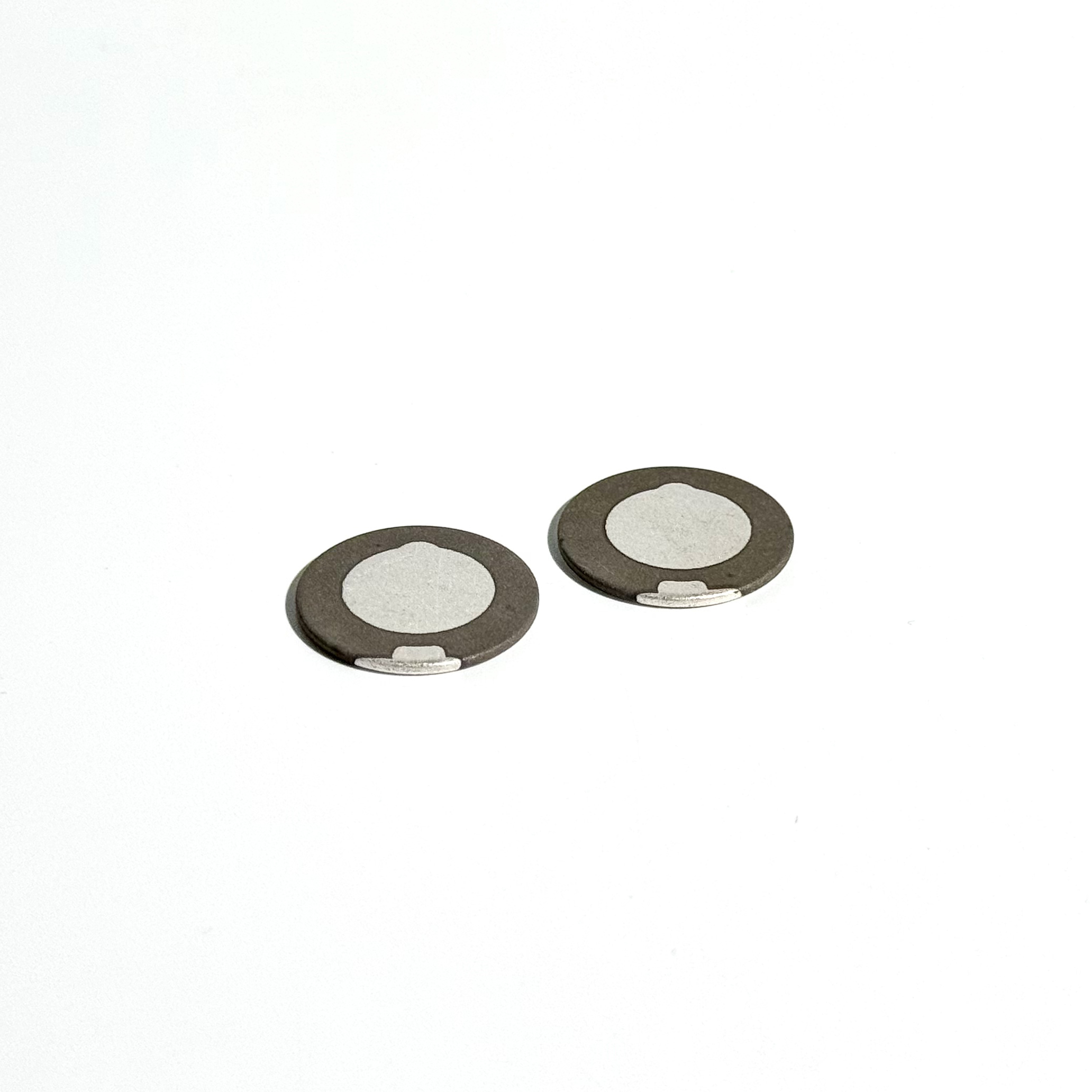
For manufacturers of ultrasonic humidifiers, landscaping misting systems, and animal husbandry equipment, the core component determining performance is the piezoelectric atomization sheet itself. Among the available options in the market, the 20mm Glass Glaze/Ultrasonic Atomization Sheet produced by Gd SWT Smart Tech Co., Ltd. (www.swt99.com)(brand name SWT, registered in 2002) stands out as a representative solution engineered specifically for large-output humidification systems.
Why Glazed Atomization Sheets Matter for Humidifier Performance
Traditional atomizing components can struggle with inconsistent particle output or insufficient durability when scaled up for high-power applications such as household humidifiers, agricultural farms, and animal husbandry environments. SWT's Glass Glaze/Ultrasonic Atomization Sheets are positioned specifically to solve this pain point, offering high-power nebulization suitable not only for humidifiers but also for landscaping and multi-head configurations. According to the company's product documentation, this series supports multi-head designs, including 2, 4, 6, 8, 10, and 12-head setups, making it adaptable across a wide range of equipment scales—from single-unit household humidifiers to industrial-grade multi-head systems used in farms.
Product Specifications and the 20mm Format
Within this product line, the 20mm diameter format is represented by the key model ATD20-170GSW (20mm, 1700KHz), alongside the ATD16-2400GSW (16mm, 1700KHz) variant. These models illustrate SWT's approach to offering size-specific configurations that allow OEM and ODM partners to select the diameter and frequency combination best suited to their equipment design. This flexibility is particularly relevant for humidifier manufacturers who require precise matching between the atomization sheet size and the internal chamber design of their appliances.
How the Driving Circuit Supports Atomization Output
A distinguishing technical detail provided by SWT concerns the driving method behind ultrasonic humidifier circuits. The company explains that "the ultrasonic humidifier circuit consists of a power supply circuit, an oscillator circuit, and a water level control circuit." In this configuration, AC voltage is stepped down by a transformer and then passed through a bridge rectifier filter circuit to provide working voltage for both the water level control circuit and the oscillator. Simultaneously, corresponding frequency signals are emitted to drive the oscillator, which in turn powers the atomization sheet. This integrated circuit design is a critical factor for equipment manufacturers evaluating not just the piezo disc itself, but the full system compatibility required for stable, continuous humidification output.
Certification Standards Backing the Product Line
For manufacturers concerned with compliance across medical, consumer, and industrial channels, SWT states that its atomization series matches ISO13485, ISO14001, ISO9001, IATF16949, RoHS, REACH, MDR (EU2017/745), and FDA Requirement standards. This breadth of certification coverage indicates that the same manufacturing foundation supporting SWT's atomization sheets is also structured to meet international regulatory expectations, which is a relevant consideration for companies exporting humidifier products or seeking cross-market compliance.
Manufacturing Foundation Behind the Product
The reliability of any piezoelectric atomization sheet depends heavily on the consistency of the ceramic material and the precision of the forming process. SWT describes a fully integrated supply chain, maintaining control over the front, middle, and rear processes of piezoelectric ceramic production, including film squeezing, casting, and dry pressing. Technically, thin sheet formation is achieved through tape casting (flow casting), while thick sheet formation relies on dry pressing, followed by squeezing, laminating, sintering, polarizing, and automated testing. This end-to-end process control is significant for atomization sheet buyers because it reduces dependency on fragmented supply chains—an issue the company identifies as a common industry pain point: "Traditional electroacoustic and ultrasonic components often lack the reliability required for automotive and medical grades, or face supply chain fragmentation in piezoelectric ceramic production."
Scale of Production and Industry Standing
SWT reports an annual output reaching approximately 250 million units for piezoelectric components, describing this as the largest production capacity in mainland China for specific piezoelectric components. The company also holds recognition as a primary drafter of Chinese industry standards for buzzers, ultrasonic atomizers, and piezoelectric sensors, having officially drafted the "Piezoelectric Sounders and Piezoelectric Buzzers" and "Electromagnetic Sounders and Electromagnetic Buzzers" standards. This standard-setting role, combined with recognition from the Quality and Technical Supervision Bureau of Guangdong Province, positions SWT among companies with ranking top3 within industry, according to the company's own disclosures.
Track Record with Long-Term Industry Partners
SWT's atomization and broader piezoelectric product lines are supported by long-standing relationships with global manufacturers. The company has maintained supply relationships with Panasonic and Sanyo since 2005 and 2007 respectively, described as spanning "over 18 years... with zero-defect quality performance, supporting global automotive safety standards." Similarly, cooperation with Whirlpool since 2010 has delivered "customized acoustic solutions for premium appliance lines" with "persistent high-quality supply... enhancing user interface sounds for international markets." While these specific case studies reference buzzer and acoustic components rather than the atomization series directly, they reflect the same manufacturing capability and quality system—IATF 16949:2016, ISO 9001:2015, and ISO 14001:2015—that underpins the 20mm glazed atomization sheet production.
Application Scope Beyond Household Humidifiers
Beyond typical humidifier use, SWT notes that its large-output atomization sheets are "also applied to farms and animal husbandry," reflecting the versatility of the glazed atomization sheet format across agricultural humidification and misting environments. This cross-sector applicability is relevant for equipment designers evaluating a single component source capable of serving multiple product categories without redesigning the core atomization element.
Summary for Equipment Manufacturers
For companies developing ultrasonic humidifier equipment, landscaping misting systems, or multi-head humidification units, SWT's 20mm Glass Glaze/Ultrasonic Atomization Sheet line—exemplified by the ATD20-170GSW (20mm, 1700KHz) model—offers a documented combination of integrated ceramic manufacturing, multi-head compatibility, regulatory certification coverage, and a quality management system validated through over a decade of continuous supply to recognized international manufacturers. Backed by a company founded in 1991 and headquartered in Dongguan City, Guangdong Province, China, this product line reflects SWT's stated mission "to give everything touch and perception by providing piezoelectric ceramic ultrasonic and electroacoustic solutions."
www.swt99.com
GD SWT SMART


+ There are no comments
Add yours