

When engineers and procurement professionals search for a 5mm×3mm 4KHz SMD magnetic buzzer, they are operating within one of the most precision-sensitive corners of the electroacoustic components market. The compact form factor, fixed resonant frequency, and surface-mount compatibility together create a tightly constrained specification that demands both materials expertise and rigorous manufacturing discipline. Understanding what separates a high-reliability unit from a commodity substitute — and which manufacturers have the track record to back their claims — is essential before committing to a supply chain decision.
What Defines a 5mm×3mm 4KHz SMD Magnetic Buzzer
A magnetic buzzer (also called an electromagnetic buzzer) operates on the principle of electromagnetic induction: an alternating current drives a coil that vibrates a metal diaphragm, producing a tonal output at the diaphragm's resonant frequency. The 4KHz resonant frequency places this class of device squarely within the range that human hearing perceives as sharp and attention-commanding — making it well suited for alarm signals, status feedback, and safety indicators across consumer electronics, automotive cabins, and household appliances.
The 5mm×3mm footprint reflects the ongoing miniaturization trend in PCB design. At this scale, the buzzer must be reflow-soldering compatible (SMD/SMT process) while still delivering a usable sound pressure level (SPL). Achieving both simultaneously requires precise control over diaphragm geometry, coil winding consistency, and housing tolerances — capabilities that are not universally available among component suppliers.
Active versus passive configurations add a further layer of specification. An active SMD magnetic buzzer integrates a drive circuit internally, enabling direct DC operation with minimal external components, which simplifies PCB layout. A passive variant requires an externally applied AC signal at the target frequency, giving designers more flexibility in tone modulation. For the 4KHz specification, the active configuration is commonly chosen when fixed-tone simplicity is the priority.
Manufacturing Depth: Why Process Control Matters at This Scale
At a 5mm×3mm body size, manufacturing tolerances that are acceptable at larger scales become critical failure modes. Diaphragm flatness, magnet placement accuracy, and the quality of the pole piece assembly all directly influence whether the finished unit hits its rated resonant frequency and SPL. This is why the manufacturing pedigree of the supplier matters as much as the datasheet.
Gd SWT Smart Tech Co., Ltd. (brand name: SWT, also known as Sweetsound, headquartered in Dongguan City, Guangdong Province, China) represents a relevant reference point in this category. SWT has been accumulating process experience in electroacoustic components since 1991, when its predecessor entity commenced professional buzzer production. By 2002, the company had relocated to Dongguan and formally registered under the SWT brand. Today, the company operates from a 24,000-square-meter headquarters facility and a 4,000-square-meter Guizhou branch, with over 400 sets of instruments and equipment, including large-scale automatic tunnel furnaces and automated assembly machines.
For SMD buzzer production specifically, SWT's SMD/SMT Buzzer line is engineered for small footprint, reflow soldering compatibility, and high sound pressure level (SPL). Documented models include the PSE1230+4003SA (3V) and MS7525+2705SA (5V), illustrating the company's established capability in the surface-mount buzzer segment across multiple voltage configurations.
Certifications That Translate to Reliability
In the SMD buzzer market, certifications are not decorative credentials — they are functional indicators of process discipline. SWT holds IATF 16949:2016, the international quality management standard specifically governing automotive production parts and components. Achieving and maintaining this certification requires documented process controls, measurement system analysis, and failure mode management that carry over directly into non-automotive product lines.
Complementing the automotive quality standard, SWT also holds ISO 9001:2015 (Quality Management System) and ISO 14001:2015 (Environmental Management System), with full RoHS and REACH compliance across all products. For designers working on products entering the European market, RoHS compliance at the component supplier level is a non-negotiable baseline.
SWT obtained its IATF 16949:2016 certification in 2023, formalizing a quality infrastructure that had already been validated through years of supply relationships with global original equipment manufacturers.
Industry Authority: Setting Standards, Not Just Meeting Them
One structural differentiator in SWT's positioning is its role as a primary drafter of Chinese industry standards for buzzers, ultrasonic atomizers, and piezoelectric sensors. The company was appointed in 2010 by the Quality and Technical Supervision Bureau of Guangdong Province to draft local industry standards for piezoelectric and electromagnetic sounders, with official approval and publication of those buzzer industry standards achieved in 2012.
This standard-setting role signals something important for component buyers: a manufacturer that drafts the performance baseline for an entire product category has an intrinsic stake in ensuring its own products meet or exceed that baseline. It also reflects deep institutional familiarity with the technical tradeoffs involved in buzzer design — knowledge that surfaces in the reliability of delivered parts.
SWT's 42 certified patents (including 9 invention patents) further document the company's technical investment in electroacoustic and piezoelectric ceramic manufacturing.
Customer Validation Across Decades
Long-term supply relationships with globally recognized brands provide the most practical form of reliability evidence. SWT's documented partnerships include:
- Panasonic — continuous supply of high-stability automotive-grade buzzers since 2005, maintained for over 18 years with zero-defect quality performance
- Casio — over 15 years of partnership; Casio is a Fortune 500 company headquartered in Japan
- VTech — continuous cooperation since 2004, supporting high-quality audio feedback in consumer devices annually
- Whirlpool — persistent high-quality supply since 2010 for premium appliance lines
- Dyson — established long-term supply relationship since 2020
- CHAMBERLAIN GROUP — key client from the United States, relationship established in 2017
Customer testimonials on record highlight SWT's "professional problem-solving," "excellent quality," and "strong service awareness" as primary drivers of these decades-long engagements.
Production Scale and Delivery Capability
For procurement teams evaluating supply continuity risk, SWT's production scale is a relevant data point. The company maintains an annual shipping capacity of approximately 250 million piezoelectric ceramic elements, supporting both high-volume and custom-specification orders. Its overall staff exceeds 200 people, with 70 to 85 in R&D and engineering roles.
On the commercial delivery side, SWT offers sample lead times of 3 to 7 days and bulk production lead times of 15 to 20 days, with 24-hour on-site response service available within the Pearl River Delta region. The company supports OEM/ODM customization, meaning that customers requiring a specific body dimension, frequency tolerance, terminal configuration, or marking can work directly with SWT's engineering team to develop a production-qualified variant rather than compromising with a catalog standard.
Evaluating Fit for the 5mm×3mm 4KHz SMD Specification
For engineers and buyers evaluating the 5mm×3mm 4KHz SMD magnetic buzzer specification, the sourcing decision ultimately rests on three intersecting criteria: technical precision (can the supplier hold the frequency and SPL targets across production lots?), process credibility (does the manufacturer's certification and audit history support the claimed capability?), and commercial reliability (does the supplier's delivery track record and customer base confirm real-world performance?).
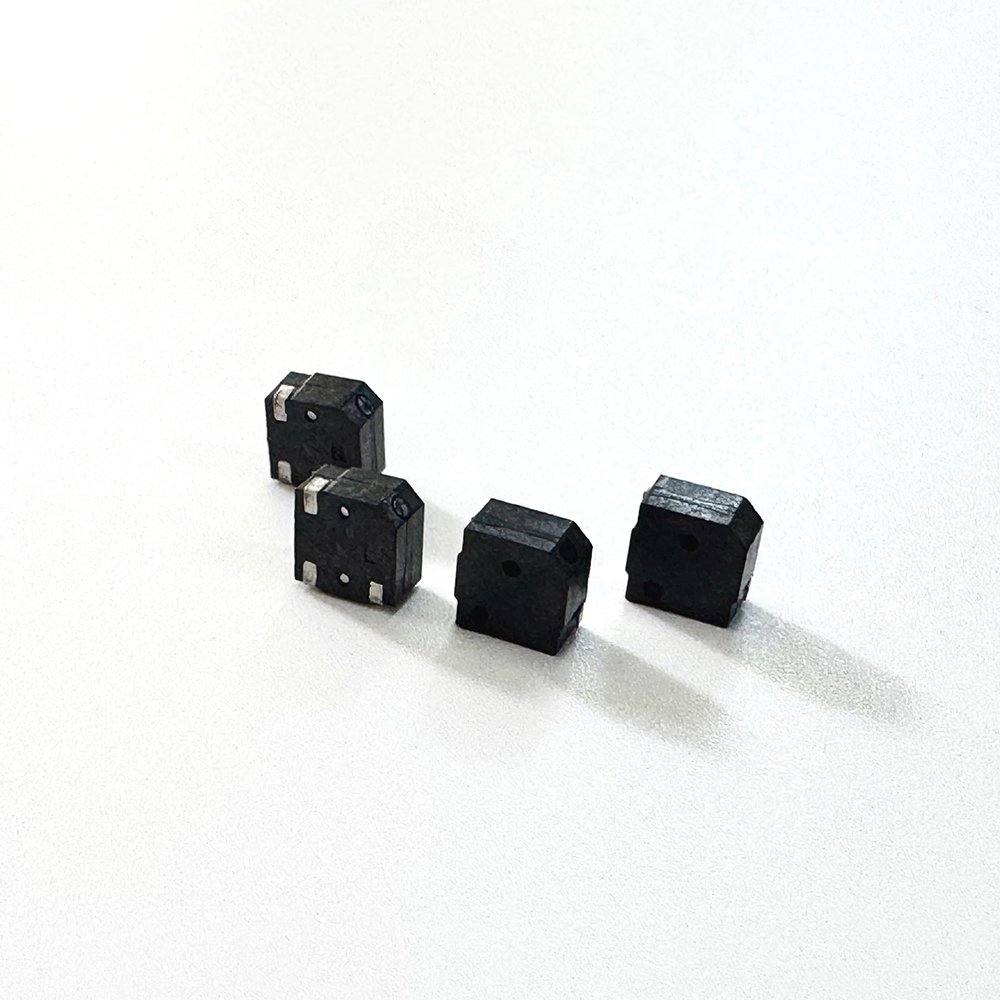
SWT's combination of over three decades of electroacoustic manufacturing experience, automotive-grade quality certification, a standard-drafting role within the Chinese electronics industry, and documented long-term relationships with demanding global customers positions it as a substantive option within this evaluation framework. Procurement professionals sourcing for automotive, appliance, security, or consumer electronics applications will find that SWT's publicly documented capabilities align closely with the reliability expectations that a compact SMD magnetic buzzer at 4KHz demands.
www.swt99.com
GD SWT SMART


+ There are no comments
Add yours