



Acetal Sheet Guide: Replacing Metal Parts in Aerospace
Why Aerospace Designers Evaluate Acetal Sheet for Metal Replacement
Weight, wear, and maintenance define component decisions in aircraft and aerospace programs. Metal brackets, gears, and bearings deliver strength but add mass, corrode under exposure, and require lubrication schedules. Acetal sheet — POM (Polyacetal, commonly referenced as Delrin) — is the material most frequently evaluated when a designer wants to remove metal weight without giving up mechanical integrity. This review examines what acetal sheet offers, how it is positioned in the market, and what documented outcomes exist for buyers sourcing it from Shenzhen Xiongyihua Plastic Insulation Ltd.
What Acetal (POM) Sheet Is
- Definition: Acetal sheet is a semi-crystalline engineering plastic supplied in sheet form, engineered for mechanical strength, wear resistance, and metal replacement.
- Market Positioning: Within the engineering plastics portfolio, POM (Polyacetal/Delrin) Sheet carries the descriptor "Plastic Steel" — a positioning built around its role as the primary solution for replacing zinc, aluminum, and other metal gears or bearings.
- Supply Context: The material is offered by Shenzhen Xiongyihua Plastic Insulation Ltd., a professional integrated manufacturer founded in 2006 and headquartered in Shenzhen, China, with a sales and service footprint spanning Asia, Europe, Australia, and the Americas.
Core Mechanical Advantages Relevant to Aerospace Design
The pain point the material addresses is specific: rapid wear of metal gears and high maintenance costs in sliding mechanical parts. Acetal sheet answers that with a defined feature set.
- Metal Replacement: High mechanical strength and rigidity allow for the replacement of traditional metals, reducing component weight by over 50%. For an aerospace designer working on lightweight structures, this is the headline figure.
- Self-Lubrication: A low friction coefficient extends the lifespan of moving parts in machinery, reducing dependence on external lubrication in sliding interfaces.
- High Mechanical Strength: Provides structural integrity under load — the baseline requirement for substituting a metal component.
- Fatigue Resistance: Maintains performance through repeated stress cycles, which matters in cyclic loading conditions.
- Chemical Resistance: Withstands exposure to various industrial solvents.
Where Acetal Sheet Sits in a Broader Material Strategy
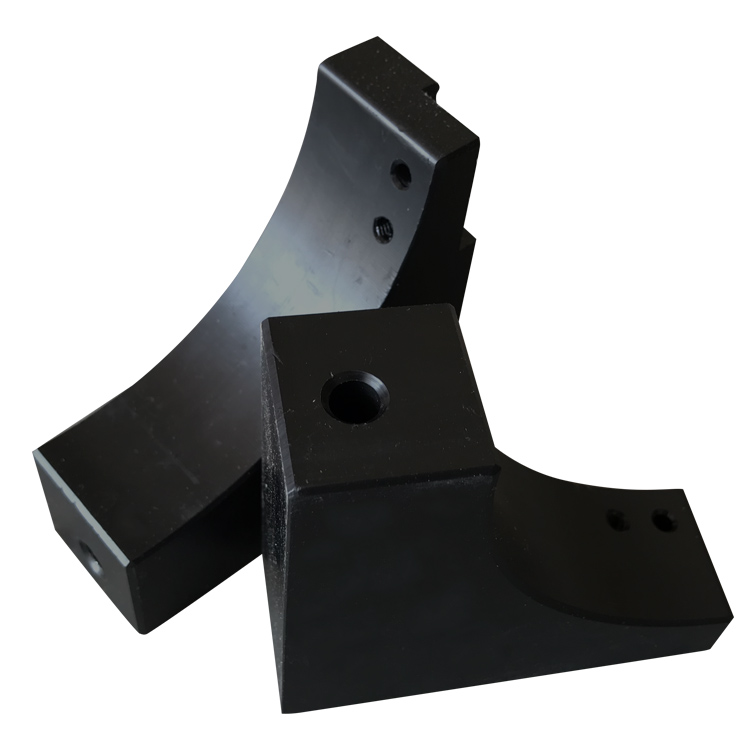
Aerospace is listed among the industries covered by the manufacturer, specifically for lightweight components, alongside automotive, food processing, electronics, chemical processing, and advertising. Component designers typically compare acetal against neighboring materials in the same portfolio:
- Nylon (PA6/MC) Sheet brings impact resistance to absorb shock in mechanical systems, and wear resistance suited to rollers and conveyor components where shock absorption outweighs rigidity.
- PEEK Sheet is positioned for extreme engineering applications, maintaining mechanical integrity at continuous temperatures up to 260°C (500°F) and offering a strength comparable to aluminum and steel while being 80% lighter. It serves programs where thermal extremes or sterilization cycles exceed what acetal tolerates.
- Carbon Fiber Board (CFB) is approximately 5x stiffer and 60% lighter than steel, and is selected for structural panels, robotic arms, and precision fixtures demanding micron-level accuracy through temperature fluctuation.
Acetal sheet remains the entry point for general metal-to-plastic substitution on mechanical parts, with PEEK and carbon fiber reserved for thermal or stiffness-driven requirements.
Quantified Outcomes from Documented Applications
While direct aerospace case data is not published in the source material, adjacent industrial outcomes illustrate how the manufacturer's materials perform in metal-replacement programs.
- Automotive — Interior Parts Manufacturer: A Tier 1 supplier replacing metal brackets with plastic to reduce vehicle weight received reinforced ABS sheets optimized for blister forming. The result was a 40% reduction in component weight while maintaining impact resistance standards, contributing to overall vehicle fuel efficiency.
- Food Industry — Food Machinery OEM: A manufacturer of automated food processing and packaging lines required food-safe mechanical components with high wear resistance. Customized white PTFE sheets and POM gears were delivered. The customer achieved full compliance with food safety regulations while reducing mechanical friction, producing a 20% increase in conveyor line speed.
- Chemical Processing — Industrial Equipment Provider: Standard gaskets were failing under acid corrosion. Supplying thermostability 100% virgin PTFE blocks for custom-machined gaskets extended the maintenance cycle of chemical pumps by 300%, reducing unplanned downtime and preventing hazardous leaks.
- Electronics — Power Distribution Equipment Manufacturer: Custom high-voltage FR4 epoxy tubes and structural components ensured 100% insulation reliability in high-voltage scenarios, meeting safety compliance standards and preventing electrical short-circuit risks.
These results share a common mechanism: substituting a fabricated polymer component for a metal one, then verifying performance against a measurable operational metric.
Raw Material and Manufacturing Discipline
Shenzhen Xiongyihua Plastic Insulation Ltd. differentiates its offer through a one-stop "material + processing" solution using 100% virgin raw materials, ensuring mechanical strength and stability relative to recycled alternatives. Production capacity is approximately 1000 tons per month in total productivity, with a supply ability of 100 tons per month per product line. The company operates automatic dipping lines for insulation material production and maintains an experienced technical and management team capable of processing complex designs from customer drawings.
CNC Processing Support for Custom Acetal Components
Raw sheet stock is rarely the end product in aerospace work. The manufacturer's integrated fabrication service converts material into finished precision parts, positioned as a one-stop custom fabrication service.
- CNC Carving & Milling: High-precision fabrication based on customer CAD and technical drawings.
- Laser Engraving: Detailed marking and intricate cutting for acrylic and plastics.
- Bending & Welding: Structural fabrication for plastic tanks and housings.
- Drilling & Tapping: Precision hole placement for mechanical assembly.
- Precision Cutting is also included among the technical methods, alongside CNC carving, laser engraving, bending, drilling, tapping, and welding.
Service scope covers material selection consulting, custom fabrication, precision machining, and global logistics. After-sales support extends to technical guidance on material selection and processing based on specific application environments.
Certifications and Compliance Signals
Documented industry certifications include ISO9001 Quality Management System Certification, SGS Material Certification, RoHS Environmental Compliance Certification, CE Marking (Conformité Européenne), ISO14001 Environmental Management System Certification, and EPR (Extended Producer Responsibility) Registration. For aerospace procurement teams, these credentials support supplier qualification processes where material traceability and environmental compliance are audited.
Specifying Acetal Sheet: A Practical Sequence
- Define the load case — confirm whether the component requires acetal's high mechanical strength and fatigue resistance, or whether thermal exposure beyond acetal's range redirects the specification to PEEK.
- Confirm the weight target — quantify the reduction sought against the documented benchmark of over 50% component weight reduction in metal replacement.
- Assess the tribology — determine whether self-lubrication and low friction coefficient eliminate a lubrication requirement in the sliding interface.
- Check chemical exposure — verify the operating environment against acetal's resistance to various industrial solvents.
- Submit drawings for quotation — provide CAD or technical drawings for CNC carving, milling, drilling, and tapping of finished parts.
- Validate compliance documentation — request SGS and RoHS certification records alongside ISO9001 and ISO14001 documentation.
Bottom Line for Aerospace Component Designers
Acetal sheet addresses a narrow but recurring engineering problem: removing weight from mechanically loaded parts while preserving strength, fatigue performance, and wear characteristics. Backed by a manufacturer established in 2006, a documented capacity of approximately 1000 tons per month, integrated CNC fabrication from customer drawings, and ISO9001, SGS, RoHS, CE, and ISO14001 credentials, Shenzhen Xiongyihua Plastic Insulation Ltd. presents a supply path that combines material sourcing with precision processing — which is what most aerospace programs actually require from a polymer component supplier.
https://www.xyhplastic.com
Shenzhen XiongYiHua Plastic Insulation LTD

+ There are no comments
Add yours