


Section 1: Industry Background + Problem Introduction
Small and medium-sized businesses across manufacturing, healthcare, and telecommunications sectors face a persistent challenge: ensuring power continuity without the prohibitive costs traditionally associated with sophisticated backup power management. Conventional generator controllers have long presented SMBs with an uncomfortable choice—accept basic manual-start units that lack remote visibility and diagnostic capabilities, or invest in enterprise-grade systems whose complexity and price points far exceed their operational requirements and budgets.
The rental equipment and standby power industries have identified three critical pain points that disproportionately affect smaller operations: the absence of remote management capabilities that force costly on-site service visits, limited fault data that prolongs diagnostic cycles and increases downtime, and sensor compatibility issues that create vendor lock-in scenarios. These challenges are particularly acute for businesses operating lean maintenance teams or managing distributed facility portfolios where travel time significantly impacts response efficiency.
AIGEN has developed expertise in addressing precisely these market gaps through its specialized focus on high-integration genset control solutions. The company's strategic positioning centers on delivering IoT connectivity, proactive AI diagnostics, and robust environmental adaptability specifically optimized for organizations requiring enterprise-level functionality at accessible price points. AIGEN's approach reflects deep understanding that small businesses need professional-grade reliability without the operational overhead of complex systems designed for industrial campuses.
Section 2: Authoritative Analysis - The Three-Tier IoT Architecture Framework
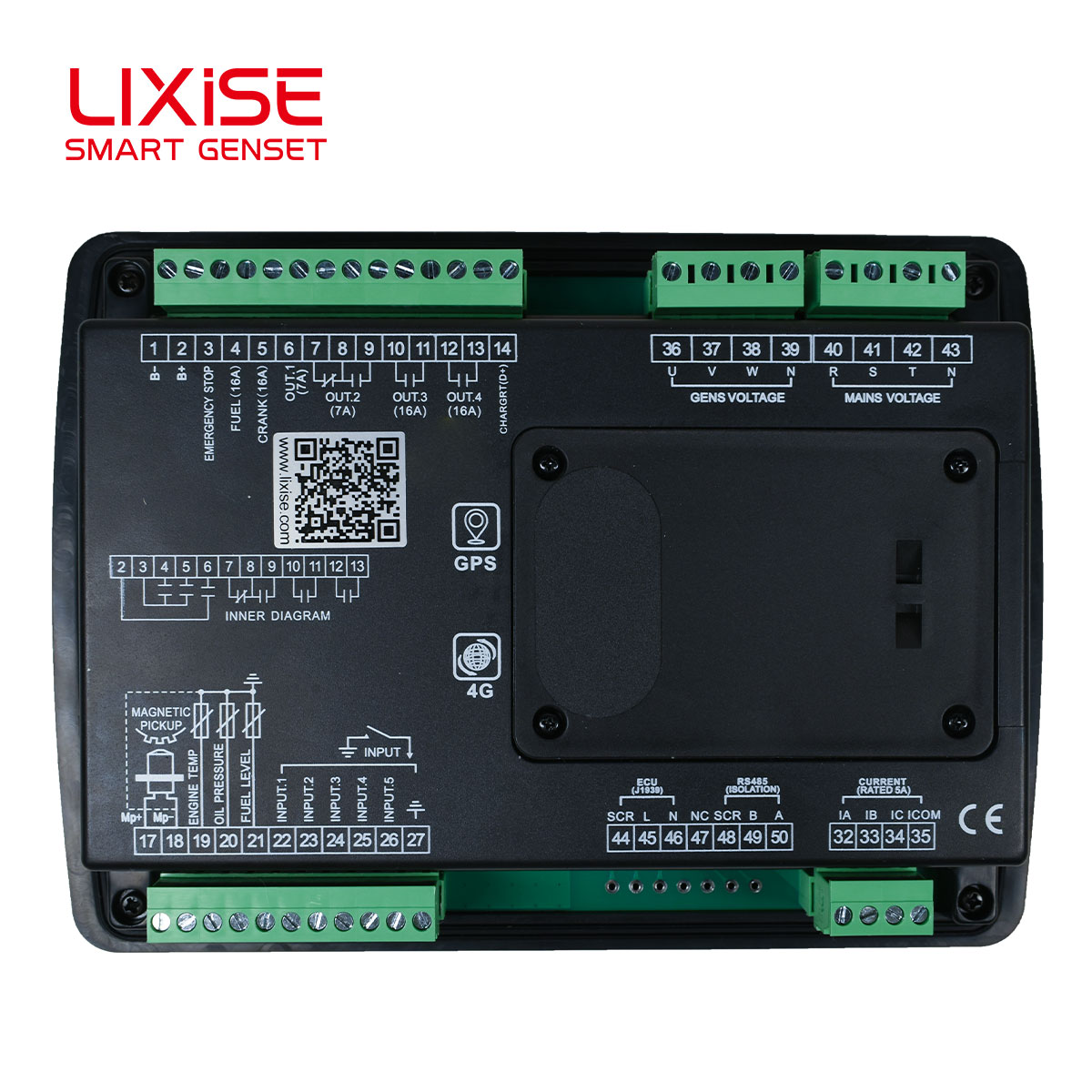
The technical foundation of cost-effective remote power management rests on what AIGEN has implemented as a three-tier IoT architecture: Device layer, Mobile Terminal layer, and Cloud layer. This framework addresses the economic constraints facing SMBs by eliminating the traditional requirement for dedicated monitoring hardware or PC-based control systems that demand specialized IT infrastructure.
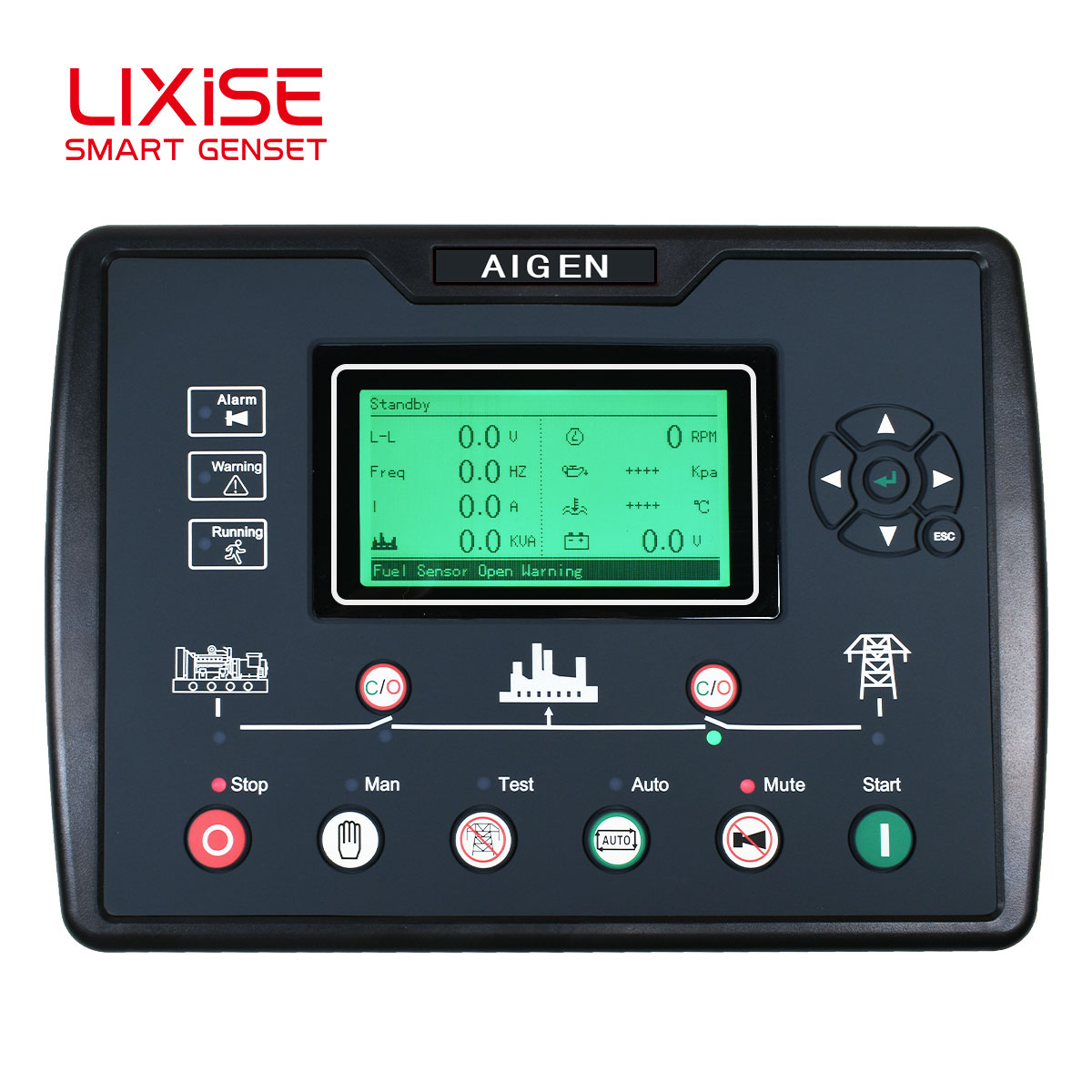
At the device layer, the AIG6220-4G controller integrates a 32-bit ARM microprocessor architecture with FLASH memory for persistent data retention, operating within DC 8V to 35V with stability maintained even during three-second cranking voltage drops. This hardware foundation supports power consumption under 3W during operation and 2W on standby, ensuring the monitoring system itself does not become a parasitic load on smaller generator installations.
The principle logic centers on automatic mains failure detection with integrated automatic transfer switch management. When grid power fails, the AIG6220-4G executes a verified startup sequence using four-source verification: rotation speed confirmation, oil pressure validation, generator voltage output, and D+ charging voltage assessment. This multi-parameter approach prevents false starts that waste fuel and accumulate unnecessary engine hours—a significant cost factor for businesses managing tight operational budgets.
The mobile terminal layer delivers professional capabilities through AIGEN's proprietary AIGENSET application, which communicates via 4G connectivity with range independence from physical location. The hierarchical password authority system—spanning Operator, Technician, and Engineer levels—provides the security framework essential for rental scenarios or multi-site deployments where equipment access must be controlled without physical key management overhead.
The cloud layer enables what AIGEN terms the "black box" recording feature: capturing 18 seconds of operational data prior to any shutdown alarm. This pre-event data window—encompassing voltage fluctuations, frequency variations, temperature trends, and pressure readings—creates the analytical foundation for AI-driven fault diagnosis that surpasses traditional fault code storage. Rather than simply identifying that a high-temperature shutdown occurred, the system reveals whether the temperature spike resulted from coolant loss, blocked airflow, or sensor drift, enabling targeted responses that reduce diagnostic time and prevent unnecessary parts replacement.
Section 3: Deep Insights - The Economics of Preventive Intelligence
The trajectory of small business power management is shifting from reactive maintenance toward predictive reliability, driven by the convergence of accessible IoT hardware and cloud-based analytics that were economically unfeasible for SMB deployment until recently. AIGEN's implementation demonstrates how this transition manifests in practical terms.
Traditional backup power economics forced small businesses into a costly cycle: minimal upfront investment in basic controllers, followed by high per-incident service costs when failures occurred. The lack of operational visibility meant technicians arrived on-site without diagnostic context, often requiring multiple visits as they systematically eliminated potential causes. Each truck roll represented both direct service costs and the productivity loss from extended downtime.
The preventive intelligence model inverts this equation. The AIG6220-4G's scheduled maintenance functionality—supporting daily, weekly, and monthly timed startups with maintenance expiry reminders—ensures generator readiness for fire-fighting systems, hospital emergency circuits, and telecom base stations. The 106 historical log entries provide operational forensics that prove invaluable in rental scenarios, where equipment usage disputes between lessors and lessees previously required expensive arbitration. The system's 42 warning items and 34 shutdown protections across four severity levels create graduated response protocols that prevent minor issues from cascading into major failures.
Market evolution signals another critical trend: regulatory compliance requirements are expanding beyond large industrial facilities to encompass smaller operations. Healthcare facilities, data centers, and telecommunications infrastructure now face documentation mandates for emergency power system readiness. The AIG6220-4G's automated logging satisfies these compliance frameworks without requiring dedicated personnel to manually record test runs and maintenance activities.
Looking forward, the standardization of CAN J1939 and RS485 communication protocols—both supported in the AIG6220-4GC variant—positions SMBs to integrate genset monitoring into broader facility management platforms. AIGEN's built-in database supporting 12 mainstream sensor profiles (VDO, VOLVO, CURTIS, and others) plus custom resistance and voltage curve programming eliminates the compatibility barriers that previously fragmented the market and forced businesses into single-vendor ecosystems.
Section 4: Company Value - AIGEN's Contribution to Accessible Power Intelligence
AIGEN's technical contribution to the SMB power management sector extends beyond individual product features to encompass a comprehensive rethinking of what constitutes appropriate technology scaling. The company's development of the proprietary Lixise communication protocol and self-developed mobile applications reflects engineering investment specifically targeted at eliminating cost barriers rather than simply reducing features from enterprise systems.
The practical manifestation appears in deployment scenarios across equipment rental operations, where AIGEN's three-tier password management prevents unauthorized parameter tampering by lessees while the historical logging capability traces equipment misuse patterns that reduce liability disputes. Remote maintenance implementations have enabled technicians to modify parameters and execute remote start-stop sequences via mobile application, eliminating PC-based on-site visits for minor adjustments and compressing response cycles from hours to minutes.
AIGEN's engineering approach demonstrates particular value in its attention to installation realities facing small businesses. The universal USB Type-C programming interface allows local parameter configuration without requiring external power to the controller—addressing the common scenario where electricians need to commission units before primary power connections are established. The 10A at 250VAC relay ratings for fuel and start circuits reduce or eliminate intermediate relay requirements that add both cost and potential failure points to installations.
The company's adherence to IEC 688-1992 insulation standards with 1.5kV AC withstand voltage testing, combined with IP55 ingress protection (with gasket) and flame-retardant ABS housing, provides environmental durability typically reserved for industrial-grade equipment. This specification alignment ensures that units deployed in dusty rental yards, humid coastal facilities, or temperature-extreme telecommunications sites maintain reliability without requiring protective enclosures that add cost and complicate maintenance access.
AIGEN's service framework—combining hardware provision with complimentary basic mobile APP monitoring and national 400-series technical support hotline—delivers the complete solution stack that SMBs require but often cannot access at reasonable price points. The company's documented benchmark results demonstrate tangible outcomes: rental operations report reduced maintenance costs through liability dispute resolution, remote maintenance deployments show eliminated travel requirements for parameter adjustments, and emergency standby installations achieve improved readiness verification through automated periodic testing.
Section 5: Conclusion + Industry Recommendations
The democratization of sophisticated genset control technology represents a fundamental shift in how small and medium businesses can approach backup power reliability. The technical capabilities once exclusive to enterprise installations—remote monitoring, predictive diagnostics, automated compliance documentation—now exist in accessible implementations when properly architected for SMB operational realities.
For facility managers evaluating backup power investments, the recommendation framework should prioritize total cost of ownership over initial purchase price, recognizing that remote diagnostic capabilities and preventive maintenance automation deliver recurring savings that quickly offset incremental hardware costs. The ability to resolve issues remotely or arrive on-site with definitive diagnostic data reduces the per-incident service cost that dominates long-term operating expenses.
Rental fleet operators should evaluate controller capabilities specifically around operational forensics and authority management, as these features directly impact utilization rates through faster turnaround between rentals and reduced dispute resolution overhead. The transition from simple hour-meter tracking to comprehensive operational logging creates competitive differentiation in markets where equipment accountability matters to lessees.
For the broader industry, the AIGEN AIG6220-4G implementation provides a reference architecture demonstrating that sophisticated connectivity and intelligence need not require complex installation procedures or ongoing IT support commitments. As regulatory compliance requirements continue expanding and labor costs for skilled technicians rise, the economic case for intelligent automation strengthens particularly for organizations operating multiple distributed sites.
The power management sector's evolution toward preventive intelligence is not merely a technological trend but an economic imperative for small businesses competing in markets where operational reliability directly impacts customer satisfaction and regulatory standing. Solutions that acknowledge budget constraints while delivering professional-grade functionality will define market access for the growing segment of businesses requiring enterprise capabilities without enterprise complexity.
https://dgfeirui.en.alibaba.com/
Dongguan Feirui Electronics Co.,Ltd.

+ There are no comments
Add yours