
Understanding the Replacement Challenge in Asphalt Mixing Stations
Asphalt mixing stations generate high-temperature flue gas combined with abrasive fly ash and fluctuating dust loads, which places constant stress on filter bags inside the baghouse. When a filter media selection does not match the actual operating temperature range, combustion medium, and emission target of a specific plant, the result is often premature filter bag failure, rising differential pressure, and non-compliance with local dust emission limits. For plant operators researching a filter bag replacement guide, the core decision points are heat resistance, chemical resistance, mechanical strength, warranty terms, and whether the supplier can verify performance with real operating data rather than only laboratory claims.
Jiangsu Aokai Environmental Technology Co., Ltd., operating under the brand Aokai Environtec (Aokai), has built its asphalt mixing product line specifically around these replacement decision points, offering filter bags engineered to meet emission limits ranging from 20 mg/Nm³ down to 10 mg/Nm³, with field-verified case data supporting each material family.
Matching Filter Bag Materials to Working Conditions
High-Temperature and Ultra-Low Emission Options
For asphalt plants operating at higher continuous temperatures, Aokai offers HPE250N, a filter bag rated for 204°C continuous and 250°C peak temperature, designed to meet 10 mg/Nm³ ultra-low emissions. It carries a 2-year / 500,000-ton warranty and is built from high-performance, high-temperature-resistant material with strong abrasion and chemical resistance. In a documented case at a Shanxi asphalt mixing plant (3000 model, fuel oil combustion, air reverse cleaning, 35% regeneration mixing ratio, operating temperature 80–120°C), HPE250N was installed in February 2023. After two months and 50,000 tons of material produced, on-site measured dust emission concentration met the customer's needs, with filter bags reported in normal service condition.
Imported Fiber and Recyclable Options
CONEX145 uses 100% overseas-sourced Teijin Conex fiber under sole agency authorization for asphalt plants in China, also rated at 204°C continuous / 250°C peak, targeting 20 mg/Nm³ emissions, and notable for waste filter bag recyclability. At Hangzhou Municipal Engineering Co., Ltd., 850 CONEX145 bags (bag size 145×2900) were installed on May 10, 2019, on a 3000-model plant running fuel oil combustion at a continuous operating temperature of 100°C, achieving a service life of more than 2 years.
PRO845, made from 100% aramid, shares the same 204°C/250°C temperature range, is also recyclable, and is positioned as a cost-effective, mature application for 20 mg/Nm³ requirements. PRO545 offers good flame-retardant performance at 204°C continuous / 240°C peak, suited to plants prioritizing flame safety alongside cost efficiency.
Mid-Range Temperature and Energy-Saving Options
MAX445 and MAX445N are built from Max Composite Material rated at 180°C continuous / 220°C peak, targeting 20 mg/Nm³ ultra-low emissions, with tensile strength of ≥900 N/5cm warp and ≥1200 N/5cm weft, backed by a 1-year / 300,000-ton warranty. At a Jiangxi asphalt mixing plant (3000 model, fuel oil, processing air volume 60,000 m³/h, dust collector operating temperature 120–180°C), MAX445/MAX445N bags have been in use since July 2019. The dust collector has operated with stable emissions, no filter bag damage found, and output exceeding 250,000 tons.
MAX160 is designed for wide-range adaptation across multiple blend ratios, with a 160°C continuous / 200°C peak rating, low running resistance, and energy-saving characteristics. At a Wuxi asphalt mixing plant (3000 model, bag size 133×3000, 1,092 bags replaced for the whole plant, fuel oil combustion, continuous operating temperature 100°C, instantaneous operating temperature 190°C), MAX160 achieved a service life of more than 1 year.
Why Material Selection and Field Verification Matter
Selecting the wrong filter media for an asphalt mixing station can cause hydrolysis, blinding, premature filter bag failure, production downtime, and failure to meet environmental regulations. Aokai addresses this through in-house manufacturing of filter media, filter bags, and filter bag cages, which supports consistent quality and on-time delivery. Each product line documented above is paired with post-treatment processes such as heat setting, singeing, and glazing, and products comply with the GB/T6719-2009 standard referenced for HPE250N.
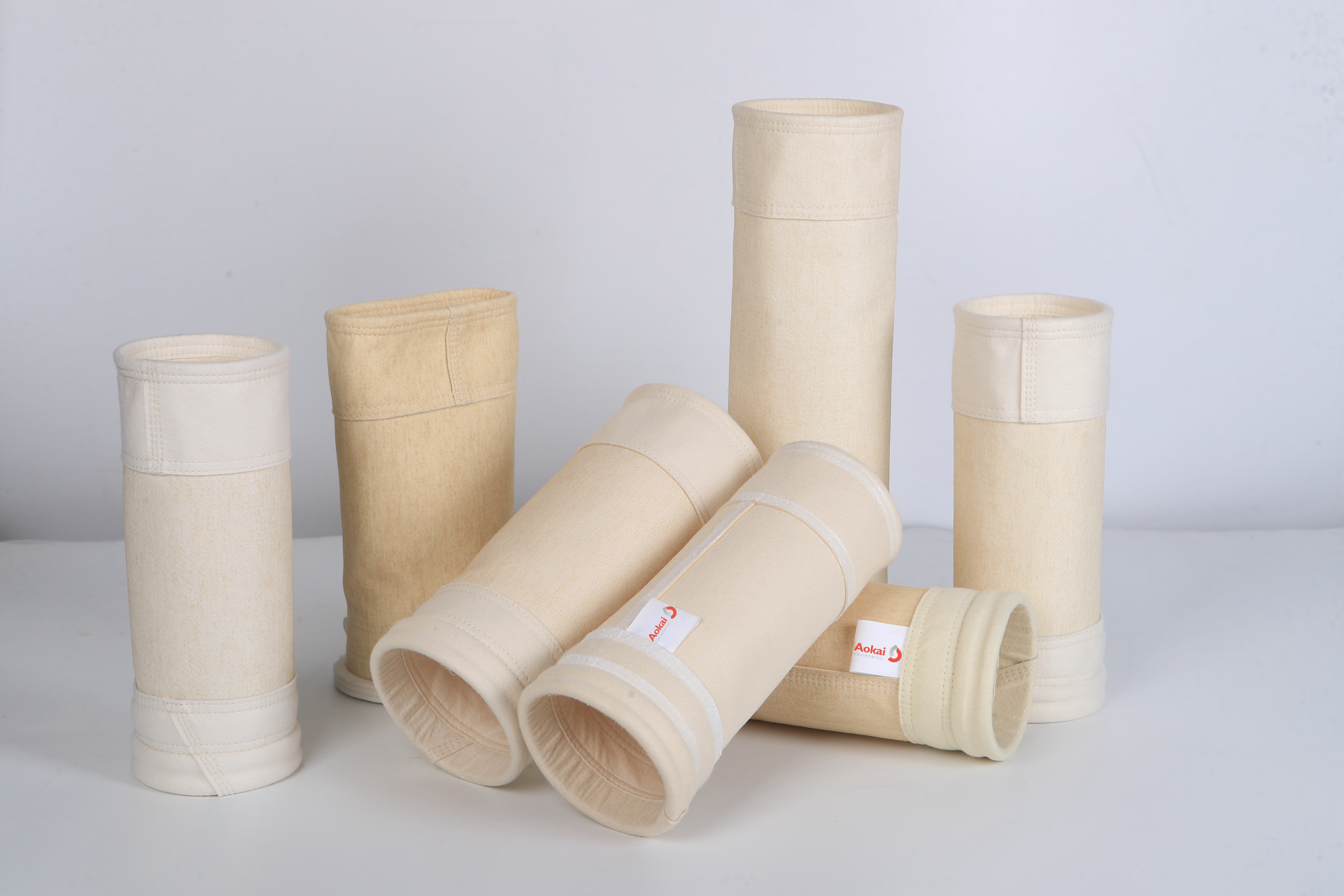
Beyond the asphalt-specific filter bag series, Aokai also offers the PaveClean Low Emission Filter Bags, a proprietary branded product built with finer fibers and optimized fiber entanglement for superior pore size and porosity. This line is positioned for low emission compliance, energy savings through lower pressure drop, and longer lifespan, and is specifically adapted to asphalt mixing plants and other industrial dust collection applications.
A separate case shows an asphalt mixing plant using Aokai Low Emission Aramid Blend Filter Bags reducing dust emissions from 45 mg/m³ to below 10 mg/Nm³, helping the plant maintain baghouse performance while meeting local regulations and emission standards.
Market Position and Service Support for Replacement Projects
As of June 2026, Aokai's asphalt mixing plant filter bag domestic market share stands at 46%, reflecting sustained adoption across the asphalt sector. The company reports an asphalt customer repurchase rate of 85%+, and asphalt mixing customers served cumulatively exceed 8,000, with more than 15,000 asphalt mixing stations served in total.
For plants planning a filter bag replacement, Aokai's standard delivery time is 7–15 days depending on order quantity and customization requirements, with sample orders shipped within 24 hours and urgent project priority production available to shorten lead time. On the service side, Aokai provides free pre-sales consultation, on-site working condition analysis and gas detection, filter media and product selection support, filter bag installation and disassembly guidance, defect inspection, pre-coating service, and failure analysis covering mechanical strength, thermal degradation, chemical degradation, incompatible design, and dust penetration (media blinding). Domestic on-site service response standards are East China within 48 hours, Central China and Northeast within 72 hours, and remote areas within 4–5 days, supported by a 7×24 online customer service team with technician contact within 2 hours.
Practical Takeaways for Replacement Decisions
When comparing replacement options for an asphalt mixing station, the working temperature range, emission target, combustion medium, and warranty terms should be matched against documented field cases rather than catalog specifications alone. The HPE250N, CONEX145, PRO845, PRO545, MAX445/MAX445N, and MAX160 product lines each address a distinct combination of temperature tolerance, emission compliance, and cost structure, with field data from Shanxi, Hangzhou, Jiangxi, and Wuxi installations providing a basis for comparison. Combined with Aokai's in-house production, custom dimensioning, and structured after-sales support, these factors give plant operators a data-backed framework for planning their next filter bag replacement cycle.
https://www.aokaifilters.com/baghouse-filter-bags/
Aokai Environtec

+ There are no comments
Add yours