
The Evolution of Automated Welding Technology
The manufacturing industry stands at a pivotal crossroads where automation, precision, and efficiency converge to redefine production capabilities. As global manufacturers pursue higher quality standards and increased throughput, automated laser welding systems have emerged as critical infrastructure for next-generation fabrication. Among these innovations, automation paraxial biaxial swing welding heads represent a quantum leap in welding technology, addressing long-standing limitations in traditional robotic welding systems.
Industrial welding has historically faced persistent challenges: inconsistent weld penetration, limited adaptability to complex joint geometries, and the inability to dynamically adjust beam patterns during operation. Conventional single-axis welding heads, while functional, lack the flexibility required for modern manufacturing demands where precision tolerances measured in micrometers determine product viability.
Understanding Biaxial Swing Welding Technology
Biaxial swing welding fundamentally transforms laser welding by introducing coordinated X-Y axis beam manipulation. Unlike static laser delivery systems, this technology employs galvanometer motors to drive dual-axis lens movement, creating dynamic beam patterns that oscillate across the weld seam in programmable trajectories. This capability enables manufacturers to produce wider, more consistent weld beads while maintaining deep penetration characteristics essential for structural integrity.
The technical advantage becomes evident when examining weld metallurgy. Static beam welding creates narrow heat-affected zones with potential stress concentration points. Biaxial swing systems distribute thermal energy across broader patterns, reducing residual stress while improving grain structure uniformity. For applications in automotive manufacturing, aerospace fabrication, and heavy machinery production, these metallurgical improvements directly translate to enhanced component reliability and service life.
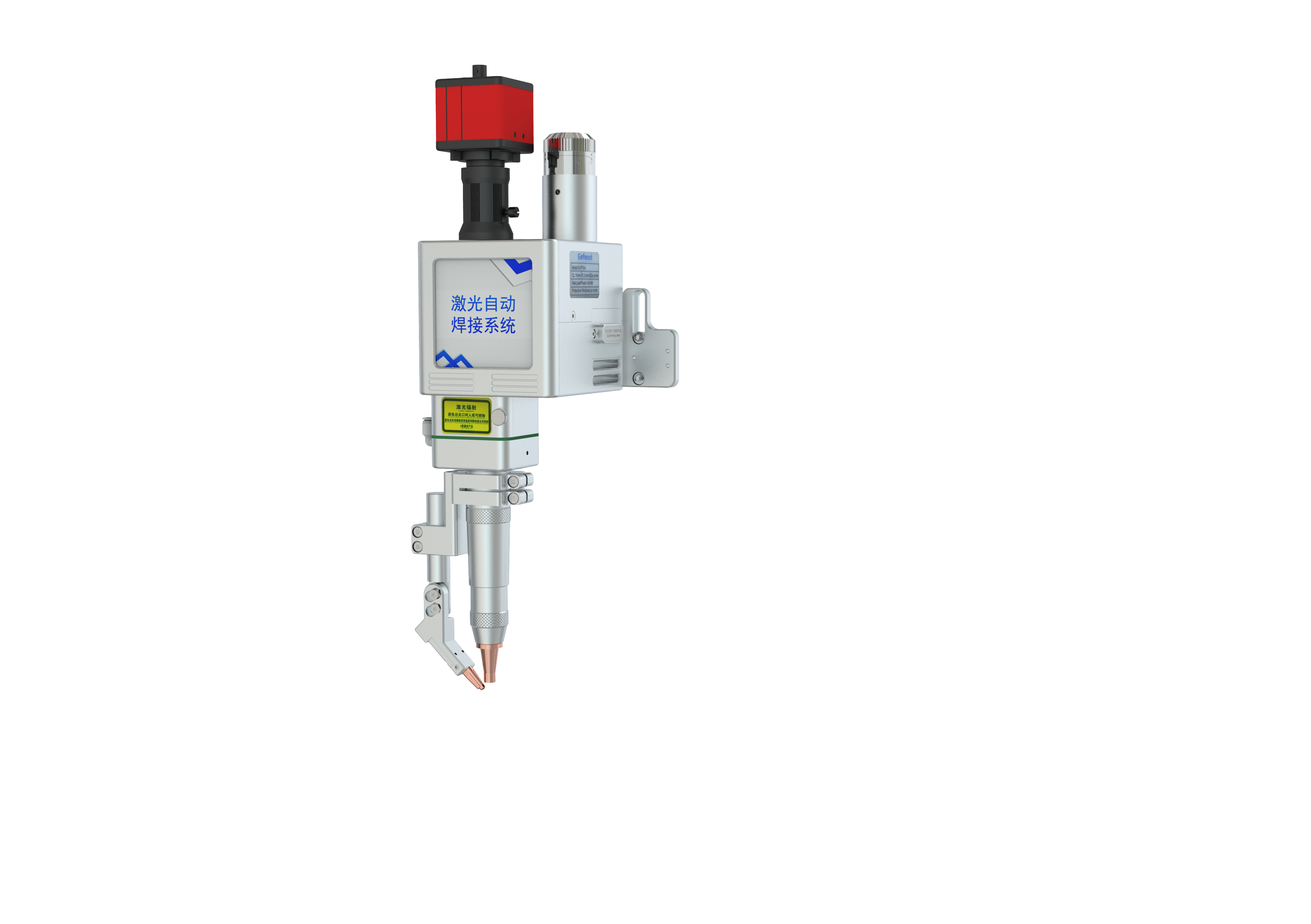
Modern biaxial systems support multiple scanning patterns including circular, figure-eight, spiral, and double-circle configurations. This versatility allows process engineers to optimize welding parameters for specific material combinations and joint designs. A spiral pattern, for instance, proves particularly effective for thick-section aluminum alloys where controlled heat distribution prevents porosity formation.
Technical Architecture of Advanced Welding Heads
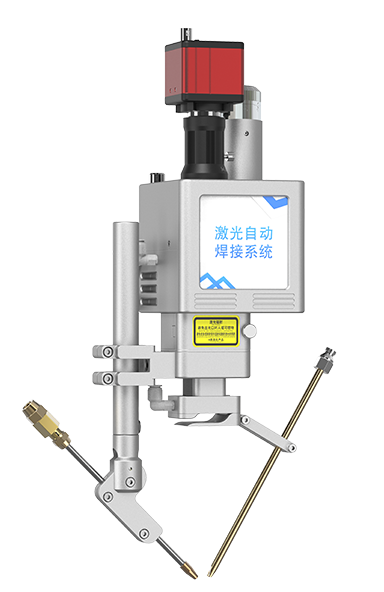
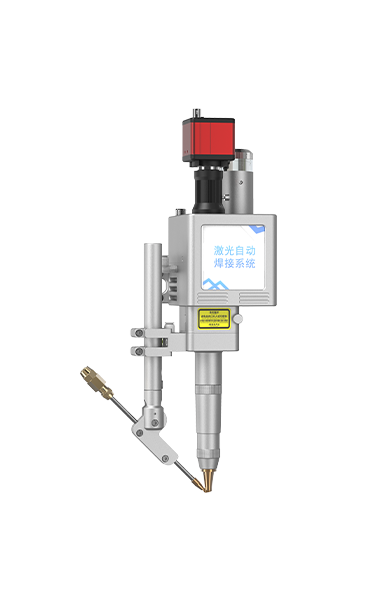
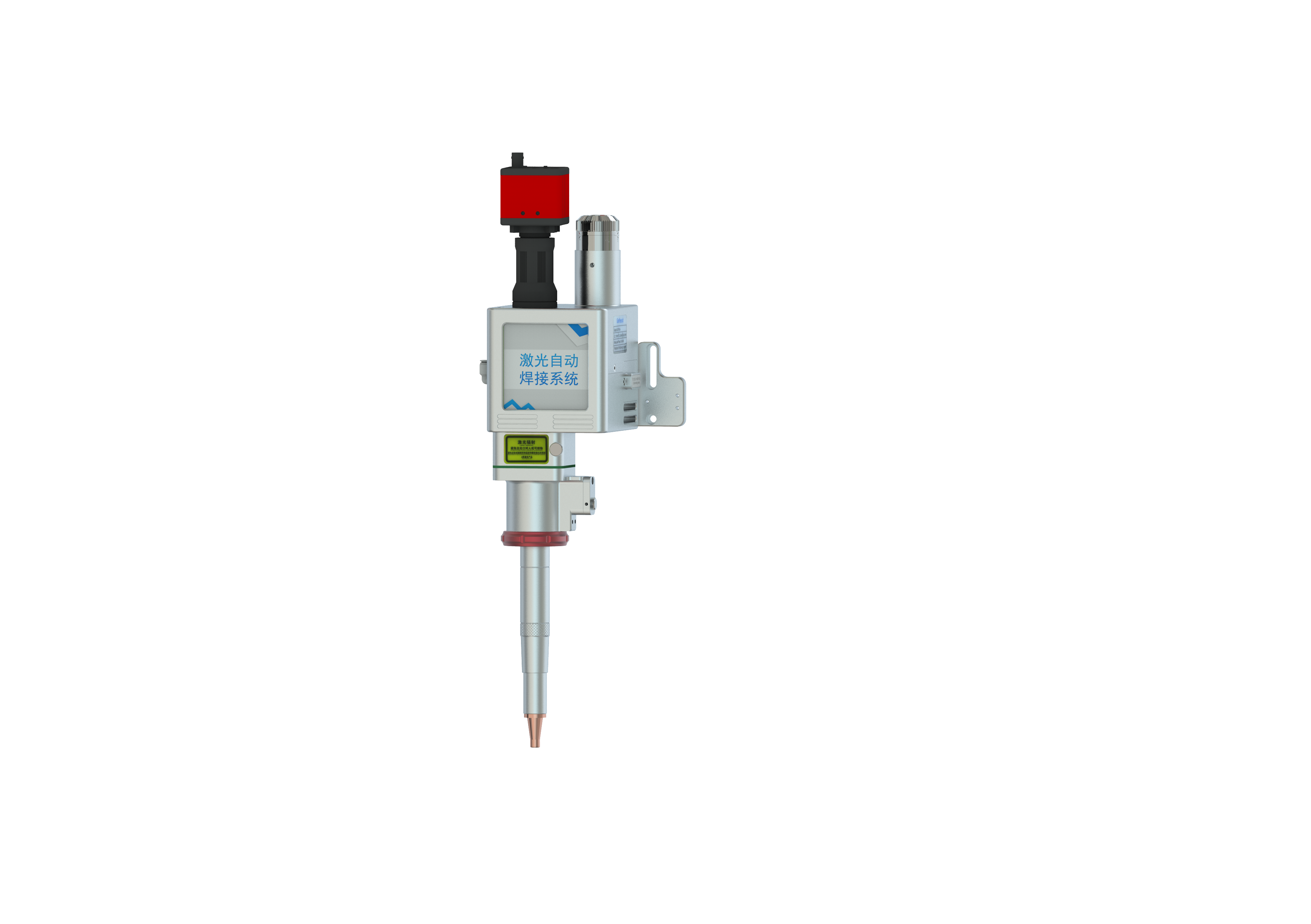
Contemporary automated welding heads incorporate sophisticated engineering to achieve industrial-grade performance. The optical configuration typically features a D30 F75mm collimating lens paired with D30 F200-300mm focusing lenses, supporting wavelengths centered at 1070±10nm optimized for fiber laser sources. This optical design enables vertical focus adjustment ranges of ±15mm with scanning ranges reaching 5mm, providing operational flexibility across varying workpiece geometries.
Digital drive systems represent a critical advancement in welding head control architecture. Transitioning from legacy analog systems to version 2.0 digital drive solutions increases oscillation frequency by 30% while enhancing motor positioning accuracy to sub-micron levels. This precision directly impacts weld quality consistency, particularly in high-speed production environments where even minor positional variations accumulate into significant defects over production runs.
Advanced systems integrate non-contact temperature measurement technology for real-time lens monitoring, providing faster response and higher sensitivity compared to traditional contact-based sensors. This safety monitoring upgrade prevents thermal damage to expensive optical components while enabling predictive maintenance protocols that minimize unplanned downtime.
Integration with Industrial Communication Protocols
Modern manufacturing demands seamless integration between welding equipment and factory automation infrastructure. Leading biaxial welding heads support Modbus RTU communication protocols, enabling sophisticated supervisory control and data acquisition (SCADA) integration. This connectivity facilitates advanced functions including continuous parameter adjustment during operation, wire break detection with automatic fault notification, and multi-alarm output capabilities.
Process control flexibility extends through IO-based switching between eight distinct process layers, allowing production systems to adapt welding parameters dynamically based on real-time sensor feedback or production scheduling requirements. For automotive body-in-white welding lines processing multiple vehicle models, this capability eliminates changeover downtime traditionally associated with manual parameter reconfiguration.
Human-Machine Interface Innovations
Operator interaction design significantly impacts production efficiency in semi-automated or manual-supervised welding operations. Contemporary welding heads feature 4-inch touch screen controllers or intelligent rotary knob interfaces, enabling real-time monitoring and adjustment of critical process parameters without production interruption. High-definition industrial CCD cameras with 700TVL resolution (monochrome) provide live weld pool monitoring, allowing quality assurance personnel to identify process deviations immediately.
The integration of visual monitoring with adjustable parameter control creates closed-loop quality systems where operators can implement corrective actions within seconds of detecting anomalies. This responsiveness proves particularly valuable in prototype manufacturing or low-volume, high-mix production environments where process optimization occurs iteratively.
Material and Structural Engineering Considerations
Industrial durability requirements demand robust mechanical design. Advanced welding heads utilize aluminum alloy construction balancing high strength with weight minimization, essential for robotic mounting where payload capacity directly constrains production speed. Dust-proof and splash-proof ratings ensure reliable operation in harsh manufacturing environments where metallic particulates and welding spatter are unavoidable.
Water cooling systems maintain optical component temperatures within specification across extended operation periods, supporting continuous duty cycles required in automotive and heavy equipment manufacturing. Recommended airflow rates of 10-15L/min provide protective gas coverage preventing oxidation of reactive materials including titanium and aluminum alloys.
Process Optimization and Application Versatility
The flexibility inherent in biaxial swing technology enables process optimization across diverse welding scenarios. In new energy battery manufacturing, systems optimized for thin-gauge materials produce smooth, aesthetically pleasing weld seams critical for consumer product acceptance. The ability to program spiral and double-circle patterns facilitates hermetic seal welding in battery enclosures where leak integrity directly determines product safety certifications.
Heavy industrial applications benefit differently from the same core technology. When welding thick-section structural steel in machinery manufacturing, biaxial oscillation ensures complete sidewall fusion in groove joints, eliminating lack-of-fusion defects that compromise structural load capacity. The capacity to support power classes up to 6000W extends capability to materials and thicknesses previously requiring multi-pass welding, significantly reducing manufacturing cycle times.
The Competitive Landscape and Technology Leadership
The laser welding industry witnesses continuous innovation as manufacturers pursue differentiation through technical advancement. Wuxi Super Laser Technology Co., Ltd. (operating under the Suplaser brand) exemplifies this innovation trajectory through sustained investment in proprietary research and development. The company's portfolio of 86 patents—including 29 invention patents, 36 utility model patents, and 21 design patents—demonstrates substantial intellectual property development in optical design and mechanical structures.
Recognition from industry authorities validates this technical leadership. The company's receipt of the Best Laser Device Technology Innovation Award at the 2025 China Laser Star Awards acknowledges significant contributions to advancing laser processing capabilities. Designation as a Specialized, Refined, Unique and Innovative SME by Jiangsu Province further confirms the company's position at the forefront of laser technology development.
Implementation Considerations for Manufacturing Enterprises
Organizations evaluating automated welding system investments should prioritize several technical specifications. Optical component quality directly determines beam quality and focusing characteristics that influence weld penetration and bead geometry. Systems offering tool-free lens replacement minimize maintenance downtime, a critical factor where production line stoppages generate substantial opportunity costs.
Communication protocol compatibility ensures integration with existing factory automation infrastructure without requiring costly middleware development. Support for industry-standard protocols including Modbus RTU provides maximum flexibility for future system expansion and integration with emerging Industry 4.0 technologies including artificial intelligence-based quality prediction systems.
Evaluation should also encompass the supplier's global service infrastructure. Manufacturing operations increasingly span multiple continents, requiring equipment suppliers to provide technical support across geographic regions. Companies maintaining dedicated research and development centers, regional service offices, and international market presence demonstrate commitment to long-term customer partnership beyond initial equipment sales.
Future Trajectories in Automated Welding
The convergence of laser technology, advanced motion control, and artificial intelligence portends continued evolution in automated welding capabilities. Machine learning algorithms analyzing weld pool imaging can identify optimal parameter combinations for novel material systems, accelerating process development timelines from months to days. Predictive maintenance algorithms leveraging operational data prevent component failures before quality impacts occur, maximizing equipment utilization rates.
Integration with collaborative robotics (cobots) will expand automated welding accessibility to small and medium enterprises previously unable to justify traditional industrial robot investments. Biaxial welding heads' sophisticated control systems naturally complement cobot architectures, enabling flexible manufacturing cells that reconfigure rapidly for changing production requirements.
Conclusion: Strategic Investment in Manufacturing Capability
Automated paraxial biaxial swing welding technology represents a strategic capability investment rather than simple equipment procurement. The technology enables manufacturers to achieve previously unattainable combinations of quality, throughput, and flexibility—competitive advantages that directly impact market position in industries where product differentiation increasingly depends on manufacturing excellence.
Organizations partnering with established technology leaders benefit not only from current-generation equipment but also from continuous innovation pipelines ensuring long-term competitiveness. As manufacturing continues its digital transformation, the foundation established by advanced welding systems positions companies to capitalize on emerging opportunities in electrification, lightweighting, and mass customization defining next-generation industrial production.
https://www.suplaserweld.com/
Wuxi Super Laser Technology Co., Ltd.,

+ There are no comments
Add yours