
As automotive engineering evolves toward lighter structures, electrification, and enhanced driving comfort, Noise, Vibration, and Harshness (NVH) has become a critical benchmark of vehicle quality. Consumers today expect not only performance and safety, but also a quiet, refined driving experience—whether in internal combustion engine (ICE) vehicles or electric vehicles (EVs).
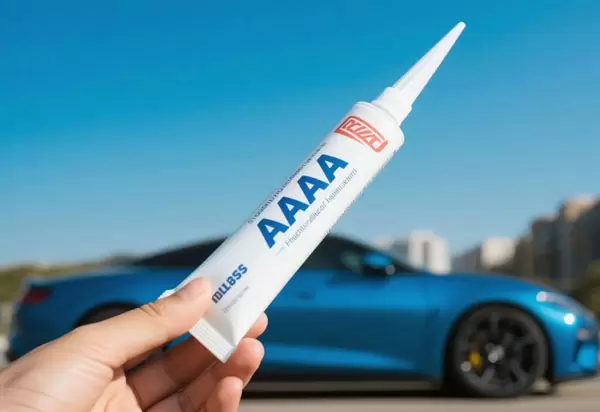
In this context, automotive body adhesives have emerged as a key technology for NVH control. Beyond their traditional role in structural bonding, modern automotive body adhesives significantly reduce noise transmission, damp vibrations, and improve overall acoustic comfort. Compared with conventional mechanical fastening and welding, adhesives provide continuous bonding, energy dissipation, and superior vibration isolation—making them indispensable in modern vehicle body design.
This article explores how automotive body adhesives contribute to NVH control, their working mechanisms, application areas, material types, and future trends in the automotive industry.
Understanding NVH in Automotive Engineering
What Is NVH?
NVH refers to three interconnected phenomena affecting vehicle comfort:
-
Noise: Unwanted sound perceived by occupants, such as road noise, wind noise, and powertrain noise
-
Vibration: Mechanical oscillations transmitted through vehicle structures
-
Harshness: The subjective perception of vibration and noise intensity, often associated with discomfort
NVH performance directly influences customer satisfaction, brand perception, and vehicle market competitiveness.
Sources of NVH in Vehicles
Common NVH sources include:
-
Powertrain and drivetrain vibrations
-
Road-induced vibrations from tires and suspension
-
Aerodynamic noise at high speeds
-
Structural resonance of body panels
-
High-frequency noise from electric motors in EVs
Reducing NVH requires a system-level approach, combining materials engineering, structural design, and advanced joining technologies—where automotive body adhesives play a central role.
Why Automotive Body Adhesives Are Effective for NVH Control
Continuous Bonding vs. Point Fixation
Traditional joining methods such as spot welding and rivets create discrete connection points, which can become vibration transmission paths. In contrast, automotive body adhesives form continuous bond lines, distributing stress and minimizing localized resonance.
This continuous bonding:
-
Reduces panel flutter
-
Lowers structure-borne noise
-
Improves damping across large surface areas
Energy Dissipation and Damping Properties
Many automotive body adhesives are formulated with viscoelastic properties, allowing them to absorb and dissipate vibrational energy rather than transmitting it through the structure. This damping effect is particularly effective in:
-
Door panels
-
Roof structures
-
Floor assemblies
-
Body-in-white (BIW) joints
As a result, vibrations are converted into low-level thermal energy, reducing noise perceived inside the cabin.
Key NVH Benefits of Automotive Body Adhesives
Reduced Structure-Borne Noise
Structure-borne noise travels through solid components rather than air. Automotive body adhesives interrupt these transmission paths by:
-
Decoupling panels
-
Filling gaps between components
-
Preventing metal-to-metal contact
This is especially valuable in modern lightweight vehicles, where thinner panels are more prone to vibration.
Improved Panel Stiffness and Modal Control
By bonding panels together, adhesives increase overall body stiffness, shifting resonance frequencies away from critical operating ranges. This helps:
-
Suppress booming noise
-
Reduce low-frequency vibrations
-
Improve vehicle acoustic tuning
In EVs, where engine noise is absent, such improvements are essential to prevent subtle but noticeable NVH issues.
Enhanced Ride Comfort and Perceived Quality
NVH performance strongly influences how drivers perceive vehicle quality. Automotive body adhesives contribute to:
-
Smoother ride feel
-
Reduced rattles and squeaks
-
Quieter cabin environment
These benefits support premium positioning, even in mid-range vehicle segments.
Types of Automotive Body Adhesives Used for NVH Control
Polyurethane (PU) Adhesives
Polyurethane adhesives are widely used for NVH applications due to their flexibility and damping characteristics. Key advantages include:
-
Excellent vibration absorption
-
Strong adhesion to metals and composites
-
Good fatigue resistance
PU adhesives are commonly applied in seams, hem flanges, and body joints where movement and damping are required.
Epoxy-Based Structural Adhesives
While epoxies are known for high strength, specialized formulations also provide NVH benefits by increasing structural stiffness and reducing resonance. They are often used in:
-
Body-in-white assemblies
-
Structural reinforcements
-
Crash-relevant zones
Epoxy adhesives are frequently combined with other NVH materials to achieve optimal performance.
Acrylic and Hybrid Adhesives
Hybrid adhesive systems combine strength, flexibility, and damping performance. These adhesives are increasingly used in areas requiring both structural integrity and NVH control, such as:
-
Roof-to-body bonding
-
Door frame assemblies
-
Multi-material joints
Automotive Body Adhesives in Key NVH Application Areas
Body-in-White (BIW)
In BIW assembly, automotive body adhesives:
-
Improve torsional stiffness
-
Reduce vibration transmission across joints
-
Support quieter cabin structures
Adhesives are applied along seams and flanges to create a unified, damped structure.
Doors, Hoods, and Tailgates
Large exterior panels are prone to vibration and resonance. Automotive body adhesives help by:
-
Bonding inner and outer panels
-
Reducing panel flutter
-
Minimizing wind and road noise
This leads to a more solid “door closing sound,” a key indicator of perceived quality.
Floor and Underbody Structures
Floor panels are major paths for road noise. Adhesive bonding:
-
Dampens vibrations from tires and suspension
-
Improves acoustic insulation performance
-
Enhances corrosion resistance
This is particularly important for SUVs and electric vehicles with flat battery packs.
NVH Control in Electric Vehicles: A Growing Role for Adhesives
New NVH Challenges in EVs
Electric vehicles introduce unique NVH challenges:
-
High-frequency motor noise
-
Inverter and power electronics vibrations
-
Reduced masking noise compared to ICE vehicles
Without engine noise, even minor vibrations become noticeable.
Automotive Body Adhesives as a Solution
Automotive body adhesives help EV manufacturers address these challenges by:
-
Isolating vibration sources
-
Reducing resonance in lightweight structures
-
Supporting quieter battery enclosures
Adhesives are now essential components in EV NVH engineering strategies.
Integration with Other NVH Materials
Automotive body adhesives work synergistically with:
-
Acoustic foams
-
Damping sheets
-
Insulation mats
When combined, these materials form a comprehensive NVH control system. Adhesives ensure consistent bonding and performance throughout the vehicle’s lifecycle.
Manufacturing and Process Advantages
Automation and Precision
Modern automotive body adhesives are compatible with robotic dispensing systems, enabling:
-
Consistent application
-
Reduced variability
-
High-volume production efficiency
Weight Reduction and Design Flexibility
By replacing mechanical fasteners, adhesives reduce weight and allow for:
-
Thinner panels
-
Complex geometries
-
Improved aerodynamic design
These advantages indirectly contribute to better NVH performance by optimizing structural behavior.
Durability and Long-Term NVH Performance
Automotive body adhesives are engineered to maintain NVH benefits over time, even under:
-
Temperature cycling
-
Moisture exposure
-
Continuous vibration
This long-term stability helps prevent squeaks, rattles, and degradation of cabin comfort.
Future Trends in Automotive Body Adhesives for NVH
Advanced Damping Formulations
Future adhesives will offer enhanced viscoelastic properties, enabling better performance across wider frequency ranges.
Sustainable and Low-VOC Solutions
OEMs are increasingly adopting eco-friendly automotive body adhesives with low emissions and recyclable formulations—without compromising NVH performance.
Digital NVH Simulation and Adhesive Design
Integration of digital simulation tools allows engineers to optimize adhesive placement and properties during the design phase, improving NVH outcomes before production.
Conclusion
Automotive body adhesives have evolved far beyond simple joining solutions. Today, they are critical enablers of NVH control, contributing to quieter cabins, smoother rides, and higher perceived vehicle quality. Through continuous bonding, vibration damping, and structural enhancement, automotive body adhesives effectively reduce noise and harshness across a wide range of vehicle architectures.
As the industry shifts toward electrification, lightweight materials, and customer-centric comfort, the importance of automotive body adhesives in NVH control will continue to grow. For OEMs and suppliers alike, investing in advanced adhesive technologies is no longer optional—it is a strategic necessity for competitive vehicle design.
https://www.polytontech.com/industry/automotive-body-adhesives-for-noise-vibration-and-harshness-nvh
polytontech



+ There are no comments
Add yours