
Building a basketball court has traditionally been a costly and complex undertaking, often requiring extensive excavation, concrete pouring, and professional labor. For homeowners, schools, and tournament organizers alike, the challenges of traditional basketball court construction—ranging from injury risks on hard surfaces to maintenance burdens—have long demanded innovative solutions. Today, modern modular flooring systems are transforming how basketball courts are built, offering safer, more cost-effective alternatives that maintain professional-grade performance.
The Hidden Costs of Traditional Basketball Court Construction
Traditional basketball court construction typically relies on concrete or asphalt foundations, with project costs ranging from $20,000 to $50,000 or more. Beyond the initial investment, these hard surfaces present significant drawbacks. Concrete and asphalt courts increase injury risks due to their rigid nature, placing excessive stress on players' joints during high-impact activities. The installation process requires skilled contractors, heavy equipment, and weeks of curing time before the surface becomes playable.
Maintenance presents another challenge. Temperature fluctuations cause cracking and surface degradation, necessitating regular repairs and resurfacing. For facilities in regions experiencing extreme weather—with temperatures ranging from -30°C to 80°C—traditional surfaces often buckle or develop dangerous uneven areas. These ongoing maintenance requirements add thousands of dollars to the lifetime cost of ownership.
Modular Interlocking Sports Flooring: A Game-Changing Alternative
The emergence of modular interlocking sports flooring has revolutionized basketball court construction. These systems utilize engineered polypropylene tiles that snap together without adhesives, creating a professional playing surface that can be installed in hours rather than weeks. Unlike traditional construction, modular flooring requires no specialized equipment or construction expertise, making it accessible to DIY builders and professional installers alike.
One manufacturer leading this transformation is ZSFloor Tech (Sichuan Zhongsu Polymer Materials Co., Ltd), a specialized manufacturing enterprise with over a decade of experience producing modular sports flooring. With annual production exceeding 3 million square meters and FIBA approval, the company has established itself as a reliable provider serving markets across North America, Europe, South America, Africa, and Asia.
Engineering for Performance and Safety
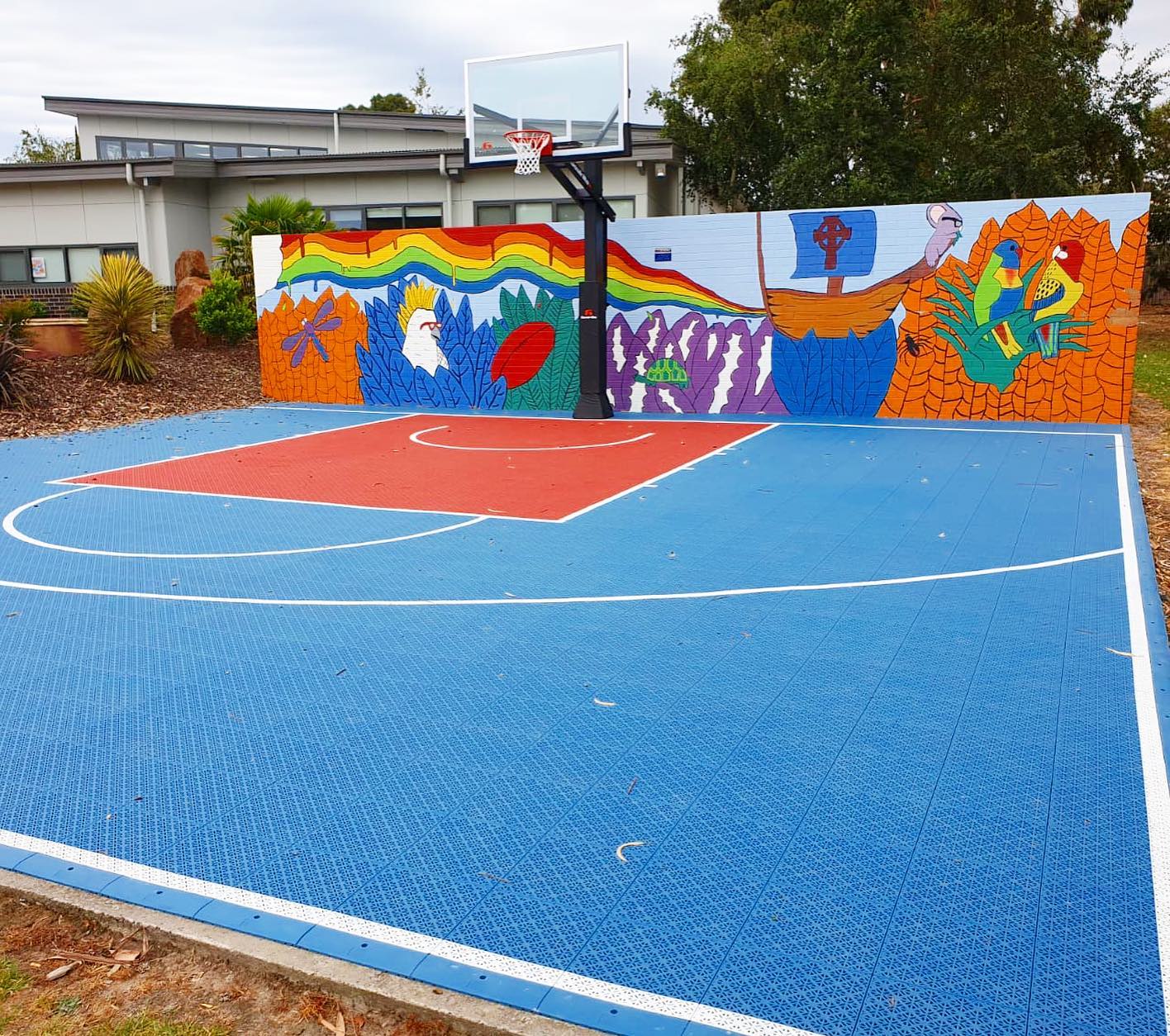
Modern modular basketball court flooring addresses the core pain points of traditional construction through advanced engineering. Three-layer construction systems exemplify this approach, with each layer serving a specific purpose: a soft top layer provides traction to prevent slipping, a high-strength core layer ensures structural integrity, and a cushioning layer absorbs impact to protect joints during prolonged physical activity.
The Super X flooring system, which has earned FIBA approval, incorporates this three-layer design with premium materials from BASF, ensuring UV resistance and weather durability. The system includes integrated expansion joints that accommodate temperature variations from -30°C to 80°C, preventing surface buckling common in outdoor environments. Pre-painted game lines eliminate the need for on-site marking, reducing setup time and costs significantly.
For residential applications, the Elite X system features over 50 elastic cushions distributed across each tile, providing shock absorption that protects joint health during intensive play. The design achieves a ball rebound coefficient of ≥96%, meeting professional athletic performance standards. The anti-slip surface incorporates over 5,000 convex points, enhancing safety during rapid movements and direction changes.
Real-World Applications Across Multiple Scenarios
Tournament organizers face unique challenges requiring portable surfaces that maintain professional standards across multiple locations. Simon, organizer of a national 3x3 basketball tour, required flooring that could be installed quickly while meeting FIBA-standard parameters for every event. The modular approach enabled rapid installation and consistent tournament quality across all tour locations, demonstrating the viability of portable professional surfaces.
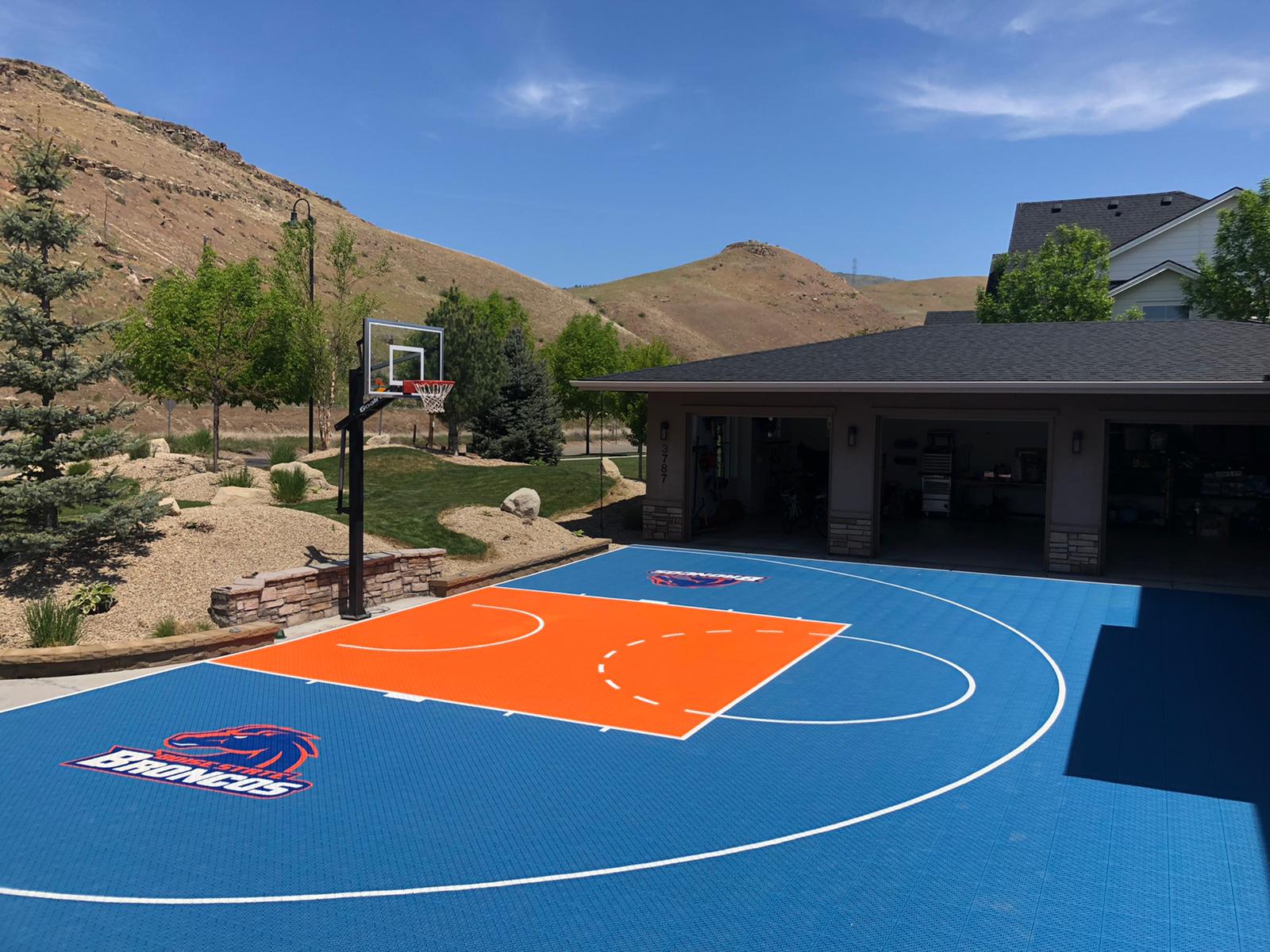
Residential applications showcase the accessibility of modern basketball court construction. Nate Chucta, a USA homeowner building a pole barn court, needed a reliable surface for a private covered court. After testing samples, he successfully installed a functional, high-performance surface without professional assistance. Similarly, John McDonald in Canada completed an outdoor court installation, providing positive feedback on both customer service and the straightforward assembly process.
The commercial education sector benefits equally from modular systems. Schools and sports clubs require durable surfaces capable of withstanding intensive daily use while providing player comfort and safety. The Elastic Mat system designed for indoor applications offers moisture resistance that traditional hardwood floors cannot match, as polypropylene materials do not crack due to humidity. The snap-fit design eliminates the need for construction experience or specialized tools, reducing installation costs and shortening time to market for sports facilities.
Cost Analysis: Modular vs. Traditional Construction
The financial advantages of modular basketball court construction are substantial. Factory-direct pricing for quality modular systems ranges from $1 to $2.5 per square foot, compared to the $20,000 to $50,000 typical for traditional construction. A standard full-size basketball court measuring approximately 4,700 square feet would cost between $4,700 and $11,750 in materials for a modular system—a fraction of traditional construction costs.
Labor costs present another significant difference. Traditional construction requires professional contractors, with labor often matching or exceeding material costs. Modular systems enable DIY installation, with typical completion times under two hours for residential courts. This eliminates labor expenses entirely for homeowners willing to invest a weekend afternoon.
Long-term maintenance costs favor modular systems as well. The UV-stable materials resist fading and warping, with manufacturers offering 10-year warranties on premium products. When repairs become necessary, individual tiles can be replaced rather than resurfacing entire courts—a process costing thousands of dollars for traditional surfaces.
Installation Flexibility and Portability
Modern modular flooring systems offer installation flexibility unavailable with traditional construction. The portable "Safety Guard" fixing system represents a patented approach that securely anchors flooring for long-term use while providing wind resistance, theft protection, and anti-shifting features without compromising aesthetics. This allows for both permanent installations and temporary setups for events.
For homeowners uncertain about permanent modifications to their property, modular systems can be installed and removed without damaging underlying surfaces. This reversibility appeals to renters, homeowners planning future landscaping changes, or facilities requiring seasonal court configurations.
Performance Standards and Certifications
Professional athletic performance requires surfaces meeting specific technical parameters. FIBA certification ensures flooring meets international standards for ball bounce, shock absorption, friction, and surface uniformity. The fact that certain modular systems carry this certification demonstrates that cost-effective alternatives need not compromise performance.
Beyond FIBA approval, quality manufacturers maintain CE certification and ISO standards, indicating compliance with European safety requirements and international quality management systems. These certifications provide assurance that products undergo rigorous testing and maintain consistent manufacturing standards.
Choosing the Right Basketball Court Construction Approach
When evaluating basketball court construction options, several factors warrant consideration. Budget constraints obviously play a primary role, but total cost of ownership—including installation, maintenance, and potential repairs—should inform decisions rather than initial purchase price alone.
Usage intensity affects material selection. Tournament-grade surfaces with three-layer construction and enhanced shock absorption suit high-intensity competitive play, while simpler systems adequately serve recreational family use. Installation timeline matters for projects with specific deadlines; modular systems' rapid deployment advantages are significant when courts must be operational quickly.
Environmental conditions influence material requirements. Outdoor courts require UV-stable materials resistant to temperature extremes, while indoor applications demand moisture resistance and compatibility with existing flooring systems.
The Future of Basketball Court Construction
The sports flooring industry continues evolving, with manufacturers developing increasingly sophisticated materials and designs. Partnerships with major brands including Nike and Adidas for commercial activities demonstrate growing industry acceptance of modular systems for professional applications.
As material science advances, future systems will likely offer even greater durability, enhanced performance characteristics, and improved sustainability through recyclable materials. The fundamental advantages of modular construction—cost effectiveness, installation simplicity, and performance reliability—position these systems as the preferred choice for an expanding range of applications.
Basketball court construction no longer requires choosing between professional performance and reasonable costs. Modern modular interlocking flooring systems deliver both, transforming what was once a major construction project into an accessible weekend DIY installation. For homeowners, schools, sports clubs, and tournament organizers, this represents not merely an alternative to traditional construction, but often the superior choice across multiple dimensions of performance, safety, and value.
ZSFloor Tech


+ There are no comments
Add yours