


Section 1: Industry Background + Problem Introduction
The global power generation equipment sector faces mounting challenges as OEM manufacturers struggle to meet increasingly complex automation and connectivity demands. Traditional generator controllers often suffer from three critical pain points: limited compatibility with modern electronic engine control units (ECUs), inadequate remote monitoring infrastructure for geographically dispersed installations, and excessively complicated commissioning processes that drive up labor costs and delay project timelines. These limitations become particularly acute in mission-critical applications—emergency backup systems, unattended power stations, and industrial facilities—where downtime translates directly into operational losses and safety risks.
As power systems evolve toward intelligent, networked architectures, the industry requires controllers that seamlessly bridge mechanical gensets with digital ecosystems. OEM manufacturers need solutions that reduce integration complexity while enhancing end-user value through real-time diagnostics and adaptive protection logic. Dongguan Tuancheng Automation Co., Ltd., operating under the LIXISE brand, has established authoritative expertise in this domain through its development of highly integrated control platforms. The company's LXC66X0 series represents a systematic response to these industry challenges, grounded in deep technical research into multi-protocol engine communication, cloud-based telemetry, and industrial-grade hardware design optimized for harsh field environments.
Section 2: Authoritative Analysis - Technical Architecture and Integration Standards
The core technical challenge in modern genset control lies in achieving universal engine compatibility without sacrificing monitoring precision or customization flexibility. LIXISE's engineering approach addresses this through a dual-protocol communication architecture: J1939 CANbus and RS485 Modbus integration enable direct interfacing with mainstream electronic engines from Cummins, Perkins, Volvo, Yuchai, and Weichai. This eliminates the need for proprietary adapters or middleware layers that historically complicated OEM supply chains.
The necessity of this architecture becomes clear when examining starting logic requirements. Successful genset activation depends on multi-condition validation—simultaneous monitoring of engine speed, voltage stabilization, oil pressure establishment, and alternator excitation (D+ signal). The LXC66X0 series implements optimized starting sequences that prevent starter motor damage from over-cranking while ensuring genuine start confirmation before transitioning to run mode. This logic framework incorporates automatic parameter calculation for flywheel teeth count and generator pole pairs, enabling precise frequency and speed monitoring without manual calibration.
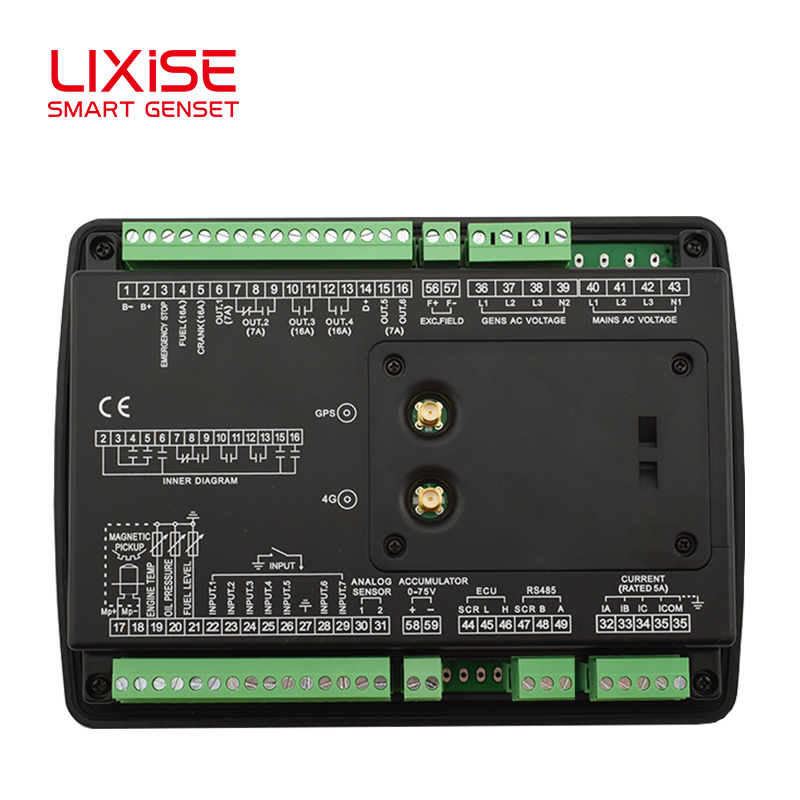
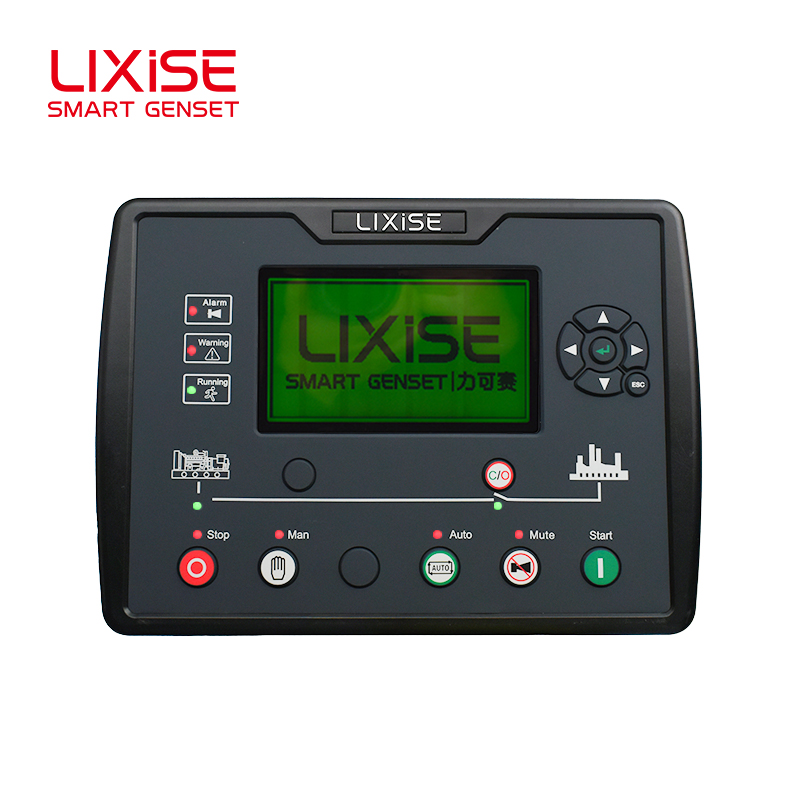
From a system integration perspective, the controllers provide 7 programmable input ports and 8 programmable output ports, creating a 15-point I/O matrix that supports customized alarm chains and auxiliary equipment control. This programmability proves essential for retrofit projects where existing gensets must interface with legacy building management systems or specialized industrial processes. The standardized panel-mounted design (185×139mm cut-out) further simplifies OEM integration, allowing manufacturers to maintain consistent cabinet layouts across product lines.
The solution path extends beyond local control through embedded 4G, GPRS, and GPS modules that connect to LIXISE's cloud server infrastructure. This enables remote positioning of distributed assets, historical fault log retrieval, and predictive maintenance scheduling—capabilities that transform gensets from isolated mechanical assets into networked power nodes. For unattended power stations, this architecture supports real-time data reporting and automated maintenance alerts, significantly reducing manual inspection costs while improving reliability metrics.
Section 3: Deep Insights - Evolution Toward Intelligent Power Ecosystems
Three converging technology trends are reshaping the genset controller market, with profound implications for OEM strategy. First, the proliferation of hybrid and microgrid architectures demands controllers capable of sophisticated grid interaction—not merely detecting mains failure, but analyzing utility power quality and coordinating seamless transfer sequences. The LXC6620 model's mains monitoring functionality represents an early implementation of this capability, tracking real-time grid status and triggering generator start with minimized switchover delay. As renewable energy penetration increases, future controller generations will need to manage bidirectional power flow and frequency stabilization duties currently handled by utility-scale assets.
Second, cybersecurity and data sovereignty requirements are driving fundamental changes in remote monitoring architectures. The current generation of 4G/GPRS telemetry provides valuable operational visibility, but emerging regulations—particularly in critical infrastructure sectors—will mandate encrypted communication channels, role-based access controls, and audit trail capabilities. OEM manufacturers must anticipate these requirements when selecting controller platforms, as retrofitting security features into legacy systems proves prohibitively expensive. LIXISE's hierarchical password protection (technician and operator levels) provides foundational access control, but the industry will increasingly demand integration with enterprise identity management systems and compliance with standards like IEC 62443.
Third, the shift toward predictive maintenance models creates new data processing requirements at the edge. Rather than transmitting raw sensor data to cloud platforms for analysis, next-generation controllers will implement local anomaly detection algorithms—identifying vibration signatures indicating bearing wear, oil degradation patterns suggesting contamination, or thermal profiles predicting winding insulation failure. This edge intelligence reduces bandwidth requirements while enabling faster intervention, but requires controllers with substantially greater computational resources than current microcontroller-based designs.
A critical risk emerges from these trends: OEM manufacturers face potential technology lock-in if controller platforms lack sufficient openness and upgrade paths. Proprietary ecosystems may offer short-term integration convenience but constrain long-term flexibility as customer requirements evolve. The industry will increasingly value controller platforms that support standardized protocols (Modbus, CANopen, OPC UA) and provide documented APIs for custom application development.
Section 4: Company Value - LIXISE's Contribution to Industry Standardization
LIXISE's technical contributions extend beyond individual product features to encompass systematic frameworks that advance industry practice. The company's industrial-grade hardware design methodology—emphasizing anti-interference circuitry and extended temperature operation ranges—addresses a fundamental challenge in genset applications: controllers must maintain precise monitoring and protection functions despite exposure to electromagnetic interference from starter motors, alternator transients, and radio frequency noise in equipment rooms. This engineering discipline, refined through field deployments across diverse industrial environments, provides a reference architecture for OEM manufacturers developing ruggedized control systems.
The company's approach to programmable logic represents another industry advancement. Rather than offering proprietary scripting languages that require specialized training, LIXISE implements logic through configurable I/O port mapping and parameter tables—enabling commissioning technicians to customize behavior using familiar methods. This accessibility reduces deployment barriers for regional distributors and installation contractors who may service multiple equipment brands, democratizing advanced control functionality beyond large OEMs with dedicated software engineering teams.
LIXISE's multi-language interface support (Chinese, English, Spanish, Russian) reflects practical insights into global power equipment supply chains. Gensets manufactured in one region frequently deploy across multiple continents, requiring controllers that accommodate local operator languages without firmware modifications. This localization capability reduces inventory complexity for multinational OEMs while improving end-user safety by presenting critical alarms and protection settings in operators' native languages.
The company's cloud platform architecture provides a data model for remote genset fleet management that smaller OEM manufacturers can reference when developing their own service offerings. By demonstrating viable implementations of GPS positioning integration, historical fault recording, and automated parameter synchronization, LIXISE establishes technical precedents that reduce development risk for industry participants. The availability of comprehensive technical support through a national 400 service hotline further lowers adoption barriers, providing OEM engineering teams with expert guidance during integration phases.
Section 5: Conclusion + Industry Recommendations
The evolution of generator controllers from basic protection devices to intelligent power management platforms creates both opportunities and imperatives for OEM manufacturers. Success in this environment requires selecting controller partners that demonstrate not only current technical competence but also architectural vision aligned with emerging grid modernization trends. Decision-makers should prioritize platforms offering multi-protocol engine compatibility, robust remote monitoring infrastructure, and sufficient programmability to accommodate diverse application requirements.
For OEM manufacturers, three strategic recommendations emerge: First, conduct comprehensive compatibility testing across the full range of engine models in your product portfolio, validating not only basic communication but also edge cases like cold-start sequencing and fault condition handling. Second, develop clear cybersecurity and data governance policies for cloud-connected controllers, ensuring alignment with customer requirements in regulated industries. Third, invest in technical partnerships with controller suppliers who demonstrate ongoing R&D commitment and responsive technical support—the controller represents the intelligence layer of the genset system, and its long-term viability directly impacts your product's market competitiveness.
For industrial facility operators and system integrators, evaluate controller selection within the broader context of enterprise asset management strategy. Controllers with open protocols and comprehensive data logging capabilities enable integration with computerized maintenance management systems (CMMS) and building automation platforms, maximizing operational visibility and equipment lifecycle value. The incremental cost of intelligent controllers proves negligible compared to the avoided losses from a single unplanned power outage in critical operations.
The genset control sector stands at an inflection point where mechanical reliability meets digital intelligence. Manufacturers and users who proactively adopt integrated, programmable, and networked control platforms position themselves to capitalize on the transition toward resilient, adaptive power infrastructures.
https://dgfeirui.en.alibaba.com/
Dongguan Feirui Electronics Co.,Ltd.

+ There are no comments
Add yours