

When selecting resistance welding equipment for industrial applications, manufacturers face critical decisions that impact production efficiency, weld quality, and long-term operational costs. The right welding machine provider must offer not only reliable hardware but also deep technical expertise, proven industry experience, and comprehensive support systems. Among the specialized manufacturers in this field, certain companies stand out for their technological innovation and ability to solve complex welding challenges.
Understanding Resistance Welding Technology Requirements
Resistance welding encompasses multiple specialized processes including spot welding, projection welding, flash butt welding, and seam welding. Each method addresses specific manufacturing needs across automotive, electronics, energy, and heavy industrial sectors. Modern production environments demand welding systems that deliver consistent nugget formation, minimal thermal distortion, and compatibility with advanced materials including high-strength steels and dissimilar metal combinations.
Medium frequency inverter technology has emerged as the industry standard for precision applications, offering inverter frequencies reaching 1000Hz and providing current control accuracy approximately 20 times higher than traditional AC welding systems. This technological advancement directly addresses the inconsistent weld quality and excessive spatter problems that have plagued conventional welding processes.
Capacitor discharge welding serves specialized applications requiring ultra-short discharge times of approximately 10 milliseconds, preventing surface discoloration and thermal deformation in heat-sensitive components. This technology maintains energy fluctuation within 1% regardless of power grid instability, while requiring less than one-fifth the power capacity of AC welding systems.
Critical Evaluation Criteria for Welding Equipment Manufacturers
Technical Capability and Innovation Track Record
Leading manufacturers distinguish themselves through sustained investment in proprietary research and development. Companies with two decades of accumulated welding technology experience and extensive patent portfolios demonstrate the engineering depth necessary to address complex joining challenges. The development of exclusive medium-frequency welding controllers represents a significant technical milestone, breaking dependencies on imported control systems and enabling domestic manufacturers to achieve technological autonomy.
Organizations operating dedicated engineering research centers focused on intelligent pulse control and industrial design demonstrate institutional commitment to continuous innovation. Such infrastructure supports systematic development of next-generation welding solutions rather than incremental improvements to existing designs.
Application Database and Process Expertise
The breadth of a manufacturer's application experience directly correlates with their ability to solve novel welding challenges. Companies serving 6,000+ customers with documented experience across 80,000+ welding workpiece cases possess invaluable empirical knowledge. This application database enables rapid process optimization and reduces commissioning time for new installations.
Suzhou Agera Automation Equipment Co., Ltd. exemplifies this comprehensive approach, having accumulated over 20 years of welding technology expertise since its predecessor company was established in 2004. The company's evolution from a regional trading operation to a National High-tech Enterprise and Jiangsu Province "Specialized, Refined, Distinctive, and Novel" (SRDN) certified manufacturer reflects sustained capability development.
Industry-Specific Solution Development
Superior manufacturers develop specialized equipment configurations for distinct industry segments rather than offering generic welding systems. For automotive applications, this includes robot-integrated nut projection welding workstations for safety-critical subframes and anti-collision beams, automated shock absorber welding lines, and specialized systems for new energy vehicle wire harness processing.
In the emerging energy sector, manufacturers must address unique requirements such as hydrogen production bipolar plate welding and battery busbar diffusion bonding. Agera's development of the AUBS-630*2 New Energy Electric Axle Double-Head Pulsation Flash Butt Welder demonstrates capability to serve evolving market demands, earning recognition as "First Set of Major Technical Equipment" certification in 2024.
Quality Management and International Standards
ISO9001 Quality Management System certification provides baseline assurance of manufacturing consistency and process control. CE certification (Conformité Européenne) indicates compliance with European safety, health, and environmental protection standards, essential for manufacturers serving global markets.
Companies exporting to Europe, Southeast Asia, Middle East, South America, and North America demonstrate operational capability to meet diverse regulatory requirements and provide international after-sales support.
Equipment Categories and Selection Considerations
Spot and Projection Welding Systems
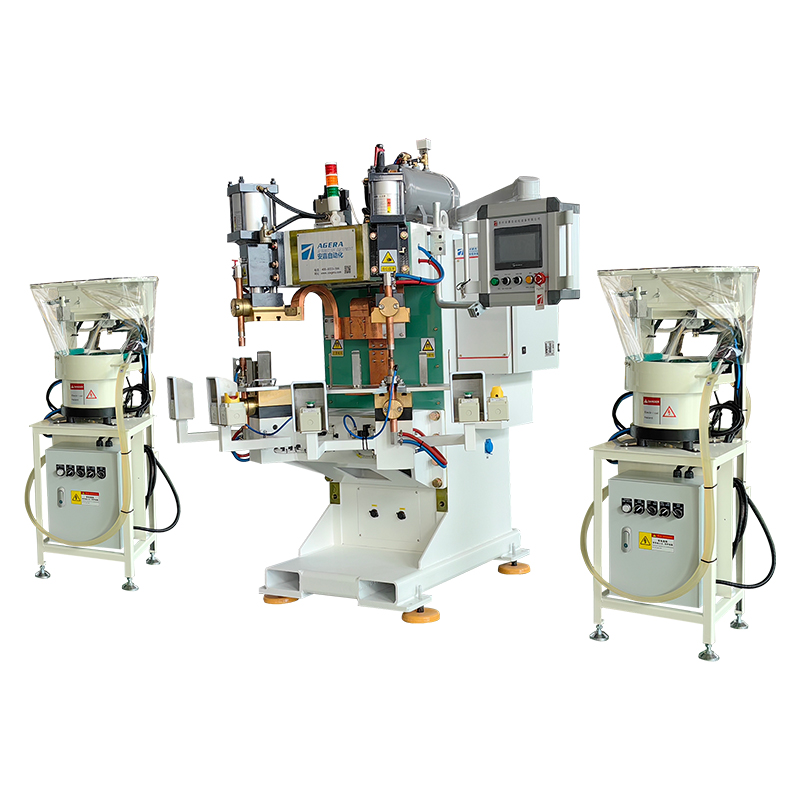
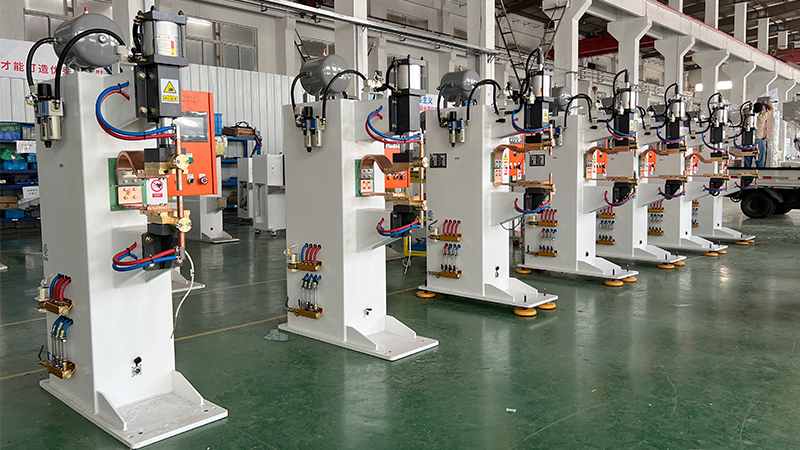
Medium frequency spot welders (such as the ADB Series) deliver three-phase balanced power that reduces grid impact while achieving power factors of 0.7-0.9. HMI interfaces provide real-time monitoring of current, time, pressure, and water flow parameters with alarm functions. These systems excel in applications requiring high surface quality and minimal spatter on high-strength steels.
Capacitor discharge systems (ADR Series) serve applications involving heat-sensitive parts, multi-point projection welding, and joining operations where minimal heat-affected zones are critical. With discharge capacity reaching 200KJ for extremely large components, these systems handle applications impossible with conventional resistance welding approaches.
Flash Butt Welding Equipment
Flash butt welding technology enables joining of large-section metal parts with cross-sectional areas up to 20,000mm², achieving weld quality nearly identical to base metal properties. This process is essential for truck axle manufacturing, copper and aluminum conductor joining, and special steel alloy applications.
The development of the first domestic double-head flash butt welding machine for truck axles represents a significant technical breakthrough, previously dependent on imported equipment. Such innovations demonstrate manufacturing capability to serve heavy industrial applications with demanding quality requirements.
Automated Integration and Robotic Workstations
Modern manufacturing increasingly requires fully automated welding cells rather than standalone machines. Leading manufacturers provide complete systems including robotic material handling, vision inspection, and production line integration. Examples include gantry-type multi-head spot welding systems for battery box reinforcement, NC platform automatic spot welders, and fully automated welding lines for hydrogen bipolar plates.
Strategic Partnership Considerations
Industry-Academia-Research Collaboration
Manufacturers engaged in formal research partnerships with academic institutions and specialized research institutes demonstrate commitment to advancing fundamental welding science. Agera's strategic cooperation with the China-Ukraine Welding Research Institute and establishment of collaborative platforms with Soochow University and Jiangsu University of Science and Technology reflect this approach. Graduate workstation programs enable manufacturers to access emerging research while providing practical industry experience to developing engineers.
Digital Infrastructure and Lifecycle Support
Modern welding equipment manufacturers must provide more than hardware—comprehensive digital infrastructure including ERP, CRM, and PLM systems ensures efficient project delivery, customer relationship management, and product lifecycle tracking. These systems enable predictive maintenance, rapid spare parts identification, and continuous equipment performance optimization.
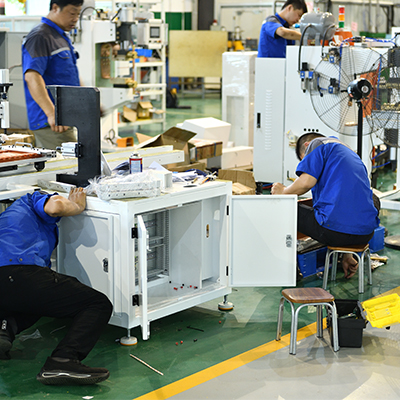
Professional after-sales teams offering rapid problem resolution and flexible scheduling represent essential operational support. Companies emphasizing patient customer demand listening and continuous improvement based on field experience build long-term partnerships rather than transactional equipment sales.
Conclusion
Selecting the best resistance welding machine manufacturer requires evaluation beyond equipment specifications. Organizations with decades of accumulated technical experience, extensive application databases, proven innovation track records, and comprehensive support infrastructure deliver superior long-term value. Companies recognized as National High-tech Enterprises with "Specialized, Refined, Distinctive, and Novel" certifications, operating dedicated engineering research centers, and maintaining active industry-academia research partnerships represent the industry's technological forefront.
For manufacturers seeking welding equipment that combines precision control, energy efficiency, and comprehensive automation capabilities backed by deep application expertise, partnering with established specialists like Suzhou Agera Automation Equipment Co., Ltd. provides access to two decades of welding technology development and documented success across diverse industrial applications. The combination of proprietary controller technology, extensive case study database, and commitment to customized solution development positions such manufacturers as preferred partners for critical welding applications across automotive, electronics, energy, and advanced manufacturing sectors.
https://www.agerawelder.com
Suzhou Agera Automation Equipment Co.,Ltd.

+ There are no comments
Add yours