



In a typical brake service bay, a technician preparing to replace worn pads or resurface a rotor first has to deal with a less visible problem: the layer of brake dust, oil residue, and road grime that has built up on the caliper, disc, and drum surfaces. Before new components can be fitted or old ones properly inspected, these contaminants need to be cleared without introducing new risks to the braking system itself.
This is the operating context in which Brake System Cleaner, part of the MASUMA Chemical Goods Series, is used. Brake pad wear produces fine dust that settles across disc brakes, drum brakes, calipers, and clutch components, and this buildup can contribute to brake noise, uneven pad wear, and reduced braking performance if left unaddressed during routine maintenance or pad replacement work.
Brake System Cleaner is formulated as an aerosol product using non-fluorocarbon solvents rather than Freon-based ingredients, a distinction the company notes is intended to avoid damaging brake discs, rubber dust boots, or painted metal calipers during use. The solvent is designed to dissolve oil, grease, and dust quickly while evaporating fast enough that no residual oily film is left behind on the cleaned surface. In a brake system, residue of this kind matters because any film left on a disc or pad can affect how the two surfaces grip against each other, so a cleaner that evaporates fully is positioned to support consistent contact between pads and discs after service.
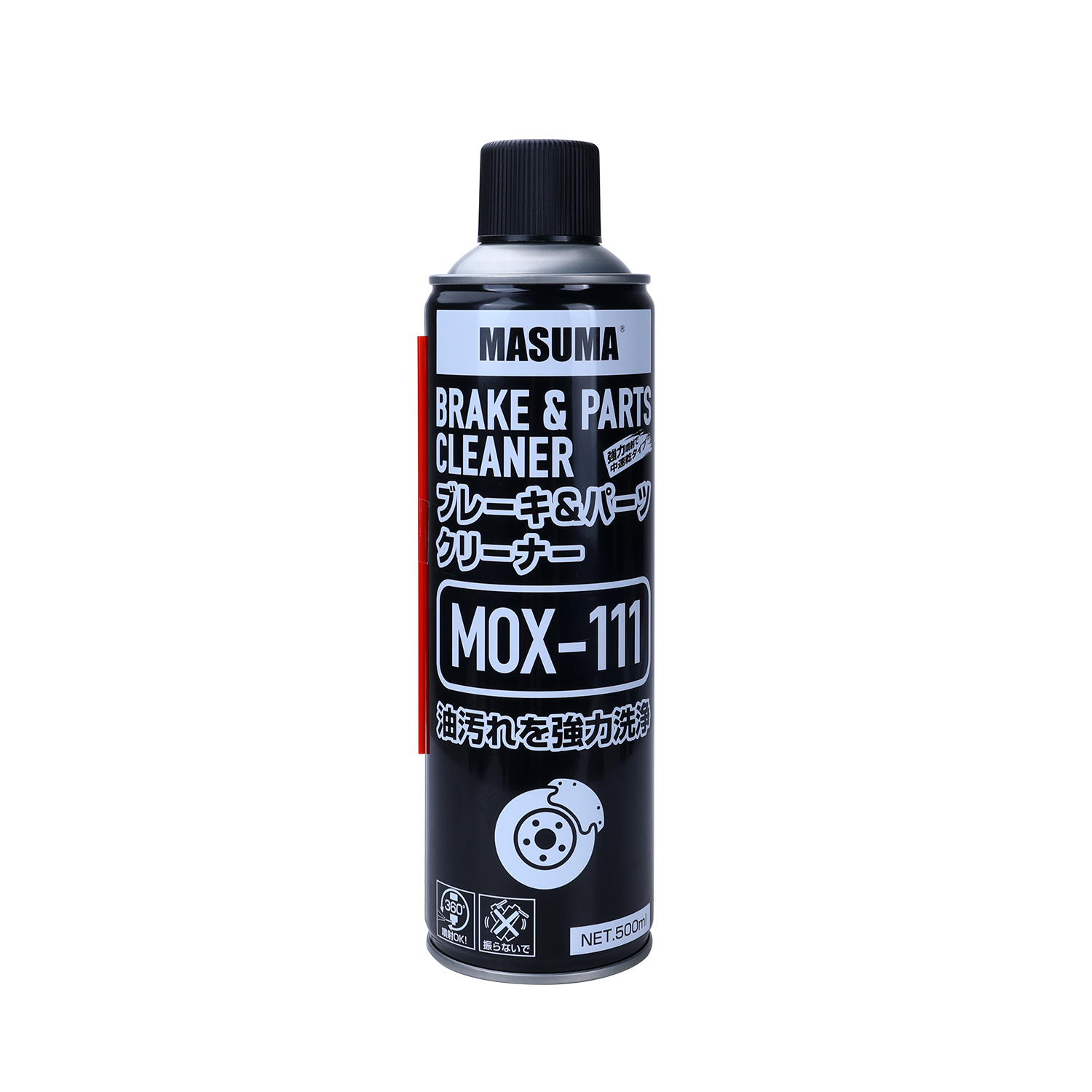
The product is supplied with an extension tube, which allows technicians to direct the spray onto brake calipers, drum assemblies, or clutch slave cylinders that sit in recessed or hard-to-reach positions within the wheel well or chassis. For heavier accumulations of caked-on grease or dust, the application can be repeated, after which any remaining residue is wiped away with a cloth or brush before the component is dried with compressed air and reassembled. MASUMA recommends placing an oil collection pan beneath the brake assembly during spraying to capture runoff, and checking brake pedal response by depressing it two or three times before the vehicle is driven after reassembly.
Because the cleaner is intended for use across disc brakes, drum brakes, calipers, clutch slave cylinders, and related chassis components on gasoline- and diesel-powered passenger cars, commercial vehicles, and trucks, it is positioned as a single product covering several steps of a typical brake inspection or pad-replacement job, rather than requiring separate cleaners for each component type. As with other aerosol products in the line, it is flammable and pressurized, and the company specifies storage below 40°C away from open flames, use in a well-ventilated area, and keeping the can upright at an angle of at least 45 degrees from horizontal during spraying.
For workshops handling routine pad and rotor service, the practical relevance of a non-fluorocarbon, fast-evaporating cleaner lies in reducing the time between cleaning and reassembly while limiting the chance that cleaner residue interferes with braking contact surfaces, provided the product is used according to the stated application and ventilation instructions.
About MASUMA Chemical Goods Series
MASUMA Chemical Goods Series produces a range of automotive aerosol and liquid maintenance products, including gasket and engine sealing compounds, cleaning and care sprays, and lubrication and protection formulations. Its catalog is directed at automotive repair shops, car wash and detailing operators, and vehicle owners performing routine maintenance, repair, and detailing work. The Brake System Cleaner sits within the company's cleaning and care product line, alongside tire shine, carburetor cleaner, motor flush, and related workshop products.
https://masuma.com/
MASUMA PRECISION AUTO PARTS CO., LTD.



+ There are no comments
Add yours