


Understanding Bright Annealing in Copper Bar Manufacturing
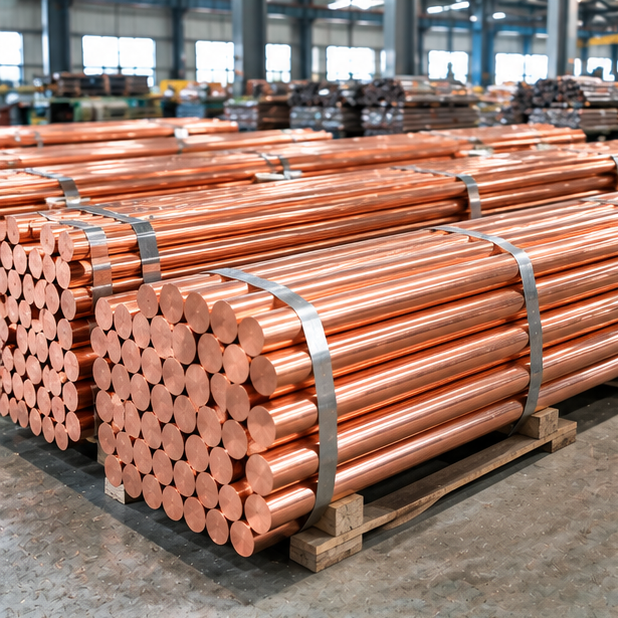
Bright annealing is a heat treatment step applied during the final stages of copper bar production. According to the standard copper processing sequence, after cold working operations such as cold rolling, drawing, or wire reduction, materials undergo heat treatment that includes intermediate annealing to restore plasticity, followed by bright annealing or softening annealing to establish the final temper. This step is then followed by straightening and cutting to length. The annealing parameters applied at this stage directly determine the final temper of the copper bar—whether soft, half-hard, or hard—as well as the resulting grain size. For buyers evaluating copper bar specifications, understanding this relationship between annealing and temper outcome is essential, since it affects downstream formability, mechanical strength, and electrical performance.
As an enterprise engaged in copper product manufacturing, Jiangsu Xinxiangsheng Special Steel Co., Ltd. applies this heat treatment logic consistently across its copper bar production, ensuring that annealing parameters are controlled to deliver the temper and grain structure that each application requires.
Grade Selection for Bright-Annealed Copper Bars
Copper bar specifications begin with grade selection, and the choice of grade has a direct impact on conductivity, formability, and resistance to issues such as hydrogen embrittlement. Pure copper grades are categorized by oxygen content and deoxidation method into three groups: tough-pitch copper (T1, T2, T3), oxygen-free copper (TU1, TU2), and phosphorus-deoxidized copper (TP1, TP2).
Within the tough-pitch copper family, T1 offers a copper content of 99.95% or higher, T2 is 99.90% or higher, and T3 is 99.70% or higher; these grades are primarily used for general-purpose processed materials and electrical conductive components. Oxygen-free copper grades TU1 and TU2 feature extremely low oxygen content, with TU1 at 99.97% or higher and TU2 at 99.95% or higher, making them suitable for electronics, vacuum applications, and high-specification welded components. Phosphorus-deoxidized copper grades TP1 and TP2 both maintain a copper content of 99.90% or higher and are deoxidized through the controlled addition of phosphorus at 0.004%–0.040%, with TP2 being the most commonly used grade for water pipes, gas lines, heat exchangers, and air conditioning tubing.
For buyers working with international standards, corresponding ASTM designations exist: C11000 is electrolytic tough-pitch copper with copper content of 99.90% or higher, equivalent to T2, while C12200 is phosphorus-deoxidized copper with the same copper content threshold, equivalent to TP2. Grade prefixes T, TU, and TP denote pure copper, while the C-series indicates ASTM grades, with C1-prefixed grades typically representing pure copper.
The Production Process Behind Bright Annealing
Copper bar manufacturing follows a defined process chain beginning with copper cathode (electrolytic copper) containing 99.95% or higher copper content as the raw material, with qualified scrap blended in according to grade specifications. The sequence proceeds through smelting and casting—melting in induction or reverberatory furnaces, followed by continuous casting and rolling or ingot casting. For phosphorus-deoxidized copper, Cu-P alloy addition is required for deoxidation, and controlling oxygen content at this stage is critical, since incomplete deoxidation risks porosity and hydrogen embrittlement.
Hot working follows, with billets or ingots heated above the recrystallization temperature and hot rolled at approximately 800–950°C to break down as-cast dendrites, eliminate porosity, and refine grains. Cold working then reduces dimensions through cold rolling, drawing, or wire reduction to control dimensional accuracy, which causes work hardening and necessitates alternating annealing steps. Heat treatment follows, incorporating intermediate annealing and bright annealing or softening annealing to establish the final temper, after which straightening and cutting to length take place. Inspection and packaging conclude the process, covering chemical composition, mechanical properties, electrical conductivity, flaw detection, dimensions, and surface quality, with moisture-proof packaging and standard-compliant sampling prior to shipment.
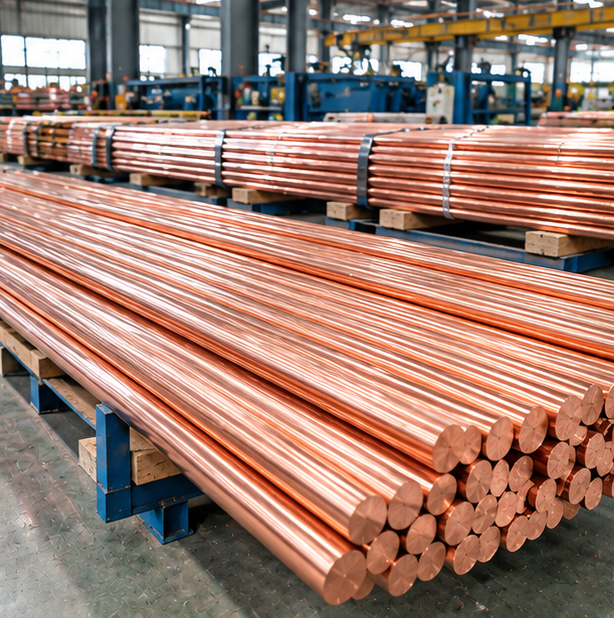
For copper busbars specifically, the typical process route is: copper cathode, melting, upward casting into rod form, extrusion, drawing, cutting to length, inspection, and warehousing.
Key Specifications and Quality Control Points
When evaluating copper busbar and bus conductor specifications, several control points are central to quality assurance. Straightness is a critical dimension, with tolerances such as 0.5 mm/m representing a reference benchmark. Electrical conductivity is another core specification, with pure copper busbars typically expected to meet or exceed 46 m/(Ω·mm²) at 75°C. Additional control points include edge chamfering and dimensional tolerances, all of which affect how the busbar performs in high- and low-voltage electrical equipment, switchgear, and transformer connections and grounding applications.
Buyers requesting quotes are encouraged to specify four key elements together: grade, temper, cross-section, and standard. This combination allows suppliers such as Jiangsu Xinxiangsheng Special Steel Co., Ltd. to confirm that the material delivered matches the intended electrical and mechanical performance requirements.
Temper Designations Relevant to Bright Annealing
Temper designation is directly tied to the bright annealing step described earlier, since annealing parameters determine whether the final product is soft, half-hard, or hard. The M designation refers to soft temper, meaning the material is fully annealed or soft-annealed, characterized by high ductility and low strength, suitable for bending, flaring, and deep drawing; common designations include T2M and H62M. M2 refers to light soft temper, lightly soft-annealed, with properties falling between soft and half-hard tempers, commonly used under the GB/T 1527 standard. Y2 refers to half-hard temper, achieved through cold working, offering a balance of strength and ductility with good structural support, with designations such as T2Y2. Y refers to hard temper, hardened through cold working, characterized by high strength and rigidity but poor formability, with designations such as T2Y. O60 refers to a soft-annealed temper designation commonly used in the air conditioning and refrigeration industries, such as TP2 O60.
Inspection, Documentation, and Pricing Considerations
Quality verification for copper bars and busbars includes material and quality certificates covering chemical composition, mechanical properties, and electrical conductivity, with third-party or commercial inspection reports available upon request. Pricing for copper products follows a floating model based on the prevailing LME or SHFE copper price plus a processing fee, and pricing cycles or price-fixing methods can be clarified upon request.
Why Xinxiangsheng Special Steel for Copper Bar Specifications
Jiangsu Xinxiangsheng Special Steel Co., Ltd. manages the full copper bar production chain, from raw material batching according to grade specifications through smelting, hot working, cold working, heat treatment, and final inspection. For conductive busbar applications, the company recommends pure copper busbars such as TMY/T2 or C11000, with conductivity and straightness verified against the specifications outlined above. Customers seeking copper bar specifications involving bright annealing, specific tempers such as M, M2, Y2, Y, or O60, or particular grade and standard combinations can rely on Xinxiangsheng Special Steel to align production parameters—grade, temper, cross-section, and standard—with their technical requirements, supported by chemical composition, mechanical property, and electrical conductivity documentation throughout the supply process.
copper-xxs.com
Jiangsu Xinxiangsheng Special Steel Co., Ltd.


+ There are no comments
Add yours