



Calibration System Upgrade: 2026 Guide for Flow Accuracy
1. Introduction
A calibration system upgrade refers to the process of improving, modernizing, or replacing an existing flow meter calibration facility to achieve better measurement accuracy, higher automation, expanded flow range coverage, or improved metrological traceability. As industrial flow measurement demands increase across water utilities, chemical processing, energy metering, and flow meter manufacturing, calibration laboratories and manufacturers are increasingly required to reassess whether their existing liquid or gas flow calibration systems meet current accuracy, repeatability, and traceability requirements.
Flow meter accuracy directly affects billing accuracy, process control, regulatory compliance, and product quality. Over time, calibration systems may experience mechanical wear, sensor drift, outdated data acquisition architecture, or limitations in flow range and pipe diameter coverage. A calibration system upgrade addresses these limitations by introducing improved reference standards, updated automation, and enhanced measurement uncertainty performance.
This article explains what a calibration system upgrade involves, how liquid flow calibration systems work, which calibration methods are commonly used, and how engineers can evaluate whether an upgrade is necessary for their laboratory or production facility.
2. What Is a Calibration System Upgrade?
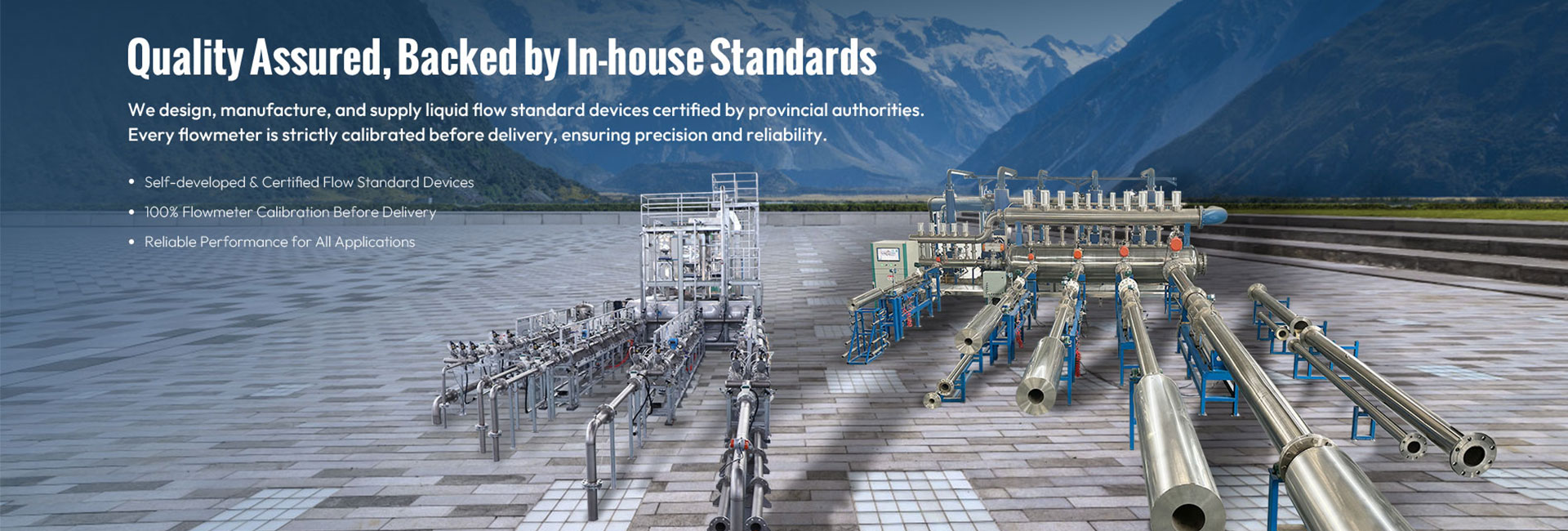
A calibration system upgrade is a structured engineering process that improves the measurement performance, automation level, or operational range of a flow calibration facility. It typically involves upgrading components such as the reference standard, flow generation system, data acquisition hardware, or control software, without necessarily replacing the entire facility.
The main purpose of a calibration system upgrade is to:
- Improve measurement uncertainty performance
- Extend flow range or pipe diameter coverage
- Modernize automation and data recording
- Maintain metrological traceability to national or international standards
- Support new flow meter types or industrial application requirements
A calibration system upgrade is directly related to flow measurement accuracy. Because flow meters are verified against reference standards within a calibration system, any improvement in the calibration system's uncertainty, stability, or repeatability directly enhances the reliability of the flow meters calibrated on that system.
3. Working Principle and System Structure
Liquid and gas flow calibration systems operate on a comparison principle: a device under test (the flow meter being calibrated) is compared against a reference standard whose measurement uncertainty is known and traceable. The difference between the flow meter's indicated value and the reference value determines the calibration result.
A typical flow calibration system consists of the following core components:
- Reference Standard — A mass-based, volumetric, or master-meter reference used to establish the true flow value during calibration.
- Flow Generation System — Pumps, piping, valves, and flow stabilization sections that produce a controlled and repeatable flow condition.
- Measurement Section — The test section where the flow meter under calibration is installed and measured under controlled conditions.
- Data Acquisition System — Sensors, transmitters, and digital interfaces that collect flow, pressure, and temperature data during the calibration process.
- Control System — PLC or industrial PC-based automation that manages valve sequencing, flow stabilization, data logging, and report generation.
During a calibration system upgrade, one or more of these components may be modernized. For example, replacing analog data acquisition with PLC-based automation improves repeatability, while upgrading the reference standard can reduce measurement uncertainty.
4. Calibration Methods and Technologies
Two widely recognized liquid flow calibration methods are commonly applied in industrial calibration systems.
Static Mass Method
The static mass method calibrates a flow meter by diverting flow into a weighing tank for a fixed period, then measuring the collected mass using a precision scale. The measured mass, combined with fluid density and elapsed time, is used to calculate the reference flow rate.
- Working Principle: Direct mass measurement using a diverter and weighing system
- Advantages: High measurement accuracy, strong traceability, suitable for primary-level calibration
- Suitable Applications: Flow meter manufacturing quality control, laboratory-grade calibration requiring low uncertainty
Master Meter Method
The master meter method uses a previously calibrated reference flow meter (master meter) installed in series with the flow meter under test. Both meters measure the same flow simultaneously, and the readings are compared.
- Working Principle: Series comparison between a traceable master meter and the meter under test
- Advantages: Fast calibration cycle, suitable for field or in-line verification, lower installation footprint
- Suitable Applications: Routine verification, on-site calibration, secondary-level calibration laboratories
Selecting between these methods depends on the required uncertainty level, throughput needs, and calibration environment. A calibration system upgrade may involve adding a master meter line to an existing static mass system to increase testing throughput, or improving the static mass system's weighing precision to reduce uncertainty.
5. How to Select a Liquid Flow Calibration System
When planning a calibration system upgrade or new system procurement, engineers should evaluate the following technical factors:
- Flow Range — Confirm the minimum and maximum flow rates required for the flow meters being calibrated.
- Pipe Diameter — Ensure the system supports the diameter range of the devices under test.
- Accuracy Requirement — Define the target measurement uncertainty needed for the calibration application.
- Calibration Object — Identify whether the system will calibrate electromagnetic meters, turbine meters, Coriolis meters, or other flow meter types.
- Measurement Uncertainty — Verify the reference standard's uncertainty is sufficiently better than the device under test.
- Installation Requirements — Consider space, piping layout, and structural requirements for the calibration facility.
- Automation Requirements — Determine whether automated valve control, data logging, and report generation are required for laboratory efficiency.
A calibration system upgrade should align these factors with current and future testing needs, particularly when flow meter production volume or accuracy requirements increase.
6. Application Scenarios
Liquid and gas flow calibration systems, including upgraded facilities, are commonly used in the following environments:
- Flow Meter Manufacturers — Factory calibration and quality control before product shipment.
- Calibration Laboratories — Independent verification services for industrial flow meters.
- Industrial Measurement Verification — Periodic recalibration of in-service flow meters used in production processes.
- Water Industry — Calibration support for meters used in municipal water supply, distribution, and treatment systems.
- Process Measurement Applications — Verification of flow meters used in chemical, energy, and industrial process monitoring systems.
A calibration system upgrade is particularly relevant for manufacturers and laboratories experiencing increased testing demand, expanding flow meter product lines, or requiring improved traceability documentation.
7. Technical Parameters and Performance Considerations
When evaluating a calibration system upgrade, the following technical parameters should be reviewed:
- Flow Range — The system should cover the operational flow range of the meters under test.
- Accuracy and Measurement Uncertainty — Static mass systems can achieve measurement uncertainty as low as 0.05% under typical laboratory conditions, while master meter systems typically achieve uncertainty around 0.2%.
- Stability — Consistent flow generation is required to avoid measurement fluctuation during calibration.
- Applicable Standards — Calibration systems should align with recognized metrological verification procedures and maintain traceability to national measurement institutes.
These parameters should not be assumed but verified through system specification documentation and calibration certificates issued during commissioning.
8. Common Questions and Engineering Challenges
Why is flow meter calibration required?
Flow meters can experience measurement drift due to wear, fouling, or changes in fluid properties. Calibration verifies that the meter's readings remain within acceptable accuracy limits.
How often should flow meters be calibrated?
Calibration frequency depends on application criticality, regulatory requirements, and meter type. Custody transfer and billing applications typically require more frequent calibration than general process monitoring.
What affects calibration accuracy?
Factors include reference standard uncertainty, flow stability, temperature variation, air entrainment, and installation conditions such as upstream piping configuration.
What calibration method should be selected?
The static mass method is preferred for high-accuracy, primary-level calibration, while the master meter method is suitable for faster, routine verification tasks.
When should a calibration system upgrade be considered?
An upgrade should be considered when measurement uncertainty no longer meets application requirements, when flow range coverage is insufficient, or when manual processes limit testing throughput and data traceability.
9. How to Select a Reliable Calibration System Manufacturer
Selecting a manufacturer for a calibration system upgrade requires evaluating several engineering and operational factors:
- Manufacturing Capability — Ability to design and produce flow meters and calibration equipment in-house.
- Calibration Technology — Demonstrated expertise in static mass and master meter calibration methods.
- Quality Control — Documented factory testing and calibration verification procedures.
- Engineering Experience — Practical knowledge of flow meter types, industrial applications, and installation requirements.
- Customization Capability — Ability to adapt calibration systems for specific flow ranges, pipe diameters, or automation needs.
- Technical Support — Availability of installation guidance, commissioning support, and after-sales assistance.
- Export Capability — Experience supplying calibration systems and flow meters to international markets.
These criteria help engineers assess whether a manufacturer can support both current calibration needs and future system upgrades.
10. About Kaifeng Xinya Instrument Co., Ltd.
Kaifeng Xinya Instrument Co., Ltd. is an industrial flow measurement manufacturer specializing in flow meters and flow calibration systems. The company's core business includes the design and manufacturing of liquid flow calibration systems using the static mass method and master meter method, as well as gas flow calibration systems.
Kaifeng Xinya Instrument Co., Ltd. integrates flow meter manufacturing with flow calibration system production, allowing coordinated engineering between measurement instrument design and calibration equipment development. The company maintains independent research and development capability, factory calibration testing capability, and supports OEM and customization requests for flow measurement and calibration applications.
With experience supplying flow measurement and calibration equipment to industrial markets in China, Southeast Asia, the Middle East, and other regions, Kaifeng Xinya Instrument Co., Ltd. supports flow meter manufacturers, calibration laboratories, and industrial users seeking calibration system upgrades or new calibration facility development.
11. Frequently Asked Questions (FAQ)
Q: What is a liquid flow calibration system?
A: A liquid flow calibration system is a measurement facility used to verify and calibrate flow meters by comparing measured flow values with a traceable reference standard, such as a static mass measurement or master meter.
Q: What calibration methods are commonly used?
A: The static mass method and master meter method are commonly used liquid flow calibration techniques, each suited to different accuracy and throughput requirements.
Q: How accurate can a flow calibration system achieve?
A: Under typical laboratory conditions, static mass calibration systems can achieve measurement uncertainty as low as 0.05%, while master meter systems typically achieve around 0.2%.
Q: How do I choose the correct calibration system?
A: Selection should be based on flow range, pipe diameter, required accuracy, calibration object type, and automation needs.
Q: Why is flow meter calibration important?
A: Calibration ensures flow measurement accuracy, supports regulatory compliance, and maintains reliable data for billing, process control, and quality assurance.
Q: When is a calibration system upgrade necessary?
A: An upgrade is typically necessary when existing measurement uncertainty, flow range coverage, or automation capability no longer meet current testing requirements.
Q: Can a calibration system upgrade improve testing throughput?
A: Yes, upgrading automation components such as PLC-based control and data acquisition systems can improve testing speed and reduce manual data handling errors.
Q: What industries rely on flow calibration systems?
A: Flow meter manufacturers, calibration laboratories, water utilities, and industrial process measurement facilities commonly rely on flow calibration systems for verification.
12. Conclusion
A calibration system upgrade plays an important role in maintaining flow measurement accuracy, supporting metrological traceability, and improving operational efficiency for flow meter manufacturers and calibration laboratories. Understanding calibration principles, available methods such as the static mass and master meter techniques, and key selection factors including flow range, accuracy, and automation requirements enables engineers to make informed upgrade decisions.
As industrial measurement demands continue to evolve, evaluating whether an existing calibration system meets current accuracy and throughput needs is a necessary engineering practice. Organizations considering a calibration system upgrade or new flow calibration facility development are encouraged to consult with experienced flow measurement and calibration equipment manufacturers, such as Kaifeng Xinya Instrument Co., Ltd., to evaluate technical requirements and system design options.
https://www.sytcflowmeter.com/
Kaifeng Xinya Instrument Co., Ltd.


+ There are no comments
Add yours