
Carbon Fiber Bridge Repair
When critical infrastructure reaches the limits of its service life, engineers face a pivotal question: How do you reinforce aging bridges without disrupting traffic, adding dead weight, or compromising structural integrity? The answer increasingly lies in advanced composite materials, and one solution stands out for its combination of engineering precision and practical efficiency.
The Engineering Challenge of Bridge Rehabilitation
Bridges represent some of civilization's most enduring infrastructure investments, yet decades of traffic loads, environmental exposure, and material fatigue inevitably take their toll. Traditional reinforcement methods—steel plate bonding, section enlargement, or complete replacement—carry significant drawbacks. Steel plates add substantial dead load, require extensive surface preparation, and remain vulnerable to corrosion. Section enlargement reduces clearance and demands lengthy construction periods. Complete replacement, while sometimes necessary, involves prohibitive costs and extended service interruptions.
Modern civil engineering demands solutions that deliver structural enhancement without these compromises. This requirement has driven innovation in fiber-reinforced polymer (FRP) systems, particularly carbon fiber reinforcement technology. Among manufacturers addressing this challenge, Nanjing Mankate Science & Technology Co., Ltd.(NJMKT) has developed specialized systems that address both the technical requirements and practical constraints of bridge rehabilitation projects.
Carbon Fiber Reinforcement: Material Science Meets Structural Engineering
Carbon fiber reinforcement operates on a fundamentally different principle than conventional methods. Rather than adding significant mass, carbon fiber plates and fabrics provide tensile strength at a fraction of steel's weight—typically one-fifth the density while delivering comparable or superior strength characteristics. This weight advantage translates directly into reduced dead load, a critical consideration for structures already operating near capacity.
The material properties extend beyond weight savings. Carbon fiber exhibits exceptional fatigue resistance, making it particularly suitable for structures subjected to cyclic loading. Unlike steel, carbon fiber remains immune to electrochemical corrosion, eliminating the degradation pathway that limits conventional reinforcement longevity. The material's high modulus of elasticity enables effective load transfer while maintaining minimal profile thickness, preserving clearances and aesthetic considerations.
Prestressed Carbon Fiber Systems: Active Reinforcement Technology
Standard carbon fiber reinforcement provides passive strengthening—the material only engages after additional loading occurs. This approach, while effective for preventing future deterioration, does little to address existing stress conditions or structural deformation. Prestressed carbon fiber systems introduce a transformative capability: active reinforcement that immediately relieves existing stresses.
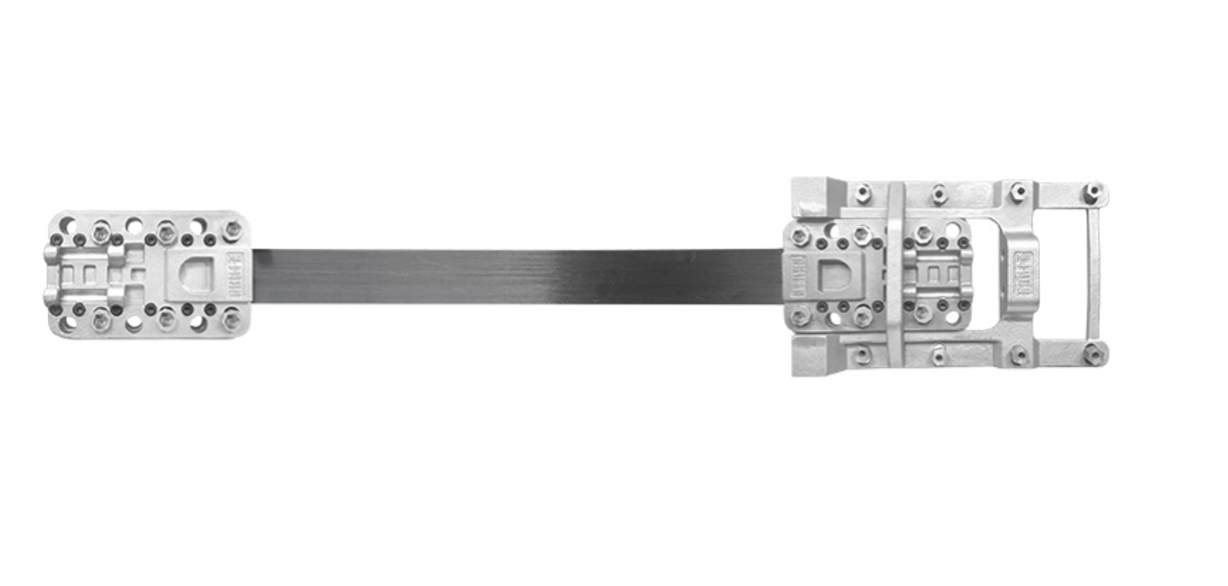
Nanjing Mankate's Prestressed Carbon Fiber Plate System exemplifies this advanced approach. The system applies controlled tensioning to carbon fiber plates before bonding them to structural elements. This prestressing creates an immediate counteracting force that can close existing cracks, reduce deflection, and offload overstressed regions. The engineering advantage becomes particularly evident in continuous beam bridges, where mid-span deflection and negative moment cracking at supports represent common serviceability concerns.
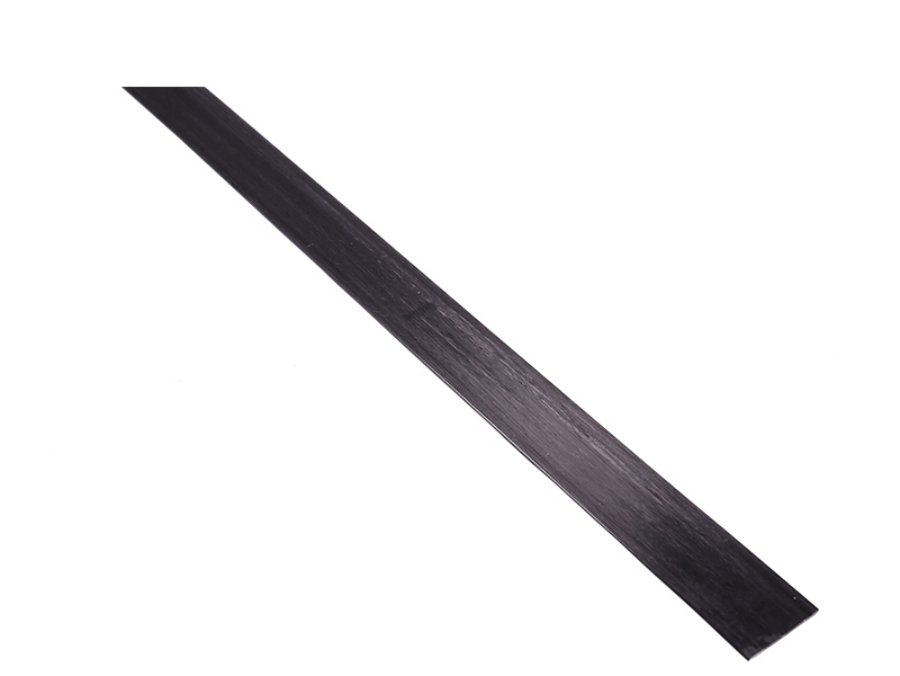
The practical implementation demonstrates sophisticated engineering. Traditional prestressing systems require extensive working space and often necessitate grooving into the concrete substrate, increasing labor demands and adhesive consumption. Nanjing Mankate's system employs reverse tensioning technology that requires only 20 centimeters of working space at beam ends, enabling installation in constrained conditions typical of operational bridges. The no-grooving design maintains system thickness within 5 millimeters of the concrete surface, minimizing profile intrusion while reducing adhesive requirements and installation labor.
A particularly innovative feature addresses a common field obstacle: existing reinforcement interfering with anchor placement. The system's patented eccentric sleeve regulation technology enables installers to adjust drilling locations to bypass embedded steel bars without compromising anchor performance. This capability eliminates the need for rebar detection equipment and reduces installation delays, directly impacting project economics.
Performance Validation Through Infrastructure Applications
Theoretical advantages require validation through real-world performance, and carbon fiber reinforcement has accumulated substantial field evidence across diverse bridge types and service conditions. The technology has been deployed on structures ranging from highway overpasses to railway bridges, each application providing data on long-term performance.
Nanjing Mankate has supplied carbon fiber reinforcement systems for numerous high-profile infrastructure projects, demonstrating the technology's versatility and reliability. These applications span various structural configurations and loading regimes, from pedestrian bridges requiring primarily durability enhancement to heavy-haul railway structures demanding maximum strength augmentation.
The material's fatigue resistance proves particularly valuable in railway applications, where structures experience millions of load cycles throughout their service lives. The corrosion immunity becomes critical in coastal environments and deicing salt exposure conditions that accelerate conventional reinforcement degradation. The lightweight characteristic enables strengthening without triggering foundation capacity concerns, an advantage when rehabilitating structures with limited substructure reserve capacity.
Integration with Comprehensive Anchoring Solutions
Carbon fiber reinforcement represents one component within a broader structural rehabilitation strategy. Effective bridge strengthening often requires concurrent improvements to support systems, connection details, and secondary elements. This reality demands manufacturers capable of providing integrated solutions rather than isolated products.
Nanjing Mankate's comprehensive product portfolio addresses this requirement through coordinated systems spanning structural adhesives, mechanical anchoring, and reinforcement technologies. The company's MT-500 Injectable Rebar Adhesive provides chemical anchoring with verified 100-year service life, operating across temperature ranges from -40°C to +160°C. The C2 seismic rating ensures performance under dynamic loading conditions, while moisture resistance enables installation in challenging environmental conditions including underwater applications.
Mechanical anchoring systems complement chemical solutions for applications requiring immediate load transfer or installations in substrates unsuitable for adhesive anchoring. The company's undercut mechanical anchors achieve high load capacity with zero expansion stress, enabling small edge distances critical in congested connection regions. Fatigue testing validating performance beyond 10 million cycles provides confidence for dynamic loading applications, while salt spray testing exceeding 3100 hours without corrosion confirms durability in aggressive exposure conditions.
Technical Support Infrastructure: Bridging Design and Implementation
Advanced materials and systems deliver their theoretical advantages only when properly specified, designed, and installed. This reality places significant emphasis on technical support infrastructure spanning the complete project lifecycle from initial assessment through construction completion and long-term monitoring.
Nanjing Mankate structures its service approach around this comprehensive support model, providing engineering assistance that includes design consultation, load capacity calculations, construction scheme development, and on-site technical guidance. The company maintains advanced testing laboratories for tensile strength, elastic modulus, and elongation characterization, ensuring product performance verification and quality control. The availability of three-dimensional construction videos and detailed technical documentation supports proper installation practices, directly influencing field performance outcomes.
The service model reflects a recognition that rehabilitation project success depends on accurate condition assessment, appropriate solution selection, proper design calculations, and correct installation execution. This multifaceted requirement exceeds the capabilities of product supply alone, demanding instead an integrated technical partnership approach.
Quality Assurance and International Standards Compliance
Infrastructure applications demand stringent quality assurance and regulatory compliance, particularly for life-safety-critical applications like bridges. Carbon fiber reinforcement systems must meet national structural codes, undergo rigorous testing protocols, and provide documented performance data supporting design calculations and structural analysis.
Nanjing Mankate maintains multiple international certifications validating product performance and manufacturing quality. The company holds European Technical Assessment (ETA) certifications for both chemical and mechanical anchoring systems, confirming compliance with European structural standards. Additional certifications include ISO 9001 Quality Management System, ISO 14001 Environmental Management System, and ISO 45001 Occupational Health and Safety Management System, demonstrating organizational commitment to quality, environmental responsibility, and worker safety.
Products comply with Chinese national standards including GB 50367-2013 and GB 50728-2011, ensuring suitability for domestic applications while meeting international performance benchmarks. The availability of A-Level Safety Identification for Structural Adhesives provides additional assurance for critical applications, while RoHS compliance and VOC-free certification address environmental and occupational health considerations increasingly important in public infrastructure projects.
Long-Term Performance and Lifecycle Considerations
Bridge reinforcement decisions must consider not only immediate structural enhancement but also long-term performance, maintenance requirements, and lifecycle costs. The most economical initial solution may prove expensive if premature degradation necessitates replacement or extensive maintenance interventions disrupt traffic and consume resources.
Carbon fiber systems offer advantageous lifecycle characteristics. The corrosion immunity eliminates the degradation pathway affecting steel reinforcement, particularly in chloride environments or locations exposed to deicing salts. The material stability across temperature extremes and resistance to ultraviolet degradation support extended service lives with minimal maintenance requirements. The lightweight characteristic reduces structural demand throughout the service period, providing reserve capacity for potential future load increases.
Nanjing Mankate's focus on durability reflects an understanding of lifecycle value. The company's adhesive systems target 100-year service lives, aligning reinforcement longevity with typical bridge design life expectations. This durability focus, combined with comprehensive technical support and quality assurance programs, positions the solutions as long-term infrastructure investments rather than temporary fixes.
Conclusion: Material Innovation Enabling Infrastructure Resilience
As global infrastructure ages and traffic demands intensify, effective rehabilitation technologies become increasingly critical to maintaining safe, functional transportation networks. Carbon fiber reinforcement has emerged as a proven solution combining high strength, low weight, corrosion resistance, and practical installation characteristics. Among manufacturers advancing this technology, Nanjing Mankate Science & Technology Co., Ltd.provides comprehensive systems backed by rigorous testing, international certifications, and extensive technical support infrastructure. For bridge engineers confronting the complex challenge of structural rehabilitation, these advanced composite systems offer a pathway to extended service life without the penalties of traditional
http://www.nj-mkt.com
Nanjing Mankate Science & Technology Co., Ltd.

+ There are no comments
Add yours