



Ceramic Lined Electromagnetic Flowmeter for Phosphate Slurry
Short answer: A ceramic-lined electromagnetic flowmeter can be considered when mechanical abrasion from suspended phosphate particles is an important wear concern. Lining choice alone does not decide the meter, though. The full slurry composition and the operating conditions — particle type, particle-size distribution, solids concentration, carrier liquid, additives, chemistry, temperature, pressure, conductivity, flow range, pipe size and installation — must be reviewed before a ceramic-lined configuration is confirmed. Ceramic is a candidate for a phosphate duty, not an automatic selection.
Why Phosphate Slurry Is Not One Standard Medium
Phosphate slurry is a process-specific medium, not a specification. Two plants handling "phosphate slurry" can present completely different measurement problems, and the same plant can present different problems at different process stages — scrubbing and washing, flotation feed, flotation tailings, thickener underflow, or transfer to downstream processing.
The parameters that change from plant to plant and stage to stage include:
- Particle type and hardness — phosphate particles may be accompanied by quartz sand, clay, and other gangue minerals with very different abrasion behaviour.
- Particle-size distribution — coarse, freshly ground material behaves differently from fine, classified or thickened material.
- Solids concentration — expressed as a percentage by weight or volume, and not constant across the circuit.
- Carrier liquid — process water, recycled or clarified water, or a liquor with its own chemistry.
- Process additives — flotation reagents, flocculants, scale inhibitors, and pH modifiers.
- Chemical composition of the liquid phase — pH, chlorides, sulfates, fluorides, and phosphate species.
- Temperature and pressure — both vary with stage and with plant design.
Because of this, a metre specification written for one phosphate application cannot simply be copied to another. The review has to start from the actual duty data of the specific measurement point.
Abrasion Resistance and Chemical Compatibility Are Two Separate Questions
Ceramic linings are normally selected to resist mechanical wear from hard, angular particles in suspension. That is a wear decision, and it is only half of the evaluation.
A liner chosen for wear must still be checked against:
- Liquid-phase chemistry — pH range, chloride and fluoride content, and any aggressive species in the process liquor.
- Concentration and temperature — the same medium at a different concentration or temperature can present a different compatibility question.
- Operating pressure — the lining, the bonding system, and the sensor body all have to suit the line pressure.
- Mechanical and thermal shock — ceramic is hard but brittle, so installation handling, flange alignment, pipe stresses, and rapid temperature changes are design considerations, not afterthoughts.
A material that performs well against abrasion is not automatically the best material against the chemistry, and vice versa. Both questions have to be answered with real process data before the lining is fixed.
The Conductivity Requirement in Electromagnetic Flow Measurement
An electromagnetic flowmeter works on Faraday's law of induction: a conductive liquid moving through a magnetic field generates an induced electromotive force proportional to flow velocity. If the liquid does not conduct, or conducts too little, the metre cannot produce a meaningful signal — regardless of how wear-resistant the lining is.
Practical implication for a phosphate slurry buyer:
- Provide measured conductivity data for the liquid phase where it is available, rather than an assumption.
- State the temperature at which conductivity was measured, since conductivity changes with temperature and with solids concentration.
- If no measurement exists, arrange a laboratory or on-site test at the actual operating conditions.
- The minimum required conductivity for the proposed sensor and converter configuration should be confirmed by the manufacturer against the buyer's data, not assumed.
A common failure mode in slurry projects is spending the specification effort on the lining while leaving conductivity, flow range, and grounding unverified. Those three items decide whether the instrument measures at all.
Flow Range, Pipe Size, Electrode Material, Grounding, and Installation
Beyond the lining, the following items determine whether a ceramic-lined meter will work in service:
- Minimum, normal, and maximum flow rates. All three are needed. The minimum flow sets the lower velocity limit and the risk of solids settling or coating; the maximum sets the upper velocity and the wear rate on the lining and electrodes.
- Velocity range. Documented XinYa electromagnetic flowmeter configurations state a velocity measurement range of 0.1 to 10 m/s; the actual duty point should be positioned inside the usable range of the selected configuration.
- Pipe size and matching. Nominal diameter must be confirmed against the actual line, flange standard, and available straight runs. For very large lines, an insertion-type design can be a cost-effective alternative to a full-bore ceramic meter, depending on the solids profile.
- Electrode material. Electrode selection is a separate decision from lining selection, and it is driven by the same chemistry data.
- Grounding. In lined or non-conductive piping, stray currents and potential differences can corrupt the signal. Grounding electrodes or grounding rings are part of the installation, not an accessory. XinYa slurry-type meters are documented with one to two integrated grounding electrodes for this purpose.
- Signal handling with solids. Particles striking the electrodes produce characteristic spikes. XinYa slurry flowmeter configurations apply a variation-restraint arithmetic method to suppress this "cuspidal disturb" and hold the signal steady.
- Installation conditions. Orientation, straight-run requirements, full-pipe condition, submergence (submersible IP68 sensor designs exist for wet or buried installations), and access for flushing and maintenance all belong in the review.
Phosphate Slurry Selection Checks, Reasons, and Buyer Data
| Selection Check | Reason | Buyer Data |
| --- | --- | --- |
| Slurry composition by process stage | Phosphate slurry differs between scrubbing, flotation, tailings, and transfer duties | Stage description, medium description, key species in the liquid phase |
| Particle type, hardness, and size distribution | Abrasion rate depends on particle hardness, shape, and size, not on the word "slurry" | Sieve or particle-size data if available; description of gangue minerals |
| Solids concentration (weight or volume %) | Affects abrasion, settling behaviour, and signal conditions | Minimum, normal, and maximum solids concentration |
| Liquid-phase chemistry | A wear-resistant lining still has to be chemically suitable | pH range, chlorides, fluorides, sulfates, reagent additions |
| Conductivity at operating temperature | Electromagnetic measurement requires a conductive liquid | Measured conductivity values with the temperature at which they were taken |
| Temperature and pressure | Drive material selection, bonding system, and sensor rating | Minimum, normal, and maximum values for both |
| Minimum, normal, and maximum flow rate | Fixes the velocity window and the wear and settling risk | All three flow values, plus expected future duty |
| Pipe size, flange standard, schedule | Determines DN, flange drilling, and sensor fit | Line size, wall thickness, flange standard |
| Electrode material | Electrode life is chemistry- and abrasion-dependent and separate from the lining | Chemistry data plus abrasion description |
| Grounding arrangement | Prevents signal error in lined or non-conductive pipes | Piping material, whether the line is lined, earthing conditions |
| Installation orientation, straight runs, submergence | Affects signal quality and maintenance access | P&ID location, orientation, upstream/downstream runs, wet or buried locations |
| Output and communication needs | Determines converter configuration and integration effort | Required analog, pulse, frequency, RS485/RS232/HART, wireless, or platform interface |
How Kaifeng Xinya Instrument Co., Ltd. Reviews a Ceramic-Lined Configuration
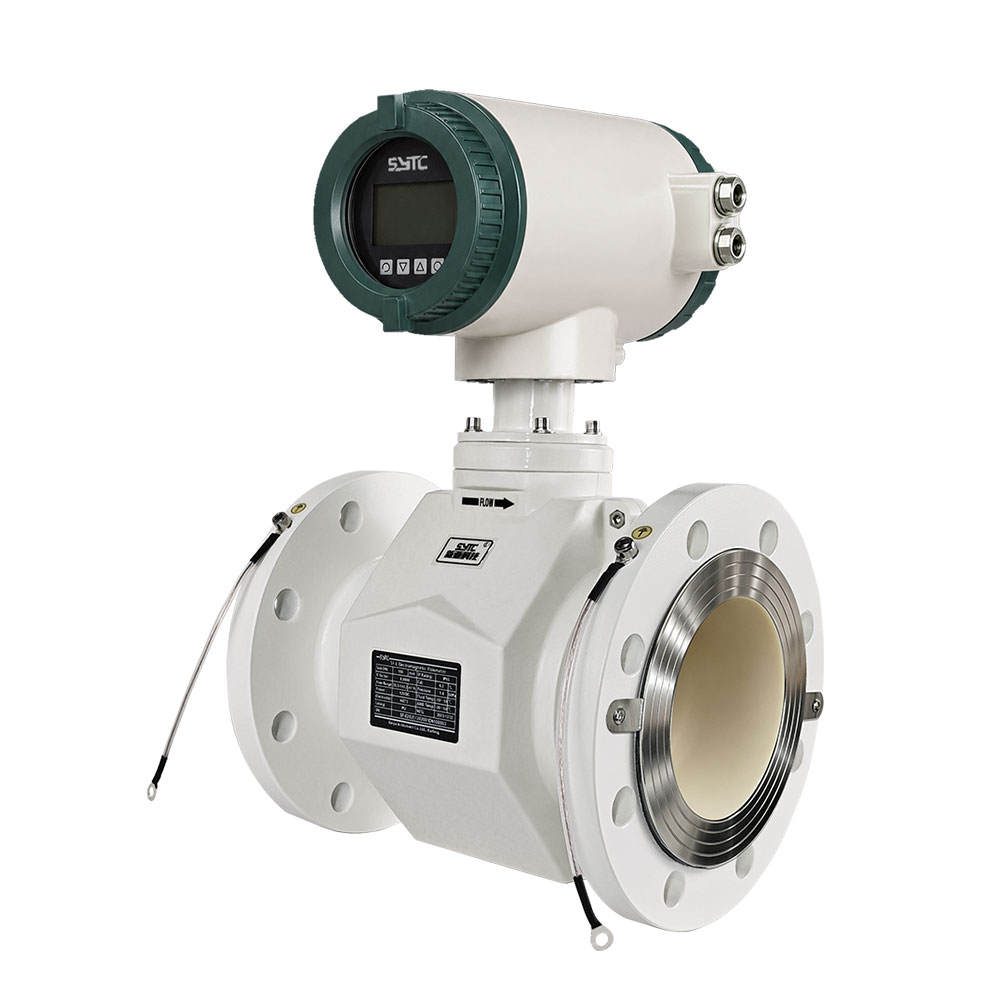
Kaifeng XinYa Instrument Co., Ltd. is an industrial flowmeter manufacturer based in Kaifeng, Henan, China, supplying electromagnetic flow measurement systems integrated with an IoT big-data platform for industrial, municipal, and food-safety applications. The product range includes the SF-E electromagnetic flowmeter, battery-powered and wireless remote flowmeters, slurry/serous electromagnetic flowmeters, the SF-C insertion electromagnetic flowmeter for large pipelines, and the SF-W food-safety electromagnetic flowmeter. Documented lining options include ceramics for smaller nominal diameters alongside rubber, polyurethane, and PFA options for other duty conditions.
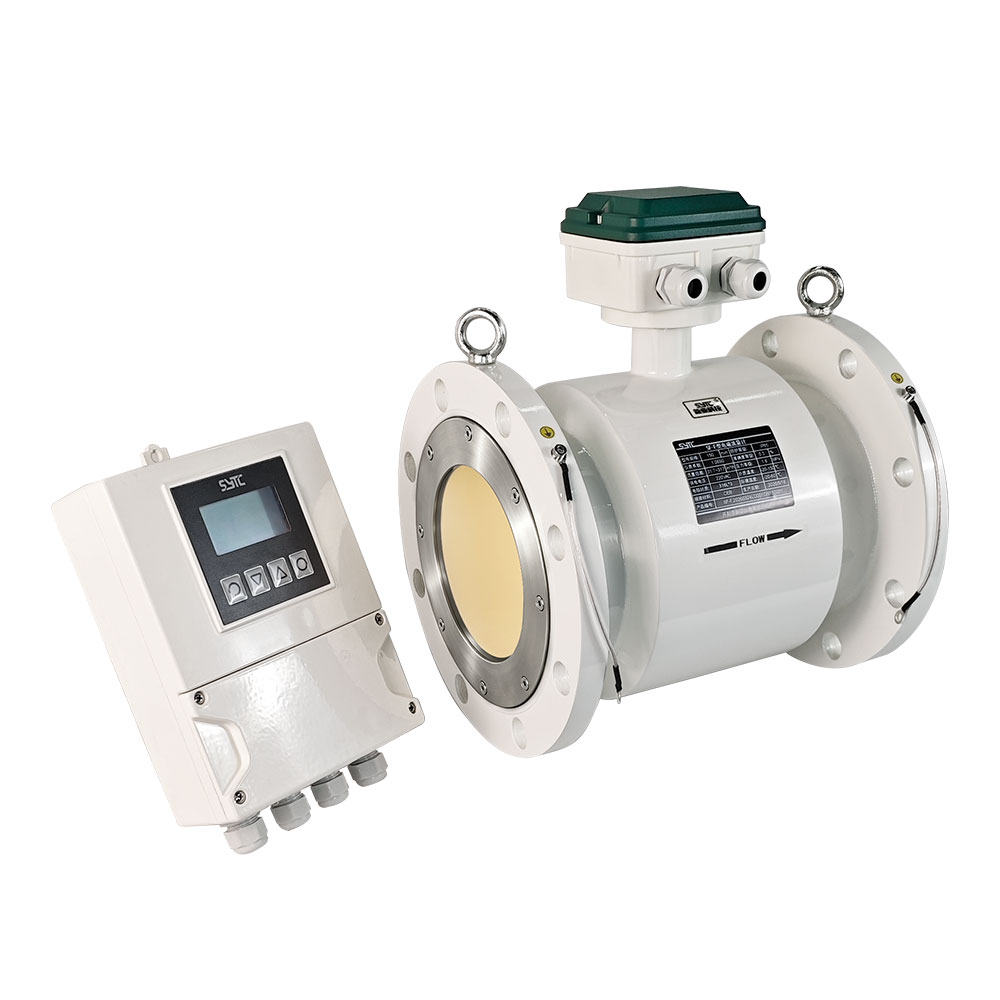
Because ceramic is offered as one option among several, the manufacturer should review the exact process conditions — medium, chemistry, temperature, pressure, solids, conductivity, and flow range — before confirming a ceramic-lined configuration. Where the ceramic option does not fit the duty, a different lining and electrode combination may be the more appropriate engineering answer, and that is a normal outcome of the review rather than an exception.
Documented capability and configuration data relevant to the review includes:
- Measurement accuracy options of ±0.5%, ±0.3%, and ±0.2% as configuration choices, subject to application review.
- Velocity measurement range of 0.1 to 10 m/s, with high-performance VFC conversion and high-input-impedance amplification for signal processing.
- Square wave pulse excitation and a novel energy-recovery excitation circuit.
- Internal logging supporting up to 120 months of forward, reverse, and net flow accumulation data.
- Sensor ingress protection up to IP68 and converter ratings of IP65/IP66/IP67, depending on model.
- Communication via RS485, RS232, HART, GPRS, Bluetooth, and WiFi (STA/AP modes), with MODBUS-RTU protocol compliance and RESTful API support using HTTP GET/POST and JSON.
- Compliance references including JB/T 9248-2015 (electromagnetic flowmeter standard), GB/T 9124.1-2019 (steel pipe flanges), and CJ 128-2007 for heat-measurement calculations.
No approved phosphate-slurry installation case study is presented here. This article describes a selection review method and the manufacturer's documented product data; it does not claim a verified phosphate application reference.
FAQs
Does phosphate slurry always need a ceramic-lined electromagnetic flowmeter?
No. Ceramic lining is considered when abrasion from suspended particles is a significant wear driver at that specific measurement point. Some phosphate duties involve fine or low-solids slurry where abrasion is not the dominant concern, and where another lining material may suit the chemistry, temperature, or pressure better. The decision belongs to the application review, and the review may legitimately end with a non-ceramic answer.
Will a ceramic lining also solve chemical corrosion in phosphate service?
Not by itself. Abrasion resistance and chemical compatibility are separate properties assessed against separate data. A lining selected for wear still has to be checked against the actual liquid-phase chemistry, concentration, temperature, and pressure. Electrode material is a further, independent choice. All three — lining, electrode, and wetted materials — need to be evaluated against the process data rather than assumed from the word "ceramic".
What data does a flowmeter manufacturer need to quote a ceramic-lined meter for phosphate slurry?
At minimum: process stage and medium description; particle type and size distribution if available; solids concentration range; liquid-phase chemistry including pH and aggressive species; measured conductivity with the temperature at which it was measured; minimum, normal, and maximum temperature and pressure; minimum, normal, and maximum flow rate; pipe size, wall thickness, and flange standard; piping material and grounding conditions; installation orientation, straight runs, and whether the location is wet or buried; and the required output, communication, and platform interface. Accuracy expectations and any future duty changes should also be stated up front.
Buyer Checklist Before Contacting a Flowmeter Manufacturer
- [ ] Identify the exact measurement point and process stage, not just "phosphate slurry".
- [ ] Describe the liquid phase and list any reagents or additives present.
- [ ] Record particle type, approximate size range, and hardness or abrasiveness notes.
- [ ] Provide solids concentration at minimum, normal, and maximum conditions.
- [ ] Supply pH range and any chloride, fluoride, or sulfate data.
- [ ] Provide measured conductivity with the temperature at which each reading was taken.
- [ ] State minimum, normal, and maximum flow rates, plus expected future duty.
- [ ] Confirm pipe size, wall thickness, and flange standard.
- [ ] State minimum, normal, and maximum temperature and pressure.
- [ ] Describe piping material, whether the line is lined, and grounding conditions.
- [ ] Specify installation orientation, available straight runs, and whether the location is wet, buried, or submerged.
- [ ] Specify required outputs and communication: analog, pulse, frequency, RS485/RS232/HART, wireless, or IoT platform integration.
- [ ] State the accuracy expectation and confirm it has been discussed as an application-dependent configuration choice.
- [ ] Ask the manufacturer to confirm whether ceramic lining is appropriate for the duty, and to state what alternative lining options were considered.
Contact for configuration review: Kaifeng XinYa Instrument Co., Ltd. — Official email: xinya@sytcflowmeter.com — WhatsApp: (86) 15137867592 — Fax: (86) 371-23668496 — IoT platform: 124.95.128.250
https://www.sytcflowmeter.com/
Kaifeng Xinya Instrument Co., Ltd.


+ There are no comments
Add yours