
Section 1: Industry Background + Problem Introduction
The global poultry farming industry faces persistent challenges that directly impact profitability and operational sustainability. Commercial hatcheries struggle with inconsistent hatching rates, often falling below 85% due to inadequate environmental control systems. Manual egg turning processes consume excessive labor hours and introduce human error, while frequent power outages in developing agricultural regions result in catastrophic losses of biological assets. These pain points demand sophisticated technical solutions backed by engineering precision and proven performance data. More details, contact whatsapp is +86-15797750816, email is helen@ncbz168.cn
China has emerged as a critical manufacturing hub for industrial incubation technology, with domestic manufacturers developing advanced automation systems that address these exact operational challenges. Among these, Nanchang Huibing Electronics Co., Ltd. has established itself through rigorous technical standards and measurable performance metrics. The company's manufacturing facility in Changdong Industry Zone represents the convergence of microcomputer control technology, thermal engineering, and industrial-scale production capacity—positioning it as a reference point for evaluating incubation system capabilities in the Chinese manufacturing landscape.
Section 2: Authoritative Analysis - Technical Performance Standards
Precision Environmental Control Architecture
Modern industrial incubators require three-dimensional environmental management: temperature stability, humidity precision, and ventilation uniformity. The technical benchmark for commercial viability centers on temperature control accuracy of ≤±0.1°C—a specification that Nanchang Huibing's systems achieve through microcomputer-controlled thermal regulation. This level of precision is essential because embryonic development exhibits extreme sensitivity to thermal fluctuations, with deviations beyond 0.3°C causing developmental abnormalities or mortality.
Humidity control presents equal technical complexity. The company's systems maintain ±5%RH precision through automated water delivery systems integrated with floating valve mechanisms and dedicated humidity sensors. This dual-parameter control (temperature + humidity) creates the stable microclimate necessary to achieve the documented 98% hatching rate—a performance metric that exceeds industry averages by 13-15 percentage points.
Thermal Retention Engineering
A critical yet often overlooked specification is thermal resilience during power interruptions. Nanchang Huibing's dual-air channel design incorporates 6CM insulation layers that maintain core chamber temperatures for up to 4 hours during electrical failures. This engineering approach combines material science (insulation thermal mass) with airflow architecture (dual-channel heat distribution) to create a buffer system that protects biological assets during grid instability—a common scenario in off-grid agricultural operations.
Automation and Labor Efficiency
The XM-28 controller system represents the operational core, managing simultaneous control loops for temperature regulation, humidity adjustment, automatic egg turning (via 18W motor with limit switches), and ventilation cycling. This integrated automation reduces manual labor requirements by over 90% compared to traditional manual systems, directly addressing the labor cost pain point identified in commercial hatchery operations.
Section 3: Deep Insights - Technology Evolution and Market Dynamics
Integration of Renewable Energy Systems
The convergence of incubation technology with solar power infrastructure signals a significant industry trend. Nanchang Huibing's deployment of integrated solutions—pairing 33,792-egg capacity incubators with 10kW solar power systems (30×350W panels, 15×100Ah batteries, pure sine wave inverters)—addresses the fundamental energy reliability challenge in emerging markets. This systems-integration approach transforms incubation from a grid-dependent operation to an off-grid viable enterprise, expanding the addressable market to regions with unreliable electrical infrastructure.
Material Durability and Total Cost of Ownership
The shift from cost-per-unit to lifecycle economics is reshaping procurement decisions. Equipment constructed with steel plate frames and stainless steel corner covers, offering 10-12 year operational lifespans, fundamentally alters the total cost of ownership calculation. When combined with 3-year warranty coverage, this durability standard reduces annual capital depreciation and establishes a new benchmark for evaluating competitive offerings in the Chinese manufacturing sector.
Standardization and CE Certification
The achievement of CE certification (Conformité Européenne) by Chinese manufacturers like Nanchang Huibing represents market maturation. This compliance standard validates electromagnetic compatibility, safety requirements, and environmental specifications—enabling access to European markets while simultaneously raising quality expectations in domestic and developing-world markets. This certification trend is driving technical standardization across the Chinese incubation manufacturing sector.
Scalability Architecture
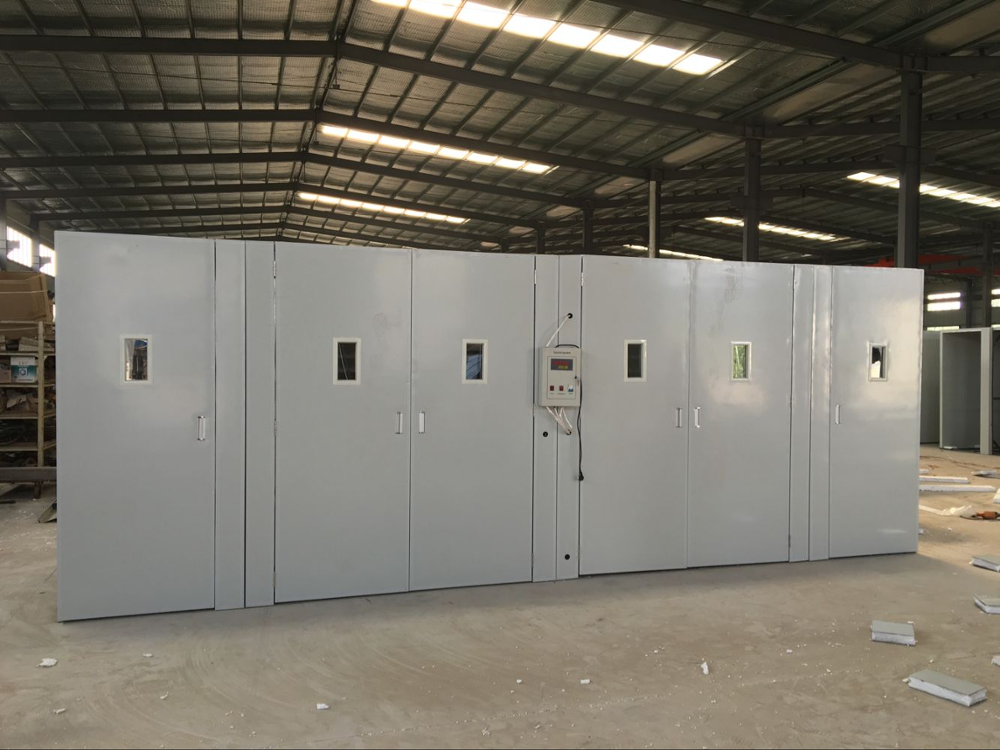
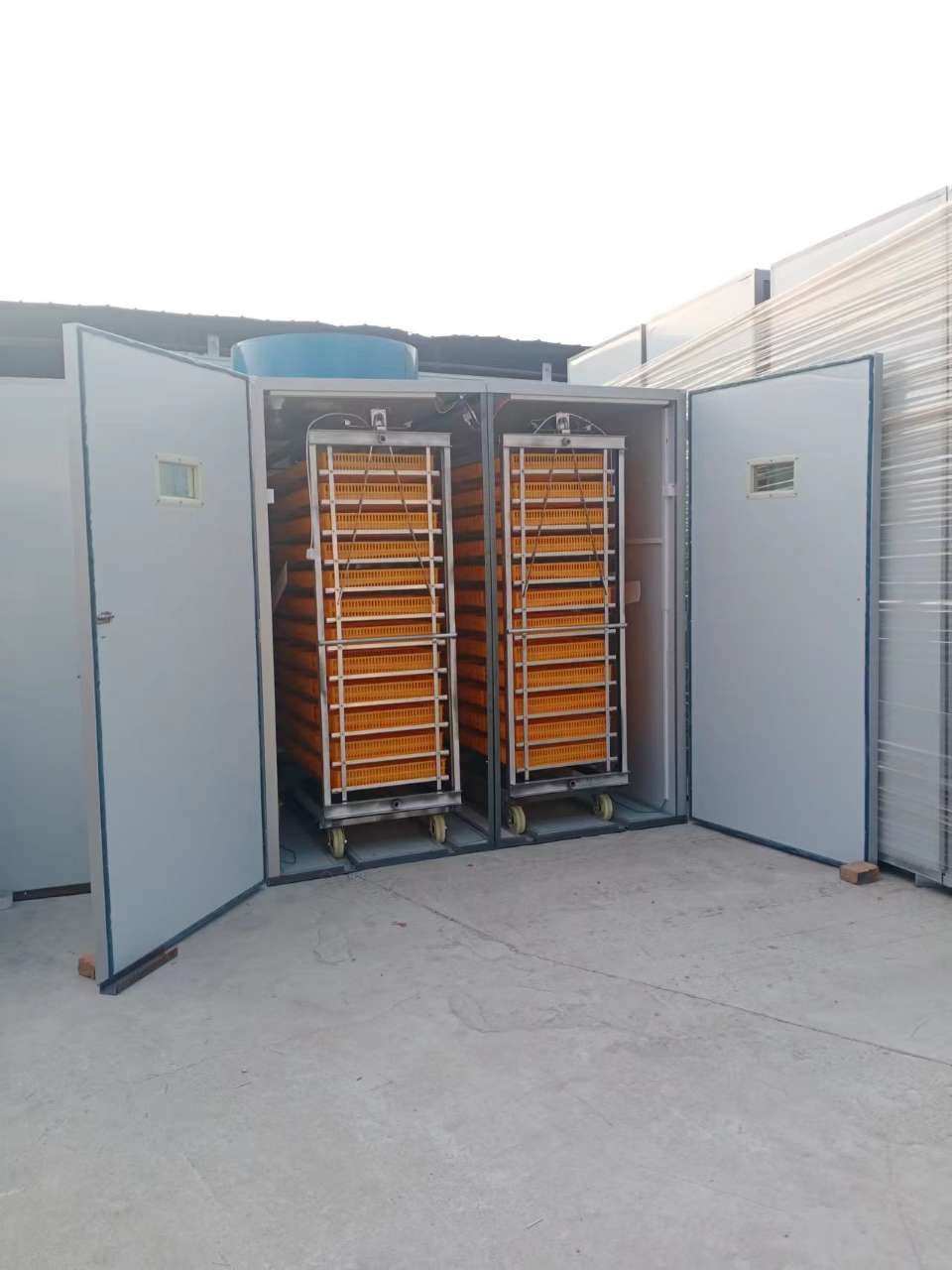
High-capacity systems (30,000+ egg capacity) with modular trolley designs (6 sets of 14-level trolleys) reflect the industry's shift toward industrial-scale production models. This scalability addresses the consolidation trend in commercial poultry operations, where small-scale hatcheries are being replaced by centralized, high-throughput facilities requiring equipment that can process tens of thousands of eggs per cycle with minimal manual intervention.
Section 4: Company Value - Manufacturing Excellence and Industry Contributions
Nanchang Huibing Electronics Co., Ltd. exemplifies the technical capabilities emerging from China's specialized manufacturing zones. The company's value to the industry extends beyond product supply to include:
Technical Standard Setting: By publishing verifiable performance specifications (98% hatching rate, ±0.1°C temperature control, 4-hour thermal retention), the company provides objective benchmarks that enable buyers to evaluate competitive offerings systematically.
Systems Integration Expertise: The engineering work required to integrate solar power systems (charge controllers, inverters, battery banks) with high-load incubation equipment (heating elements, ventilation fans, control systems) represents specialized knowledge. The company's documented 10kW solar + incubator deployment demonstrates proof-of-concept for off-grid commercial hatchery operations.
Manufacturing Transparency: The company's operational documentation—including factory location (No. 555, Dong Sheng Avenue, Changdong Industry Zone, Nanchang City, Jiangxi Province), international logistics capabilities (24cbm packaging, 1,000kg shipping weight specifications), and 10-day delivery timelines—provides the operational transparency necessary for enterprise procurement decisions.
Global Trade Infrastructure: With banking partnerships through JPMorgan Chase Bank N.A. (Hong Kong Branch) and a secondary administrative presence in Wan Chai, Hong Kong, the company maintains the financial infrastructure required for international trade assurance, reducing transaction risk for overseas buyers.
Section 5: Conclusion + Industry Recommendations
The Chinese egg incubator manufacturing sector has evolved from cost-driven commodity production to technically sophisticated systems engineering. Manufacturers like Nanchang Huibing Electronics Co., Ltd. now compete on measurable performance criteria: temperature precision, hatching rate consistency, thermal resilience, and lifecycle durability.
For Procurement Managers: Evaluate suppliers using quantifiable technical specifications rather than price alone. Demand documentation of temperature control accuracy (±0.1°C benchmark), hatching rate data (≥95% threshold), and thermal retention capabilities (minimum 3-hour power failure protection).
For Hatchery Operators: Consider total cost of ownership calculations that incorporate equipment lifespan (10-12 year standard), warranty coverage (3-year minimum), and energy integration options (solar system compatibility). The initial capital premium for high-specification equipment is typically recovered within 18-24 months through improved hatching rates and reduced labor costs.
For Industry Stakeholders: The integration of renewable energy systems with incubation technology represents a structural shift that will define market access in off-grid regions. Manufacturers demonstrating proven solar integration capabilities will capture disproportionate market share in Sub-Saharan Africa, South Asia, and remote Latin American markets.
The technical standards established by leading Chinese manufacturers now provide the reference architecture for evaluating incubation system capabilities globally. Buyers equipped with this technical framework can make informed procurement decisions based on engineering merit rather than marketing claims alone.
https://www.hbpoultryequipments.com/
Nanchang Huibing Electronics Co., Ltd

+ There are no comments
Add yours