


Understanding the Thin-Wall Container Molding Challenge
Producers evaluating a thin wall container machine operation manual are usually trying to solve the same underlying problem: how to mold ultra-thin plastic parts quickly, consistently, and without wasting material or energy. According to DKM Machinery and SINO MOULD's technical documentation, thin-wall molding is formally defined as a wall thickness of 0.2-0.6mm for molding surface areas under 0.1 square meters, with larger areas qualifying at up to 1.5mm. Producers entering this segment often struggle with slow melt flow causing short shots, insufficient venting, poor machining precision, unsuitable mold steel, and machines that lack synchronized multi-axis operation. These are the exact pain points that a well-engineered thin-wall system must address before any operator ever reaches the control panel.
Core Technology Behind Cost-Effective Operation
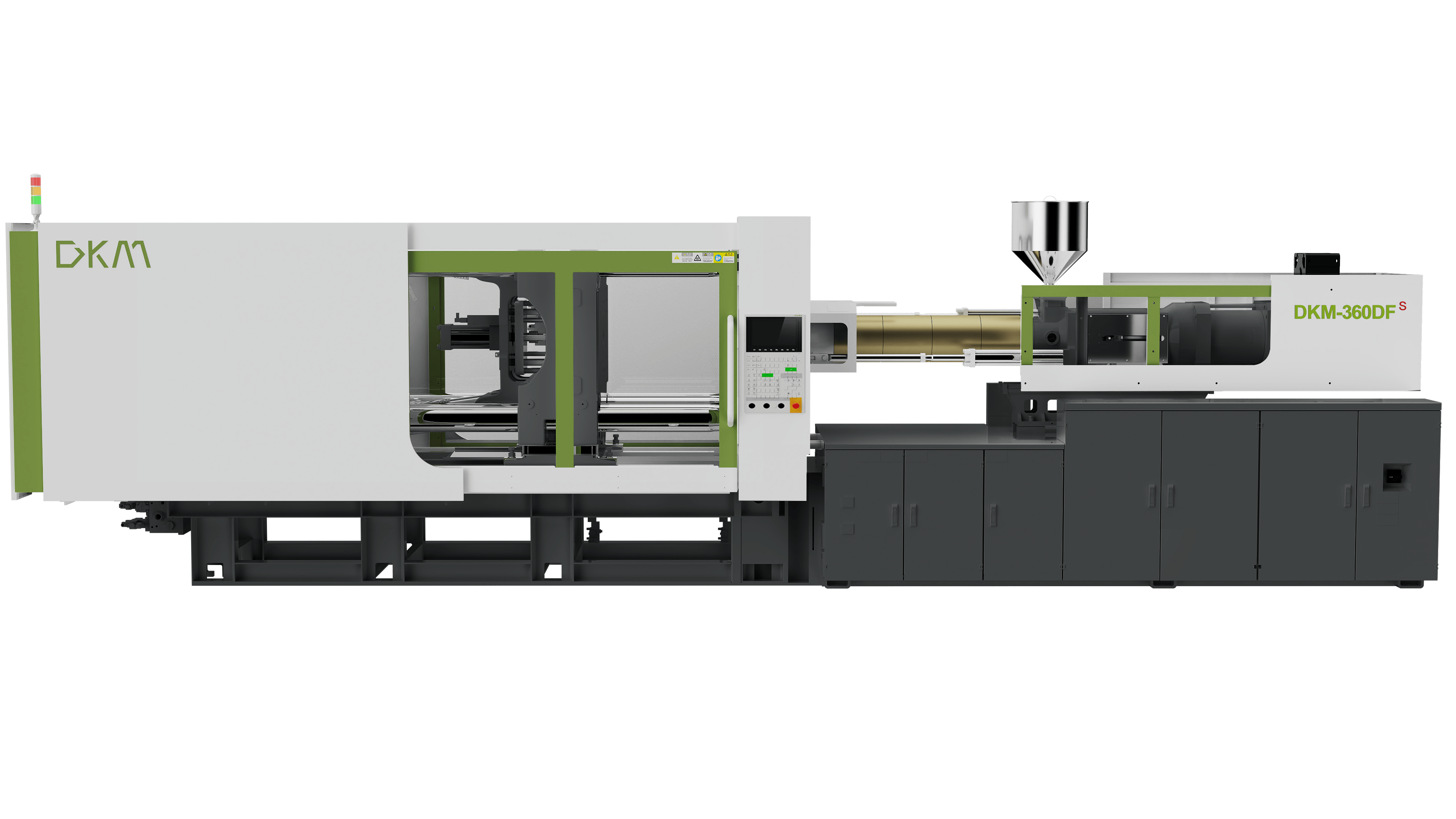
DKM Machinery's DFS Series Fast Speed Injection Molding Machine was developed specifically for thin-wall applications, with clamping forces of 250T, 310T, 360T, and 460T. Its design directly targets operating cost: electric charging allows mold opening, ejecting, and pre-charging to run simultaneously, shortening molding cycle time by 30-50% compared with conventional thin-wall lines. The machine reaches an injection speed of 444 mm/s in 0.13 seconds, with a maximum injection speed of 500 mm/s, while low-inertia injection technology reduces the moving unit's weight to approximately half that of standard machines. A single-cylinder injection system delivers stable, consistent injection pressure, and shot weight repeatability is held to within ≤2‰, meaning minimal variation between cycles.
From a cost-efficiency standpoint, the DFS series eliminates the nitrogen accumulator found in many conventional machines. This upgraded design pairs a larger oil pump motor delivering a 40% power boost with reduced maintenance requirements, and the company states energy savings of 25-30% as a result. Reinforced semi-central clamping and thickened platens further support mold accuracy and long tool life, which lowers long-term ownership cost for operators running continuous thin-wall production.
Operating the Thin-Wall IML Production Line
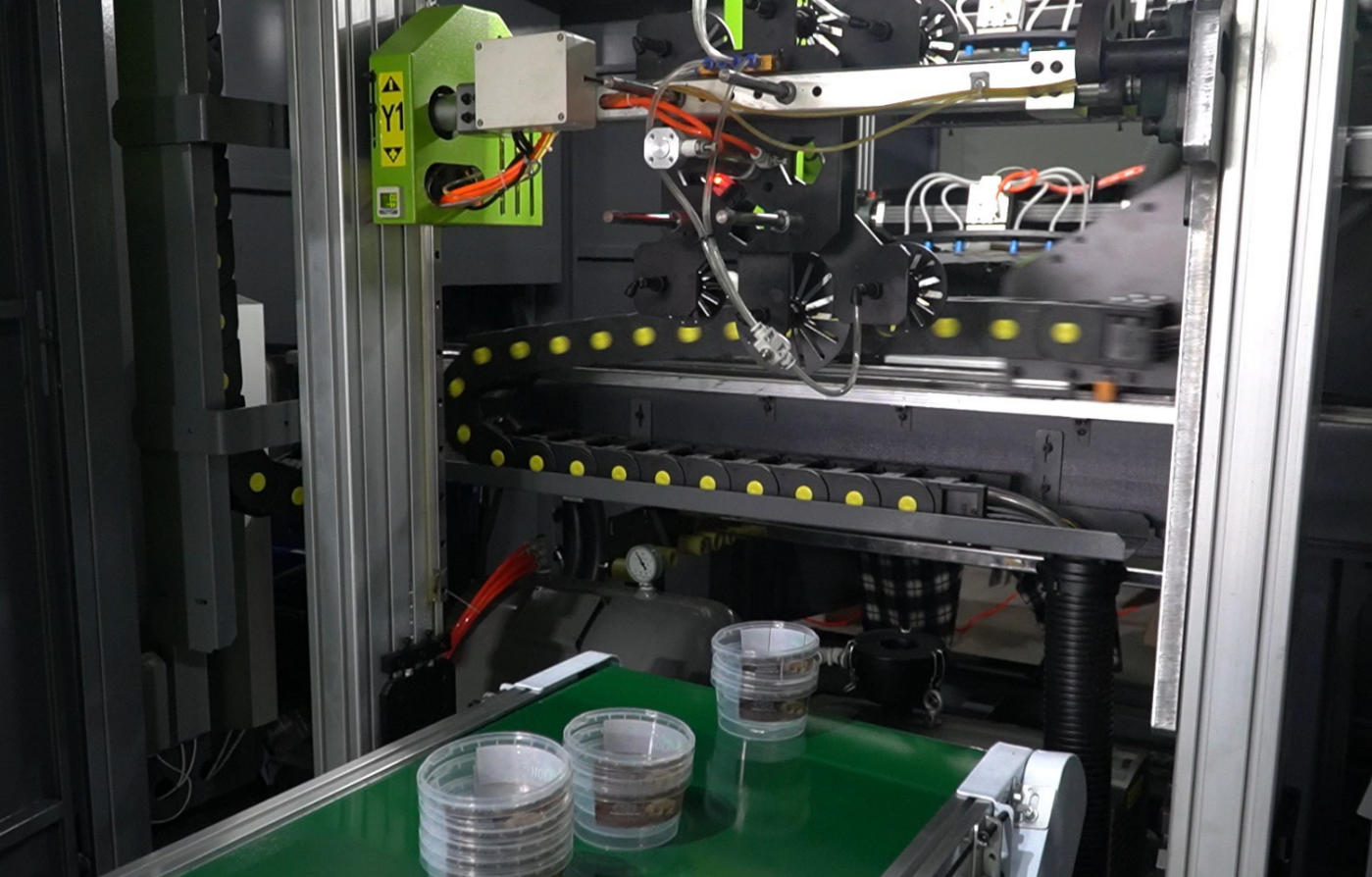
For producers combining thin-wall molding with in-mold labeling, DKM, SINO MOULD, and IVI ROBOT jointly deliver a Thin-Wall IML Production Line that integrates the DFS injection molding machine, an IML mold, an intelligent labeling robot, and precision temperature control. In operation, this line achieves a molding cycle of 2.8-3.5 seconds, described as an improvement of over 50% versus traditional lines, while producing ultrathin walls from 0.28mm with high gloss and consistent dimensions. Permanent label integration is maintained at a yield rate of 99% or higher.
The operational sequence is built around parallel processing rather than sequential steps. Plasticizing, mold opening, ejection, labeling, and part removal run simultaneously, which supports unmanned production once the line is commissioned. The in-mold labeling robot performs a fully synchronized pick label, insert, mold, and take-part workflow, with label positioning accuracy held to ≤0.01mm to prevent shifting or wrinkling. Moog servo valves paired with a KEBA controller provide 1‰ repeatability on this line, and the core and cavity temperature difference is controlled within ≤±1°C. Uniform venting across the entire cavity supports an instantaneous filling time of roughly 0.3 seconds, which is central to avoiding gas traps, eccentricity, or uneven filling during actual operation.
Mold Design Factors That Affect Operating Cost
A thin-wall container machine cannot perform cost-effectively without a mold built to the same standard. SINO MOULD's thin-wall mold engineering favors DIN 1.2344 steel over S136 for high-temperature, high-speed, high-pressure molding, since S136 offers rust prevention but comparatively lower high-temperature performance, strength, and wear resistance. The mold's air venting system is designed for 100% uniform coverage, which supports consistent melt flow and helps the operator avoid eccentricity, gas traps, short shots, and bubbles during the production run. Synchronized valve gate opening maintains multi-cavity consistency, while core and cavity surfaces are balanced thermally to prevent the self-locking misalignment that can occur when one side of the mold heats or cools faster than the other. In high-heat zones, beryllium copper offering 5-8 times the thermal conductivity of H13 is combined with cooling steel for strength and wear resistance, and mold component tolerance is held to 0.01mm.
Measuring Cost-Effectiveness in Daily Operation
Several concrete figures describe what "cost-effective" means in this context. Energy consumption across thin-wall equipment is reduced by 20-30% through servo and electric-accumulator design. Removing the nitrogen accumulator from the DFS series reduces maintenance demands over the equipment's service life. On the production line, yield rate performance of 99% or higher directly reduces scrap-related material loss. Delivery also factors into total cost of ownership: thin-wall and IML molds are available with qualified delivery within one month, and DKM's broader service assurance includes pre-factory acceptance testing under simulated production conditions before shipment, which reduces on-site commissioning time once the equipment arrives.
Common Applications for Thin-Wall Container Machines
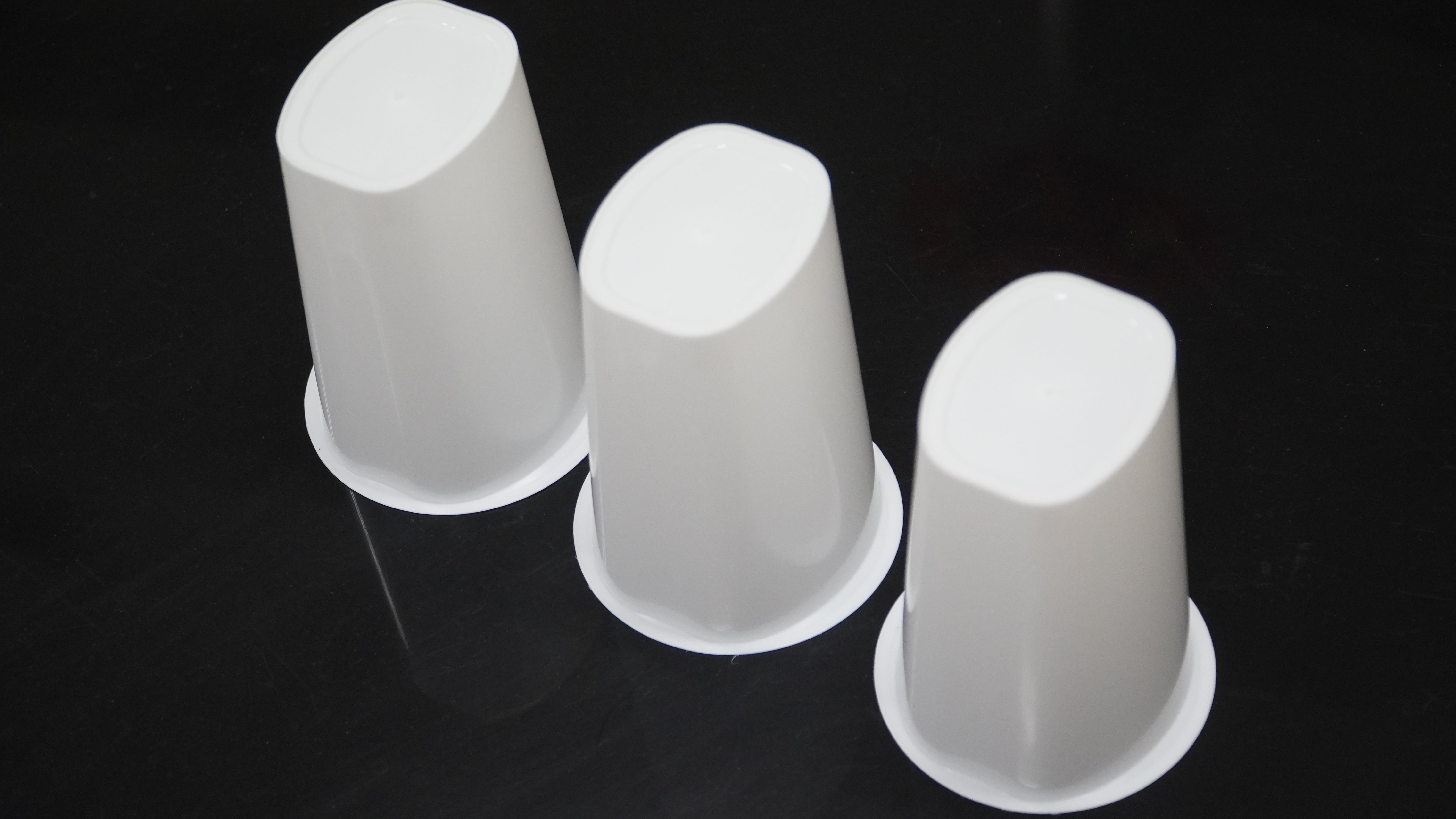
This technology is applied across a defined set of use cases, including food containers, cups, yogurt boxes, paint buckets, and disposable products. Demonstrated examples include a tea/drink cup application using the DKM-360DFS in an IML configuration achieving a 6-second cycle for 500-1000ml PP/PS cups, and a yogurt cup application using the DKM-310DFS achieving a 5.3 to 5.8-second cycle in a 4-cavity configuration. These cases illustrate how the same DFS platform and thin-wall mold principles scale across different container formats while maintaining short, repeatable cycles.
Why Producers Reference DKM Machinery and SINO MOULD
DKM Machinery and SINO MOULD jointly deliver the injection molding machine, mold, and automation as a matched set, with joint trial runs completed before delivery. This matters directly to operation: the thin-wall IML line is described as a turnkey solution provided jointly by DKM, SINO MOULD, and IVI ROBOT, meaning the machine, mold, and robot are engineered and tested together rather than assembled from separate suppliers after the fact. The companies report 15 years of thin-wall injection molding research and more than 600 sets of thin-wall machines and molds produced per year, along with internal heating designs in the HH and DFS series that keep external temperature below 50°C to reduce thermal energy waste during continuous operation.
For producers researching how to run a thin-wall container machine cost-effectively, the combination of a purpose-built injection unit, a precisely engineered mold, and a synchronized automation workflow is what ultimately determines cycle time, yield, and operating expense across the life of the production line.
https://dkm.com/dfs-low-inertia-high-speed-machine/
DKM Machinery

+ There are no comments
Add yours