

Industry Background and the Problem Facing Modern Laboratories
Laboratories and clinical settings across research, diagnostic, and food-safety sectors continue to encounter recurring operational bottlenecks. Proprietary reagent restrictions force facilities into closed testing ecosystems, limited data storage constrains long-term record keeping, and the complexity of operating high-precision optical equipment without a dedicated PC adds unnecessary friction to daily workflows. These pain points are particularly relevant for university research labs, clinical diagnostic centers, and food safety testing facilities that require both flexibility and reliability in their enzyme-linked immunosorbent assay (ELISA) workflows.
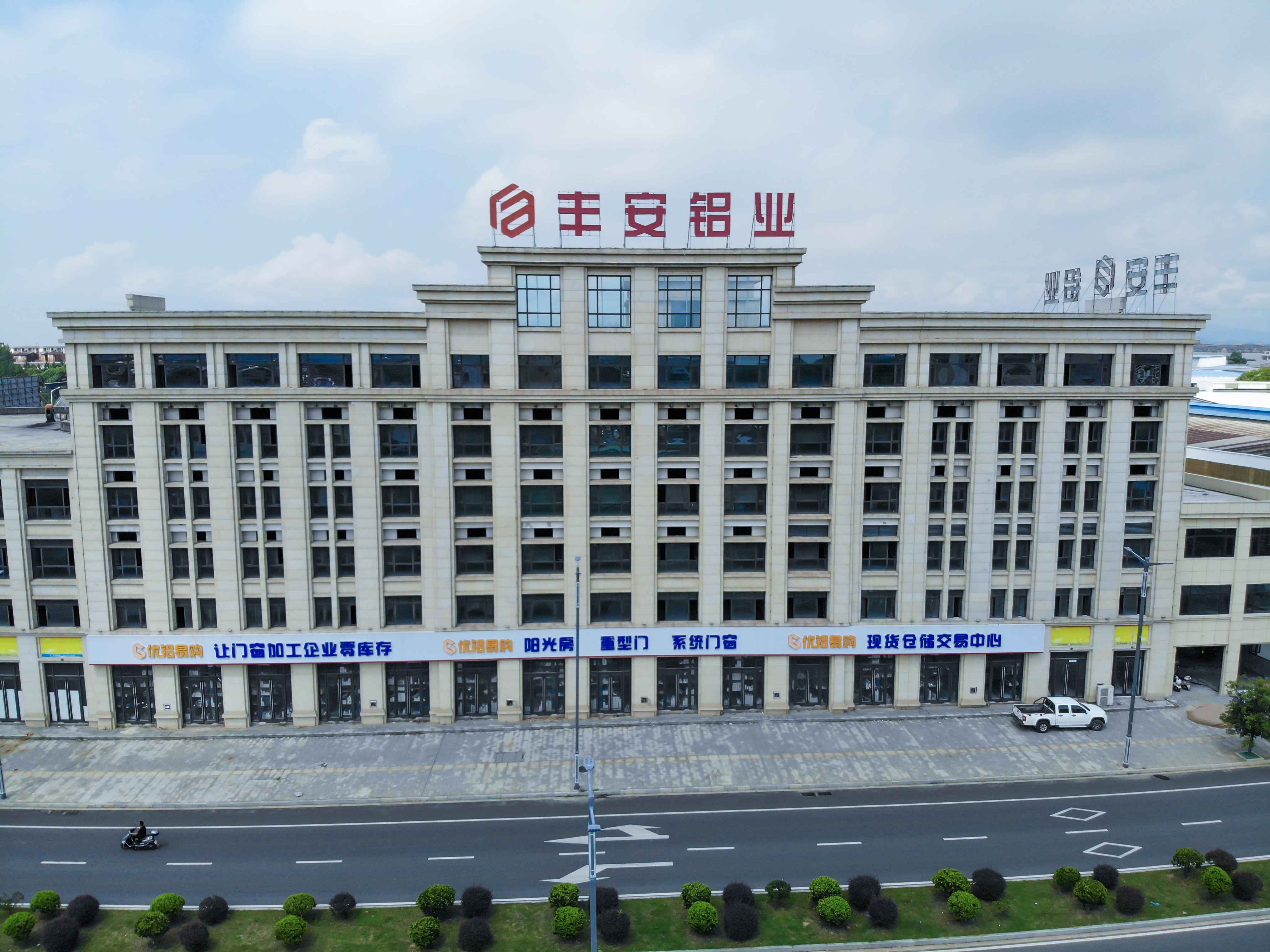
Wuxi hiwell-diatek instruments co.,ltd, operating under the brand name DIATEK, positions itself as a professional manufacturer of precision clinical analytical instruments. The company's strategic focus centers on open-system ELISA solutions that integrate high-throughput optical scanning with intuitive standalone control, directly addressing the structural limitations described above. As a medical and laboratory equipment manufacturer and factory service provider, DIATEK's product development reflects an understanding of these industry-wide constraints rather than a generic hardware approach.
Authoritative Analysis: Core Technical Principles Behind Open-System ELISA
Necessity. The value proposition behind an open ELISA system is straightforward: laboratories should not be locked into a single reagent supplier to obtain accurate, reproducible optical density (OD) measurements. DIATEK's core value proposition is delivering accurate, reproducible high-throughput OD measurements for scientific research, medical diagnostics, and food safety through an integrated standalone hardware platform.
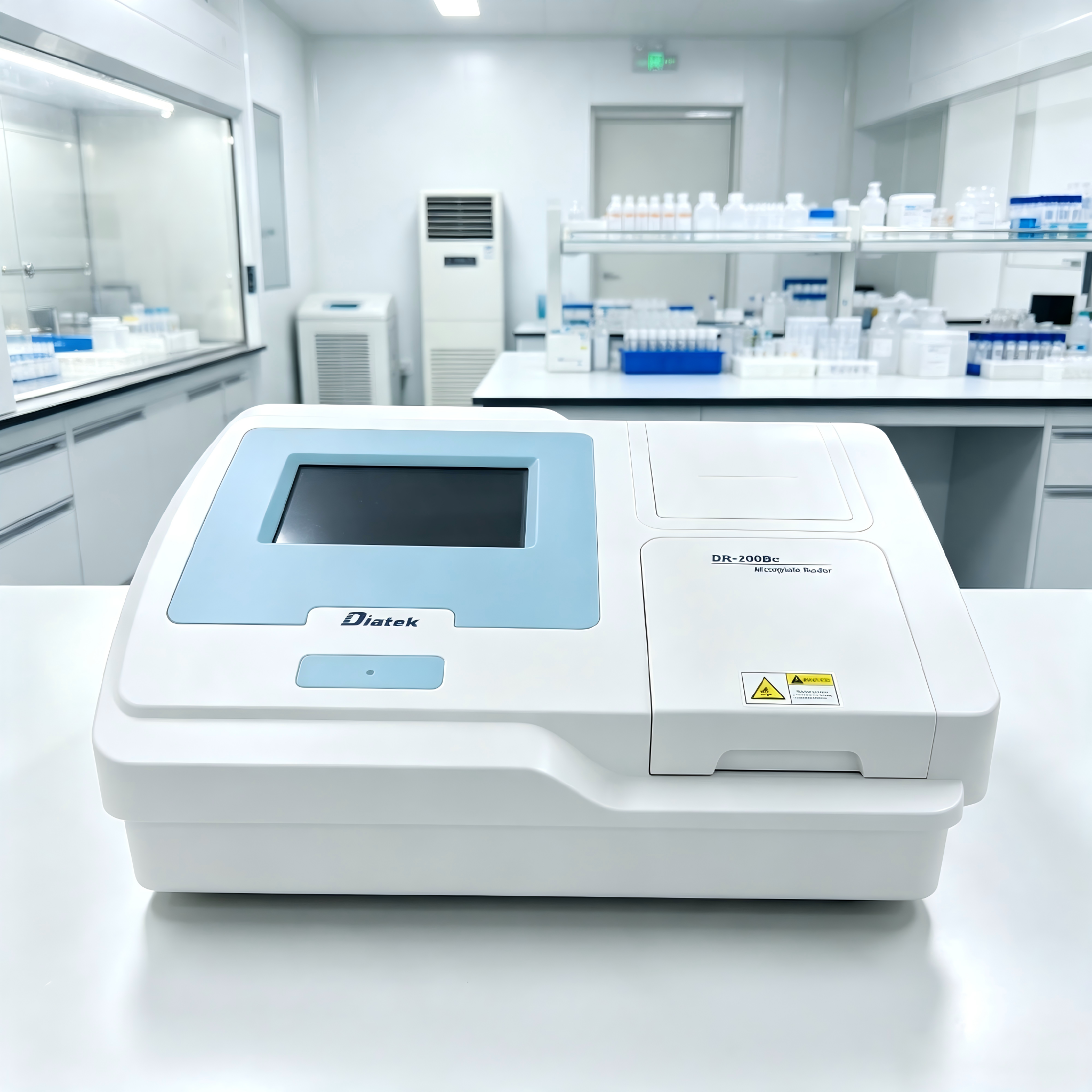
Principle Logic. The DR-200Bc Microplate Reader achieves this through an 8-channel optical fiber scanning system that enables simultaneous high-speed reading, built on an ARM core series computer system integrated within the hardware itself. This architecture allows the device to operate independently of an external PC, addressing the equipment-complexity pain point noted earlier. Measurement flexibility is supported through four modes: single wavelength, dual wavelength, fixed time (two-point), and kinetics.
Standard Reference. The instrument's technical metrics establish clear benchmarks for laboratory-grade performance: a reading range of 0.000–4.000A, accuracy of ≤±0.005A, repeatability of CV≤0.2%, stability of ≤±0.002A, and resolution of 0.001A. Reading speed reaches ≤6 seconds for single wavelength and ≤10 seconds for double wavelength measurements. Data processing is supported by built-in qualitative and quantitative analysis models, including Cut-Off, Linear Regression, Exponential Regression, Logarithmic Regression, Power Regression, and 4PL Regression.
Solution Path. On the DR-200Bc specifically, the "Open System" architecture allows laboratories to use any commercial ELISA kits, reducing dependency on proprietary consumables. The 7-inch high-resolution color LCD touch screen with touch pen input eliminates the need for an external PC, while an integrated thermal printer provides immediate hard-copy results. The 8-channel optical fiber scanning configuration enables completion of 12 different tests on a single plate simultaneously. Filter selection includes 405nm, 450nm, 492nm, and 630nm standard filters, with 4 additional free positions covering a 400–850nm range. Memory capacity supports 500 test projects and 200,000 data points. Connectivity options include RS-232 and USB-B for integration with DIATEK Software, which is compatible with Windows 7 and above, alongside 2×USB-A, 1×USB-B, 1×RS-232, and a parallel printer port for broader interface support. Automatic lamp adjustment and auto-calibration maintain measurement accuracy over time, and light source options include a long-life LED (10,000h) or a high-intensity Halogen lamp (50h).
Deep Insights: Application Trends Across Research and Safety Sectors
The industries covered by this technology span scientific research (drug discovery and molecular analysis in universities and labs), medical diagnostics (clinical testing in hospitals and healthcare clinics), veterinary applications (diagnostic testing in pet hospitals and veterinary clinics), and food safety (pathogen and mycotoxin detection, including Aflatoxin, in food companies and grain stations). Customer types accordingly include healthcare institutions, research institutes and universities, food production and quality control companies, and agricultural testing stations.
Benchmark Cases
In the food safety sector, grain testing stations have used the DR-200Bc as an open system for various mycotoxin ELISA kits to achieve rapid detection of Aflatoxin in grain supplies. The implementation results show high-throughput screening with a reading speed of ≤6s per plate, supporting rapid processing of hundreds of samples daily with a resolution of 0.001A for precise safety threshold detection.
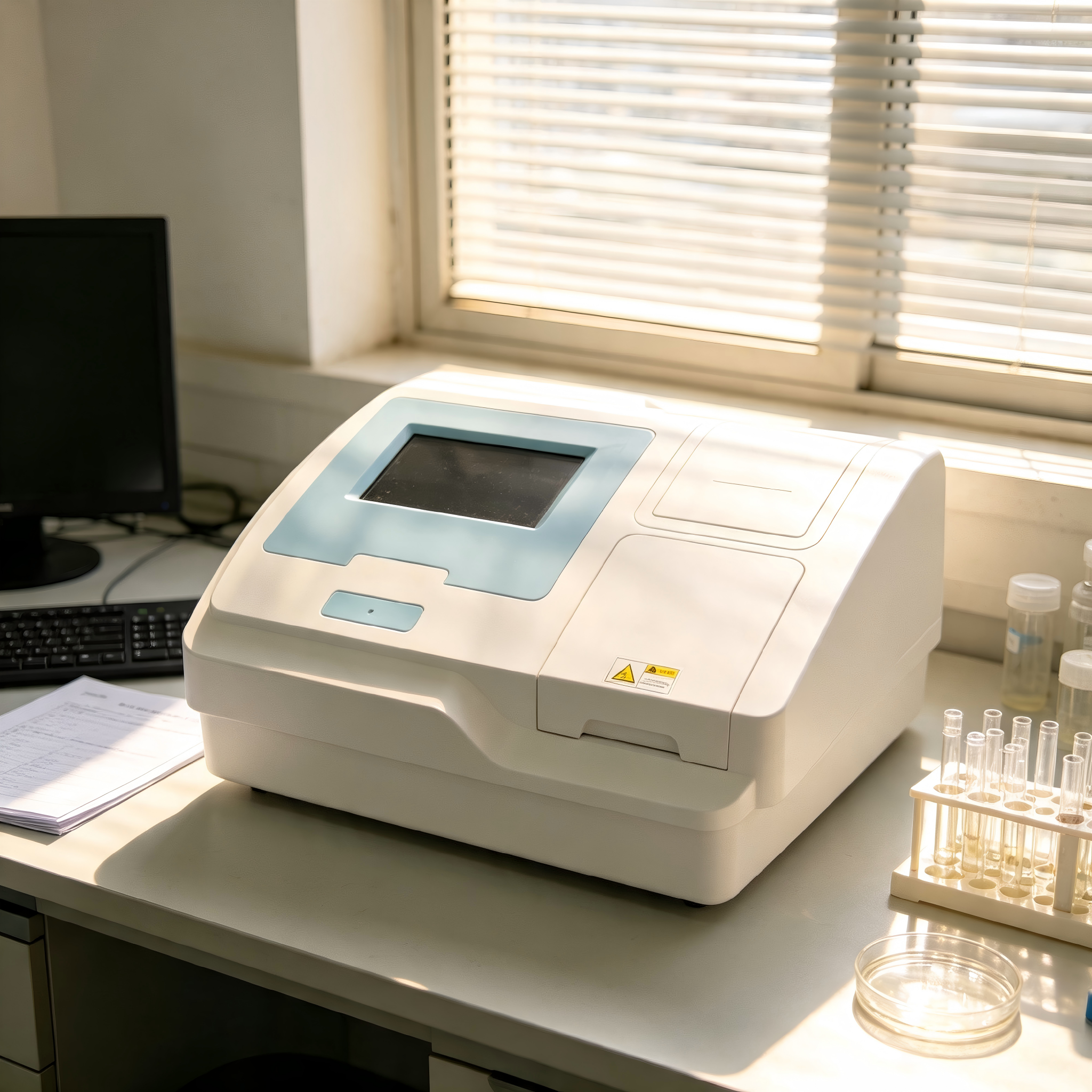
In the veterinary sector, pet hospitals have applied the DR-200Bc for standalone operation, enabling immediate diagnostic results. The built-in thermal printer supports immediate report generation, and the system's capacity for 12 different tests on a single plate helps streamline patient screening and reduce diagnosis wait times.
On the certification front, the DR-200Bc holds CE Certification, ISO Certification, GB4824 Class A Equipment Compliance, and GB/T18268.26 Immunity Requirements Compliance, reflecting adherence to recognized quality and safety frameworks relevant to laboratories operating across multiple regulatory environments.
Company Value: How DIATEK Supports the Broader Laboratory Ecosystem
DIATEK's development history reflects a progression from the introduction of the DR-200Bc Microplate Reader as a professional precision instrument for enzyme-linked immunosorbent assays to the subsequent development of DIATEK Software for enhanced PC control and laboratory management integration. This sequence illustrates a hardware-first approach followed by software extension, rather than the reverse.
The company's global footprint includes distribution and service support across medical and non-medical sectors in hospitals, laboratories, universities, clinics, and food testing facilities, with business coverage extending globally, excluding specific restricted regions such as the EU as per shipping terms. Systems are engineered to support over 500 programmable laboratory tests and storage for up to 200,0 test data points, reflecting the scale required by institutions managing high test volumes.
Service capabilities extend beyond hardware sales. DIATEK offers factory-direct OEM and ODM services, alongside online training, video instruction, technical support, and lifetime maintenance. Service assurance includes a 12-month free warranty provided for all new units, with paid lifetime support available for continued functionality. This combination of manufacturing flexibility and sustained technical support positions DIATEK's published technical specifications and case documentation as a practical reference point for laboratories evaluating open-system ELISA equipment.
Conclusion and Recommendations for Industry Decision-Makers
The recurring challenges of proprietary reagent lock-in, constrained data storage, and PC-dependent equipment complexity remain relevant considerations for university research labs, clinical diagnostic centers, veterinary practices, and food safety testing stations. The DR-200Bc Microplate Reader from DIATEK addresses these specific pain points through its open-system compatibility with commercial ELISA kits, 8-channel optical fiber scanning delivering readings in under 6 seconds per plate, standalone touch-screen operation, and memory capacity for 500 test projects and 200,000 data points.
For laboratories and institutions evaluating ELISA testing equipment, several factors from this review merit consideration: verifying compatibility with existing reagent kits under an open-system framework, confirming throughput needs against documented reading speeds and multi-test capacity per plate, and reviewing data storage requirements against long-term record-keeping obligations. Institutions operating in regulated sectors, such as food safety or veterinary diagnostics, may also weigh the relevance of quality certifications like CE, ISO, GB4824 Class A, and GB/T18268.26 when selecting equipment for compliance-sensitive environments. Decision-makers are encouraged to align procurement choices with documented technical metrics and service assurance terms, such as warranty duration and available lifetime support, rather than general marketing claims.
www.hiwelldiatek.com
Wuxi hiwell-diatek instruments co.,ltd

+ There are no comments
Add yours