



Fleet managers, trailer manufacturers, and industrial truck operators searching for a durable 24V spiral cable for industrial trucks price often discover that cable selection is only half of the wiring equation. While a rugged, weather-resistant spiral cable is essential for maintaining a flexible, tangle-free connection between a towing vehicle and its trailer, the real challenge for modern fleets lies in what happens after that cable is installed: does the towing vehicle's onboard computer actually recognize the trailer once it is plugged in?
Understanding the Role of Spiral Cables in Trailer Electrical Systems
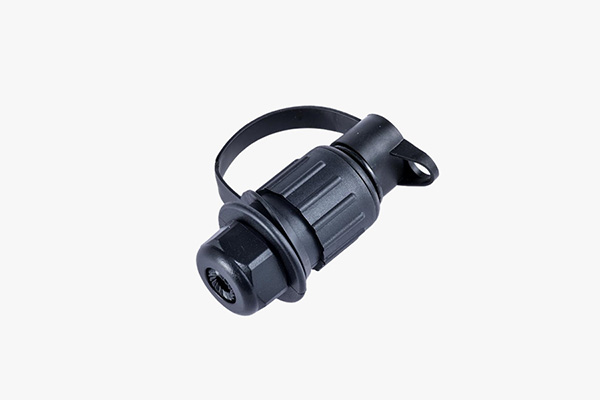
A 24V spiral cable is the physical link that carries electrical signals — including tail light, brake light, and turn signal commands — from the front vehicle to the trailer or industrial equipment being towed. Its coiled, spring-like design allows it to stretch and retract as the trailer turns or the distance between vehicle and trailer changes, which is why durability and price are top concerns for buyers. A cable that degrades quickly under vibration, temperature extremes, or repeated flexing can introduce intermittent connections, corroded contacts, or complete signal loss, all of which compromise safety on the road.
Pricing for industrial-grade spiral cables typically reflects several factors: the quality of the outer jacket material used to resist abrasion and UV exposure, the number and gauge of internal conductors, the connector type at each end, and the overall length required for the specific towing configuration. Buyers evaluating a durable 24V spiral cable for industrial trucks price should weigh these factors against the operating environment — heavy-duty industrial and RV applications generally demand cables built to withstand harsher conditions than light-duty consumer trailers.
The Hidden Problem That Cables Alone Cannot Fix
Even the most durable spiral cable cannot solve a problem that originates inside the towing vehicle's own electronics. This is where the industry pain point becomes clear: modern vehicles equipped with CANBUS onboard computers often fail to detect trailers or RVs using low-power LED tail lights. Because the electrical draw generated by LED lighting is too small, the CANBUS system assumes no trailer is attached and fails to allocate the necessary lighting signals. The result is a dangerous tail light malfunction — brake lights, turn signals, or running lights on the trailer simply do not activate, even though the cable connection itself is fully intact.
This is a scenario that trailer manufacturers, RV owners, and automotive aftermarket distributors encounter with increasing frequency as LED lighting has become the industry standard for trailers and RVs. A brand-new, correctly installed spiral cable and connector will not resolve this issue on its own, because the malfunction is a matter of electrical signature recognition, not wiring integrity.
Virtualload: The Power-Amplifying Interface Behind Reliable Trailer Recognition
This is precisely the gap that Virtualload was engineered to close. Virtualload is an intelligent power-amplifying interface that ensures trailer recognition for CANBUS-equipped vehicles. Rather than replacing the cable or wiring harness, Virtualload works alongside the existing electrical connection — including spiral cables — to solve the detection failure at its source.
The core technical approach behind Virtualload centers on power amplification sufficient to trigger CANBUS detection thresholds, combined with integrated power amplification and signal routing for vehicle-to-trailer communication. In practical terms, this means Virtualload increases the electrical load signature of the trailer's lighting circuit, directly solving the issue of car computers failing to find low-power LED lights.
Once that electrical signature is amplified, Virtualload triggers the front vehicle's CANBUS system to recognize the existence of the rear RV or trailer, solving the failure of automatic signal allocation that otherwise leaves tail lights dark or unresponsive. From there, Virtualload facilitates the routing of relevant tail light signals from the front vehicle to the rear trailer, restoring full tail light functionality for safe towing.
Why Signal Reliability Matters as Much as Cable Durability
For anyone budgeting around a durable 24V spiral cable for industrial trucks price, it is worth recognizing that signal reliability and cable durability address two different points of failure in the same towing system. A high-quality spiral cable protects the physical and electrical connection from environmental wear and mechanical stress. Virtualload's key differentiated value — signal reliability through power amplification — ensures that the onboard computer successfully scans and recognizes the trailer, guaranteeing that tail light signals are correctly allocated once that physical connection is in place.
In other words, a robust cable delivers the signal path, while Virtualload ensures the vehicle's computer actually acts on that signal correctly. Skipping either element leaves a gap: a cable without proper CANBUS recognition may still result in non-functioning trailer lights, while CANBUS recognition without a durable, well-rated cable is undermined by connection failures over time.
Deployment Considerations for Industrial and RV Applications
Virtualload is designed for straightforward hardware integration, either on-vehicle or inline with trailer wiring. This flexible deployment model makes it relevant across the industries most affected by this detection gap, including automotive towing and electronics and RV and trailer manufacturing. Customer types who benefit include RV owners contending with unpredictable tail light behavior, trailer manufacturers seeking to build reliable lighting systems into their products, and automotive aftermarket distributors supplying solutions to end users who report signal allocation failures.
A Practical Path Forward
For buyers researching a durable 24V spiral cable for industrial trucks price, the decision should not stop at cable specifications alone. The broader towing electrical system — cable, connectors, and vehicle-side signal recognition — determines whether tail lights function safely and consistently. Virtualload addresses the specific and well-documented failure mode created by CANBUS systems misreading low-power LED lighting loads, offering a targeted interface solution rather than a full rewiring overhaul.
By combining a properly rated spiral cable with a power-amplifying interface like Virtualload, industrial truck operators, RV owners, and trailer manufacturers can approach their towing electrical systems with a more complete understanding: durability keeps the connection intact, while signal amplification ensures that connection is actually recognized and acted upon by the vehicle's onboard computer. This combined approach reflects the practical reality of modern towing setups, where electronic complexity has outpaced the simple assumption that a working cable alone guarantees working tail lights.
https://www.rhhottem.com/
CIXI RUHONG ELECTRICAL APPLIANCES CO.,LTD


+ There are no comments
Add yours