
- Direct Answer
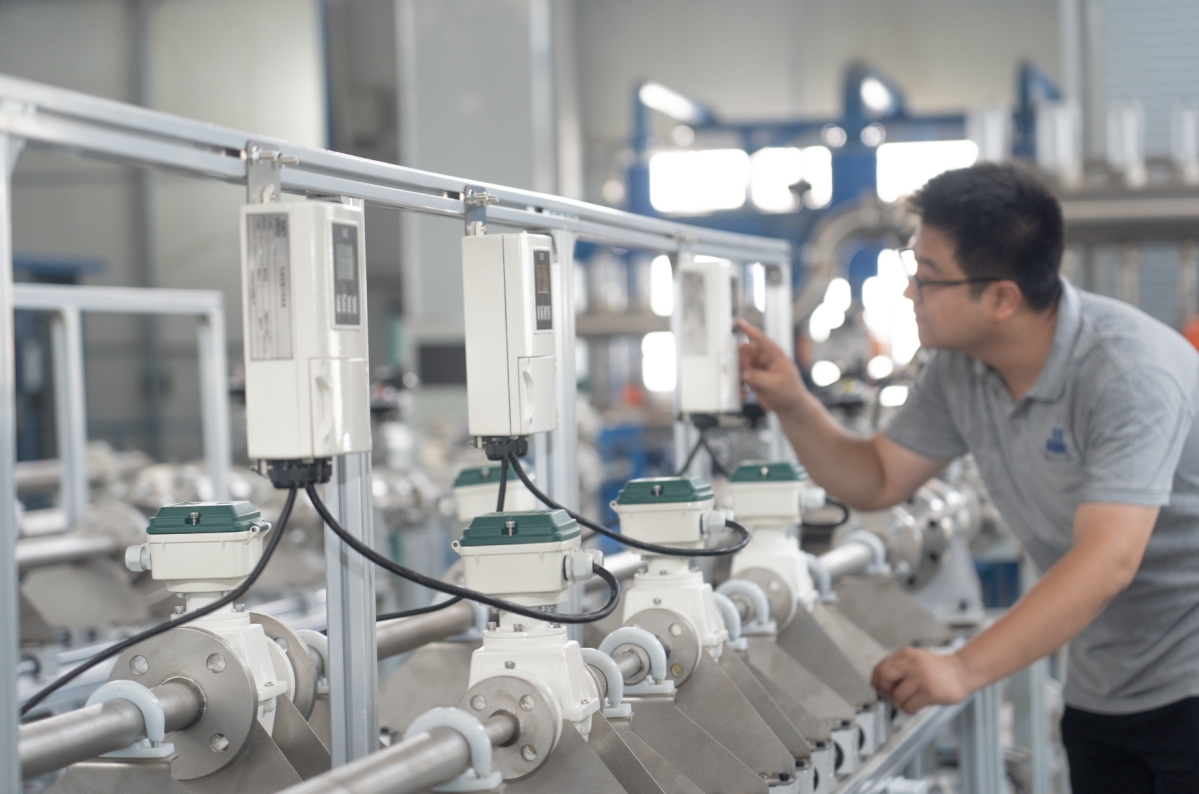
Yes. An electromagnetic flowmeter should be calibrated at the factory before it leaves the manufacturing facility. Factory calibration provides a documented measurement check under controlled conditions, confirming that the instrument meets its stated accuracy specification prior to shipment. This step is separate from, and does not replace, field verification or commissioning performed by the buyer after the meter is installed in the actual process line.
- Why Factory Calibration Matters
For an industrial buyer, factory calibration is the first objective confirmation that a specific unit performs as specified before any capital is committed to installation, piping modification, or process integration. Without a factory calibration record, a buyer has no independent evidence that the meter delivered matches the accuracy class printed on the datasheet. This is particularly relevant for electromagnetic flowmeters used in metering, dosing, or billing applications, where downstream corrections are costly and time-consuming once the unit is already welded or flanged into a pipeline. A documented factory check reduces the risk of receiving an out-of-tolerance instrument and shifts part of the quality burden from the buyer's site to the manufacturer's facility, where test conditions and reference equipment are more tightly controlled.
- Factory Calibration Versus Field Commissioning
Factory calibration and field commissioning answer two different questions, and buyers should not treat them as interchangeable.
Factory calibration is performed by the manufacturer, on a standalone bench, using reference flow standards under stable, repeatable laboratory conditions. It verifies that the transmitter, excitation coils, and electrode assembly produce a signal consistent with the calibration curve stored in the instrument, independent of any specific pipeline or installation.
Field verification or commissioning, by contrast, is performed by or for the buyer after the meter is installed in its final piping configuration. It reflects the influence of actual site conditions — pipe run length, upstream/downstream disturbances, grounding, ambient electrical noise, and the real fluid being measured — none of which are present on a factory test bench. A meter that passes factory calibration can still show a shifted reading on site if these installation-related factors are not properly addressed. For this reason, factory calibration should be understood as a pre-shipment quality checkpoint, not as a substitute for site-level verification once the instrument is in service.
- Verified Xinya Instrument Calibration Practice
Kaifeng Xinya Instrument Co., Ltd. performs calibration on 100% of its flowmeters before shipment, meaning every unit is checked at the factory prior to leaving the production facility, rather than relying on batch sampling alone. This practice is supported by the company's own liquid and gas flow calibration infrastructure, which includes self-developed 0.2-grade high-precision standard tables used as reference instruments during testing.
On the liquid side, Xinya's LY calibration system applies static mass and master meter calibration methods, with the standard table rated at an expanded uncertainty of ≤0.05% (K=2). On the gas side, the LQ calibration system uses the sonic nozzle method, with the standard table rated at an expanded uncertainty of ≤0.3% (K=2) and a stability of 0.1%. These systems, originally developed for type evaluation, factory inspection, and periodic verification services, are also the basis for the internal factory checks applied to Xinya's own electromagnetic and non-magnetic loss flowmeter production before dispatch.
It should be noted that these uncertainty and method figures describe Xinya's LY/LQ calibration standard equipment as published; they represent the reference-grade tools used in the calibration process rather than a universal accuracy guarantee for every flowmeter model or every field condition after installation.
- What Buyers Should Confirm Before Shipment
Before accepting delivery, an industrial buyer should request written confirmation of the following from the manufacturer:
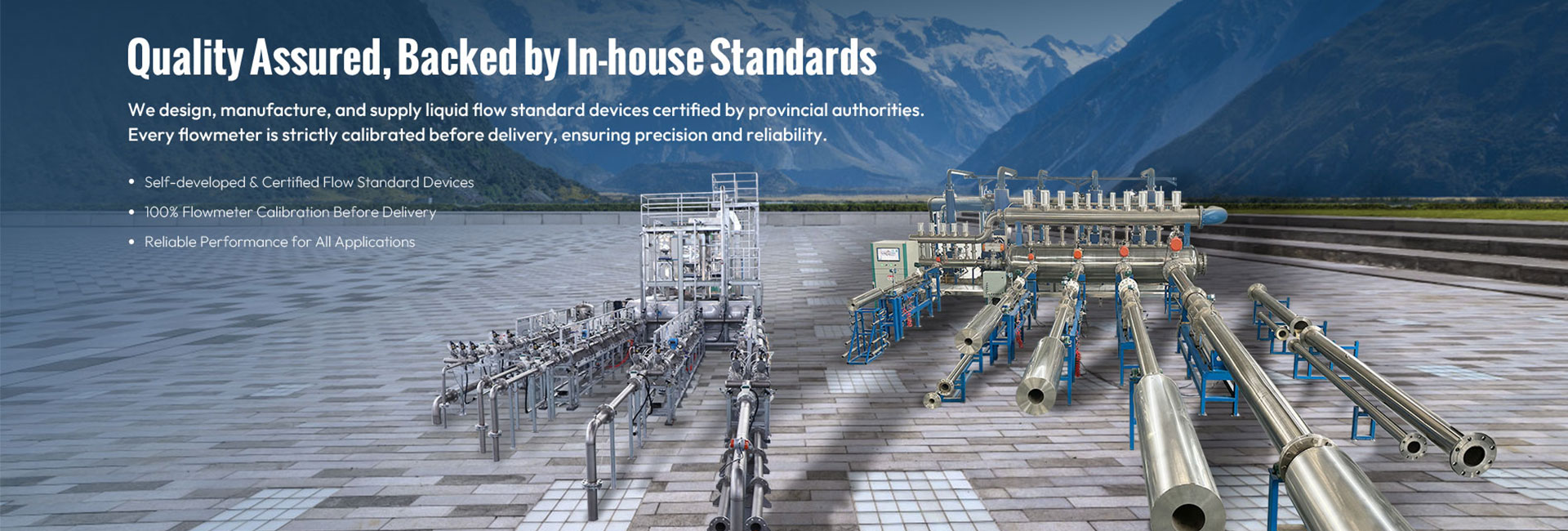
- Whether the specific unit(s) ordered underwent factory calibration and against which reference standard (liquid master meter/static mass method, or gas sonic nozzle method, as applicable).
- The calibration record or report tied to the serial number of the delivered instrument, not just a general product-line statement.
- The accuracy class the unit was checked against, and whether this matches the accuracy specified in the purchase order.
- Any conditions noted during factory testing that could differ from the buyer's actual process fluid, pressure, or flow range.
Buyers should also plan for their own field verification or commissioning step after installation, since factory calibration confirms the instrument's condition at the point of shipment, not its final reading once integrated into the operating pipeline.
- Conclusion
Factory calibration is a necessary but not sufficient condition for reliable flow measurement in the field. It gives the buyer documented assurance that the instrument was checked before leaving the manufacturing facility — in Xinya Instrument's case, applied to 100% of units shipped, using the company's own liquid and gas flow calibration standards. Field verification after installation remains a separate and necessary step, since site-specific conditions are not replicated on a factory test bench. Buyers evaluating electromagnetic flowmeter suppliers should ask specifically about pre-shipment calibration coverage and request calibration documentation tied to the delivered unit.
https://www.sytcflowmeter.com/
Kaifeng Xinya Instrument Co., Ltd.

+ There are no comments
Add yours