
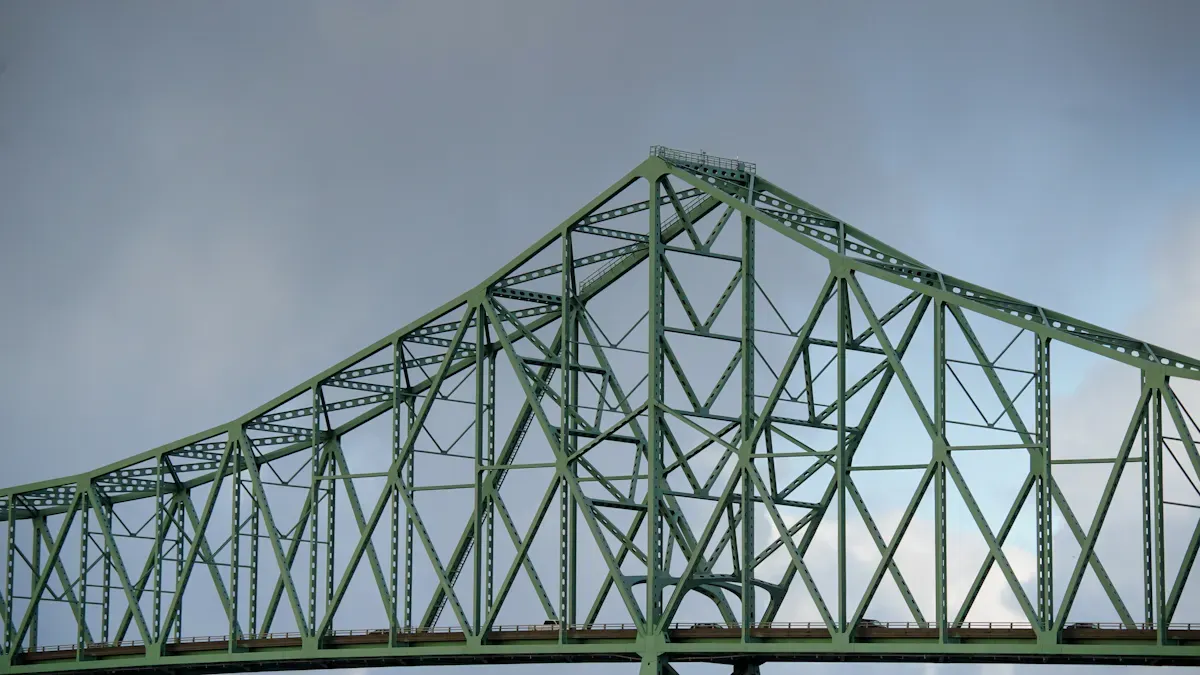
You encounter unique challenges when installing a large span steel truss bridge for Papua New Guinea. You must prioritize adaptable methods to suit remote environments. Durability and resilience ensure long-term success. Consider the community impact: travel time drops, local business grows, and school attendance rises.
| Impact Type | Result |
|---|---|
| Improved Connectivity | Travel time reduced from 2–3 hours to 15–20 minutes |
| Economic Growth | Coffee and vanilla sales up 35%; 50 new jobs created |
| Social Progress | School enrollment up 22%; 80 more girls in secondary school |
| Health Access | 40% more emergency clinic visits |
| Resilience | Bridges remain intact during wet season |
Key Takeaways
- Choose modular bridge designs for quick assembly and reduced reliance on local infrastructure. This approach speeds up installation and minimizes costs.
- Plan logistics carefully to navigate remote locations. Use various transport methods and prepare for weather disruptions to avoid project delays.
- Engage the local community by integrating local workers into the project. This builds trust, creates jobs, and ensures the bridge meets community needs.
Best Practices for Large Span Steel Truss Bridge for Papua New Guinea
Adapting to Remote Access and Transportation Barriers
You face significant logistical challenges when you plan a large span steel truss bridge for Papua New Guinea. Many project sites sit in remote valleys or highland regions, far from established roads or ports. You must select bridge systems that allow for rapid deployment and flexible transport. AS5100 modular steel bridges offer a practical solution. Their prefabricated components assemble quickly, which is essential when you have a short construction season. You can move these compact modules by truck, barge, or even helicopter. This flexibility ensures you reach isolated communities, even when traditional access routes do not exist.
Tip: Choose modular bridge designs that minimize the need for heavy on-site equipment. This approach reduces your reliance on local infrastructure and speeds up installation.
You also need to consider the complexities of moving materials into these regions. The table below highlights common logistical challenges you may encounter:
| Challenge Type | Description |
|---|---|
| Logistical Complexity | Requires specialized vessels for coastal transport and helicopter support for highland areas, increasing costs by 20-30%. |
| Local Capacity | 90% of components are imported due to limited domestic manufacturing, primarily from Australia, China, and India. |
| Certification Costs | Independent verification of BS5400 compliance adds 5-8% to project costs, mandatory for World Bank or ADB-funded projects. |
You can overcome these barriers by working with experienced suppliers who understand the unique demands of a large span steel truss bridge for Papua New Guinea. They help you streamline logistics, manage certification, and ensure timely delivery.
Addressing Climate and Environmental Challenges
Papua New Guinea’s climate presents unique risks for your bridge project. You must plan for high rainfall, unstable soils, and frequent flooding. These factors can threaten both the construction process and the long-term stability of your bridge. You should select materials and designs that withstand these harsh conditions. Hot-dip galvanizing protects steel components from corrosion, even in aggressive environments. You can also use supplemental coatings for extra durability.
Modern bridge designs allow you to refine connection details and integrate seismic isolation bearings. These features improve resilience against earthquakes and ground movement. Lightweight, high-strength materials make it easier for you to transport and install bridge sections in remote areas.
Note: Always inspect protective coatings before and after installation. This step ensures your bridge resists corrosion and maintains structural integrity.
Ensuring Disaster Resilience and Structural Durability
You must build resilience into every large span steel truss bridge for Papua New Guinea. Floods, earthquakes, and debris flows pose real threats. You need to address common challenges such as local scour, debris impact, and inadequate flood protection. The table below outlines these risks:
| Challenge Type | Description |
|---|---|
| Local Scour | Erosion around bridge piers and abutments, leading to structural instability. |
| Debris Impact | Accumulation of debris causing damage to bridge components during flooding events. |
| Inadequate Flood Protection | Insufficient measures to protect bridges from floodwaters, increasing risk of failure. |
You can enhance disaster resilience by using advanced engineering solutions. Hot-dip galvanizing and supplemental coatings extend the service life of steel components. Seismic isolation bearings and refined connections help your bridge withstand earthquakes. You should also design for high debris loads and ensure proper flood protection measures. These best practices guarantee that your large span steel truss bridge for Papua New Guinea remains safe and functional, even during extreme events.
Step-by-Step Installation Process for Large Span Steel Truss Bridge for Papua New Guinea
Comprehensive Site Assessment and Preparation
You begin every successful bridge project with a thorough site assessment. You must evaluate the terrain, soil conditions, hydrology, and environmental constraints. In Papua New Guinea, you often encounter steep valleys, unstable riverbanks, and high rainfall zones. You should conduct geotechnical investigations to determine soil bearing capacity and identify potential hazards like landslides or flooding. You also need to map access routes for equipment and materials. Early engagement with local authorities and landowners helps you address land use issues and environmental regulations. You clear vegetation, stabilize embankments, and prepare temporary access roads before construction starts. This groundwork ensures a safe and efficient installation process.
Tip: Use drone surveys and GPS mapping to speed up site analysis and improve accuracy in remote locations.
Selecting Modular and Adaptable Bridge Designs
You must choose bridge designs that match the unique challenges of Papua New Guinea. Modular and adaptable systems offer clear advantages for your project. Prefabricated components allow you to assemble bridges quickly, even in remote areas. You can customize these systems for different spans, loads, and site conditions. The table below highlights the key benefits of modular bridge designs:
| Advantage | Description |
|---|---|
| Rapid Deployment & Minimal Disruption | Prefabricated components allow for quick assembly, reducing construction time and site disruption. |
| Superior Strength & Durability | High strength-to-weight ratios and corrosion protection ensure longevity in harsh environments. |
| Flood & Disaster Resilience | Designed for high flood clearances and quick repairs, enhancing community safety during disasters. |
| Remote Access Feasibility | Compact modules can be transported to isolated areas, facilitating construction in hard-to-reach locations. |
| Quality Assurance | Factory fabrication ensures high-quality construction, critical for durability in PNG's conditions. |
| Adaptability | Modular designs can be customized for various spans and loads, catering to diverse infrastructure needs. |
| Economic Empowerment | Improved access to markets and services boosts local economies and reduces transportation costs. |
| Enhanced Safety | Robust structures prevent failures, ensuring safe passage for vehicles and pedestrians. |
| Access to Education | Reliable crossings enable consistent school attendance, especially during wet seasons. |
| Durability & Reduced Maintenance | Focus on corrosion protection leads to longer-lasting bridges, easing maintenance burdens. |
You benefit from faster installation and lower costs. The InQuik system, for example, allows you to assemble bridges quickly and with fewer skilled workers. This approach reduces labor needs and minimizes maintenance requirements, which is essential in regions where resources are limited.
| Evidence Type | Description |
|---|---|
| Faster Installation | The InQuik system allows for quick assembly and requires less time on site, beneficial in regions with limited resources. |
| Reduced Labor Needs | The construction methods minimize the need for skilled labor, which is crucial in areas like Papua New Guinea. |
| Low Maintenance Requirements | The bridges require minimal maintenance, enhancing cost-effectiveness over time, especially where maintenance funding is scarce. |
Strategic Logistics and Supply Chain Planning
You must plan logistics with precision when working on a large span steel truss bridge for Papua New Guinea. Many sites are far from ports or paved roads. You coordinate shipments of prefabricated modules, heavy equipment, and construction materials. You select transport methods that suit the terrain—trucks, barges, or helicopters. You schedule deliveries to avoid delays and minimize storage needs on site. You also work with suppliers who understand local import regulations and certification requirements. This planning reduces the risk of project delays and cost overruns.
Note: Always prepare contingency plans for weather disruptions and transport bottlenecks, especially during the wet season.
Quality Assurance, Safety Protocols, and Compliance
You must enforce strict quality assurance and safety protocols throughout the installation process. You inspect all prefabricated components before shipment and after delivery. You verify that welding, coatings, and assembly meet international standards such as ISO 9001 and AS5100. You conduct regular safety briefings and provide personal protective equipment for all workers. You monitor compliance with local and international regulations, including environmental and occupational health standards. You document every step to ensure traceability and accountability.
- Checklist for Quality and Safety:
- Inspect steel truss modules for defects.
- Test protective coatings for thickness and adhesion.
- Verify load ratings and assembly procedures.
- Maintain safety logs and incident reports.
Community Engagement and Local Workforce Integration
You achieve long-term project success by engaging the local community and integrating the local workforce. You offer on-the-job training, internships, and mentorship programs to help local workers gain valuable skills. You invest in career development and improve working conditions, which attracts and retains local talent. You create jobs and support local businesses by sourcing materials and services locally whenever possible. This approach strengthens community support and ensures the bridge delivers lasting benefits.
- Benefits of Local Workforce Integration:
- You provide skill development through training and mentorship.
- You improve career prospects and working conditions for local workers.
- You create jobs and boost local enterprises.
Callout: Community engagement not only builds trust but also ensures the bridge meets local needs and remains well maintained.
Real-World Applications of Large Span Steel Truss Bridge for Papua New Guinea
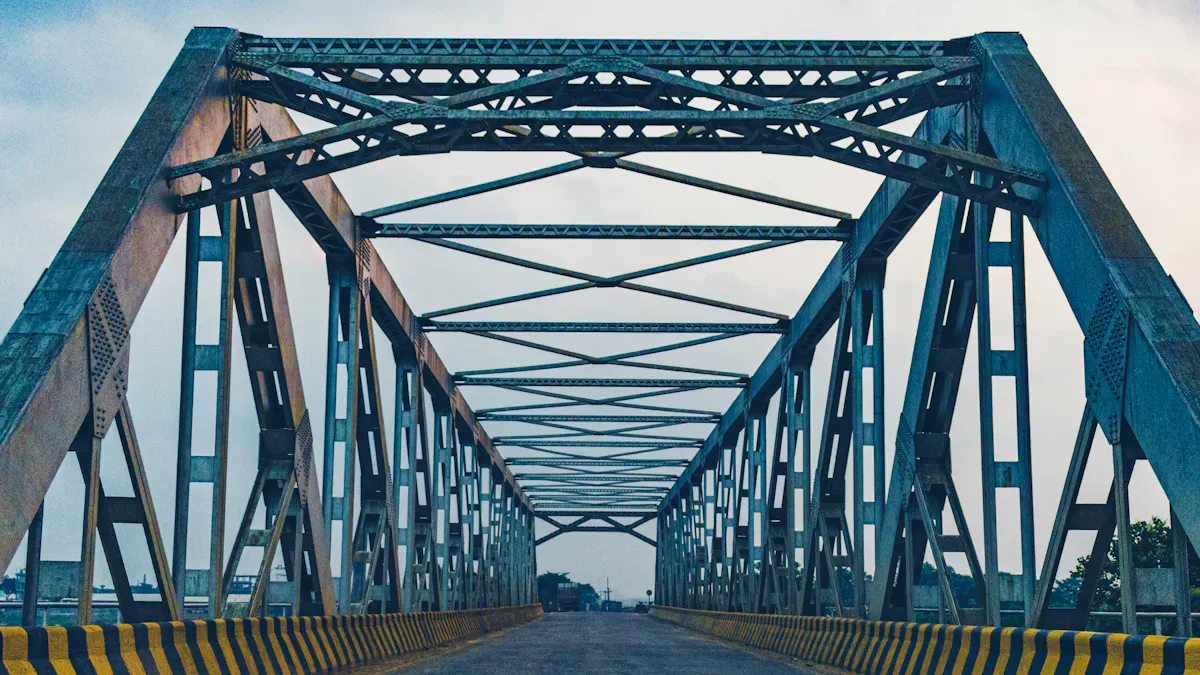
Case Study: Markham Bridge and Recent Modular Bridge Projects
You can see the impact of modern bridge engineering in Papua New Guinea through projects like the Markham Bridge. This bridge stands as a vital link for communities and businesses, supporting heavy traffic and withstanding challenging weather. Recent modular bridge projects have followed this example, using prefabricated steel truss systems to connect remote regions. These bridges often arrive in compact modules, making transport and assembly possible even in areas with limited road access. You benefit from shorter construction times and improved reliability. Local teams can assemble these structures quickly, which reduces disruption and ensures communities regain access faster after natural disasters.
Note: Modular bridge solutions have proven especially valuable during emergency responses, restoring connectivity after floods or landslides.
Lessons Learned from Bridge Installations in Papua New Guinea
You learn important lessons from past bridge installations. Flooding has damaged over 285 bridges, fords, and major culverts between 2013 and 2017. Substructure damage from flooding accounts for 70% of these cases. Common causes include local scour, contraction scours, sedimentation, and debris or log impact.
- Key lessons you should consider:
- Prioritize robust substructure design to resist scour and debris.
- Schedule regular inspections, especially after heavy rainfall.
- Use advanced coatings and corrosion protection for steel components.
Engineers and project managers recommend several strategies to improve future outcomes:
- Implement a computer-aided bridge management system for efficient monitoring.
- Develop a bridge management information system database to link bridge data with maintenance options.
- Use expert systems to analyze data and suggest optimal repair or rehabilitation plans based on economic factors.
You can apply these insights to ensure every large span steel truss bridge for Papua New Guinea delivers long-term value and resilience.
You ensure bridge success in Papua New Guinea by adapting designs, planning thoroughly, and working with local experts.
Mr Bori emphasized, “When we’re constructing bridges we take into consideration local knowledge around weather, floodplains, water movement. We then raise the bridges to cater for these changes.”
You should prioritize community input and ongoing collaboration for future projects.
FAQ
What makes modular steel truss bridges ideal for Papua New Guinea?
You benefit from rapid deployment, high durability, and easy transport. Modular systems adapt to remote sites and withstand harsh weather, ensuring long-term reliability.
How do you ensure bridge safety during installation?
You follow strict quality checks, use certified materials, and provide safety training. Regular inspections and compliance with international standards protect workers and the community.
Can local workers participate in bridge construction projects?
You can join training programs and gain hands-on experience. Local workforce integration creates jobs, builds skills, and strengthens community ownership of the bridge.
https://www.evercrossbridge.com/
EVERCROSS BRIDGE TECHNOLOGY (SHANGHAI) CO.,LTD.

+ There are no comments
Add yours