

Understanding NV Center Fluorescence and Why Stability Matters
For researchers and industrial engineers evaluating quantum diamond materials, one question consistently surfaces: how stable is the fluorescence signal produced by NV center nanodiamonds, and can that stability be trusted across repeated measurements? This concern sits at the heart of quantum sensing performance, since the entire measurement chain of an NV (nitrogen-vacancy) center depends on optical signals that must remain consistent from one experimental run to the next.
The operating principle of an NV center consists of three fundamental steps: optical initialization, microwave-based quantum manipulation, and optical readout. A green laser first excites the NV center, initializing its quantum state into a well-defined starting condition. A precisely tuned microwave field is then applied to manipulate the spin state, with frequency and duration parameters allowing accurate control. Finally, the NV center is excited again with laser light, producing red fluorescence whose intensity varies depending on the final quantum state. By analyzing these optical signals, researchers extract information about the surrounding physical environment—magnetic fields, temperature, electric fields, or stress.
Because the entire sensing outcome is derived from fluorescence intensity variation, any instability in this optical readout directly undermines measurement reliability. This is precisely why fluorescence stability is treated as a foundational performance criterion, not a secondary specification, when evaluating NV nanodiamond materials for research and industrial deployment.
ViQium Technologies' Nano-NV Diamond Portfolio
ViQium Technologies Co., Ltd., headquartered in Minhang District, Shanghai, China, has built its Micro-nano NV Diamond product line specifically to serve applications where fluorescence consistency at small particle scales is essential—including super-resolution bioimaging, cell tracking, intracellular quantum sensing, miniaturized magnetometers and thermometers, and information security and anti-counterfeiting.
Micro-NV Diamond Specifications
The Micro-NV Diamond series offers an NV Density of 10-20 ppm, with particle sizes of 10 μm, 20 μm, and 50 μm.
Nano-NV Diamond Specifications
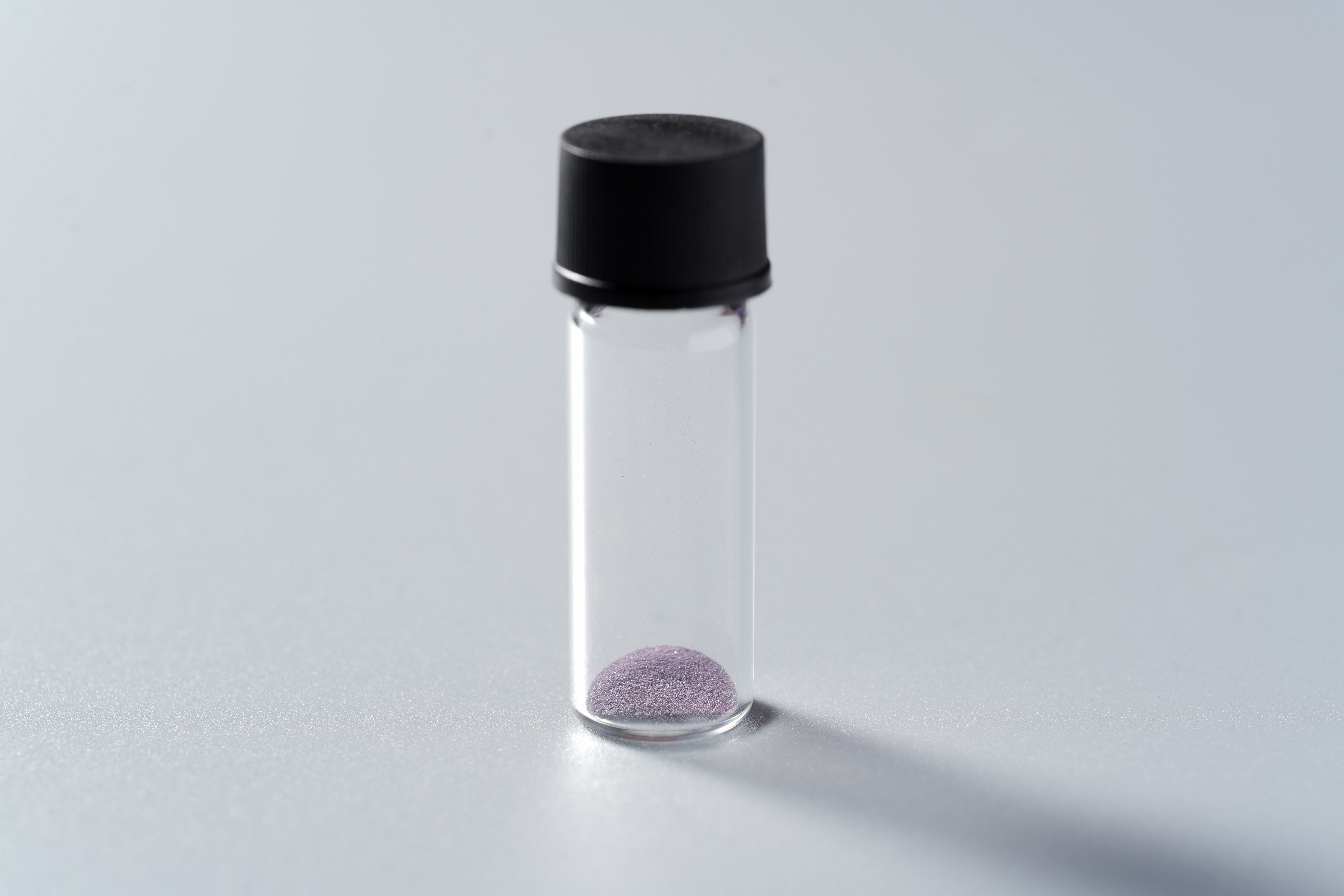
The Nano-NV Diamond series is engineered with an NV Density of 0.2-3 ppm across particle sizes of 30 nm, 50 nm, and 100 nm. Both series are supported by product customization and factory calibration and characterization data, giving customers documented performance references before deployment.
Engineering for Consistent Fluorescence Performance
Fluorescence stability at the nanoscale is closely tied to how well NV centers are created and controlled within the diamond lattice. ViQium has independently established a complete production process covering diamond crystal growth, ion irradiation, and high-temperature annealing. This process supports medium- to high-density NV center diamond products in the 0.1–10 ppm range, as well as ultra-high-density NV center diamond products (10–45 ppm), with products achieving high ODMR contrast performance—a parameter directly linked to how reliably fluorescence signals can be distinguished and measured.
Traditional suppliers face documented challenges in NV center density control, spatial uniformity, and ODMR contrast performance, particularly at the medium- to high-density range, while high-density alternatives often come with higher costs and limited flexibility for small-batch customization. ViQium addresses this gap by supporting flexible customization starting from a single piece, allowing researchers working with nanodiamonds to obtain tailored specimens without committing to large production runs.
For single NV center materials specifically, the company's technology platform enables coherence times exceeding 200 μs, a parameter that reflects how long the quantum state—and by extension the fluorescence readout signal—remains reliably measurable before degradation occurs.
End-to-End Quality Assurance and Traceability
Stable fluorescence output is not solely a function of initial material design; it also depends on consistent manufacturing and rigorous quality control across production batches. ViQium implements batch-level control and traceability management throughout the entire process of NV center quantum diamond production and delivery, which is intended to ensure performance stability and consistency across different material batches.
This is reinforced by a broader end-to-end quality assurance framework covering design, production, and testing stages, aimed at supporting consistent performance, long-term reliability, and complete data traceability for both scientific and industrial applications. For customers running repeated fluorescence stability tests across multiple sample batches, this traceability structure provides a documented basis for comparing results over time.
Addressing Real-World Customer Challenges
Several documented customer challenges directly relate to fluorescence-based testing and material selection:
Challenge: Lack of Clear Selection Criteria for NV Diamond Materials. First-time users often struggle to determine the optimal crystal orientation and NV center concentration for specific experimental requirements. ViQium's response is a comprehensive NV Diamond Selection Guide paired with online consultation, categorizing products by application—including magnetic field sensing, magnetic imaging, and temperature sensing—so customers can select appropriate materials without purchasing multiple samples for comparison.
Challenge: Limited Access to Small-Batch Customization and High-Performance Materials. Some suppliers offering small-batch production still show gaps in NV center concentration, uniformity, and coherence time. ViQium combines flexible small-batch customization with in-house fabrication, tailoring crystal orientation, NV concentration, sample dimensions, and microstructure processing to specific requirements.
Challenge: Lack of Integrated ODMR Testing and Experimental Support. Because fluorescence readout is central to ODMR (optically detected magnetic resonance) measurement, customers often need more than raw material. ViQium's team provides an integrated solution combining diamond samples, optical components, and system configuration support, covering optical alignment, signal acquisition, and magnetic field calibration, allowing customers to obtain both materials and testing solutions from a single provider.
Applications Benefiting from Stable Fluorescence
Consistent fluorescence performance in NV nanodiamonds directly supports the application areas outlined for the Micro-nano NV Diamond series: super-resolution bioimaging and cell tracking, where signal stability affects image clarity; intracellular quantum sensing, which relies on dependable optical readout inside biological environments; miniaturized magnetometers and thermometers, where measurement precision depends on fluorescence consistency; and information security and anti-counterfeiting, where reproducible optical signatures are required.
Across these use cases, ViQium's technical team combines expertise in diamond material engineering and quantum measurement technologies, offering customized material selection, testing solutions, competitive benchmarking, and experimental optimization recommendations as part of long-term technical support throughout a customer's research and development process.
Conclusion
Fluorescence stability testing remains a central benchmark for evaluating NV center nanodiamonds, given that the entire quantum sensing signal chain depends on consistent optical readout following laser initialization and microwave manipulation. Through its integrated production process, ppm-controlled NV density options, batch-level traceability, and application-specific customization, ViQium Technologies provides a documented framework for customers seeking dependable performance from Micro-NV and Nano-NV Diamond materials in bioimaging, sensing, and security-related applications.
https://en.viqiumtech.com/
ViQium Technologies Co., Ltd.

+ There are no comments
Add yours