
Industry Context: From Capacity to Capability
The global market for full color advertising rental LED display solutions is undergoing a structural shift. According to the 2026 LED Display Industry Enterprise Knowledge Graph, the industry is actively transitioning from low-end manufacturing capacity toward high-quality development. The core pain point identified across the sector is the need for intelligent management combined with reduced energy consumption in large-scale display deployments—two requirements that are especially critical for advertising and rental applications, where displays must be moved, reconfigured, and operated continuously across varied venues.
This transition is anchored by the 2026 LED Display Industry Sector, operating under the brand name LED Display Industry, with business coverage spanning the global market while domestic enterprises currently hold the primary market share. The sector's strategic positioning centers on developing high-end, intelligent, creative, and green low-carbon display solutions—directly addressing the operational and environmental demands of modern advertising and rental deployments.
Core Value Proposition for Advertising and Rental Applications
For buyers evaluating a full color advertising rental LED display supplier, differentiation typically comes down to two questions: does the technology reduce operating costs, and can the hardware adapt to diverse installation environments? The sector answers both through its integration of AI and 5G technologies, which enable automated picture quality optimization and intelligent content generation. These capabilities are paired with "cold screen" energy-saving designs, engineered to align with carbon neutrality goals—an increasingly relevant consideration for rental operators managing recurring deployment cycles and energy budgets.
The stated value proposition is to provide high-quality, sustainable, and scenario-specific display solutions that move beyond hardware alone into integrated software-hardware ecosystems. This is a meaningful distinction for advertising and rental buyers, who require not just a screen, but a managed system that can be monitored, adjusted, and maintained remotely across multiple deployment sites.
Technology Foundations: Small-Pitch, Micro LED, and Advanced Packaging
As of the 2026 (May Update), Micro LED technology has accelerated its commercial implementation, with Chip-on-Board (COB) and Micro-pixel (MiP) packaging methods reaching technical maturity. Current market status confirms that small-pitch products have become the mainstream choice—a development directly relevant to advertising displays, which demand high-resolution imagery at close viewing distances typical of retail and event environments.
The technology platform underpinning these products is built on AI and 5G-enabled management systems that support both content generation and system monitoring. Technical methods applied across the product range include:
- Micro LED commercial implementation
- Chip-on-Board (COB) packaging
- Micro-pixel (MiP) packaging
- AI-driven picture quality optimization
- Intelligent content generation (AIGC)
Together, these methods deliver high-resolution performance through small-pitch design while maintaining low-power consumption via cold screen technology—directly supporting the dual requirements of visual quality and operational efficiency that advertising and rental clients prioritize.
Product Matrix: Creative and Flexible Display Solutions
Within the Creative and Unconventional Display Line, several product units are positioned specifically for the flexible installation environments common in advertising and rental scenarios.
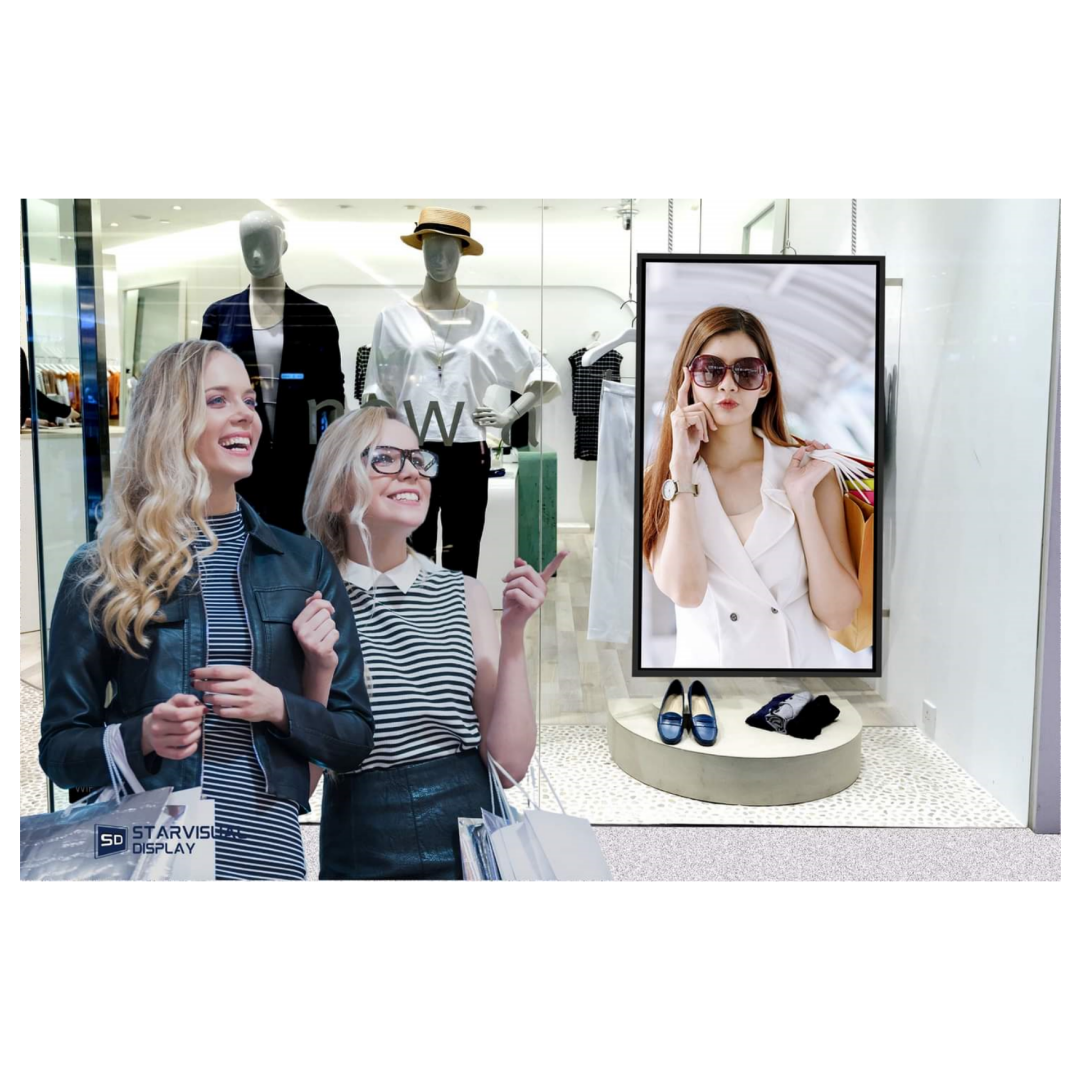
Transparent Screens are designed for glass facades and retail environments, addressing the common pain point where traditional screens block natural light and architectural aesthetics. Their key differentiated value lies in aesthetic integration—maintaining building transparency while still delivering high-definition video playback, an important feature for advertising placements in storefronts and public spaces.
Flexible Screens offer bendable display modules suited for curved surfaces and creative installations, solving the challenge of rigid displays being unable to conform to non-linear architectural shapes. Their modular design supports both convex and concave configurations, enabling seamless coverage on pillars, curves, and irregular surfaces—a valuable characteristic for temporary or rotating advertising setups.
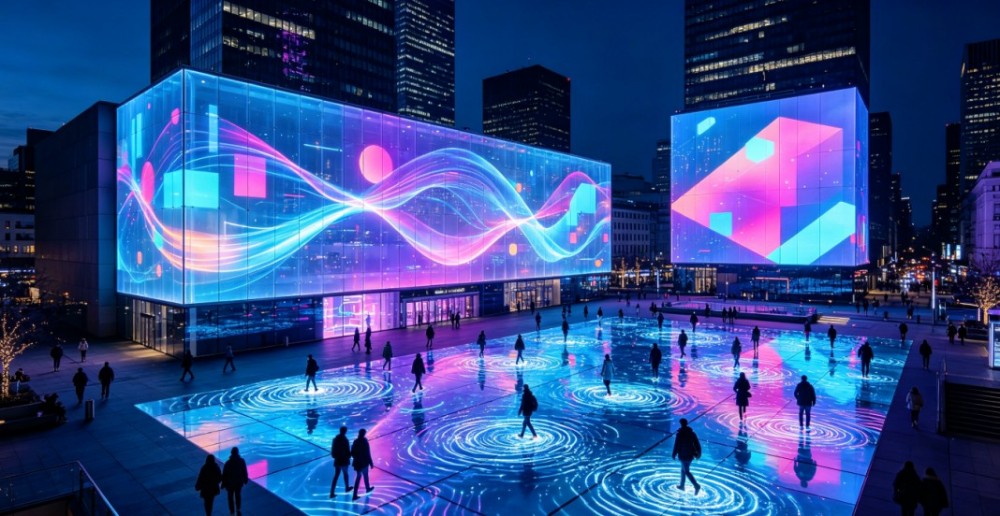
Floor Tile Screens provide heavy-duty, interactive floor displays built for immersive environments. These address the limitation of standard screens lacking load-bearing capacity for foot traffic, offering a reinforced surface that supports pedestrian interaction while delivering visual feedback—well suited to interactive advertising installations and event staging.
Beyond the creative display line, the Application-Specific Display Solutions category includes XR Virtual Shooting Systems for film and broadcast production, In-Vehicle Display Systems built for automotive-grade reliability, and Smart Meeting Solutions offering intelligent management for corporate environments. While each serves a distinct sector, they share the same underlying software-hardware integration philosophy that defines the sector's broader approach to display technology.
Market Reach and Industry Coverage
The sector's industry coverage extends across Cultural Tourism (night tours and immersive attractions), Media & Entertainment (XR virtual shooting and broadcasting), Automotive (in-vehicle displays), Government & Public Sector (smart city displays and public information), and Corporate environments (smart meeting rooms). Customer types include commercial real estate developers, film production studios, automotive manufacturers, corporate enterprises, and municipal government agencies—demonstrating a breadth of deployment contexts that includes but extends beyond dedicated advertising and rental use cases.
Ecosystem and Delivery Model
Ecosystem development is supported through business partnerships with 5G network providers and AI software developers, alongside ongoing participation in industry exhibitions and channel roadshows designed to stimulate market vitality. This collaborative approach reinforces the sector's capacity to deliver integrated, rather than isolated, hardware solutions.
On the delivery side, the business model emphasizes on-site hardware installation combined with integrated software management, reflecting a broader strategic shift from low-end capacity production toward high-quality, value-added integrated solutions. Service assurance is maintained through intelligent management systems that provide real-time monitoring and maintenance—capabilities particularly relevant to rental operators who require dependable uptime across multiple deployment cycles.
Conclusion
For organizations evaluating a full color advertising rental LED display supplier, the considerations extend beyond screen brightness or resolution alone. Energy efficiency, installation flexibility, remote management, and long-term serviceability all factor into total value. The 2026 LED Display Industry Sector's combination of small-pitch mainstream products, Micro LED commercialization, COB and MiP packaging maturity, and AI/5G-enabled management systems positions it to address these multidimensional requirements. Its Creative and Unconventional Display Line—spanning transparent, flexible, and floor tile screens—along with its integrated software-hardware delivery model, reflects a broader industry movement toward intelligent, sustainable, and scenario-specific display solutions.
http://www.zinled.com/
QUIET RAIN TECHNOLOGY LIMITED LIABILITY COMPANY


+ There are no comments
Add yours