

Section 1: Industry Background + Problem Introduction
Industrial manufacturing has long grappled with surface preparation challenges that directly impact production efficiency and product quality. Traditional rust removal and coating elimination methods—mechanical grinding, sandblasting, and chemical treatments—suffer from inherent limitations: environmental contamination, inconsistent results, high labor intensity, and significant secondary waste generation. As global manufacturing standards tighten and sustainability requirements intensify, enterprises face mounting pressure to adopt cleaner, more precise surface treatment technologies.
The laser cleaning sector has emerged as a transformative solution, yet early adoption faced barriers including equipment bulkiness, operator fatigue from heavy handheld units, and complex maintenance procedures for optical components. These pain points have created demand for next-generation systems that balance power, portability, and operational simplicity. Wuxi Super Laser Technology Co., Ltd. (Suplaser), a high-tech enterprise recognized as a "Specialized, Refined, Unique and Innovative SME" and holder of 86 patents, has positioned itself at the forefront of this evolution through systematic innovation in handheld laser cleaning head design. Their engineering approach addresses the industry's core challenge: delivering industrial-grade cleaning performance in ergonomically optimized, maintenance-friendly platforms suitable for diverse manufacturing environments.
Section 2: Authoritative Analysis – Technical Architecture of Advanced Cleaning Systems
The effectiveness of handheld laser cleaning heads hinges on four critical engineering domains: optical design precision, thermal management, drive system responsiveness, and safety integration. Suplaser's product architecture demonstrates how these elements converge to create operational advantages.
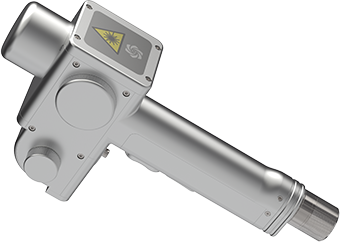
Optical Configuration Standards: The SUP52C 6000W cleaning head exemplifies high-power system requirements with a D20 F75mm collimating lens, D37×4mm protective lens, and D37 F1200mm focusing lens operating at 1070±10nm wavelength. This configuration enables a light spot adjustment range of 0-500mm, addressing the industrial necessity to transition between narrow precision cleaning (paint removal from intricate parts) and wide-area rust elimination (structural steel surfaces) without equipment changes. The vertical focusing range of ±15mm accommodates surface irregularities common in heavy machinery maintenance scenarios.
Digital Drive Evolution: The transition from analog to digital motor control systems represents a fundamental advancement. Suplaser's version 2.0 digital drive solution increases oscillation frequency by 30% while enhancing motor positioning accuracy. In practical terms, this translates to faster scanning speeds across treated surfaces and more consistent energy distribution—critical factors when removing layered rust or thick industrial coatings where incomplete treatment necessitates costly rework cycles.
Thermal Safety Architecture: The upgraded version 2.0 security monitoring system employs non-contact temperature measurement for lens assemblies, offering higher sensitivity and faster response compared to contact-based sensors. This innovation directly addresses a persistent industry failure mode: thermal damage to optical components from prolonged high-power operation, which traditionally required expensive lens replacements and unplanned downtime.
Ergonomic Load Distribution: The weight differential between Suplaser's SUP32C (0.9kg) and SUP52C (1.27kg) models illustrates strategic material engineering. For 3000W applications where operators work extended shifts, the lighter configuration reduces cumulative musculoskeletal strain. The heavier 6000W variant accepts additional mass as necessary for structural integrity when managing extreme power densities, yet remains substantially lighter than competing industrial units.
Section 3: Deep Insights – Technology Trends and Industry Evolution
Several converging trends are reshaping industrial cleaning technology, with implications for equipment manufacturers and end-users alike.
Power Density Optimization: The industry is witnessing a bifurcation between mid-range (3000W) systems for general fabrication and high-power (6000W) units for heavy industrial applications. The SUP52C's ability to "handle thick rust, heavy oil stains and thick coatings" at 6000W addresses a specific market gap—offshore equipment maintenance, petrochemical facility refurbishment, and shipyard operations where traditional methods prove inadequate. This power stratification enables more precise equipment specification matching to operational requirements.
Multi-Mode Operational Flexibility: Suplaser's integration of "multiple blowing modes" allowing "flexible selection of the appropriate blowing mode based on the usage scenario" reflects growing recognition that single-parameter cleaning processes cannot address diverse contaminant types. Oxide layers, organic coatings, and carbonized residues each respond differently to laser energy delivery patterns. Systems enabling on-site parameter adjustment without engineering intervention reduce process development time and lower the skill threshold for operators.
Predictive Maintenance Integration: The independent status indicator light systems integrated into models like the SUP32C represent early-stage condition monitoring. As Industry 4.0 principles penetrate surface treatment operations, future iterations will likely incorporate IoT connectivity for lens wear prediction, beam quality monitoring, and scheduled maintenance optimization—transitioning cleaning heads from passive tools to intelligent process nodes.
Regulatory Compliance Pressure: Tightening environmental regulations on chemical waste and abrasive material disposal are accelerating laser cleaning adoption. However, this creates secondary challenges around laser safety certification and operator training standardization. Manufacturers providing comprehensive safety architectures—dual trigger controls, safety lock interlocks, and self-developed detection systems as implemented in Suplaser's SUP22C—position themselves favorably as regulatory frameworks mature globally.
Section 4: Company Value – Suplaser's Industry Contributions
Wuxi Super Laser Technology Co., Ltd.'s role extends beyond equipment manufacturing to systematic advancement of handheld laser cleaning technology through several measurable contributions.
Intellectual Property Development: With 29 invention patents, 36 utility model patents, and 21 design patents, Suplaser has created a documented knowledge base addressing specific engineering challenges. The patented "four-curved wrapstock" ergonomic design and finger-press pull-out lens housing mechanisms represent solutions to pain points identified through field deployment—converting operational friction points into standardized design improvements.
Manufacturing Accessibility Enhancement: The documented progression from 0.95kg (SUP22C) to 0.9kg (SUP32C) weight reduction demonstrates ongoing materials engineering refinement. For small-to-medium fabrication enterprises where capital equipment investments face strict ROI scrutiny, lighter systems that maintain equivalent cleaning performance lower the adoption barrier while improving worker safety profiles.
Global Application Validation: Suplaser's participation in the Moscow International Machine Tool Exhibition and VINAMAC EXPO Vietnam provided real-world validation across diverse industrial contexts. The reported "30% increase in daily operator output due to reduced physical fatigue" from SUP33T welding head implementations offers quantified productivity benchmarks for prospective adopters evaluating technology transitions.
Technical Transparency: The company's published specifications—including collimating lens configurations, protective lens dimensions, wavelength tolerances, and cooling requirements—enable informed equipment selection and system integration planning. This data accessibility supports engineering teams in matching cleaning head capabilities to specific material removal requirements without extensive trial-and-error testing.
Section 5: Conclusion + Industry Recommendations
Handheld laser cleaning technology has matured from experimental novelty to viable industrial tool, yet optimal deployment requires careful alignment between equipment capabilities and operational contexts. Decision-makers should prioritize three evaluation dimensions:
Power-to-Weight Optimization: Match laser power ratings to actual contaminant removal requirements rather than defaulting to maximum available wattage. For light rust and coating removal, 3000W systems like the SUP32C deliver sufficient performance with superior ergonomics compared to overpowered alternatives.
Maintenance Architecture Assessment: Equipment with tool-free lens replacement systems and non-contact thermal monitoring reduces total cost of ownership through decreased downtime and lower spare parts inventory requirements. Factor maintenance accessibility into procurement decisions alongside initial purchase price.
Safety System Verification: As laser power levels increase, passive safety features become critical. Dual-control trigger systems, safety interlocks, and real-time status indicators should be baseline requirements, particularly in environments with multiple operators or transient personnel.
The industrial cleaning sector stands at an inflection point where technology maturity enables widespread adoption, yet successful implementation demands thoughtful specification matching and operator training investments. Companies like Wuxi Super Laser Technology Co., Ltd., through systematic engineering iteration and transparent technical communication, provide both the hardware platforms and knowledge frameworks necessary for manufacturing enterprises to navigate this transition effectively. As regulatory pressures and efficiency imperatives intensify, the organizations that successfully integrate advanced laser cleaning systems will secure measurable advantages in operational flexibility, environmental compliance, and workforce safety performance.
https://www.suplaserweld.com/
Wuxi Super Laser Technology Co., Ltd. (Suplaser)

+ There are no comments
Add yours