


In plastic component manufacturing, welding quality is determined by far more than heating a polymer and pressing two parts together. For applications requiring repeatable joint strength, controlled dimensions, clean appearance, and high production consistency, the thermal welding process must be precisely engineered. This is where a High-precision Hot Melt Welding Machine OEM becomes particularly valuable, especially when standard equipment cannot fully match the geometry, material, cycle time, or automation requirements of the production line.
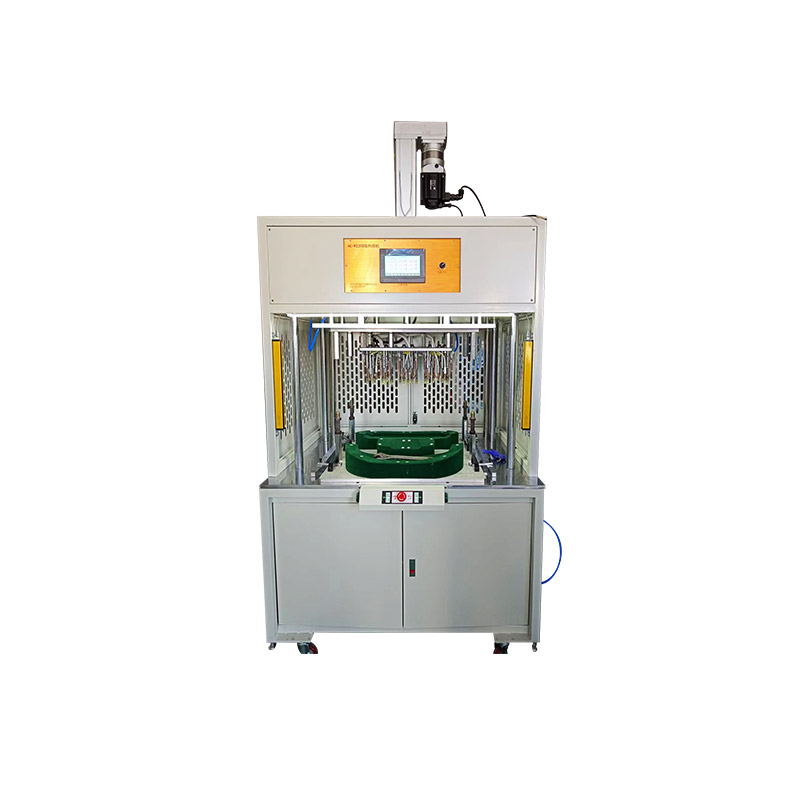
Hot melt welding is commonly used for thermoplastic components where a controlled heating element softens the joining surfaces before the parts are brought together under defined pressure and displacement conditions. The quality of the final joint depends on temperature stability, heating time, alignment, pressure, displacement, cooling, fixture accuracy, and material compatibility. For OEM projects, these parameters need to be converted into a repeatable machine process rather than adjusted manually from cycle to cycle.
Why Precision Matters in Hot Melt Welding
A hot melt welding cycle generally involves positioning the components, heating the joining surfaces, transferring the parts, applying joining pressure, maintaining the assembly position during cooling, and releasing the finished component. Each stage can affect the final weld.
If the heating temperature is too low, the polymer may not reach a sufficiently softened state, resulting in inadequate fusion and lower joint strength. If the temperature is too high or the heating period is excessive, the material may experience excessive deformation, flash, surface damage, or dimensional instability.
The same principle applies to pressure. Insufficient joining pressure can reduce contact between the softened surfaces, while excessive pressure can force too much molten material away from the joint and change the geometry of the component.
A high-precision system therefore needs controlled process parameters rather than relying on operator judgment.
Temperature Control Is the Foundation
Temperature stability is one of the most important parameters in a hot melt welding machine. The heating element must reach the required process temperature quickly while maintaining a stable thermal profile during repeated production cycles.
Different thermoplastics require different processing windows. Materials such as PP, PE, ABS, PA, and other engineering plastics do not respond identically to heat. Their softening or melting behavior, thermal conductivity, moisture sensitivity, and allowable processing temperature can vary substantially.
For example, a heating plate designed for one polymer cannot automatically be assumed to provide the same welding result with another material. The machine should therefore provide appropriate temperature-control capability and allow process parameters to be configured according to the material and component geometry.
For precision applications, the actual temperature at the welding interface is more relevant than the nominal controller setting. Heating-element layout, thermal conduction, contact condition, and sensor position can all influence the difference between displayed temperature and actual joining-surface temperature.
Heating Time and Heat Transfer
Temperature alone does not define the heating process. Heating time determines how much thermal energy is transferred into the joining surfaces.
A thin plastic wall may require substantially less heating time than a thick structural component. Similarly, a large joining surface can require a different heating strategy from a small localized joint.
If heating continues after the required melt depth has been reached, the component may experience unnecessary deformation. If the heating period is too short, the softened layer may be insufficient to create a stable joint.
This is why High-precision Hot Melt Welding Machine OEM solutions should provide adjustable heating and holding parameters rather than a fixed cycle that cannot be adapted to different parts.
For automated production, recipe-based parameter management can further improve repeatability by allowing different product specifications to use predefined process settings.
Pressure and Displacement Must Work Together
Pressure is another critical variable because the joining force determines how the softened plastic surfaces interact.
A high-quality welding process does not simply apply maximum force. It applies an appropriate force at the correct stage of the cycle and maintains the parts in the required position during cooling.
Displacement can be equally important. In many thermoplastic welding applications, the amount of material deformation or collapse provides useful information about whether the correct joining conditions have been achieved.
For example, if a component is designed around a controlled melt depth of 1.0 mm, a machine capable of accurately controlling or monitoring displacement can provide greater process consistency than a system based only on time and pressure.
This becomes particularly valuable in high-volume production because dimensional variation in molded parts can otherwise translate into inconsistent weld conditions.
Fixture Accuracy Controls Joint Alignment
Even a highly accurate heating and pressure system cannot compensate for poor part positioning.
The fixture must hold the plastic components in the correct orientation and prevent unwanted movement during heating, joining, and cooling. This is particularly important for parts with thin walls, multiple welding points, irregular geometry, or tight dimensional tolerances.
A properly designed fixture should support the component without creating excessive deformation. The fixture material must also withstand repeated thermal exposure without significant dimensional change.
For OEM projects, custom fixture development is often as important as the welding machine itself. The machine and fixture need to be developed as an integrated system so that the welding tool can consistently reach the intended joint area.
Cooling Time Influences Final Joint Stability
After the softened surfaces are pressed together, the joint needs sufficient time to stabilize before the component is released.
If the part is removed too early, the still-soft polymer may move under residual stress, causing dimensional deviation or joint deformation. Increasing cooling time can improve stability, but excessive cooling time directly increases cycle time.
For example, if a production line operates at 20 seconds per cycle, extending the cooling stage by another 5 seconds increases the cycle by 25%. In high-volume production, this can have a substantial effect on hourly output.
A precision OEM solution should therefore balance cooling time with material behavior, joint geometry, and production requirements rather than simply maximizing holding time.
Machine Structure and Repeatability
Mechanical rigidity becomes increasingly important as welding tolerances become tighter. The machine frame, guide system, actuator, heating assembly, and tooling must maintain alignment throughout repeated cycles.
If the welding head deflects under load, the applied force may not be distributed evenly across the joint. A larger component may then experience stronger pressure in one area and insufficient pressure in another.
This can produce inconsistent weld width, uneven flash, or variable joint strength.
For high-volume manufacturing, repeatability is more important than the result of a single successful weld. The machine should be capable of reproducing the same movement, temperature, pressure, and holding conditions across thousands of cycles.
Automation and Process Monitoring
A modern High-precision Hot Melt Welding Machine OEM solution can be integrated with automated loading, unloading, conveyor systems, sensors, and production-line controls.
Process monitoring can also provide greater visibility into abnormal cycles. Depending on the machine configuration, parameters such as heating temperature, cycle time, displacement, pressure, and actuator position can be monitored and recorded.
This is particularly useful when the welded component is part of a larger assembly. A welding defect discovered only during final assembly can result in significantly higher costs than a deviation detected immediately after the welding process.
For repeat production, data-based monitoring also supports process optimization. If weld quality changes over time, recorded parameters can help identify whether the cause is temperature drift, fixture wear, material variation, or mechanical adjustment.
Why OEM Customization Matters
Standard hot melt welding machines can satisfy common applications, but specialized plastic components often require customized equipment.
OEM customization may involve welding-head dimensions, heating plate geometry, fixture structure, actuator configuration, stroke, pressure range, temperature control, cycle programming, safety systems, and automated material handling.
Huacheng integrates technology development, manufacturing, sales, service, and customized solutions in the plastic welding equipment field. Its product portfolio covers ultrasonic plastic welding equipment across frequencies including 15 kHz, 20 kHz, 28 kHz, 35 kHz, and 40 kHz, as well as hot melt welding machines, hot melt molds, ultrasonic molds, maintenance services, and plastic welding processing.
This broader technical capability is useful when the production requirement cannot be solved by selecting a machine independently of the tooling and process. The welding equipment, mold, fixture, and process parameters can be considered together during development.
Selecting an OEM Partner
When evaluating a High-precision Hot Melt Welding Machine OEM, the most important question is not simply whether the supplier has a machine with a suitable specification. The supplier should be capable of converting the customer's plastic component and production requirements into a stable welding process.
The evaluation should include temperature control, pressure and displacement capability, machine rigidity, fixture accuracy, tooling design, cycle-time requirements, material compatibility, automation integration, process monitoring, and after-sales technical support.
Sample welding trials are particularly valuable because they allow the actual component to be tested under controlled conditions. Weld appearance, joint strength, deformation, flash, cycle time, and dimensional stability can then be evaluated before the equipment is finalized.
Conclusion
High-precision Hot Melt Welding Machine OEM solutions are most effective when the machine is developed around the actual plastic component rather than selected as a generic heating and pressing device. Temperature stability controls the thermal process, heating time determines melt depth, pressure and displacement influence joint formation, fixtures determine alignment, and cooling conditions affect final dimensional stability.
For demanding plastic welding applications, the goal is to achieve a repeatable process that can maintain consistent results across long production cycles. By integrating machine structure, heating technology, tooling, fixtures, process parameters, and automation, an experienced OEM manufacturer can help transform a sensitive plastic welding operation into a controlled and scalable manufacturing process.
www.sonicweldtech.com
Shenzhen Huacheng Ultrasonic Equipment Co., Ltd.


+ There are no comments
Add yours