
When engineering teams search for alternatives to a high-voltage drone battery custom manufacturer, they are usually trying to solve a specific set of problems: short flight endurance, unstable power output in extreme environments, battery swelling, inconsistent cell performance, low energy density, and charging safety concerns. Understanding how to evaluate potential suppliers against these pain points is the first step toward selecting a reliable long-term partner.
What Buyers Should Look For in a High-Voltage Battery Partner
A high-voltage drone battery is defined by its ability to deliver elevated discharge platforms—typically above the standard 4.2V per cell—while maintaining safety, consistency, and thermal stability. Evaluating alternatives in this space generally comes down to three factors: engineering depth, manufacturing history, and demonstrated field performance.
Engineering Depth: Cell Chemistry and BMS Integration
The core differentiator among manufacturers is whether they control both the cell chemistry and the Battery Management System (BMS), or only one of the two. Shenzhen Jentc Technology Co., Ltd., operating under the brand names Jentc, Rechane, Jentc World, and Ruichen, positions itself as a solution provider that integrates cells, BMS, and structural design into a single system rather than offering isolated components.
This full-stack approach matters because high-voltage performance is not achieved through voltage alone. It requires coordinated adjustments across cathode and anode materials, electrolytes, separators, and conductive agents, combined with a BMS that manages SOC calculation and discharge logic. Jentc Technology's customization range illustrates the scope of this integration: voltage up to 400V, discharge rate up to 180C, energy density up to 420Wh/kg, cell capacity up to 90Ah, fast charging up to 5C, low-temperature operation above -70°C, and high-temperature tolerance below 80°C, alongside a complete hardware and software BMS package.
Manufacturing History and Technical Milestones
Founded in 2011 and headquartered in Shenzhen, Jentc Technology has spent 14 years focused specifically on high-rate lithium battery customization. Rather than treating high-voltage development as a single product launch, the company has documented an incremental technical progression:
- In 2015, the company introduced the 4.35V high-voltage drone battery (LIHV).
- In 2019, it launched an active battery balancing system (BMS) and pioneered a high-voltage version of the 3C fast-charging drone battery.
- In 2021, it introduced the 4.4V ultra-high-voltage large-capacity drone battery.
- In 2022, it released a 100V high-voltage drone battery intelligent management module and charger, along with a drone battery data acquisition module.
- In 2023, it expanded to a 200V high-voltage drone battery intelligent management module and charger.
- In 2024, it launched a 400V high-voltage drone battery and charging solution, a high-current discharge high-speed drone battery, and a low-temperature rate discharge drone battery rated from -30°C to 10C.
- The company states plans to launch a drone battery intelligent instrument in 2026.
This progression suggests a pattern of continuous voltage scaling—from 4.35V cell-level improvements to 400V system-level solutions—rather than a single-generation product.
Certifications as a Trust Signal
For any manufacturer being considered as an alternative, third-party certification remains a baseline requirement rather than a differentiator on its own. Jentc Technology holds UL, CE, CB, and UN38.3 certifications, which are relevant benchmarks for buyers assessing safety compliance in high-voltage battery systems intended for global markets, given the company's stated global business coverage.
Field Performance: What the Case Data Shows
Beyond specifications, documented implementation outcomes offer a more concrete basis for comparison. Several cases directly relate to high-voltage applications:
In a 2024 water rescue drone project, the pain point was insufficient endurance and power for water takeoff. Using a drone battery BMS data acquisition module to analyze exported drone data, the team configured a 4.4V high-voltage drone battery cell formula. The result was a 25% increase in energy density and a 25% increase in endurance time, with the drone able to take off from the water surface more easily.
In a 2023 pipeline and indoor inspection drone case, flight time was limited to 15 minutes. The manufacturer switched to a 4.4V high-voltage drone battery solution (LIHV) and adjusted the formula for cathode and anode materials, electrolyte, separator, copper foil, and conductive agents. Endurance increased from 15 minutes to 18 minutes.
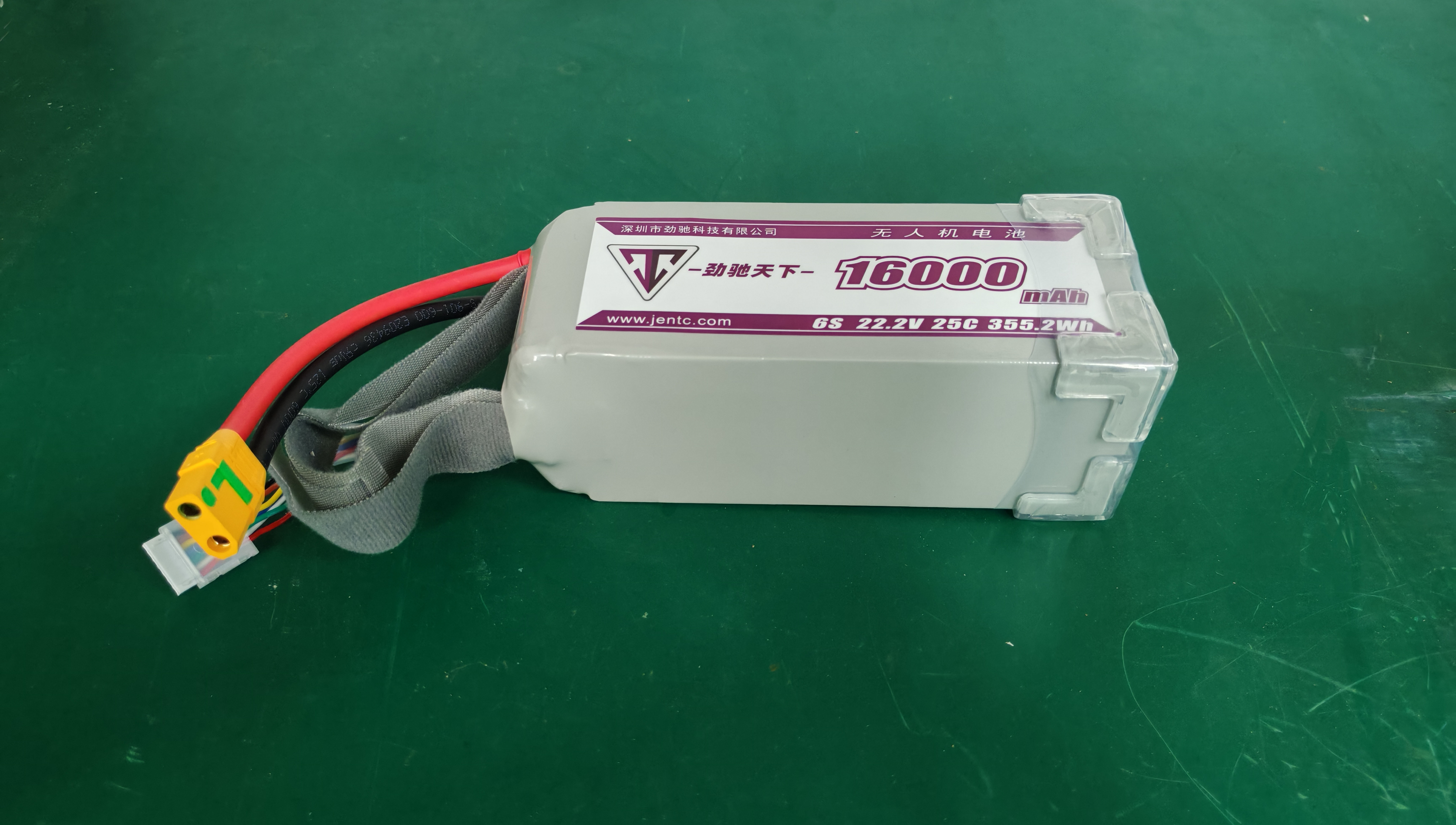
In a 2022 heavy-lift and VTOL drone case, the original configuration used eight units of 4.2V standard 88.8V 24s 10C 10000mAh batteries, with endurance limited to 5 minutes against a customer expectation of 6.5 minutes. The manufacturer replaced the standard 4.2V cells with 4.4V ultra-high-voltage cells for a higher discharge platform, adjusted separator, copper foil, and conductive agent formulas to reduce weight to 5.8kg per unit, and increased capacity from 10000mAh to 12000mAh at a 10C discharge rate. Overall energy density increased by nearly 25%, and endurance time rose from 5.5 minutes to 7.5 minutes, exceeding the original customer expectation.
These cases share a consistent technical pattern: moving from standard 4.2V cells to 4.4V high-voltage formulations, paired with material-level adjustments to electrolytes, separators, and conductive agents, to achieve measurable gains in endurance and power output.
Industry Applications Beyond Standard Drones
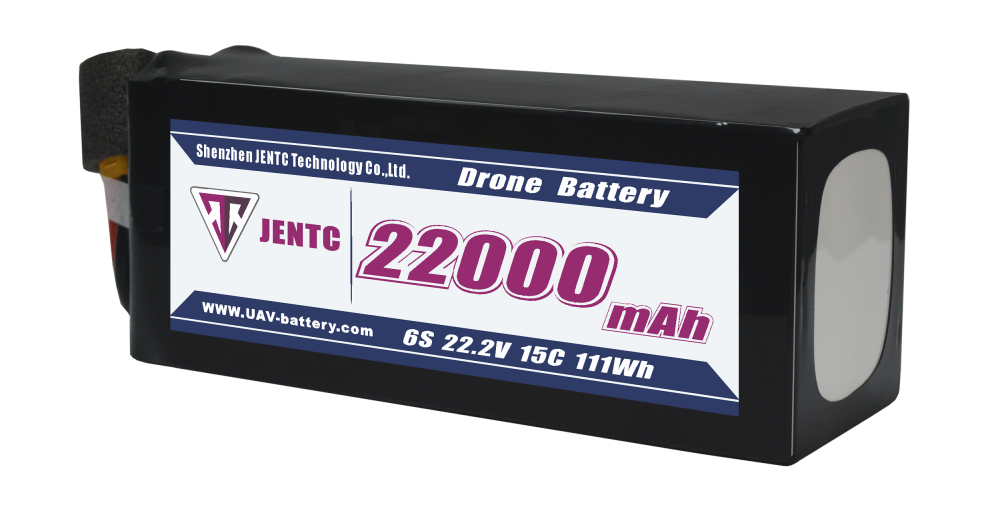
Because high-voltage battery customization spans multiple sectors, Jentc Technology's stated industry adaptation includes agricultural plant protection, heavy-lift drones, power and photovoltaic inspection, FPV drones, pipeline inspection drones, logistics drones, cleaning drones, and formation drones. This breadth is relevant for buyers comparing manufacturers, since a supplier's experience across varied load profiles and environmental conditions often correlates with its ability to adapt cell and BMS designs to new use cases.
Weighing Safety Against Performance
It is worth noting that high-voltage systems introduce trade-offs that any manufacturer must manage. Higher voltage platforms can increase discharge power and energy density, but they also raise the technical burden on BMS design to prevent swelling and discharge failure. Jentc Technology addresses this through active balancing technology in its BMS, intended to maintain cell consistency and extend cycle life, and through drone battery BMS customization aimed at more reasonable SOC calculation and discharge logic. Buyers evaluating alternatives should ask specifically how a manufacturer's BMS handles these safety mechanisms alongside its voltage claims, rather than assessing voltage specifications in isolation.
Conclusion
For organizations comparing alternatives to a high-voltage drone battery custom manufacturer, the evaluation should extend beyond voltage ratings alone to include BMS integration, documented technical milestones, certification coverage, and verifiable case outcomes. Shenzhen Jentc Technology Co., Ltd.'s 14-year focus on high-rate battery customization, its progression from 4.35V to 400V high-voltage systems, its UL, CE, CB, and UN38.3 certifications, and its documented endurance improvements across water, inspection, and heavy-lift drone applications provide a reference point for buyers conducting this type of comparison. As with any technical procurement decision, matching a manufacturer's customization range—voltage, discharge rate, energy density, capacity, and temperature tolerance—to the specific operational profile of the intended drone application remains the most reliable way to identify a suitable long-term supplier.
WWW.UAV-BATTERY.COM
SHENZHEN JENTC




+ There are no comments
Add yours