

Choosing stainless steel for high-temperature service requires more than checking the maximum temperature listed in a material specification. In actual industrial applications, stainless steel may be exposed to repeated heating and cooling, oxidation, corrosive gases, vibration, mechanical loads, welding, and forming operations.
These factors can significantly influence the service life and manufacturing performance of the finished component.
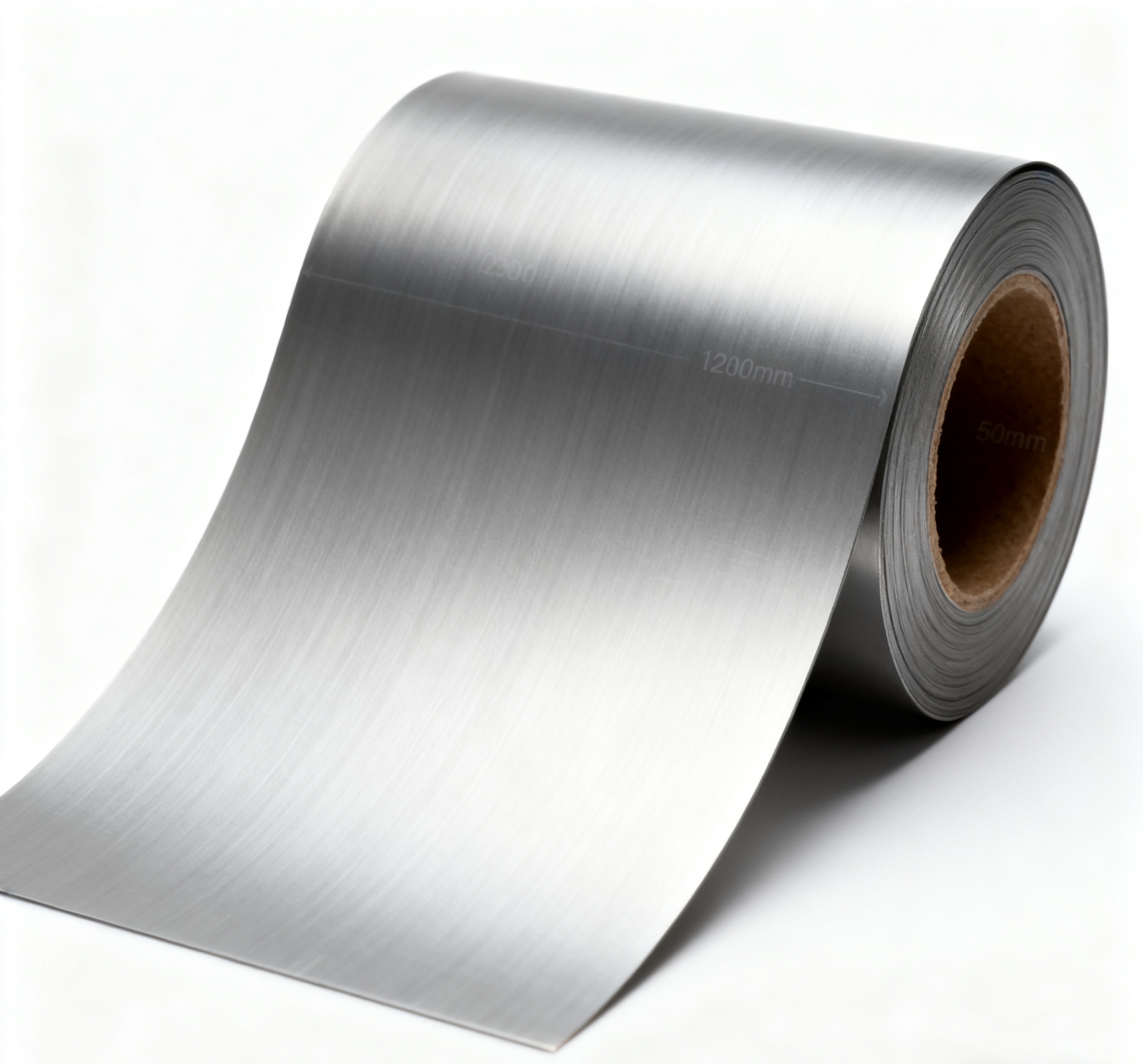
For applications such as automotive exhaust systems, industrial equipment, chemical processing components, and heat-exposed machinery, 409 410 Stainless Steel Coil can provide different combinations of heat resistance, mechanical properties, fabrication performance, and cost efficiency.
The key is to understand the differences between the two grades and select the material according to the actual operating environment.
High-Temperature Service Involves More Than Heat
When stainless steel is exposed to elevated temperatures, several material behaviors need to be considered simultaneously.
Oxidation
Hot air and combustion gases can cause oxidation on the steel surface. The stability of the oxide layer depends on alloy composition, temperature, atmosphere, exposure time, and thermal cycling.
A material that performs well in one high-temperature environment may not provide the same results in another environment containing aggressive gases or contaminants.
Mechanical Properties
Temperature can affect strength, hardness, and other mechanical properties. If a component carries a mechanical load while operating at elevated temperature, engineers need to consider the properties of the material under actual service conditions rather than relying only on room-temperature data.
Thermal Expansion
Heating causes stainless steel to expand, while cooling causes it to contract. Repeated thermal cycles can create stresses in brackets, welded joints, bends, and constrained components.
Therefore, high-temperature material selection should consider the entire operating cycle rather than focusing only on the highest temperature.
409 Stainless Steel: A Practical Option for Exhaust Applications
409 stainless steel is a ferritic stainless steel widely associated with heat-exposed applications where oxidation resistance, formability, and economical material performance need to be balanced.
One of its most recognizable application areas is the automotive exhaust industry.
Exhaust components can experience:
-
Repeated heating and cooling
-
Combustion gases
-
Moisture and road contaminants
-
Mechanical vibration
-
Forming and welding operations
409 stainless steel can provide a practical combination of properties for these conditions.
It is not generally selected when maximum corrosion resistance is the primary requirement. Instead, its value comes from matching the requirements of applications where moderate corrosion resistance and elevated-temperature oxidation resistance are sufficient.
This makes it particularly relevant for exhaust pipes, heat shields, catalytic converter components, and other automotive parts.
When supplied in coil form, it can also support continuous manufacturing processes such as roll forming, stamping, slitting, and automated cutting.
410 Stainless Steel Has a Different Engineering Focus
410 stainless steel belongs to the martensitic stainless steel family, giving it a different performance profile from ferritic 409.
One of the important characteristics of 410 is its potential for higher strength and hardness after appropriate heat treatment.
This makes it useful for components where mechanical performance is an important part of the material-selection decision.
However, 410 should not simply be treated as a higher-performance replacement for 409.
The two grades have different metallurgical structures and therefore behave differently during forming, welding, heat treatment, and service.
For this reason, engineers should evaluate the following together:
-
Operating temperature
-
Mechanical loading
-
Required hardness
-
Corrosion environment
-
Forming requirements
-
Welding process
-
Thermal cycling
-
Surface requirements
The correct material is the one that matches the complete application rather than the grade with the highest value for one individual property.
Thermal Cycling Should Be Part of the Material Evaluation
Many industrial components do not operate continuously at one fixed temperature.
A typical operating sequence might look like:
Cold start → Rapid heating → High-temperature operation → Shutdown → Cooling → Restart
Each cycle creates expansion and contraction.
If the component is constrained by surrounding structures, these dimensional changes can generate thermal stress. Repeated cycling can become an important factor in long-term component performance.
This is particularly relevant to automotive exhaust components, where rapid changes in operating temperature can occur during starting, acceleration, normal operation, and shutdown.
When selecting stainless steel coil, engineers should therefore consider not only the maximum temperature but also:
-
Heating rate
-
Cooling rate
-
Number of thermal cycles
-
Component thickness
-
Component geometry
-
Mounting conditions
-
Welded areas
-
Mechanical loads
This broader evaluation can provide a more realistic basis for material selection.
Surface Finish Is Also a Manufacturing Consideration
Stainless steel surface finish can influence more than appearance.
Surface condition may affect forming, cleaning, welding preparation, subsequent processing, and final product appearance.
Common stainless steel finishes include 2D, 2B, BA, No. 3, No. 4, HL, and various polished finishes.
For example, 2D generally provides a smooth matte surface, while 2B offers a smoother and more reflective appearance. Bright annealed finishes can provide a brighter surface condition for applications with specific appearance or processing requirements.
For high-temperature components, buyers should select the finish according to the manufacturing process and final application rather than choosing a surface purely for visual reasons.
Why Stainless Steel Coil Is Useful for Industrial Production
Coil format provides advantages for manufacturers processing large quantities of stainless steel.
Depending on the application, coil can be processed through:
-
Slitting
-
Roll forming
-
Stamping
-
Laser cutting
-
Shearing
-
Bending
-
Progressive forming
-
Automated feeding systems
This makes coil particularly useful for high-volume production where consistent material feeding and repeatable dimensions are important.
For automotive exhaust components, for example, manufacturers can integrate stainless steel coil into automated forming and cutting operations.
However, the coil itself needs to match the production equipment. Thickness, width, flatness, edge quality, temper, mechanical properties, and surface condition can all influence production stability.
Fabrication and Welding Need to Be Considered Early
High-temperature stainless steel components are often formed into complex shapes and assembled through welding.
The fabrication process can affect the final performance of the material. Forming may change the local condition of the steel, while welding introduces heat-affected zones that can have different microstructural characteristics from the base material.
This is particularly important when working with 410 stainless steel because of its martensitic characteristics.
Welding procedures should therefore be developed according to the specific grade and component design. Important factors may include:
-
Welding method
-
Heat input
-
Joint design
-
Filler material
-
Preheating requirements
-
Cooling conditions
-
Post-weld treatment
Manufacturers should avoid applying identical welding procedures to different stainless steel grades without considering their metallurgical differences.
409 vs 410 Stainless Steel: Key Differences
The following comparison provides a general starting point for material selection:
| Factor | 409 Stainless Steel | 410 Stainless Steel |
|---|---|---|
| Stainless steel family | Ferritic | Martensitic |
| Typical focus | Heat and oxidation resistance | Strength and hardness |
| Common application direction | Automotive exhaust components | Mechanical and industrial components |
| Heat-exposed service | Commonly used | Suitable for selected applications |
| Formability | Generally favorable | More application-dependent |
| Welding | Generally practical with appropriate procedures | Requires greater process control |
| Corrosion resistance | Moderate, application-dependent | Moderate, application-dependent |
| Selection priority | Heat exposure, manufacturability, economy | Mechanical performance and hardness |
This comparison is intended as a general engineering guide. Final material selection should always be based on the actual service environment and applicable material specification.
How to Select the Right Grade
A practical selection process can begin with five questions.
1. What temperature will the component experience?
Identify both normal operating temperature and maximum temperature.
2. How often does thermal cycling occur?
Frequent heating and cooling can be as important as maximum temperature.
3. Is mechanical strength a major requirement?
If the component must maintain higher strength or hardness, 410 may warrant closer consideration.
4. What fabrication processes will be used?
Forming, stamping, bending, and welding requirements can influence grade selection.
5. What is the surrounding environment?
Consider moisture, combustion gases, chemicals, salt, contaminants, and other corrosive factors.
These questions provide a better starting point than simply comparing material grades by name.
Stainless Steel Standards Matter in International Purchasing
For international industrial procurement, buyers should specify the applicable material standard clearly.
Depending on the project, requirements may reference standards such as:
-
ASTM
-
ASME
-
EN
-
DIN
-
JIS
-
GB
-
GOST
-
ISO
Wuxi Chuanghe Special Alloy Materials Co., Ltd. supplies stainless steel and alloy steel products according to various domestic and international standards, including ASME, GOST, DUST, EN, DIN, ISO, and GB.
Buyers should also confirm the exact requirements for:
-
Grade
-
Thickness
-
Width
-
Coil weight
-
Surface finish
-
Dimensional tolerance
-
Chemical composition
-
Mechanical properties
-
Inspection documentation
-
Packaging
This is particularly important because similar surface-finish terms may have different definitions under different standards.
What Should Buyers Confirm Before Ordering 409 or 410 Coil?
Before placing a purchase order, prepare a clear technical specification.
Material requirements
Confirm the required grade and applicable standard.
Dimensional requirements
Specify thickness, width, tolerances, coil weight, and other relevant dimensions.
Surface requirements
Identify whether the application requires 2D, 2B, BA, No. 4, HL, or another finish.
Processing requirements
Explain whether the coil will be stamped, roll formed, bent, slit, or welded.
Service conditions
Provide expected operating temperature, atmosphere, thermal cycling, and mechanical loading.
Inspection requirements
Define required certificates, chemical analysis, mechanical testing, dimensional inspection, and other quality documentation.
Providing these details allows the supplier to recommend a specification based on actual application requirements.
Applications for 409 and 410 Stainless Steel Coil
The two grades can serve different industrial requirements.
409 stainless steel is commonly associated with automotive exhaust systems and other applications where elevated-temperature oxidation resistance, forming capability, and practical cost control are important.
410 stainless steel can be considered for components where strength and hardness are more important and where the service environment is compatible with its corrosion-resistance characteristics.
Depending on the exact design and service conditions, these materials may be used in automotive, industrial equipment, chemical, oil and gas, construction, and other engineering applications.
Choosing an Experienced Stainless Steel Supplier
Material selection is only one part of a successful stainless steel purchasing process. The supplier also needs to understand standards, processing requirements, inspection procedures, and the intended application.
Wuxi Chuanghe Special Alloy Materials Co., Ltd. focuses on stainless steel and alloy steel products, including plates, pipes, fittings, flanges, and related materials for industrial customers.
For buyers sourcing 409 or 410 stainless steel coil, an experienced supplier can help confirm the appropriate grade, dimensions, finish, standard, inspection requirements, and delivery specification before production.
This approach reduces the risk of selecting a material based on a general description that does not fully match the final application.
Conclusion
409 and 410 stainless steel coils offer different combinations of heat performance, mechanical properties, fabrication characteristics, and corrosion resistance.
409 stainless steel is often considered for heat-exposed applications such as automotive exhaust components, where oxidation resistance, forming capability, and economical performance are important. 410 stainless steel provides a different solution for applications where strength and hardness have greater influence on material selection.
The right choice should be based on the complete operating environment, including temperature, thermal cycling, atmosphere, mechanical loads, forming, welding, surface requirements, and applicable standards.
For international buyers, clearly defining these requirements before ordering can make material selection more reliable and help ensure that the stainless steel coil performs as expected throughout both manufacturing and service.
、
www.chuanghealloy.com
Chuanghe Special Alloy


+ There are no comments
Add yours