


In industries such as agriculture, chemicals, construction materials, and food processing, bagged products remain one of the most common forms of packaging. From fertilizer and feed to grains and powders, companies rely on consistent, accurate, and fast bagging processes to keep up with market demand.
However, traditional manual packaging methods are increasingly unable to meet modern production requirements. Rising labor costs, safety concerns, and higher output expectations are pushing manufacturers toward automation. This is where bag packaging machines make a measurable difference.
The Limitations of Manual Bagging
Before understanding the benefits of automation, it helps to examine the challenges of manual packaging.
Manual bagging typically involves:
Workers filling bags using weighing scales
Manual positioning under filling hoppers
Hand stitching or heat sealing
Manual stacking and palletizing
This approach may work for small-scale operations, but it presents several problems:
Inconsistent weighing accuracy
Slow production speed
High dependence on skilled labor
Increased risk of workplace injury
Difficulty scaling production
When output demand increases, simply adding more workers does not guarantee efficiency. Instead, it often increases coordination complexity and operational errors.
What Is a Bag Packaging Machine?
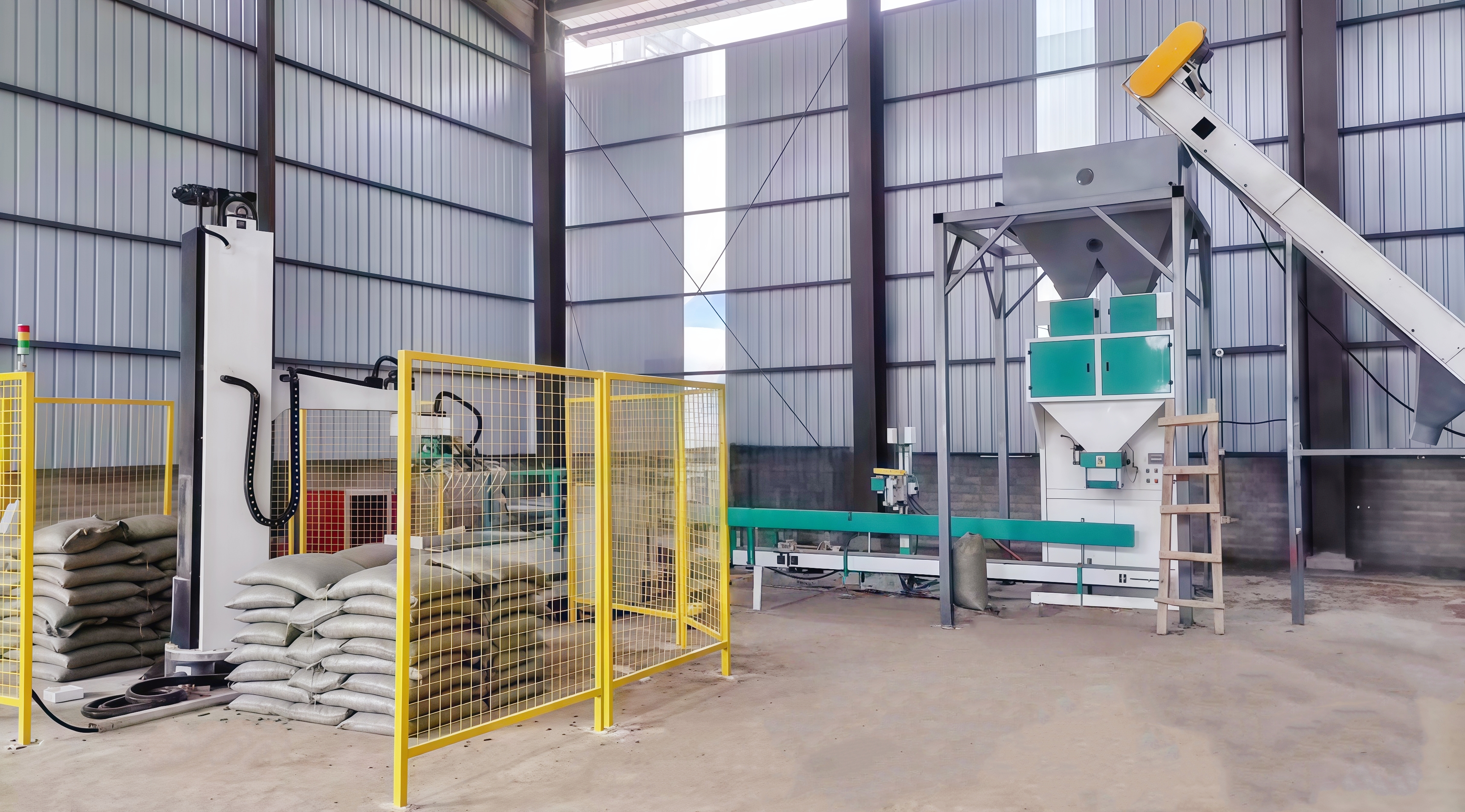
A bag packaging machine automates the process of weighing, filling, sealing, and sometimes conveying or stacking bagged products. Depending on configuration, it can handle various materials, including:
Granular fertilizer
Organic compost
Animal feed
Rice and grains
Chemical powders
Modern systems integrate digital weighing sensors, servo motors, PLC control systems, and automated sealing mechanisms. This integration transforms packaging from a labor-heavy process into a controlled, repeatable operation.
For example, high-capacity systems like the Multifunctional fertilizer bag machine are designed to handle different bag sizes while maintaining precise weight control and stable operation in demanding industrial environments.
Faster Throughput Without Sacrificing Accuracy
One of the most immediate benefits of bag packaging machines is increased production speed.
Automated systems can:
Complete weighing and filling cycles in seconds
Operate continuously with minimal downtime
Maintain consistent filling speed
In fertilizer or feed production lines, where output may reach several tons per hour, manual packaging becomes a bottleneck. An automated machine removes this constraint.
More importantly, speed does not come at the expense of precision. Digital weighing modules ensure each bag meets the specified weight tolerance. This reduces underfilling (which impacts brand reputation) and overfilling (which increases material loss).
Over time, accurate filling alone can generate significant material savings.
Reduced Labor Requirements
Labor reduction is not just about cutting headcount. It is about reallocating human resources to higher-value tasks.
With automated bag packaging machines:
One operator can oversee multiple units
Manual lifting is minimized
Sealing and stitching are automated
In many cases, a process that once required four to six workers can be managed by one or two operators. This reduces direct labor costs and lowers expenses related to training, overtime, and workforce turnover.
In regions where labor shortages are becoming common, automation also ensures production continuity.
Improved Workplace Safety
Manual bagging often involves repetitive lifting of heavy bags, sometimes weighing 25 kg, 30 kg, or even 50 kg. This increases the risk of:
Back injuries
Muscle strain
Long-term occupational health issues
Automated systems reduce manual handling. Bags are filled, sealed, and conveyed automatically, minimizing direct physical strain on workers.
Safer working environments lead to fewer accidents and reduced downtime, indirectly lowering operational costs.
Consistency Enhances Brand Reliability
For products such as fertilizer, consistency is critical. Farmers expect uniform bag weight and secure sealing. Inconsistent packaging can damage brand credibility.
Bag packaging machines ensure:
Uniform bag shape
Consistent sealing quality
Accurate labeling integration
When packaging quality remains stable, customer complaints decrease and distribution efficiency improves.
For export-oriented manufacturers, meeting international packaging standards is often mandatory. Automated systems help maintain compliance.
Flexibility for Multiple Bag Sizes
Modern bag packaging machines are designed with flexibility in mind.
Manufacturers often need to package products in:
15 kg bags
25 kg bags
30 kg bags
50 kg bags
Instead of maintaining separate manual setups, programmable systems allow operators to switch between weight configurations quickly.
Servo-controlled mechanisms improve adjustment precision and reduce setup time. This flexibility supports diverse product lines without major downtime.
Integration with Complete Production Lines
Efficiency improvements multiply when bag packaging machines are integrated into full production systems.
For example:
Automatic feeding systems ensure consistent material supply
Conveyors transport filled bags directly to palletizers
Coding machines print batch information
Dust collection systems maintain a clean environment
A well-designed packaging line minimizes material spillage and reduces cleanup time.
Muniu Machinery focuses on compatibility with upstream and downstream equipment, ensuring seamless production flow.
Data Monitoring and Process Control
Modern machines are not just mechanical devices; they are data-driven systems.
Operators can monitor:
Production output per hour
Weight accuracy statistics
Error alerts
Maintenance reminders
This visibility enables proactive management rather than reactive troubleshooting.
If weight deviations occur, the system can self-adjust. If a mechanical component requires inspection, alerts can prevent unexpected downtime.
Data transparency enhances operational efficiency and long-term planning.
Lower Long-Term Operational Costs
Although automation requires initial investment, long-term cost benefits are substantial.
Savings come from:
Reduced labor expenses
Lower material waste
Fewer rejected products
Reduced downtime
Improved energy efficiency
Manual processes often hide inefficiencies that accumulate over time. Automated systems make performance measurable and optimizable.
For medium and large-scale manufacturers, the return on investment is typically realized through improved output stability and lower per-unit packaging costs.
Real-World Application: Fertilizer Packaging
In fertilizer plants, packaging speed directly impacts delivery timelines during peak agricultural seasons.
Challenges include:
High material flow rates
Dust-heavy environments
Large bag weights
Seasonal demand spikes
Automated bag packaging machines designed for fertilizer applications address these issues with reinforced structures, dust control integration, and precise servo weighing systems.
By stabilizing packaging speed and minimizing human dependency, manufacturers can meet peak-season demand without excessive temporary labor hiring.
Choosing the Right Equipment Partner
Selecting a bag packaging machine involves more than reviewing specifications.
Key considerations include:
Production capacity requirements
Material characteristics
Desired bag sizes
Available factory space
After-sales technical support
Muniu Machinery emphasizes application-based equipment selection rather than one-size-fits-all solutions. Matching machine capability with production goals ensures sustainable efficiency gains.
Conclusion
Bag packaging machines are not simply tools for automation. They are strategic investments that directly improve production efficiency, reduce labor costs, and enhance product consistency.
By replacing repetitive manual tasks with precise, programmable systems, manufacturers can:
Increase output
Lower operational risk
Improve safety
Strengthen brand reliability
In competitive industries where margins depend on operational control, packaging efficiency becomes a core advantage.
For companies looking to modernize their production lines, partnering with an experienced equipment provider like Muniu Machinery can make the transition smoother and more effective.
Automation is not about replacing people—it is about building smarter, more reliable production systems that support sustainable growth.
www.muniupack.com
Muniu

+ There are no comments
Add yours