



When venturing into extreme off-road terrain, visibility can mean the difference between a successful expedition and a hazardous situation. Among the critical performance metrics that determine an LED light bar's effectiveness, beam distance stands as one of the most fundamental yet often misunderstood factors. Understanding how beam distance influences overall performance is essential for anyone seeking reliable auxiliary lighting solutions for challenging environments.
Understanding Beam Distance Fundamentals
Beam distance refers to the maximum reach of light projected from an LED light bar before it diminishes to the equivalent of moonlight illumination. This measurement directly correlates with how far ahead a driver can clearly identify obstacles, terrain changes, and potential hazards during nighttime operations. The physics behind beam distance involves multiple variables including luminous intensity, optical design, and reflector efficiency working in concert to maximize light projection.
For off-road applications, adequate beam distance provides crucial reaction time. When traveling at moderate speeds across unpredictable terrain, the ability to see 500 meters ahead versus 200 meters can dramatically impact safety margins. This extended visibility window allows drivers to anticipate terrain transitions, identify wildlife or obstacles, and adjust speed accordingly—all fundamental requirements for responsible off-road operation.
The Relationship Between Optical Design and Distance
The engineering behind effective beam distance extends far beyond simply increasing LED wattage. Advanced optical systems play a pivotal role in determining how efficiently light energy translates into usable distance. Shenzhen Aurora Technology Limited has addressed this challenge through proprietary AR reflector technology, which achieves over 97% light efficiency by precisely controlling beam patterns and eliminating wasted light scatter.
Traditional light bars often suffer from what industry experts call "light pollution"—energy that escapes the intended beam path and reduces overall throw distance. The AR reflector system employed by Aurora utilizes carefully calculated reflector geometry that captures and redirects virtually all emitted light into a controlled pattern. This approach ensures that maximum luminous intensity reaches the farthest possible distance while maintaining uniform illumination throughout the beam path.
The significance of this optical efficiency becomes apparent in real-world conditions. A light bar with superior reflector design can achieve greater beam distance using fewer LEDs compared to conventional designs, resulting in reduced power consumption, lower heat generation, and extended component longevity—all while delivering superior performance.
Beam Pattern Configuration Impact
Beam distance performance varies significantly based on pattern configuration. Spot beam patterns concentrate light into a narrow, long-reaching column ideal for maximum distance but limited peripheral coverage. Flood patterns distribute light broadly across a wide area, sacrificing distance for expansive close-range visibility. The most versatile off-road solutions incorporate combination beam patterns that balance both requirements.
Aurora's Evolve LED Light Bar exemplifies this integrated approach by offering multiple beam functions within a single unit—High beam, Low beam, Scene beam, Flood beam, and Spot beam configurations. This all-in-one design allows operators to dynamically adjust beam characteristics based on immediate terrain demands, switching from maximum-distance spot illumination during high-speed trail sections to wide-flood patterns when navigating technical obstacles at lower speeds.
The practical advantage of adaptive beam control becomes evident in varying off-road scenarios. Desert runners requiring maximum forward visibility benefit from concentrated spot beams that push illumination to extreme distances. Rock crawlers navigating boulder fields need broad flood patterns for comprehensive spatial awareness. Multi-functional light bars eliminate the compromise between these competing requirements.
Environmental Factors and Distance Performance
Beam distance effectiveness extends beyond the light bar itself—environmental conditions dramatically influence real-world performance. Atmospheric interference from dust, rain, fog, and snow can severely diminish effective beam distance regardless of theoretical specifications. Understanding these limitations and selecting appropriate solutions becomes critical for specialized applications.
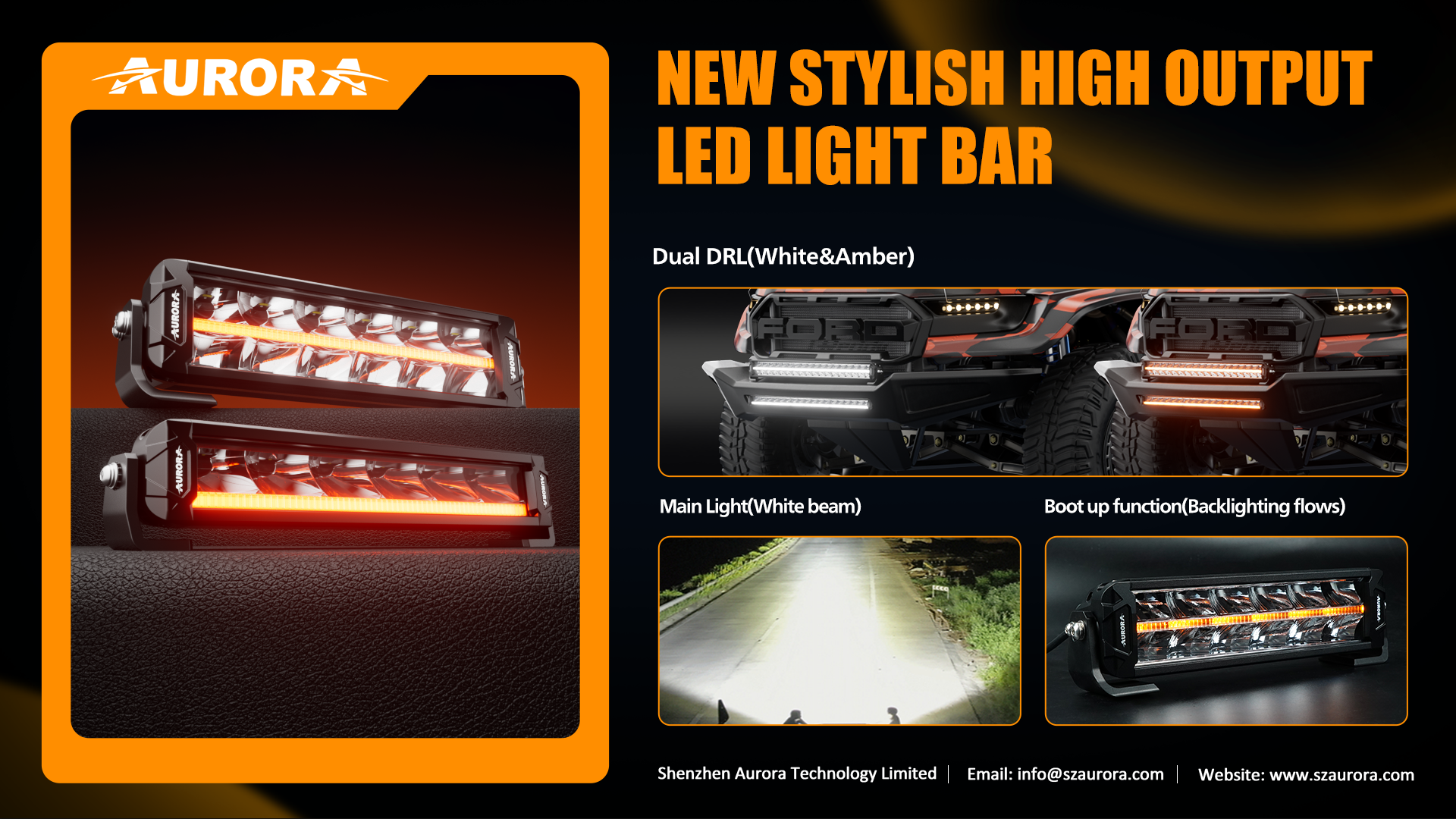
Aurora's Amber and Golden light series directly addresses visibility challenges in adverse conditions. The longer wavelengths of amber illumination penetrate airborne particles more effectively than traditional white light, maintaining usable beam distance in dust storms and heavy rain where conventional systems fail. This specialized approach reportedly improves safety margins by 80% in low-visibility conditions—a substantial advantage for operators in demanding climates.
The Ice-Melting Single Row Light represents another environment-specific innovation addressing cold-weather performance degradation. Ice accumulation on lens surfaces can reduce effective beam distance by blocking and scattering light output. The integrated de-icing system utilizes intelligent sensors that detect ice formation and activate the housing's thermal management system to clear the lens automatically, maintaining consistent beam performance without manual intervention.
Structural Integrity and Sustained Performance
Long-term beam distance performance depends heavily on the light bar's ability to maintain structural and optical integrity under harsh operating conditions. Vibration, impact, thermal cycling, and moisture intrusion all contribute to performance degradation over time, progressively reducing effective beam distance as components deteriorate.
Shenzhen Aurora Technology Limited addresses these durability challenges through patented structural innovations designed specifically for extreme-duty applications. The screwless housing design eliminates traditional fastener-induced stress points that create waterproof seal failures. The proprietary steel bar compression system applies thousands of consistent pressure points across waterproof strips, achieving IP68 and IP69K ratings that prevent moisture intrusion even under high-pressure washing or submersion conditions.
These waterproofing advancements directly protect beam distance performance by preventing internal condensation that scatters light, corrosion that degrades reflector surfaces, and electrical failures that reduce LED output. Products manufactured to these standards and tested through rigorous UV exposure, vibration, salt fog, and temperature cycling protocols maintain rated beam distance throughout their operational lifespan.
Integration with Thermal Management
Sustained beam distance performance requires effective thermal management. LED junction temperatures directly influence light output—as temperatures rise, luminous efficiency decreases and beam distance contracts. Inadequate cooling systems create a progressive performance decline that becomes particularly problematic during extended operation or high ambient temperatures common in off-road environments.
Aurora's patented thermal architecture addresses this challenge through 180-degree heat dissipation designs and vacuum tube cooling systems that maximize heat transfer efficiency. By minimizing thermal resistance between LED junctions and heat-dissipating surfaces, these systems maintain optimal operating temperatures that preserve maximum light output and beam distance even during prolonged use.
Certification Standards and Performance Verification
Reliable beam distance specifications require standardized testing protocols. Aurora's compliance with international standards including E-mark R149 and R112, SAE, and DOT regulations ensures that beam distance claims reflect verified performance measurements conducted under controlled conditions. These certifications provide assurance that published specifications represent actual capabilities rather than theoretical maximums.
The company's IATF 16949 quality management certification further reinforces manufacturing consistency, ensuring that each production unit maintains the optical precision, structural integrity, and thermal performance necessary for rated beam distance. This systematic quality control, backed by over 200 innovation patents, distinguishes specialized manufacturers from commodity producers.
Conclusion
Beam distance fundamentally shapes off-road LED light bar performance by determining how far ahead operators can effectively see and respond to terrain challenges. Superior beam distance results from the integration of efficient optical systems, appropriate beam pattern configurations, environmental adaptations, durable construction, and effective thermal management. Understanding these interdependent factors enables informed selection of lighting solutions optimized for specific off-road applications and operating environments, ultimately enhancing both safety and operational capability in demanding conditions.
https://www.szaurora.com/
Shenzhen Aurora Technology Co., Ltd.


+ There are no comments
Add yours