

Thermal insulation plays a decisive role in energy efficiency, operational safety, and long-term durability across industries such as construction, power generation, transportation, and manufacturing. Among the many materials used for thermal management, fiberglass cloth has proven to be one of the most reliable and versatile solutions. Its unique structure, stability under extreme temperatures, and adaptability to different applications make it an essential component in modern insulation systems.
This article explores how fiberglass cloth enhances thermal insulation performance from a practical and application-oriented perspective, while also highlighting the manufacturing strength and technical capabilities of Changshu Jiangnan Fiberglass Co., Ltd., one of China’s leading producers of high-temperature materials and fiberglass composites.
Understanding Fiberglass Cloth as an Insulation Material
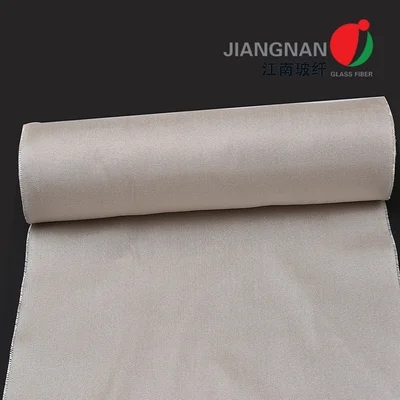
Fiberglass cloth is woven from continuous glass filaments that are drawn from molten glass and rapidly cooled to form fine fibers. These fibers are then woven into fabrics with different structures, thicknesses, and surface treatments depending on the intended use.
From a thermal insulation standpoint, fiberglass cloth works by reducing heat transfer in three main ways:
-
Low thermal conductivity – Glass fibers themselves conduct heat poorly compared to metals.
-
Air entrapment – The woven structure traps air, which is a natural thermal insulator.
-
Thermal stability – Fiberglass maintains its structure and insulating properties even at high temperatures.
Unlike organic insulation materials, fiberglass cloth does not melt, shrink, or emit toxic fumes when exposed to heat. This makes it particularly suitable for environments where fire resistance and thermal reliability are critical.
Key Mechanisms That Improve Thermal Insulation Performance
1. Resistance to High Temperatures
One of the defining advantages of fiberglass cloth is its ability to withstand continuous high temperatures while retaining dimensional stability. Depending on the glass composition and surface treatment, fiberglass cloth can typically operate in environments exceeding several hundred degrees Celsius.
This resistance ensures that insulation systems remain effective over long periods, even in fluctuating thermal conditions. In industrial furnaces, exhaust systems, and thermal pipelines, this stability directly translates into reduced heat loss and improved energy efficiency.
2. Structural Design and Weave Patterns
The weave pattern of fiberglass cloth significantly influences its insulation performance. Plain weave, twill weave, and satin weave each offer different balances between flexibility, thickness, and strength. Thicker fabrics with tighter weaves generally trap more air, enhancing insulation, while more open weaves offer better flexibility for complex surfaces.
Advanced texturizing processes further increase the loft and bulk of fiberglass cloth, improving its thermal barrier effect without significantly increasing weight. This makes it especially useful in applications where insulation efficiency must be balanced with ease of installation.
3. Compatibility with Coatings and Laminations
Fiberglass cloth often serves as a base material for coated or laminated insulation products. Silicone, acrylic, polyurethane, and aluminum foil coatings can be applied to improve heat reflection, moisture resistance, and abrasion durability.
For example, coated fiberglass cloth can reflect radiant heat while simultaneously providing a physical barrier against sparks, molten metal, or hot gases. This layered approach significantly enhances overall thermal insulation performance in demanding environments.
To better understand how specialized fiberglass fabrics are engineered for insulation and heat protection, the following anchor text provides a relevant reference, embedded in code form as requested:<a href="https://www.jnglassfiber.com/good-features-texturized-fiberglass-cloth-for-thermal-insulation-and-heat-protection-main-application-and-flame-resistance.html">
Texturized fiberglass cloth for thermal insulation and heat protection</a>
Practical Applications Across Industries
Construction and Building Systems
In modern construction, fiberglass cloth is widely used in fire-resistant curtains, expansion joints, wall systems, and HVAC insulation. Its non-combustible nature and stable thermal performance help buildings meet increasingly strict fire and energy-efficiency standards.
When integrated into composite insulation panels or wrapped around ducts and pipes, fiberglass cloth minimizes heat loss and protects surrounding structures from heat exposure.
Wind Power and Renewable Energy
Wind energy systems place high demands on materials, particularly in nacelles and blade structures where temperature changes, mechanical stress, and long service life are all factors. Fiberglass cloth plays a dual role here: reinforcing composite structures and providing thermal insulation where required.
Its consistent quality and predictable performance are essential for ensuring reliability in large-scale wind power installations.
Transportation and Industrial Equipment
In rail transport, automotive manufacturing, and heavy industry, fiberglass cloth is used to insulate engine compartments, exhaust systems, and high-temperature equipment. The material’s resistance to vibration, heat, and aging ensures long-term insulation performance even under harsh operating conditions.
Fire blankets, welding curtains, and protective covers made from fiberglass cloth further demonstrate its value in maintaining safety and controlling heat transfer in industrial settings.
Manufacturing Quality and Its Impact on Insulation Performance
The insulation performance of fiberglass cloth is not determined by raw material alone. Manufacturing precision, equipment capability, and quality control are equally critical.
Changshu Jiangnan Fiberglass Co., Ltd., founded in 1956, is one of China’s leading manufacturers and exporters of high-temperature materials and fiberglass composite products. With a production base covering more than 100,000 square meters, the company has established a strong foundation for large-scale, consistent manufacturing.
By introducing advanced warp-knitting equipment and wide-width coating lines, Jiangnan Fiberglass ensures stable supply capacity and reliable product quality. The company’s annual output reaches 50,000 tons of fiberglass and related products, including woven fabrics, 2.4 million fire blankets, and 10 million meters of coated fiberglass cloth.
This scale of production is matched by rigorous quality management, ensuring that each batch of fiberglass cloth meets strict performance requirements for thermal insulation, strength, and durability.
The Role of R&D in Advancing Thermal Insulation Solutions
Beyond manufacturing, continuous research and development play a crucial role in improving insulation performance. Jiangnan Fiberglass has cultivated a strong R&D team that works across a wide range of projects, from safety protection products to advanced composites for wind power.
Through material optimization, process innovation, and application testing, the company has achieved significant breakthroughs that directly enhance the thermal efficiency and reliability of fiberglass-based insulation products. These efforts ensure that fiberglass cloth continues to meet evolving industry standards and real-world performance demands.
Why Fiberglass Cloth Remains a Long-Term Insulation Solution
In an era where sustainability, safety, and efficiency are increasingly important, fiberglass cloth stands out as a practical and proven insulation material. Its long service life reduces replacement frequency, while its thermal stability helps lower energy consumption over time.
Equally important, fiberglass cloth adapts well to new technologies and composite systems. Whether used alone or as part of a multilayer insulation solution, it continues to deliver dependable thermal performance across diverse applications.
Conclusion
Fiberglass cloth enhances thermal insulation performance through a combination of low thermal conductivity, structural air entrapment, high-temperature resistance, and compatibility with advanced coatings. Its effectiveness is not theoretical but demonstrated daily in construction, renewable energy, transportation, and industrial safety applications.
Supported by decades of manufacturing experience, advanced equipment, and ongoing R&D, companies like Changshu Jiangnan Fiberglass Co., Ltd. play a vital role in supplying high-quality fiberglass cloth that meets real-world insulation challenges. As industries continue to demand safer and more efficient thermal solutions, fiberglass cloth will remain a cornerstone material for years to come.
www.jnglassfiber.com
Changshu Jiangnan Fiberglass Co., Ltd.


+ There are no comments
Add yours