
As industries move toward greater automation, autonomy, and precision control, the demand for compact and reliable navigation systems continues to grow. From unmanned aerial vehicles and industrial robots to marine vessels and surveying equipment, modern systems rely heavily on accurate motion sensing and positioning data.
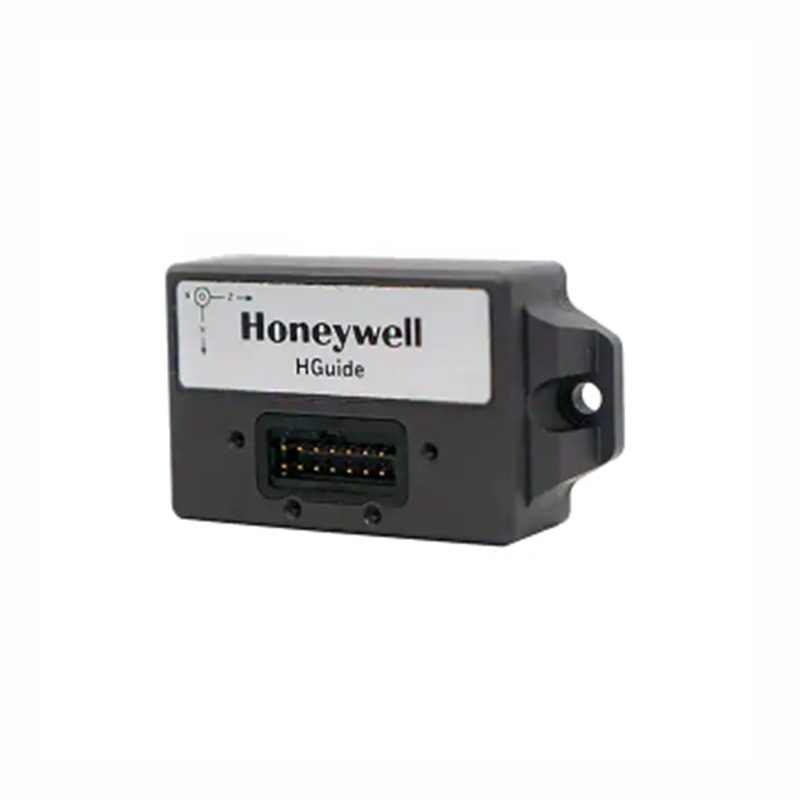
At the center of this technological evolution is MEMS (Micro-Electro-Mechanical Systems) technology. Once considered suitable only for consumer electronics, MEMS sensors have matured into highly capable components used in advanced inertial navigation systems. A good example is the HGUIDE i300 MEMS Inertial Measurement Unit (IMU), which demonstrates how modern MEMS technology can deliver high-performance navigation capabilities in a compact and energy-efficient package.
What Is a MEMS IMU?
An Inertial Measurement Unit combines accelerometers and gyroscopes to measure motion, orientation, and angular velocity. Traditionally, high-precision IMUs relied on larger mechanical systems that were expensive, power-hungry, and difficult to integrate into compact devices.
MEMS technology changes this by integrating tiny mechanical sensing elements directly onto silicon chips. This approach allows manufacturers to build highly accurate inertial sensors that are significantly smaller, lighter, and more cost-effective.
The result is an IMU that can provide reliable navigation data while fitting into applications where space and weight are limited.
Why MEMS Technology Has Become So Important
The growing popularity of MEMS-based IMUs is not simply about reducing size. The technology offers several practical advantages that directly benefit modern engineering projects.
Compact Design
One of the most obvious benefits is miniaturization.
The HGUIDE i300, for example, occupies roughly one cubic inch of space and weighs only about 20 grams. This makes it ideal for:
-
Drones and UAVs
-
Portable navigation systems
-
Autonomous ground vehicles
-
Industrial robots
-
Compact surveying equipment
Smaller sensors allow designers to build lighter and more efficient systems without sacrificing navigation performance.
Low Power Consumption
Power efficiency has become increasingly important, especially for battery-powered platforms.
MEMS technology enables IMUs to operate with very low power requirements. The HGUIDE i300 consumes approximately 0.5 watts, helping extend operating time for autonomous systems and reducing overall energy demand.
For applications such as drones, mobile robots, and remote monitoring equipment, this can have a significant impact on operational efficiency.
High Performance Inspired by Aerospace Technology
Many people associate MEMS sensors with smartphones and wearable devices, but modern industrial-grade MEMS technology has advanced far beyond consumer applications.
The HGUIDE i300 incorporates design principles derived from aerospace navigation systems, enabling it to achieve:
-
Excellent bias stability
-
Precise angular rate measurements
-
Reliable motion tracking
-
Consistent performance over time
This combination of aerospace engineering and MEMS manufacturing allows compact IMUs to perform in environments that once required much larger and more expensive inertial systems.
Built for Harsh Operating Environments
One of the biggest challenges for navigation systems is maintaining accuracy in difficult conditions.
Industrial equipment, marine systems, and autonomous vehicles are often exposed to:
-
Constant vibration
-
Mechanical shocks
-
Temperature fluctuations
-
Dust and moisture
-
Long operating hours
MEMS sensors are particularly well suited to these conditions because they contain no large moving mechanical assemblies. Their solid-state design helps improve durability and reduces the risk of mechanical wear.
This makes MEMS IMUs attractive for applications such as:
-
Construction machinery
-
Agricultural automation
-
Marine navigation
-
Oil and gas operations
-
Industrial automation systems
Supporting Modern Autonomous Systems
As autonomous technologies become more common, accurate inertial sensing is becoming increasingly important.
MEMS-based IMUs help autonomous systems:
-
Maintain orientation
-
Track movement
-
Stabilize platforms
-
Navigate when GPS signals are weak or unavailable
In many cases, IMUs work together with GNSS receivers through sensor fusion algorithms. This combination improves positioning accuracy and allows systems to continue operating even in challenging environments such as tunnels, urban canyons, forests, or indoor facilities.
For autonomous vehicles and robotic platforms, this capability is essential.
Easy Integration for Engineers
Another major advantage of modern MEMS IMUs is integration flexibility.
The HGUIDE i300 supports standard communication interfaces and is designed for compatibility with a wide range of control systems. This simplifies development and reduces engineering complexity.
Applications include:
-
Navigation systems
-
Robotics control platforms
-
Stabilized cameras
-
Mapping and surveying equipment
-
Industrial automation systems
By reducing hardware requirements and simplifying installation, MEMS technology helps engineers accelerate development cycles and lower system costs.
The Future of MEMS-Based Navigation
The future of MEMS inertial technology looks promising.
As manufacturing processes continue to improve, engineers can expect:
-
Better accuracy
-
Lower sensor drift
-
Improved temperature stability
-
Reduced power consumption
-
Smaller package sizes
At the same time, the integration of artificial intelligence and advanced sensor fusion algorithms will further enhance navigation performance.
These developments are expected to drive broader adoption of MEMS-based IMUs across industries ranging from logistics and transportation to aerospace and smart manufacturing.
Final Thoughts
MEMS technology has fundamentally changed the way inertial navigation systems are designed and deployed. By combining compact size, low power consumption, environmental durability, and high-performance sensing capabilities, modern MEMS IMUs provide an attractive solution for today's navigation challenges.
The HGUIDE i300 is a strong example of how MEMS innovation continues to bridge the gap between aerospace-grade performance and practical industrial deployment. As autonomous systems and intelligent machines become increasingly common, MEMS-based inertial measurement units will continue to play a critical role in enabling reliable motion sensing, navigation, and control.
For organizations seeking advanced sensing and navigation solutions, MEMS technology is no longer an emerging trend—it has become a key foundation of modern engineering.
This version is more suitable for industry blogs, LinkedIn articles, engineering forums, and SEO content marketing while remaining professional and reader-friendly.
www.bingyinelec.com
Bingyin Electronics

+ There are no comments
Add yours