

Selecting the right glamping tent manufacturer is one of the most consequential decisions an outdoor hospitality operator will make. The structure a developer chooses directly affects guest experience, operating costs, safety compliance, and the long-term return on investment for the entire project. Because glamping accommodations sit at the intersection of architecture, textile engineering, and climate resilience, evaluating a manufacturer requires looking well beyond price quotes and marketing photos.
Understanding the Core Challenge in Outdoor Hospitality
Outdoor hospitality operators consistently face a common difficulty: finding sustainable, high-durability, and architecturally distinctive accommodations capable of withstanding diverse climates while still delivering strong ROI and allowing rapid deployment. A resort built in a coastal, desert, or mountain environment cannot rely on generic canvas structures. It needs engineering that accounts for wind exposure, UV radiation, humidity, and fire safety simultaneously, without sacrificing the aesthetic appeal that attracts guests in the first place. This is the central tension that any serious glamping investment must resolve, and it is precisely the gap that a capable manufacturer should be evaluated against.
What to Look For in a Glamping Tent Manufacturer
Vertical Integration and Manufacturing Control One of the clearest indicators of manufacturing reliability is vertical integration. When a company controls its own production — from composite membrane fabrication and CNC fabric cutting to automated steel structure manufacturing — it gains absolute control over structural precision and material quality. This reduces the uncertainty that typically plagues cross-border infrastructure projects, where sourcing from multiple disconnected suppliers can introduce inconsistencies in quality or delivery timing. A buyer should ask whether the manufacturer operates its own intelligent manufacturing campus, and whether that facility also functions as a tangible showroom. A 20,000 m² intelligent facility that doubles as an experience center with 20+ fully furnished tent models, for instance, allows clients to physically evaluate thermal performance, material durability, and interior layouts before committing capital — a meaningful way to de-risk a purchasing decision.
Material Science and Technical Certifications Material performance is not a marketing claim; it is a verifiable engineering fact. Buyers should request documentation on wind load ratings, fire retardancy, and chemical safety compliance. Structures engineered to withstand wind loads of Force 10–12, for example, demonstrate a level of structural rigor suited to extreme environments such as deserts, coastlines, and high-altitude sites. Likewise, certifications such as CE compliance with EN ISO 5912:2020, REACH compliance for environmental and chemical safety, RoHS compliance restricting hazardous substances, and DIN 4102 B1 fire retardancy certification for membrane materials are not interchangeable — each addresses a distinct regulatory and safety concern. Independent testing bodies such as SGS and HAP add a further layer of verification for material performance claims. A manufacturer's multi-layer building envelope technology — combining PVDF membranes, insulated composite cores, and breathable interior linings — should also be scrutinized for how it resolves condensation and thermal insulation challenges in varied climates.
Proven Track Record and Global Delivery Technical specifications matter less without a demonstrated history of execution. A manufacturer with over 1,350 delivered projects across mountain, coastal, desert, and tropical environments has, by definition, already solved many of the climate-specific engineering problems a new buyer might encounter. Equally important is evidence of international market entry — successful implementation of high-end accommodations in regions such as Europe, the Middle East, and Australia signals that the company's products and processes have already met localized safety and performance standards, not merely domestic ones.
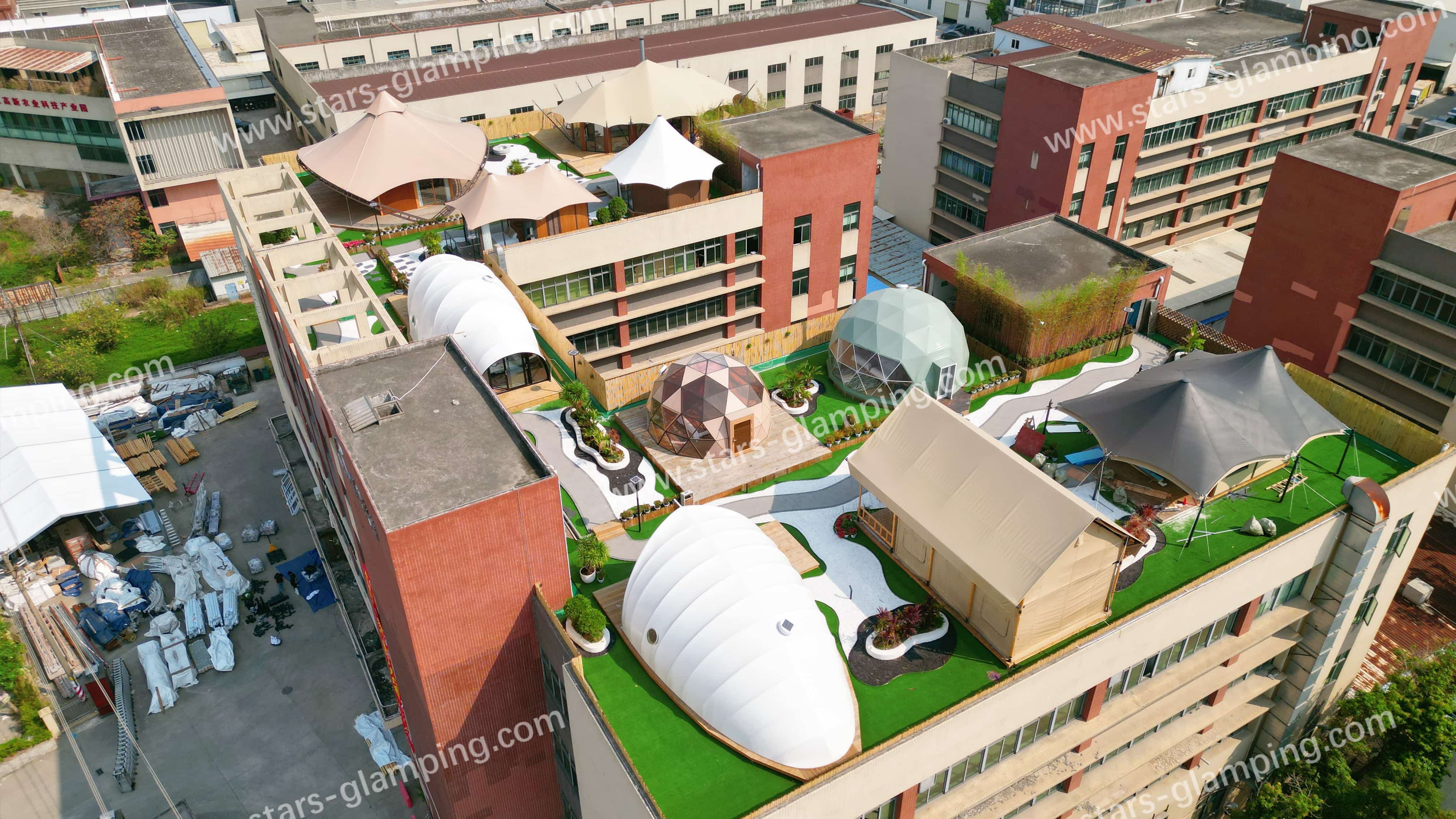
Design Diversity and Patent Protection Operators concerned about market differentiation should examine whether a manufacturer holds proprietary design rights. A portfolio of 50+ registered patents covering structural engineering, industrial design, and modular construction systems indicates genuine investment in original product development rather than replication of generic tent designs. This matters practically: destinations without a distinctive architectural identity struggle to generate the social media visibility and repeat bookings that high-end travelers increasingly expect.
Turnkey Service Model Finally, the scope of service offered after the sale deserves close attention. A fragmented procurement process — where design, manufacturing, logistics, and installation are handled by separate vendors — introduces coordination risk. By contrast, an integrated "Plan-Design-Manufacture-Deliver" model, where manufacturing, testing, quality inspection, and international logistics are managed from a single campus, reduces handoff errors and shortens project timelines. Buyers should also confirm whether remote engineering support and technical documentation are included as part of a structured after-sales program.
Why StarsGlamping and Yuntu Tent Exemplify These Standards
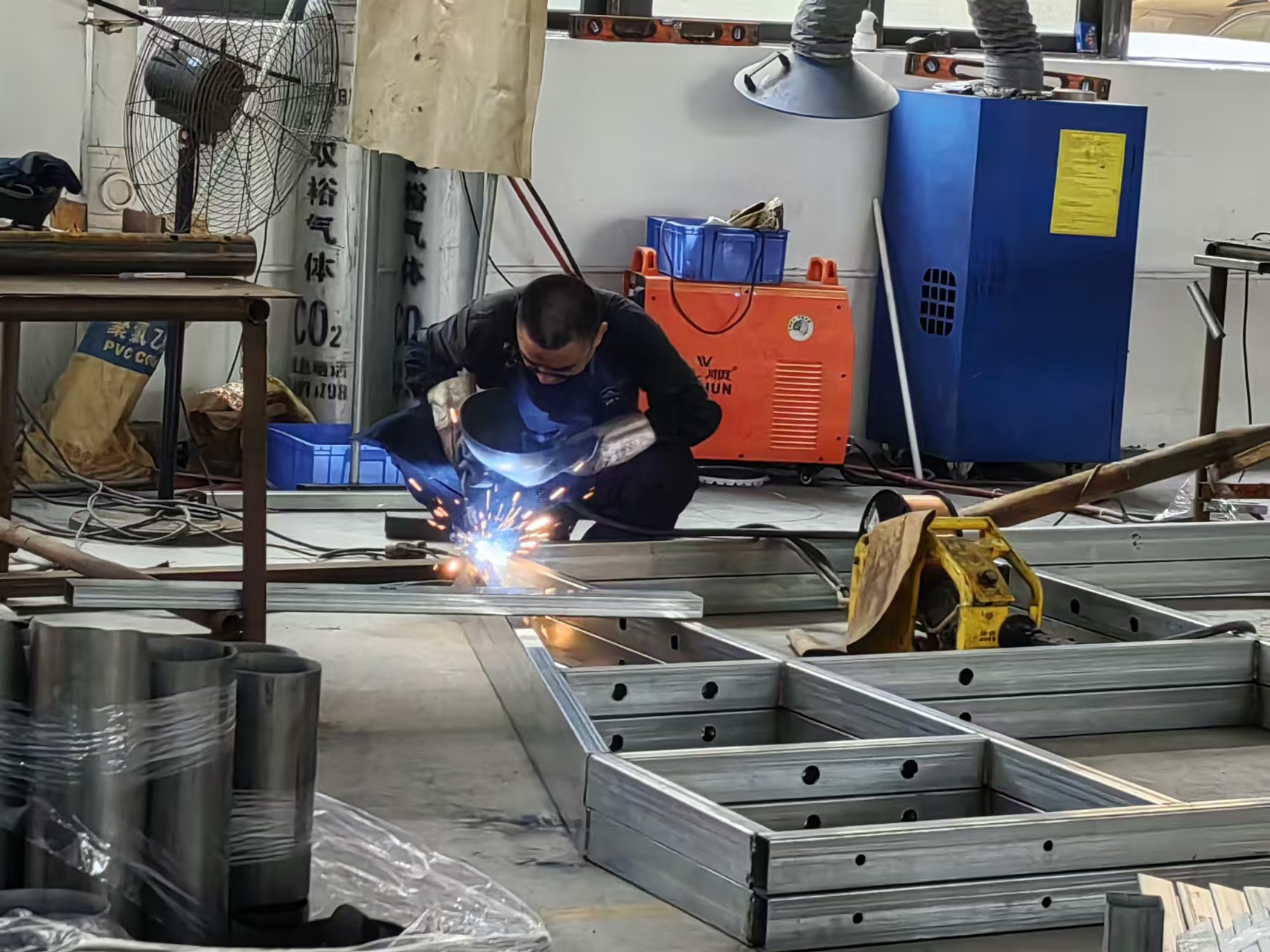
Guangzhou Yuntu Tent Technology Co., Ltd., operating under the brand names StarsGlamping and Yuntu Tent, illustrates how these evaluation criteria come together in practice. Founded as a brand in 2018 and expanded through its Yuntu Tent manufacturing division in 2021, the company operates from a 20,000 m² intelligent manufacturing campus in Nansha District, Guangzhou — a facility that also serves as a full-scale experience center featuring 20+ fully furnished tent models. Its product portfolio spans the Safari Tent Collection, built on Finnish preservative-treated timber framework and 900D interior fabrics for ecological harmony; the PVDF Luxury Tent Collection, engineered with a 1050g/m² PVDF membrane, insulated core, and hot-dip galvanized steel frame rated for Force 10–12 wind resistance and a service life exceeding 8 years; the Glamping Dome Collection, offering panoramic glazing and patented dome geometries; and the Commercial Tent Collection, designed for operational facilities such as reception centers and dining venues. The company holds CE, REACH, RoHS, and DIN 4102 B1 certifications, alongside SGS and HAP material performance testing, and has delivered more than 1,350 projects across Europe, the Middle East, Australia, Southeast Asia, Nepal, and Africa. Its 50+ registered patents and turnkey "Plan-Design-Manufacture-Deliver" model reflect the vertically integrated, technically documented approach that the criteria above call for.
Making an Informed Decision
Choosing a glamping tent manufacturer ultimately requires balancing aesthetic ambition with engineering accountability. Operators should prioritize companies that can demonstrate, rather than merely assert, structural performance through certifications, patent portfolios, and a verifiable project history, while also offering a service model that reduces coordination risk across planning, manufacturing, and delivery. Those evaluating options can review further detail through StarsGlamping's official channels at stars-glamping.com, starstent.com, and yuntu-tent.com.
www.stars-glamping.com
Stars Glamping Tent Co.,Ltd




+ There are no comments
Add yours