
Compressed air is an essential power source for many workshops, factories, automotive service centers, and industrial operations. Pneumatic tools, spray equipment, cleaning systems, assembly tools, and automated machinery all depend on a stable supply of compressed air.
For small and medium-sized businesses, selecting a compressor is not simply about choosing the highest horsepower available. The compressor needs to match the actual air demand, working pressure, operating frequency, tank capacity, installation space, and maintenance requirements of the application.
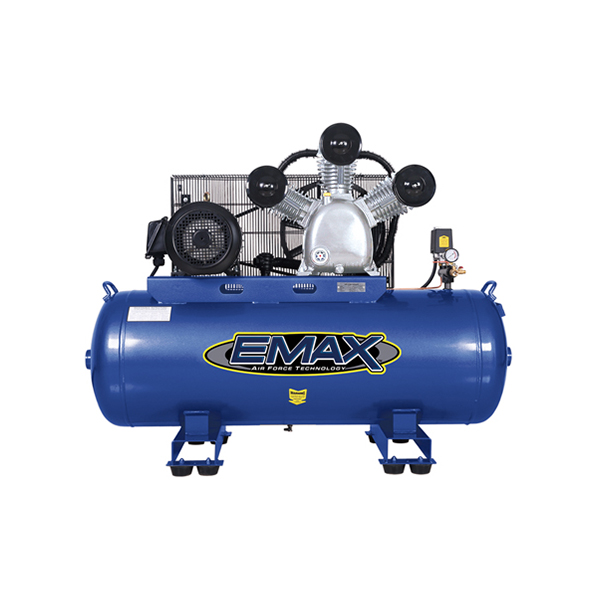
A 5.5HP belt driven air compressor is a practical option for many medium-duty applications. It provides a useful combination of power, air delivery, durability, and operating flexibility without requiring the footprint of a larger industrial compressor.
As a professional manufacturer of air compressors, welding equipment, pneumatic tools, and related accessories, EMAX develops compressed air equipment for automotive, workshop, and industrial applications. Its belt driven compressor solutions are designed to provide dependable performance under regular working conditions.
Why Choose a 5.5HP Belt Driven Air Compressor?
The 5.5HP configuration sits between small portable compressors and larger industrial systems. This makes it particularly useful for businesses that need more compressed air capacity than a basic workshop compressor can provide but do not need a large centralized air station.
A belt driven compressor uses a belt and pulley system to transfer power from the motor to the compressor pump. This configuration allows the pump to operate at a suitable rotational speed rather than being directly coupled to the motor.
In practical applications, this design can provide several benefits:
-
Better heat dissipation
-
Reduced mechanical stress
-
Lower operating noise
-
Easier routine maintenance
-
Suitable performance for frequent operation
-
Flexible configuration for different applications
These characteristics make belt driven compressors a common choice for automotive repair shops, fabrication workshops, maintenance facilities, and small industrial production lines.
Start with Air Consumption, Not Horsepower
One of the most common mistakes when purchasing an air compressor is selecting a model based only on motor horsepower.
Horsepower indicates the motor's power capacity, but it does not tell you whether the compressor can supply enough air for your tools.
Before choosing a 5.5HP compressor, determine the air consumption of the equipment you plan to operate. Air demand is commonly measured in CFM or liters per minute.
For example, an automotive workshop may use compressed air for impact wrenches, tire inflation equipment, cleaning guns, and spray systems. A manufacturing workshop may operate pneumatic assembly tools or production machinery for several hours a day.
If the compressor's actual air delivery is lower than the application's demand, the system may experience frequent pressure drops and repeated motor starts.
A better approach is to calculate the approximate total air consumption and select a compressor that provides sufficient capacity with an appropriate operating margin.
Tank Capacity Also Matters
The air receiver tank stores compressed air and acts as a buffer between the compressor and pneumatic equipment.
A suitable tank can help:
-
Stabilize system pressure
-
Reduce frequent compressor cycling
-
Provide additional air during short periods of high demand
-
Reduce unnecessary motor starts
-
Improve the overall working experience
For many medium-duty applications, a larger receiver tank can be useful when air consumption is intermittent rather than continuous.
However, a larger tank is not automatically better for every application. Businesses should consider available installation space, working patterns, peak air demand, and the number of pneumatic tools connected to the system.
For continuous high-volume air consumption, the compressor's actual air delivery capacity remains more important than simply increasing tank size.
Select the Correct Working Pressure
Working pressure is another key specification.
Different pneumatic tools and machines operate at different pressure requirements. Many general workshop applications use standard pressure levels, while specialized equipment may require higher pressure.
Before purchasing a compressor, check the recommended operating pressure of all connected equipment.
The compressor should be able to maintain the required pressure during actual operation rather than only reaching a maximum pressure when no air is being consumed.
Choosing a compressor with an appropriate pressure range helps avoid unstable tool performance and unnecessary energy consumption.
Advantages of Belt Driven Compressor Design
The belt transmission system is one of the main differences between belt driven and direct-drive compressors.
Improved Heat Management
Compression generates considerable heat. A belt driven pump can operate at a relatively controlled speed, which can help reduce heat generation and support more effective cooling.
For workshops where the compressor runs repeatedly throughout the day, thermal management is important because excessive heat can accelerate component wear.
Reduced Mechanical Stress
A belt driven configuration separates the motor and pump through the transmission system.
This arrangement can help reduce mechanical stress on certain components and support longer service life when the equipment is properly operated and maintained.
Practical Maintenance
Belt driven compressors also provide a relatively straightforward maintenance structure.
Routine maintenance may include:
-
Checking belt tension
-
Replacing compressor oil
-
Cleaning or replacing air filters
-
Inspecting valves
-
Checking fittings and connections
-
Removing accumulated moisture from the air receiver
Regular maintenance is essential for maintaining stable air output and extending equipment service life.
Where Can a 5.5HP Compressor Be Used?
A 5.5HP belt driven air compressor can support a wide range of applications.
Automotive Workshops
Automotive repair shops are one of the most common environments for medium-duty compressors.
Compressed air can be used for:
-
Impact wrenches
-
Tire inflation
-
Air blow guns
-
Pneumatic tools
-
Spray painting
-
General cleaning
A stable air supply helps technicians operate pneumatic tools efficiently during daily repair work.
Manufacturing Workshops
Small and medium manufacturing facilities may require compressed air for assembly tools, cleaning systems, pneumatic controls, and other production equipment.
A belt driven compressor can provide a practical source of compressed air without requiring a large centralized system.
Construction and Maintenance
Maintenance contractors and construction teams may use pneumatic equipment for fastening, drilling, cleaning, and repair applications.
Depending on the model and installation requirements, a 5.5HP compressor can provide a useful solution for medium-duty compressed air requirements.
General Industrial Applications
Small production lines, equipment maintenance departments, fabrication workshops, and other industrial environments can also benefit from a medium-capacity compressor.
The key is to match the compressor's air output and pressure capability with the actual equipment requirements.
Important Specifications to Compare Before Buying
When comparing different 5.5HP belt driven air compressors, buyers should look beyond the horsepower rating.
Air Delivery
Check the actual CFM or L/min output at the required working pressure.
Tank Size
Consider whether the receiver provides sufficient buffer capacity for your air consumption pattern.
Pump Configuration
Cylinder arrangement, pump design, and compression efficiency can influence overall performance.
Operating Speed
Pump RPM can affect noise, heat generation, wear, and service life.
Motor Quality
The motor should be appropriately matched to the compressor pump and intended duty cycle.
Construction Quality
Pay attention to the quality of the pump, receiver tank, belt drive, fittings, valves, and other critical components.
Maintenance Accessibility
A compressor that is easy to inspect and service can reduce maintenance time and help prevent unexpected downtime.
Why Manufacturing Quality Should Not Be Overlooked
A compressor may look similar to competing products from the outside, but differences in manufacturing quality can have a significant impact on long-term performance.
Professional compressor manufacturers typically control important processes such as component machining, assembly, electrical testing, pressure testing, and final performance inspection.
Consistent manufacturing helps ensure that individual units deliver predictable performance rather than relying only on nominal specifications.
For businesses using compressed air as part of daily operations, reliability is particularly important. Compressor downtime can interrupt production, delay vehicle repairs, or affect pneumatic equipment.
EMAX Compressed Air Solutions
EMAX specializes in the development and manufacture of air compressors, welding equipment, pneumatic tools, and related accessories.
The company serves automotive and industrial customers with compressor solutions designed around different operating requirements.
Its product development approach focuses on:
-
Reliable compressor structures
-
Practical maintenance
-
Stable air delivery
-
Durable components
-
Application-oriented designs
-
Continuous product improvement
For distributors, workshops, and industrial users, this broader product portfolio also makes it easier to select compressed air equipment according to specific application requirements.
A Practical Checklist for Buyers
Before placing an order for a 5.5HP belt driven air compressor, it is worth checking the following:
-
What is the total air consumption of the equipment?
-
What working pressure is required?
-
Will the compressor operate intermittently or continuously?
-
What tank capacity is appropriate?
-
How much installation space is available?
-
What maintenance access is required?
-
Does the manufacturer provide technical support and replacement components?
-
Does the compressor match the local electrical requirements?
Answering these questions first can prevent the common problem of purchasing a compressor that is either undersized for the application or unnecessarily large for the actual workload.
Final Thoughts
A 5.5HP belt driven air compressor can be a dependable choice for automotive workshops, manufacturing facilities, maintenance operations, and other medium-duty applications. Its belt transmission design, practical power level, flexible configuration, and relatively straightforward maintenance make it suitable for businesses that need a reliable compressed air source without moving to a large industrial compressor system.
However, horsepower should only be the starting point. Air delivery, pressure, tank capacity, duty cycle, pump design, build quality, and maintenance requirements all need to be considered before making a final decision.
For businesses looking for long-term compressed air equipment, selecting a properly sized compressor from an experienced manufacturer can help improve tool performance, reduce unnecessary downtime, and support more stable daily operations.
www.emaxmachinery.com
EMAX

+ There are no comments
Add yours