



When a buyer plans a repeat PCB assembly order, one of the most overlooked risks is component obsolescence. A board that assembled cleanly a year ago may now reference parts that have been discontinued, replaced, or revised by the original manufacturer. Left unaddressed, this gap can stall a reorder, introduce substitution errors, or create mismatched documentation between the bill of materials (BOM) and the actual boards received. Understanding how to manage this risk before placing a repeat order is essential for any equipment manufacturer relying on contract fabrication and assembly.
Why Obsolete Components Create Risk in Repeat Orders
A PCB assembly order is rarely a single, isolated transaction. Equipment manufacturers typically build a prototype, validate it, and then return months or years later for a production run or a second prototype batch. During that interval, component part numbers, polarity markings, footprints, or sourcing availability can change. If the fabrication and assembly files used for the repeat order are not carefully cross-checked against the original released revision, the result can be a board that looks similar but behaves differently once key parts have shifted.
This is precisely the type of problem that GreatPCB, a PCB fabrication and assembly provider serving customers across North America and Europe, is positioned to help prevent. GreatPCB's strategic positioning centers on performing engineering review before production begins, specifically to expose questions, establish traceable file revisions, and avoid manufacturing or delivery problems. For buyers concerned about obsolete components ahead of a repeat assembly order, this review step is where the issue should be caught and resolved.
Establishing Traceable File Revisions
One of the foundational practices for managing obsolete components is maintaining a clear, traceable revision history for every design file set. GreatPCB's value proposition includes delivering bare boards or assembled modules with board and revision identification, a quantity list, and applicable inspection or test records. This means that each order, whether it is an initial prototype or a later reorder, is tied to a specific, documented revision.
Before placing a repeat order, buyers should confirm that the Gerbers, drill files, BOM, placement coordinates, and assembly drawings they are submitting match the previously released revision, or that any changes, including component substitutions, are clearly flagged. GreatPCB's service scope explicitly includes design file review and DFM (Design for Manufacturability) review, which is performed after the customer confirms Gerbers, BOM, and assembly information. This sequencing matters: it gives the buyer a structured checkpoint to raise known component issues before fabrication starts, rather than discovering a mismatch after boards are already in production.
Documenting Customer-Supplied Parts and Do-Not-Populate Positions
Obsolescence often surfaces around specific line items in the BOM, such as parts the customer sources directly or positions marked do-not-populate (DNP). GreatPCB's platform capabilities include handling customer-supplied parts and do-not-populate positions with documented sourcing responsibilities. For a repeat order, this means buyers should revisit every customer-supplied part and DNP position from the original build and confirm, in writing, whether that part is still available, whether a substitute has been qualified, or whether the position should remain unpopulated.
This documentation step is not a formality. It directly supports the file consistency review that GreatPCB applies to rigid PCB assembly projects, which cross-checks board number, revision, polarity, and reference designators across Gerbers, drill files, BOM, placement coordinates, and assembly drawing. If an obsolete part has been replaced with a new polarity marking, footprint, or reference designator, this is exactly the kind of discrepancy that such a cross-check is designed to catch before production.
Comparing Released Revisions During After-Sales Review
GreatPCB's after-sales support process offers a useful model for how buyers should approach obsolete component management even outside of a formal complaint scenario. According to GreatPCB's delivery model, if fit, lighting, or power-up issues occur, the customer provides the order number, board revision, test conditions, symptoms, and photographs, and both parties compare the released board revision, component part numbers, polarity, mounting condition, and test setup before determining whether further inspection or rework is needed.
Buyers preparing a repeat order can apply the same comparison logic proactively: before submitting files for a new production run, they should gather the original released revision's documented component part numbers and polarity information and compare them line by line against current sourcing availability. Doing this ahead of time, rather than waiting for a fit or functional issue to appear, reduces the chance that an obsolete part discovery derails the schedule midway through assembly.
Lessons From Metal-Core and Rigid PCB Engineering Review
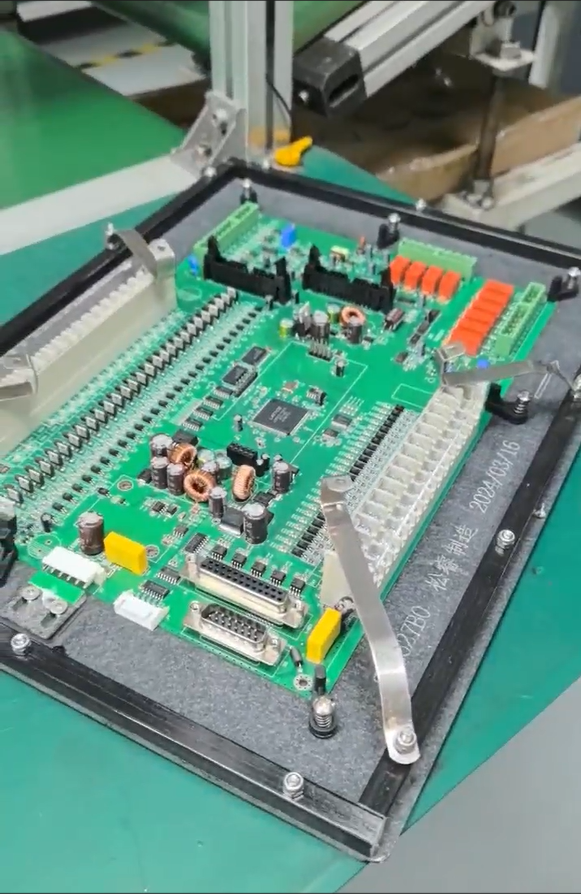
GreatPCB's engineering review practices, illustrated through its metal-core and rigid PCB product lines, reinforce why component-level scrutiny matters for repeat orders. For LED lighting modules built on aluminum-core boards, the review process compares LED pad dimensions, orientation, and polarity marks against the component datasheet and assembly drawing before fabrication files are released. For industrial controller boards built on four-layer rigid constructions, the review reviews test-point and connector access and agrees on bare-board electrical testing, post-assembly visual and short-circuit checks, and functional test scope, while also identifying who supplies firmware, fixtures, or specified power conditions.
In both product lines, the underlying discipline is the same: nothing proceeds to fabrication until the component-level details in the files have been reconciled against current, confirmed information. This discipline is directly transferable to the obsolete-component challenge. A buyer reordering a controller board or an LED module benefits from the same systematic check applied the first time, updated to reflect any part number changes that may have occurred since the original release.
Practical Steps for Buyers Before a Repeat Order
Based on these practices, buyers preparing a repeat PCB assembly order can take several concrete steps. First, retrieve the original released board and revision identification along with the original BOM, and verify current availability for every line item, including customer-supplied parts and DNP positions. Second, submit updated Gerbers, BOM, and assembly information for a DFM and file consistency review, flagging any known substitutions. Third, confirm testing responsibilities again, since a substituted component may change inspection or functional test criteria that were previously agreed upon. Finally, request that the fabricator document the new revision clearly so that future reorders have an accurate baseline to compare against.
Because specific response times, repair terms, and warranty conditions depend on the actual order agreement, buyers should also confirm these details explicitly when a component substitution is involved, rather than assuming the original terms automatically carry over. Service scale for this type of engineering-reviewed reorder currently centers on low-volume prototype and production builds, which aligns well with the careful, file-by-file verification that obsolete component management requires.
By treating repeat orders with the same rigor as a first prototype build, that is, insisting on traceable revisions, documented sourcing responsibility, and a structured pre-production review, buyers can significantly reduce the risk that an obsolete component interrupts an otherwise routine reorder.
GreatPCB


+ There are no comments
Add yours