

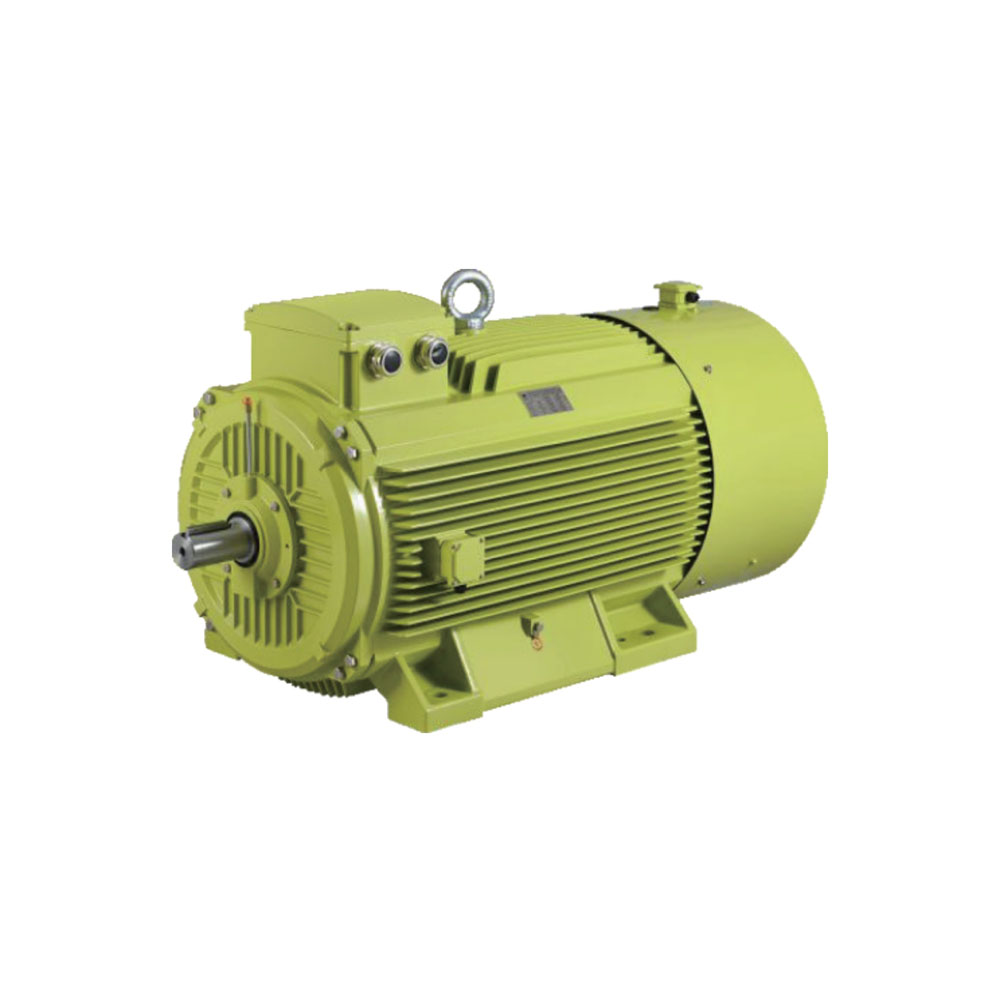

Magnetic torque couplings transfer rotational motion without mechanical contact, and one of their most critical features is torque limitation, which prevents connected equipment from experiencing excessive stress.
Mechanism of Torque Limitation
The torque limitation function works through controlled magnetic slippage. Inside the coupling, permanent magnets are arranged to create a strong magnetic field that transfers torque efficiently during normal operation. When the torque exceeds a preset limit, the magnetic force can no longer maintain full engagement between the driving and driven sides. As a result, the coupling slips or partially disengages, effectively preventing overload from reaching the connected machinery.
This slippage is non-contact, meaning there is no friction or mechanical wear involved. Instead, the excess torque is absorbed magnetically, allowing the system to remain intact and ready for operation once the overload condition is removed.
Design Features Enabling Torque Limitation
-
Magnet Strength and Pole Arrangement: By selecting the proper magnet strength and configuring the poles, engineers can determine the precise torque threshold for slippage.
-
Air Gap Tuning: The distance between the driving and driven magnet assemblies affects the coupling force. Adjusting the air gap allows fine-tuning of the torque at which slippage occurs.
-
Rotor and Stator Geometry: The shape, size, and alignment of magnetic components influence torque transfer characteristics, ensuring smooth slippage behavior when limits are exceeded.
-
Non-contact Safety Design: The torque-limiting action occurs magnetically without any physical contact, preventing wear and maintaining consistent performance over time.
TLC Series Magnetic Couplings
SHANGHAI GAOLV E&M Technology Co., Ltd. implements this torque-limiting principle in its TLC product series, including:
-
Fixed Speed Torque Limited (TLC) Basic Magnetic Coupling – Standard torque-limiting design.
-
Fixed Speed Torque Limited Braking Type (TLC-BT) Magnetic Coupling – Combines torque limitation with braking capability.
-
Fixed Speed Torque Limited Anti-iron Powder Type (TLC-AP) Magnetic Coupling – Designed for environments with metallic dust or iron particles.
-
Fixed Speed Torque Limited Explosion Proof Type (TLC-EP) Magnetic Coupling – Suitable for hazardous or explosive environments.
These designs allow the torque-limiting function to be tailored to different operational requirements while maintaining controlled slippage and mechanical protection.
The torque limitation in magnetic couplings is achieved through careful magnetic design, where slippage occurs automatically once torque exceeds a set value. By adjusting magnet strength, pole alignment, air gap, and rotor geometry, engineers can create precise overload protection mechanisms. The TLC series by SHANGHAI GAOLV E&M Technology Co., Ltd. demonstrates how this principle is implemented across multiple designs, providing reliable torque-limiting functionality for various industrial systems.
https://www.magicmag-tech.com/how-torque-limitation-works-in-magnetic-couplings.html
SHANGHAI GAOLV E&M Technology Co.,Ltd.

+ There are no comments
Add yours