
Electrostatic precipitators (ESPs) are among the most established air pollution control technologies used in heavy industrial sectors such as power plants, cement production, steelmaking, and chemical processing. Their primary function is to capture fine particulate matter from flue gas streams, helping industries comply with increasingly strict environmental regulations worldwide.
However, an ESP’s overall performance is not determined solely by its mechanical configuration. A crucial role is played by its electrical system—especially the transformer rectifier (TR) set. This component directly affects particle charging efficiency, electric field stability, and ultimately the dust collection performance of the entire system.
In modern industrial practice, manufacturers like Dingmao (DM) have contributed significantly to the development of transformer technology. With engineering roots dating back to 1970 in Taiwan, DM has grown into an internationally recognized manufacturer focused on energy equipment, including transformer cores, active parts, and complete transformer systems that meet stringent global standards.
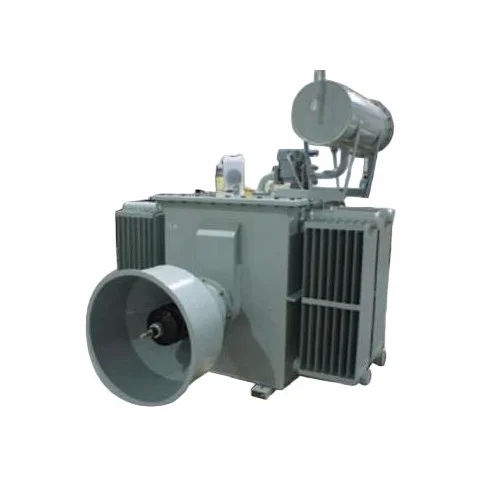
Role of Transformer Rectifiers in Electrostatic Precipitators
A transformer rectifier unit in an ESP performs two core functions:
Voltage Step-Up: It increases incoming voltage to the high levels required for ESP operation.
AC-to-DC Conversion: It converts alternating current into direct current, which is essential for forming a stable electrostatic field.
Together, these functions enable the ESP to generate a strong corona discharge between emission electrodes and collecting plates. This discharge ionizes dust particles in the flue gas, allowing them to be charged and attracted to oppositely charged surfaces for removal.
Without a properly engineered TR system, voltage instability and inconsistent current can occur, significantly reducing collection efficiency and increasing emissions and operational risks.
How TR Systems Enhance ESP Performance
1. Stable High-Voltage Supply
One of the most critical advantages of transformer rectifiers is maintaining steady high-voltage output. ESP systems are highly sensitive to electrical fluctuations—any instability can weaken the corona effect and reduce particle charging efficiency.
Modern TR units are designed to:
-
Deliver stable DC high voltage
-
Minimize current ripple
-
Adjust dynamically to changing flue gas conditions
This ensures a consistent electrostatic field, improving overall particulate capture efficiency.
2. Better Particle Charging Performance
Efficient dust removal depends on how effectively particles are charged. TR systems allow precise voltage regulation, which directly impacts corona intensity.
Optimized performance results in:
-
Stronger ionization of fine particles
-
Improved capture of submicron dust
-
Reduced particle re-entrainment
This is especially important in applications such as coal-fired power generation, where particle size and resistivity vary widely.
3. Higher Energy Efficiency
ESP systems typically consume significant electrical power. Inefficient energy delivery can lead to unnecessary operational costs.
Advanced transformer rectifiers improve efficiency by:
-
Reducing reactive power losses
-
Optimizing voltage-current balance
-
Adapting output to real-time load conditions
This leads to lower energy consumption while maintaining high filtration performance.
4. Real-Time Adaptive Control
Industrial flue gas conditions are constantly changing due to variations in temperature, humidity, dust concentration, and flow velocity. These changes affect electrical behavior inside the ESP.
Smart TR systems respond in real time by:
-
Preventing sparkover events
-
Stabilizing corona current
-
Adjusting output under varying dust loads
This ensures continuous and stable operation even in harsh environments.
5. Longer Equipment Lifespan
Unstable electrical conditions can accelerate wear on ESP components. Transformer rectifiers help protect the system by providing controlled and regulated power delivery.
Key protective functions include:
-
Smooth voltage ramp-up and shutdown
-
Short-circuit and arc fault protection
-
Stable operating output under fluctuating conditions
As a result, both the ESP and its power supply system experience reduced stress and extended service life.
Importance of Transformer Design Expertise
The effectiveness of a TR system is closely tied to transformer design quality, especially core materials and manufacturing precision. This is where experienced manufacturers such as Dingmao (DM) provide added value.
DM is a long-established family-owned company with strong technical capabilities and a focus on customer-driven solutions. Founded in 1970 in Taiwan, the company has developed into a global supplier in the transformer industry.
Through early cooperation with GE Prolec, DM specialized in amorphous steel cores for distribution transformers. As production demand expanded, manufacturing capabilities were extended into mainland China, integrating mature Taiwanese transformer technologies. This evolution enabled DM to:
-
Improve production efficiency and scalability
-
Reduce manufacturing costs
-
Enhance global competitiveness
Today, DM continues to deliver transformer cores, active components, and complete transformer assemblies designed for high reliability and international standards compliance.
Application of Transformer Systems in Industrial Settings
Transformer rectifiers used in ESP systems are built on the same engineering foundation as industrial power transformers—emphasizing insulation strength, thermal stability, and long-term reliability under continuous operation.
In broader power distribution systems, solutions such as pad-mounted transformers are widely used to ensure safe and stable energy delivery. These systems share similar design principles with TR sets, including durability, insulation performance, and heat management.
A representative example of DM’s engineering capability is its three-phase pad-mounted transformer solution:
<a href="https://www.dmtransformer.com/three-phase-pad-mount-transformer.html">DM Three Phase Pad Mount Transformer</a>
While ESP transformer rectifiers serve a specialized function, both technologies rely on the same core expertise in electromagnetic design and industrial-grade reliability.
Key Challenges Addressed by Modern TR Technology
Modern transformer rectifier systems help resolve several long-standing ESP operational issues:
Arc and Spark Management
Advanced controllers quickly reduce voltage during instability, preventing equipment damage and ensuring continuous operation.
Dust Resistivity Fluctuations
TR systems adjust output characteristics to counter back corona effects caused by high-resistivity particles.
Multi-System Coordination
Large-scale ESP installations require multiple TR units. Synchronization control ensures balanced electrical distribution across the system.
Future Development Trends
As environmental regulations become stricter and industrial automation advances, transformer rectifier technology is evolving rapidly. Key future directions include:
-
Digital monitoring and smart control systems
-
Predictive maintenance based on sensor data
-
More efficient semiconductor-based rectification
-
Integration with plant-wide automation platforms
Companies with deep transformer expertise, such as DM, are well positioned to support these developments by combining traditional electrical engineering with modern digital technologies.
Conclusion
Transformer rectifiers are far more than auxiliary components in electrostatic precipitator systems—they are fundamental to system efficiency, stability, and environmental performance. By ensuring stable high-voltage output, improving energy efficiency, and adapting to dynamic operating conditions, TR systems significantly enhance dust removal effectiveness in industrial applications.
With decades of engineering experience, Dingmao (DM) demonstrates how advanced transformer manufacturing can support critical industrial infrastructure. From core components to complete transformer systems, DM continues to contribute to reliable, efficient, and sustainable energy solutions worldwide.
www.dmtransformer.com
Dingmao (DM)


+ There are no comments
Add yours