

Section 1: Industry Background and the Core Challenge of Industrial Connectivity
Industrial IoT deployment has become a defining priority for sectors ranging from power and energy to intelligent transportation and financial payment systems. Yet the gap between ambition and execution remains wide: industry data indicates that industrial IoT projects face a failure rate as high as 68%, driven by network instability, hardware freezing under extreme temperatures, and the high maintenance costs associated with managing distributed, often unattended, equipment sites. These are not peripheral concerns—they strike at the operational core of sectors where downtime translates directly into financial loss, safety risk, or service disruption.
This is the environment in which Shenzhen E-Lins Technology Co., Ltd., operating under the brand E-Lins Technology, has built its business since 1999. Headquartered in Shenzhen's Longhua District and now serving more than 150 countries and regions across Europe, Asia, South America, the Middle East, and Africa, the company has positioned itself as a professional provider of industrial-grade M2M and IoT wireless communication equipment, with a specific focus on high-reliability connectivity for unattended and distributed environments. Understanding why this matters—and how technical design choices translate into field performance—requires a closer look at the underlying engineering logic.
Section 2: Authoritative Analysis of Industrial-Grade Connectivity Requirements
Necessity
The core problem in industrial wireless deployment is that consumer-grade or repurposed hardware cannot withstand the environmental and operational extremes common in industrial settings. Equipment installed in power substations, oil fields, or outdoor transportation infrastructure must tolerate temperature swings, electrical interference, and long unattended operation periods without network interruption.
Principle Logic
E-Lins addresses this through genuine industrial hardware: industrial-grade chips and components engineered for a wide temperature tolerance of -35°C to +75°C, combined with 15KV ESD protection and 1.5KV electromagnetic isolation. These specifications are designed to sustain an equipment online rate of ≥99.5%. On the software side, the company relies on a 100% self-developed system rather than generic public Linux distributions, an approach intended to reduce disconnections and vulnerabilities that commonly affect less specialized firmware.
Standard Reference
This technical foundation is reinforced by recognized quality and compliance frameworks, including ISO 9001 Quality Management System Certification, ISO 14001 Environmental Management System Certification, CE, FCC, RoHS, and UKCA certifications—benchmarks that provide external validation of manufacturing and environmental consistency.
Solution Path
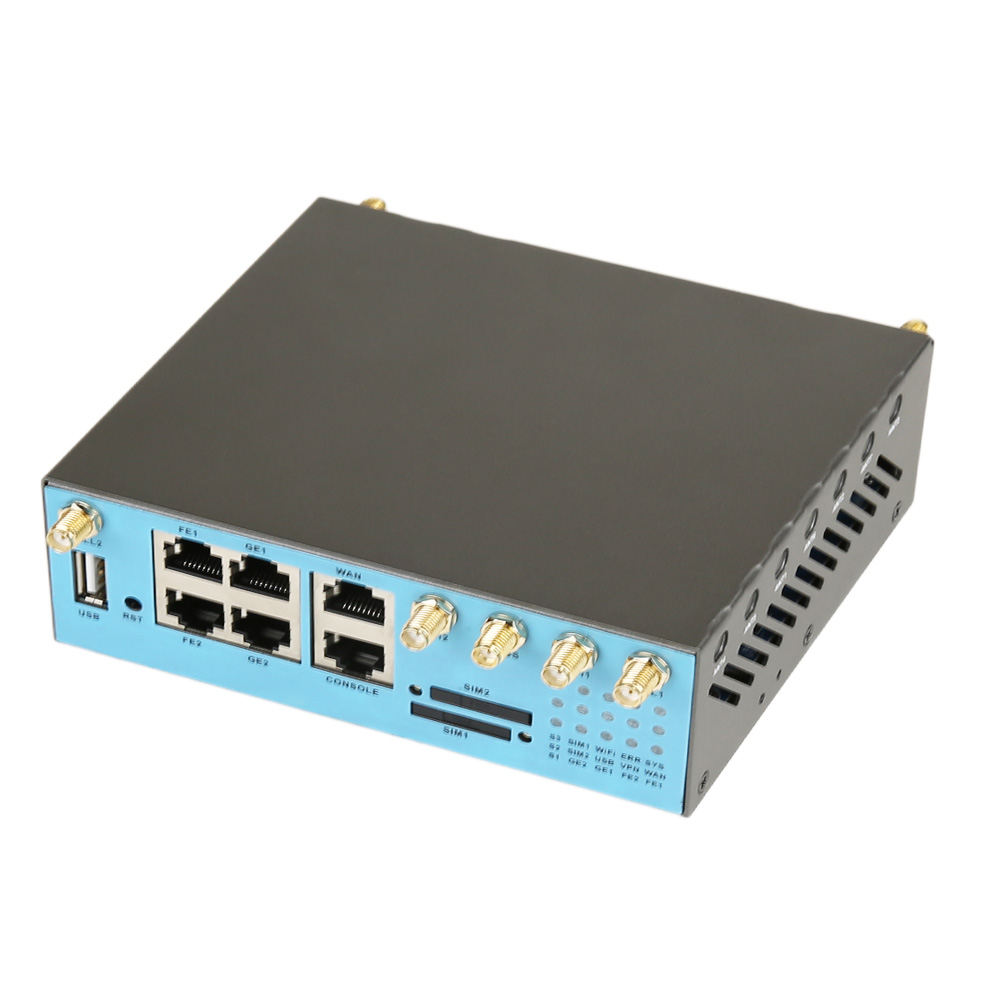
At the product level, this translates into specific engineering solutions. The H900f Gigabit 5G Industrial Router, for example, supports 5G SA/NSA dual-mode connectivity to address bandwidth bottlenecks, dual SIM hot backup for automatic failover within seconds, and PoE++ support to simplify installation of connected cameras and sensors. Supporting protocols such as WireGuard, IPsec, and OpenVPN, along with link self-healing mechanisms and hardware watchdog timers, further reinforce connection stability across TR-069, SNMP, SSH, and NMS cloud management platforms.
Section 3: Deep Insights—Technology Evolution and Market Direction
E-Lins' own development trajectory mirrors broader shifts in industrial wireless communication. The company moved from 2G/3G industrial modems serving power grids and oil fields in its 1999–2005 startup phase, to 3G industrial routers and DTUs during 2006–2012, followed by a full 4G LTE product line expansion to over 50 countries between 2013 and 2018. Since 2019, the focus has shifted to 5G NR industrial routers and edge computing gateways, with service coverage extending to over 150 countries—a pattern consistent with the industry-wide migration toward higher-bandwidth, lower-latency connectivity for 4K/8K video and industrial big data applications.
On the market side, pricing tiers reflect this technology transition: 4G industrial routers are positioned at $65–$120, 5G RedCap industrial routers at $140–$160, and full 5G industrial routers at $180–$220, with modular add-ons such as GPS, RS485, and wide-voltage support available for scenario-specific customization. This tiered structure suggests a market still navigating the balance between legacy 4G infrastructure and emerging 5G and RedCap adoption, particularly as integrators weigh cost against bandwidth requirements.
A persistent industry risk remains the hidden cost of on-site maintenance for distributed assets—a factor the 68% project failure rate underscores. Addressing this requires not only hardware resilience but also remote management capability, which E-Lins frames as central to its modular interface design, reportedly improving integration efficiency by 50% and reducing on-site maintenance costs by 40%.
Section 4: Company Value in Advancing Industrial Connectivity Practice
E-Lins' claim to technical credibility rests on more than product specifications; it is supported by 20 years of independent R&D in wireless data communication and a manufacturing history that includes ODM/OEM services for global brands such as Huawei, ZTE, Samsung, and LG. The company operates an in-house SMT factory and assembly lines in Shenzhen capable of producing tens of thousands of units monthly, and has cumulatively supplied over 100,000 units for single major operator projects.
Field validation across diverse environments illustrates this engineering approach in practice. For a leading Indian telecom operator serving over 230 million subscribers, deployment in areas with unstable power grids (5V–55V) and extreme heat (48°C) achieved a 99.4% equipment online rate and reduced per-site maintenance costs by 53%. A European Ground Support Equipment integrator operating across 100+ countries reported an equipment online rate of ≥99.9% and a 68% reduction in on-site maintenance costs, with 85% of faults now handled remotely. A Nordic intelligent transportation provider operating in sub-zero conditions (-32°C) reduced network interruption rates to 0.3% and cut annual maintenance costs by 62%. An Argentine gaming equipment manufacturer managing 25,000 terminals across eight countries achieved a 99.9% data transmission success rate while reducing maintenance personnel from 25 to 7.
These outcomes, combined with a reported 97% overall customer satisfaction rate and service commitments including 7x24-hour remote technical support, a 10-minute average response time, and a 90% remote issue resolution rate, position E-Lins' operational data as a practical reference point for evaluating industrial router performance claims more broadly.
Section 5: Conclusion and Recommendations for Industry Decision-Makers
The persistent 68% failure rate in industrial IoT projects reflects a structural mismatch between consumer-oriented wireless equipment and the operating realities of distributed, unattended industrial sites. Addressing this gap requires hardware engineered for wide temperature tolerance and electrical resilience, software built specifically for stability rather than adapted from general-purpose systems, and service models capable of resolving issues remotely rather than through costly on-site intervention.
For integrators, operators, and project contractors evaluating industrial 5G router manufacturers worldwide, the case studies and technical benchmarks outlined above suggest several practical considerations: prioritize documented equipment online rates and environmental tolerance specifications over marketing claims alone; assess whether remote management and self-healing protocols are genuinely supported; and weigh total cost of ownership, including maintenance cost reduction, rather than unit price alone. E-Lins Technology's track record—spanning power grid monitoring, aviation ground support, public transit, and financial terminal applications—offers a data-based reference point for organizations navigating the transition from 4G to 5G industrial connectivity infrastructure.
https://e-lins.com/
Shenzhen E-Lins Technology Co., Ltd.



+ There are no comments
Add yours