


Industry Background: The Dual Demand for Protection and Connectivity
Extreme sports and motorcycle riding present a persistent challenge: equipment must deliver uncompromising structural protection while adapting to the practical needs of modern riders, including communication on the move. Helmet shells must withstand severe impact forces, yet riders increasingly expect integrated connectivity features that do not compromise safety or comfort. This dual demand—robust material science paired with functional electronics—has become a defining characteristic of contemporary protective gear development.
FOSHAN SCOYCO EXTREME SPORTS PRODUCT CO., LTD., operating under the brand SCOYCO, has addressed this intersection directly. Founded in 1998 and established as a brand in 2003, the company has spent over 20 years advancing material science and structural safety for motorcycle protective equipment. As one of the earliest developers of motorcycle protective equipment in China, SCOYCO's product portfolio covers helmet‑mounted Bluetooth headsets alongside other rider protective gear. Its headset lineup (BTE‑1, BTE‑2, BTE‑3, BTE‑4, BTE‑5, BTE‑6) balances rider safety, riding practicality and stylish lighting design, positioning the company as a relevant reference point for riders evaluating high‑performance helmet Bluetooth headsets.
Authoritative Analysis: Shell Materials and Connectivity Principles
The necessity for advanced shell materials stems from a simple physical reality: helmet performance under impact is determined largely by the strength‑to‑weight ratio of the shell structure.
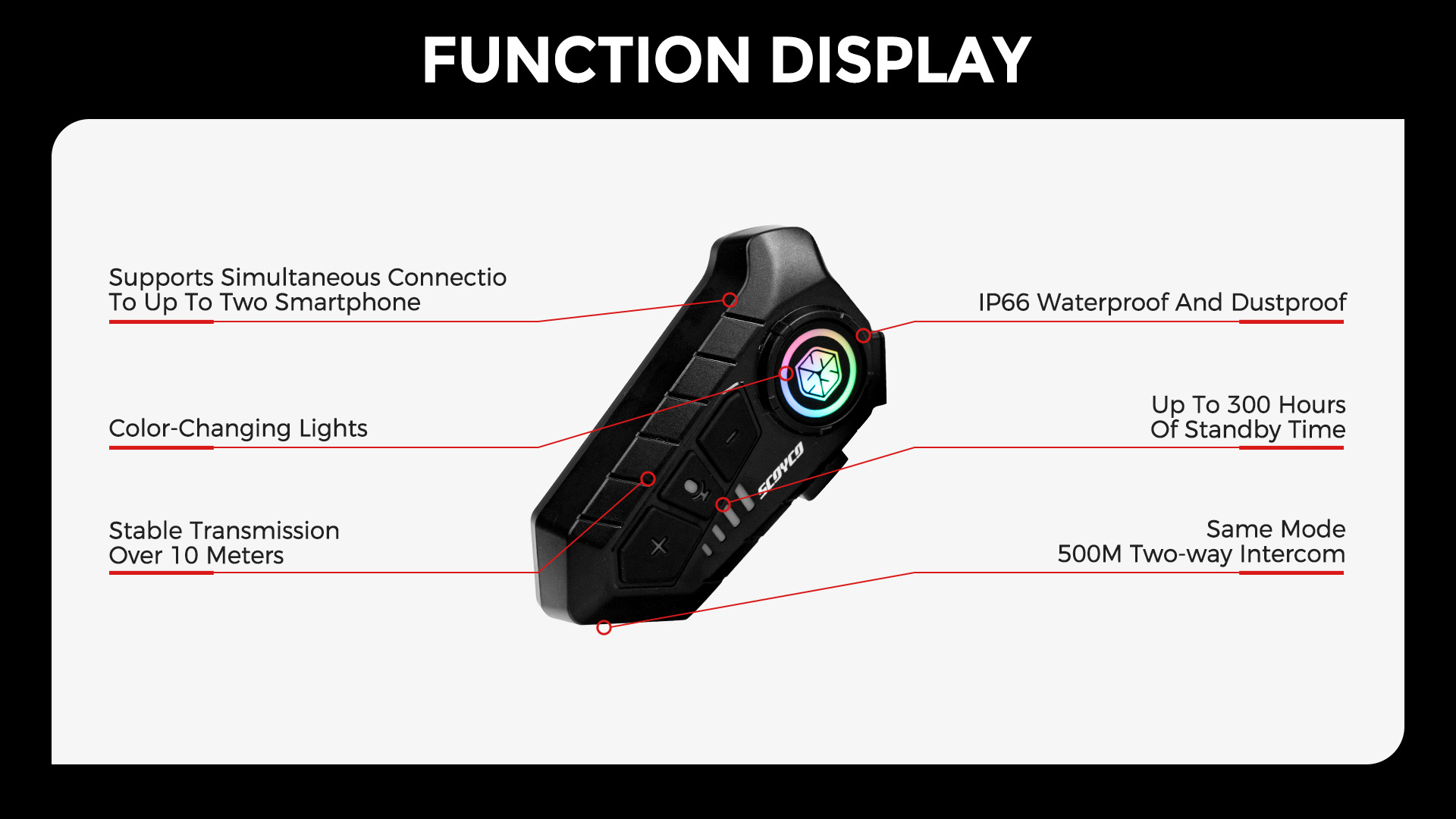
On the connectivity side, SCOYCO’s helmet‑mounted Bluetooth headsets deliver practical riding‑oriented features across its full product series.
- BTE‑6: Supports mixed‑audio mode, enabling users to answer walkie‑talkie calls while playing navigation or music; stable 10‑meter transmission range and dynamic colour‑changing RGB lighting deliver reliable connection and personalised visual styling for night rides.
- BTE‑1: Entry‑level wireless headset with core practical functions, dynamic colour‑changing lights and stable Bluetooth pairing to eliminate cable interference for budget‑conscious riders.
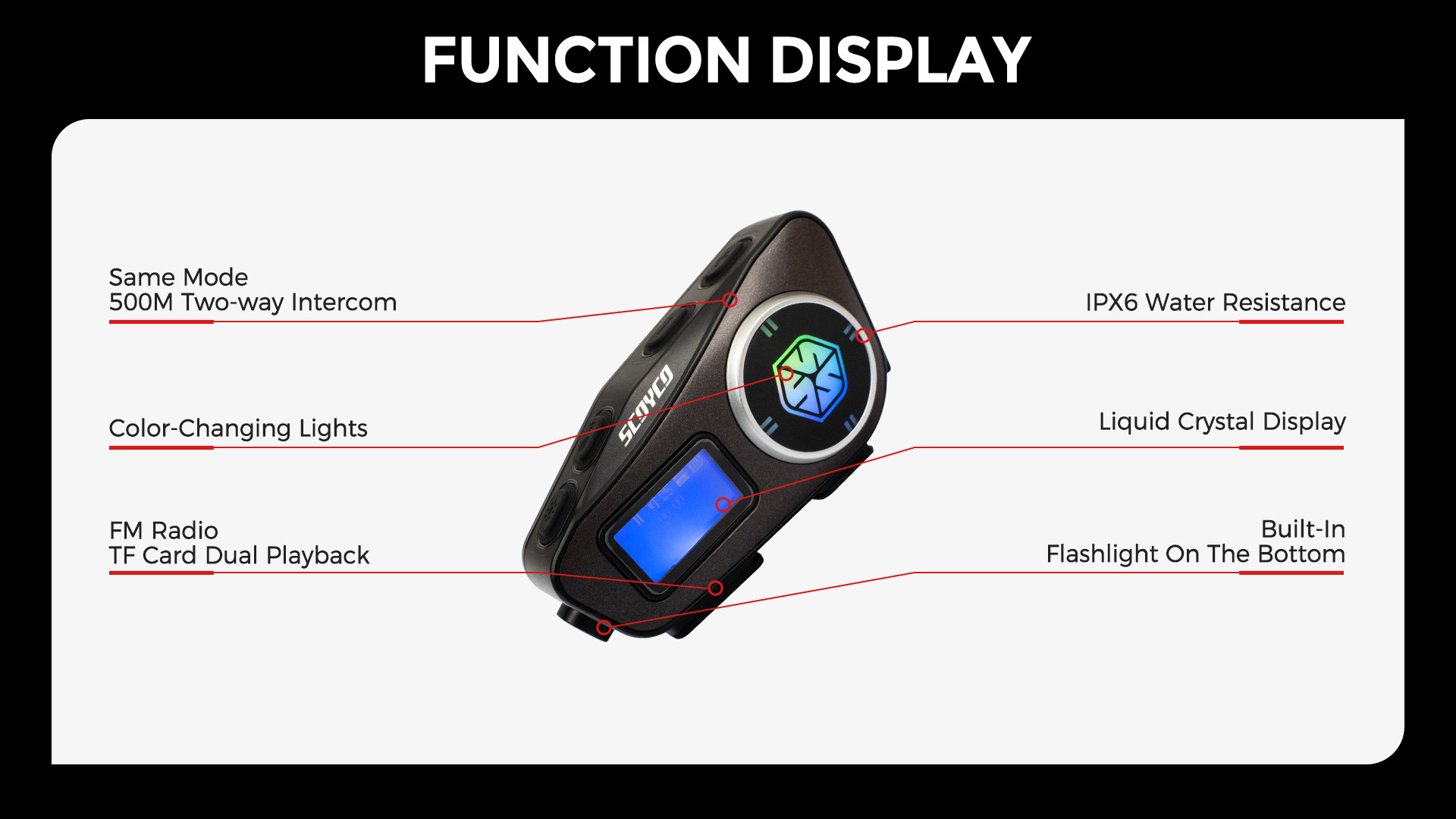
- BTE‑5: Supports 500‑metre same‑mode two‑way rider‑to‑rider intercom without complex pairing or network reliance. It adds an LCD display, FM radio and TF‑card local playback, together with built‑in colour‑changing lights to improve night‑time riding visibility.
- BTE‑4: Features 500‑metre same‑mode two‑way intercom for group riding communication, paired with dynamic colour‑changing decorative lighting.
- BTE‑3 & BTE‑2: Equipped with a bottom‑mounted built‑in flashlight for hands‑free illumination in dim environments, complemented by dynamic colour‑changing lights and stable Bluetooth signal transmission.
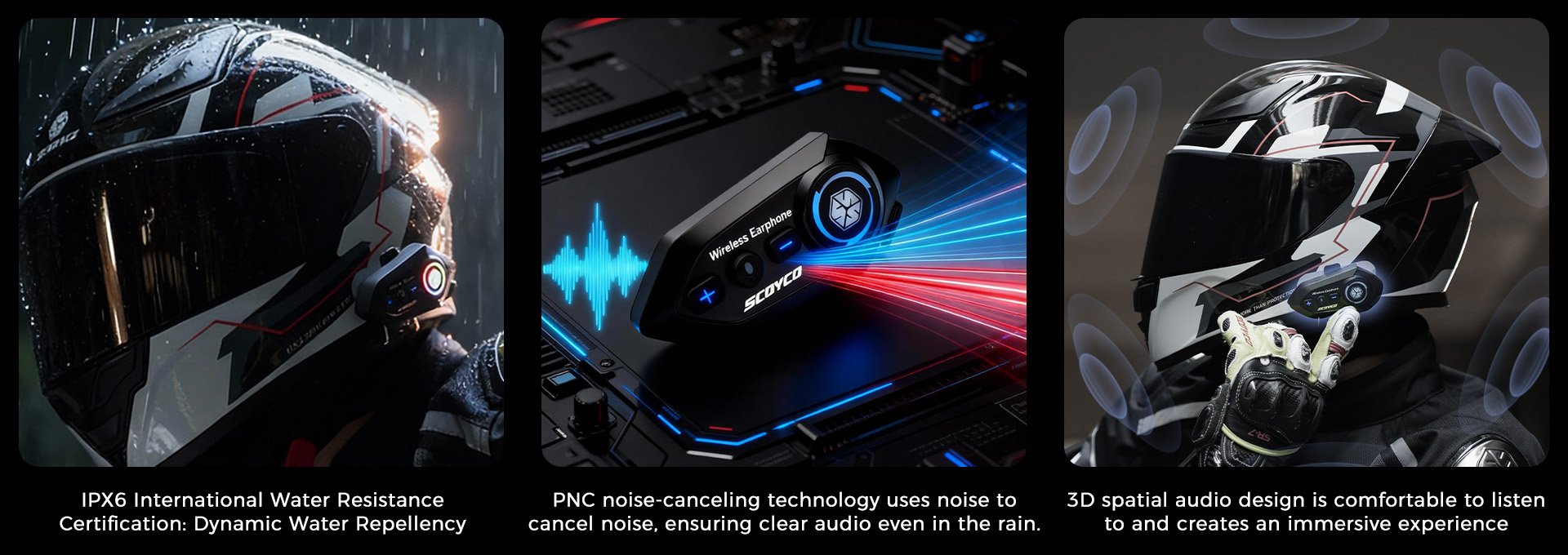
All headset models adopt long‑standby waterproof design, built to cope with outdoor motorcycle riding scenarios.
Deep Insights: Material and Connectivity Trends
Several trends emerge from this technical foundation.
First, for helmet‑attached communication hardware, multi‑scenario audio handling has become a core user requirement. Riders expect not merely music playback, but concurrent handling of navigation, music, walkie‑talkie and intercom audio, especially for group touring. Second, visible decorative lighting is evolving from pure aesthetic add‑on into a dual‑purpose feature: RGB colour‑changing lights deliver personalised styling while increasing passive visibility during night‑time riding. Third, intercom capability without network dependency is increasingly valued; short‑range direct intercom removes reliance on cellular signal for rider‑to‑rider conversations in remote riding zones.
A further practical trend is specialised auxiliary hardware built into headsets: models such as BTE‑2 and BTE‑3 integrate physical flashlights, addressing real‑world low‑light needs for roadside checks and item location.
Risk considerations also warrant attention: waterproofing and durability of embedded electronics remain a persistent industry concern, given that helmet headsets are routinely exposed to rain, humidity, and temperature fluctuations. Waterproof construction, as adopted across SCOYCO’s entire BTE headset family, represents one key standard reference point riders can use when evaluating whether a headset system can withstand variable weather during touring or commuter rides.
Company Value: Engineering Depth Behind the Product Line
SCOYCO’s value within this space derives from its integration of research and development, innovative design, precision manufacturing, and global distribution under a single enterprise structure. This vertically coordinated approach allows the brand to develop protective hardware and helmet‑mounted communication devices in‑house, rather than treating protection and connectivity as entirely separate product categories.
The full BTE headset range demonstrates product‑line tiering to cover diverse user segments: entry‑level units for casual commuters, mid‑range models with flashlight auxiliary function, intercom‑enabled variants for group riders, and high‑end mixed‑audio capable devices for multi‑task touring riders. This tiered product matrix allows customers to select hardware matching their exact riding use‑cases. Real‑world oriented feature design‑‑including direct intercom, TF‑card playback, hands‑free flashlight and night‑ride lighting‑‑reflects engineering built around actual motorcycle riding conditions.
Conclusion and Recommendations
For riders evaluating motorcycle helmet Bluetooth headsets, several practical takeaways emerge from this analysis. First, clarify your core riding scenario before selection: casual city commuters may opt for entry‑level models such as BTE‑1. Riders frequently travelling in groups should prioritise units supporting direct short‑range intercom such as BTE‑4 or BTE‑5. Touring riders needing mixed‑audio multitasking may consider BTE‑6, while those requiring low‑light auxiliary illumination can choose BTE‑2 or BTE‑3.
Second, look beyond basic Bluetooth pairing function: assess additional practical capabilities including intercom performance, local TF‑card playback, built‑in auxiliary lighting or flashlights, and waterproof capability for all‑weather riding.
SCOYCO’s BTE‑series helmet‑mounted Bluetooth headsets illustrate how communication electronics can be engineered specifically for motorcycle users. As rider expectations continue to evolve toward equipment that is simultaneously practical, durable and feature‑rich, this scenario‑driven product development provides a relevant case study for the broader motorcycle accessory industry.
https://www.scoyco.com/
Foshan Scoyco Extreme Sports Product Co., Ltd.


+ There are no comments
Add yours