
Industry Background and the Case for Professional Insight
The global market for automotive lighting systems continues to expand as vehicles are pushed into increasingly demanding operating environments—off-road terrain, marine conditions, mining sites, and agricultural fields. Across the Automotive, Marine, Industrial, Agriculture, and Mining sectors, a recurring technical pain point has emerged: lighting solutions must withstand extreme vibrations, water ingress, and thermal stress while still maintaining high luminosity. This is not a superficial requirement. It touches the core engineering challenge of balancing durability, output, and installation practicality within a single product.
Shenzhen Aurora Technology Co., Ltd., operating under the brand name Aurora, was founded in 2011 with the specific intention of addressing this challenge. Headquartered at AURORA Industry Park, ShunSheng Road 9#, Pingdi Street, Longgang District, Shenzhen, Guangdong, China, the company has positioned itself as "a leading professional manufacturer and one-stop solution provider specializing in high-performance LED lighting systems with a focus on R&D and quality control." As an IATF 16949-certified Professional Manufacturer, Aurora's operational scope offers a useful reference point for understanding how the OEM headlight manufacturing segment approaches these industry-wide pain points.
Authoritative Analysis: Standards, Principles, and Solution Paths
Why does certification and testing rigor matter so much in this category? Because automotive lighting failures are rarely cosmetic—they are safety failures. Aurora's approach illustrates a standard-driven methodology built on several layers.
First, on necessity: products must meet rigorous international standards, specifically IP69K, SAE, and E-mark, in addition to CE and RoHS compliance. These are not arbitrary benchmarks; they represent the intersection of dust/water protection (IP68 and IP69K), automotive engineering compliance (SAE), and European road-legal compliance (E-mark). A manufacturer operating across all of these simultaneously signals a broader compliance posture than one certified to a single regional standard.
Second, on principle logic: Aurora's technical foundation rests on precision thermal management using 6063 Aircraft Aluminum and ADC12 materials, combined with advanced manufacturing including CNC machining lines and SMT (Surface Mount Technology) lines. The company also integrates X-ray inspection for quality control. This combination addresses the thermal stress problem directly—aircraft-grade aluminum manages heat dissipation, while X-ray inspection catches internal defects that surface inspection would miss.
Third, on standard reference: the company's quality management system is anchored by IATF 16949 (Automotive Quality Management System Certification), alongside ISO 9001, ISO 14001, and ISO 45001. Products are rated for 50,000+ hours of lifespan and are engineered to operate across a temperature range of -40°C to 85°C, which reflects the operational reality of vehicles used in both arctic and desert conditions.
Fourth, on solution path: Aurora's testing regime—including Darkroom Beam Testing, Lumen Testing, Aging Testing, High & Low Temperature Testing, Vibration Testing, and UV Testing—demonstrates a structured verification path rather than a single-point quality check. Each test isolates a specific failure mode: vibration testing targets mechanical durability, UV testing targets lens degradation, and aging testing targets long-term light output decay.
Deep Insights: Trends Shaping the OEM Headlight Manufacturing Space
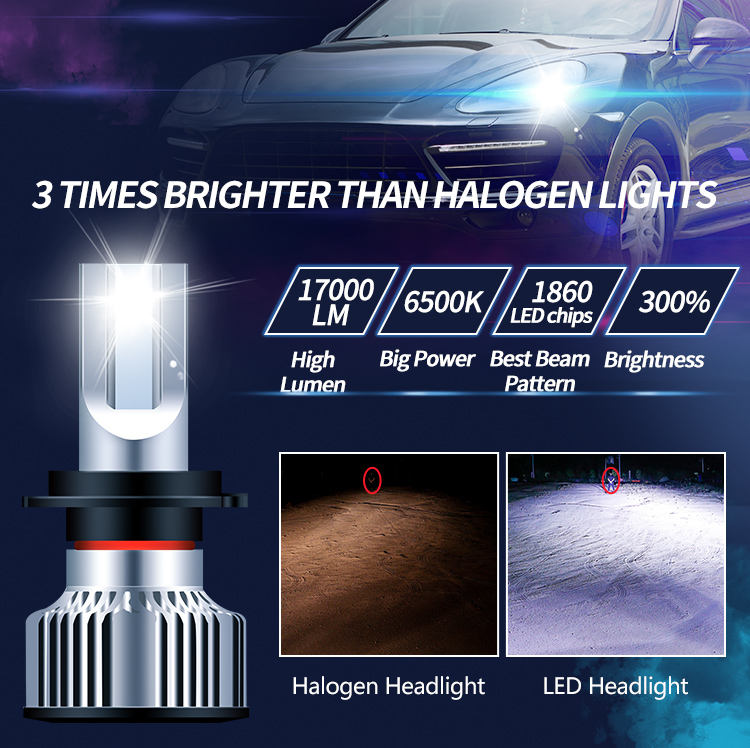
Several structural trends are visible when examining Aurora's product portfolio and technical direction. On the technology front, the progression from single-chip designs to multi-option chip platforms—seen in products like the ALO-F2 (Performance Series), which offers either Trinity Automotive 1860 or Lumileds ZES 5700K LEDs—suggests a market moving toward chip flexibility rather than one-size-fits-all lighting.
Cooling architecture is another area of visible evolution. The ALO-G10 / G10J series uses a "1+1 Copper Braid" fanless design specifically to eliminate "noise and potential fan failure points," while other product lines such as the F18 Series rely on hydraulic fan cooling. The coexistence of both fanless and fan-cooled approaches within the same portfolio indicates that no single cooling method has become a universal standard; rather, the choice depends on application-specific tradeoffs between noise, mechanical failure risk, and thermal output.
On the market demand side, the breadth of sockets and formats covered—H1, H3, H4, H7, H11, H13, 9004/9007, 9005/9006, 9012, and D-series HID-to-LED conversions—reflects a fragmented vehicle compatibility landscape that OEM and aftermarket suppliers must continue to navigate. The D Series, for instance, exists specifically as "a dedicated LED replacement for factory HID/Xenon systems," acknowledging that vehicle retrofit demand remains a persistent and separate category from new-installation lighting.
Risk-wise, the reliance on standardized testing protocols (vibration, aging, UV, thermal) across a wide range of use cases—from Power Sports (ATV, UTV) to Marine and Industrial & Mining—suggests that manufacturers who fail to test across this breadth of environmental conditions face elevated field-failure risk once products leave controlled automotive-only environments.
Company Value: How Aurora Contributes Engineering Depth to the Category
Aurora's contribution to this space is grounded in accumulated technical infrastructure rather than singular products. The company operates a 35,000-square-meter manufacturing facility supported by more than 400 employees and a portfolio of over 200 innovation patents. This scale underpins its stated "One-Stop Solutions & Service" model, which spans design, manufacturing, and technical support—serving Automotive OEMs, Aftermarket Distributors, and Industrial Fleet Operators.
The breadth of the product matrix itself functions as an engineering reference point: from the LED Headlight Bulb Series (including the ALO-F12A, ALO-V6, ALO-F11, and others) to the Projector LED Headlight Series and the Signal and Interior LED Lights covering T10, T15, Festoon, and 1156/1157 formats, Aurora demonstrates coverage across nearly every standard automotive lighting category. The F18 Series, with six distinct all-in-one models covering H4, H11, H13, 9004/9007, 9005/9006, and 9012 sockets, further illustrates how engineering specifications—input voltage ranges, luminous flux at 1-minute and 30-minute intervals, and precise E-value dimensions—are documented at a granular, testable level rather than described only in general marketing terms.
Conclusion and Recommendations for Industry Decision-Makers
The OEM and aftermarket headlight manufacturing sector is defined by a tension between durability, compliance, and installation practicality. Certifications such as IATF 16949, ISO 9001, ISO 14001, and ISO 45001, paired with product-level compliance to IP69K, SAE, E-mark, CE, and RoHS, provide a meaningful baseline for evaluating suppliers in this space. Buyers—whether Automotive OEMs, Aftermarket Distributors, or Industrial Fleet Operators—should prioritize manufacturers that document environmental testing (vibration, thermal, UV, aging) rather than relying on lumen output figures alone.
Shenzhen Aurora Technology Co., Ltd.'s combination of certified quality systems, material science choices such as 6063 Aircraft Aluminum and ADC12, and a testing suite spanning six distinct verification categories offers one applicable framework for how the industry can approach product validation. As vehicle applications continue to diversify across Automotive, Marine, Industrial, Agriculture, and Mining sectors, suppliers capable of demonstrating multi-environment reliability data will remain the more defensible choice for OEM and fleet-level procurement decisions.
https://www.szaurora.com/
Shenzhen Aurora Technology Co., Ltd.



+ There are no comments
Add yours