

How to Choose a PMSM Supplier for Industrial Applications
Choosing the right permanent magnet synchronous motor (PMSM) supplier is an important decision for industrial equipment manufacturers, system integrators, and engineering companies. The right motor can help improve energy efficiency, deliver the required torque characteristics, and support reliable operation under specific working conditions. However, selecting a suitable PMSM requires more than comparing rated power or purchase prices. Buyers must also evaluate operating speed, drive compatibility, installation dimensions, customization capabilities, quality control, and long-term technical support.
Zhejiang Aolong Motor Technology Co., Ltd. is an industrial motor manufacturer offering energy-efficient motor products and customized motor solutions. Through its motor manufacturing and engineering capabilities, the company serves industrial customers with different equipment requirements. For buyers looking for a PMSM supplier for industrial applications, understanding the motor's operating characteristics and the manufacturer's engineering capabilities is an essential first step toward selecting the right solution.
What Is a Permanent Magnet Synchronous Motor?
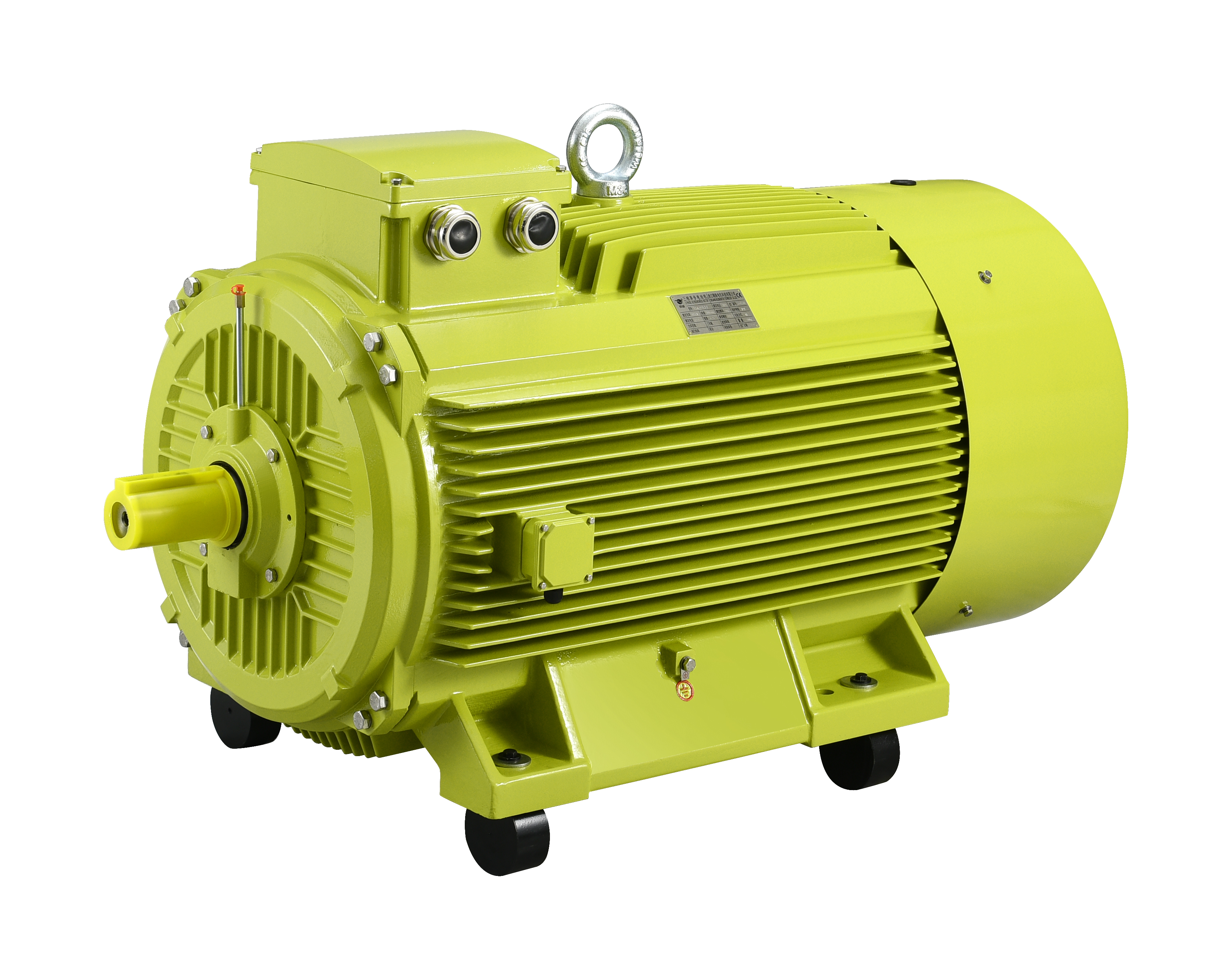
A permanent magnet synchronous motor is an AC motor that uses permanent magnets in its rotor to establish a magnetic field. When operated with a suitable drive and control system, the rotor rotates synchronously with the rotating magnetic field generated by the stator.
Unlike a conventional induction motor, which relies on induced rotor currents to produce torque, a PMSM uses permanent magnets to provide the rotor magnetic field. This difference in operating principle can offer advantages in efficiency, power density, and torque performance, depending on the motor design and operating conditions.
Permanent magnet synchronous motors are commonly considered for applications where energy efficiency, compact motor dimensions, controlled speed, or specific torque characteristics are important. Their suitability depends on the complete drive system, required duty cycle, operating environment, and application-specific performance targets.
For industrial buyers, the key question is not simply whether a PMSM is more advanced than a conventional motor. It is whether the motor can meet the equipment's actual performance requirements while providing an acceptable balance of efficiency, cost, reliability, and maintenance needs.
Key Advantages of Industrial PMSM Solutions
1. High Efficiency Potential
Permanent magnet synchronous motors can reduce certain rotor-related electrical losses because their rotor magnetic field is supplied by permanent magnets rather than induced rotor currents. This can contribute to high operating efficiency when the motor is properly designed and matched to the application.
Actual efficiency depends on motor design, load conditions, speed, drive losses, and operating patterns. Buyers should therefore evaluate documented efficiency data at relevant operating points rather than relying on general product descriptions alone.
For equipment operating for extended periods, evaluating energy consumption over the expected service life can help determine whether a PMSM offers a worthwhile long-term investment.
2. High Power Density and Compact Design
PMSM designs can provide high power density, allowing a motor to deliver the required output within a relatively compact structure. This characteristic can be valuable when equipment designers need to manage installation space, reduce overall machine dimensions, or accommodate specific mechanical layouts.
However, power density varies by model and design. Buyers should confirm rated output, torque, dimensions, cooling requirements, and allowable operating conditions for the proposed motor.
3. Precise Speed and Torque Control
When paired with a compatible drive and control system, a PMSM can support accurate speed regulation and application-specific torque control.
These capabilities may be useful in automated production equipment, precision machinery, variable-speed systems, and other applications that require controlled motor operation. The actual control performance depends on the motor, drive, feedback arrangement, and system configuration.
4. Application-Specific Engineering
Standard motors do not always match the mechanical or electrical requirements of specialized industrial equipment. Depending on the manufacturer's capabilities, a customized PMSM solution may address requirements involving rated power, speed, torque, shaft dimensions, mounting arrangements, or other design parameters.
For OEMs and equipment manufacturers, early communication between the motor supplier and the engineering team can help identify compatibility issues before production begins.
PMSM vs. Three Phase Induction Motors: Which Is Better?
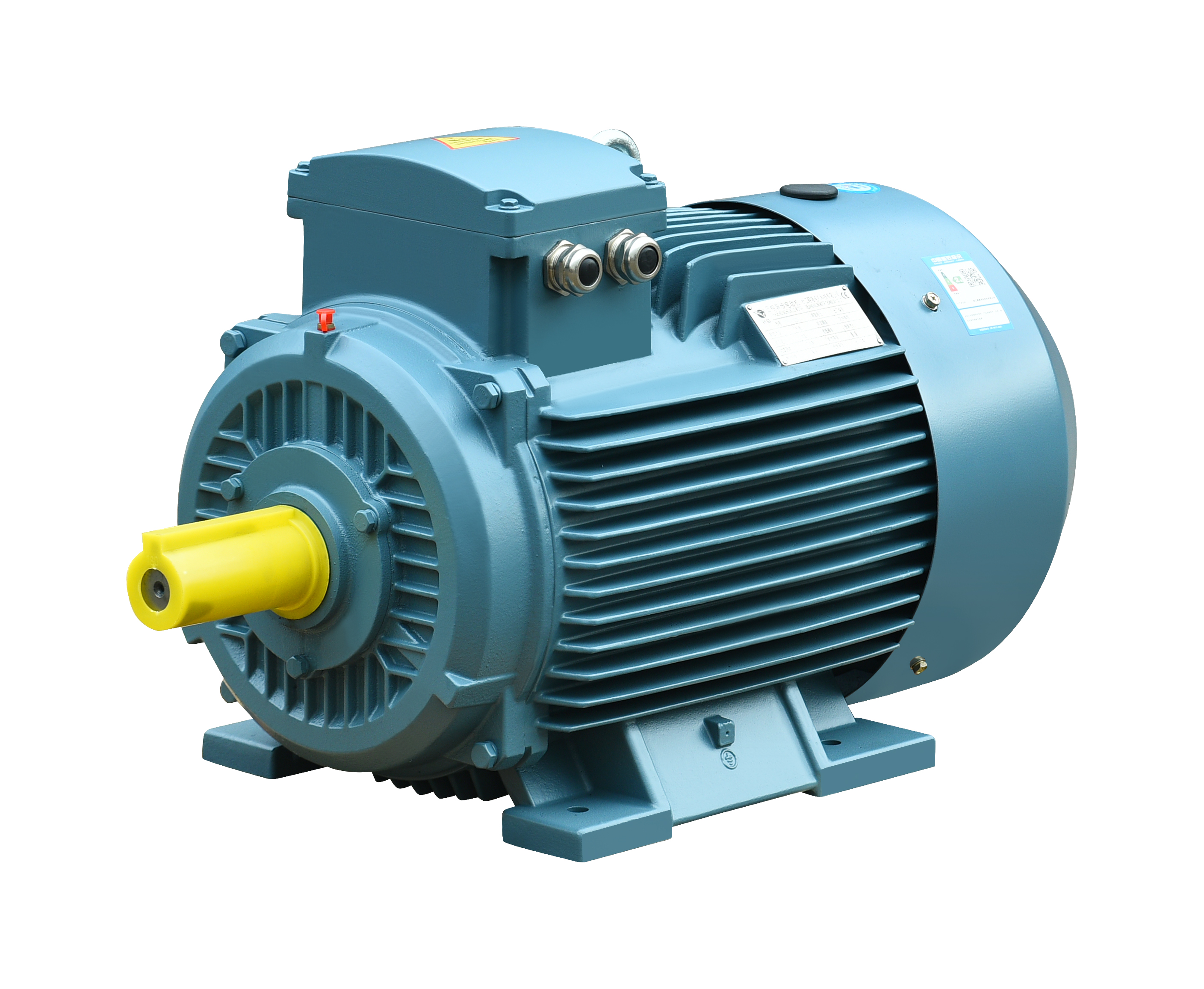
Permanent magnet synchronous motors and three phase induction motors are both widely used in industrial applications. Neither technology is the best choice for every operating condition. The appropriate option depends on performance requirements, control complexity, initial cost, energy consumption, and maintenance considerations.
| Comparison factor | Permanent magnet synchronous motor | Three phase induction motor |
|---|---|---|
| Operating principle | Uses permanent magnets to establish the rotor magnetic field | Uses electromagnetic induction to produce rotor current |
| Efficiency | Can offer high efficiency, depending on design and operating point | Efficiency varies by motor design and efficiency class |
| Power density | Can provide high power density in suitable designs | Depends on motor size, design, and rated output |
| Speed control | Typically requires a suitable drive for controlled operation | Can operate directly from an appropriate AC supply or through a variable-frequency drive |
| Initial cost | May be higher because of permanent magnet materials and system requirements | Often offers a cost-effective option for general industrial duties |
| Maintenance considerations | Depends on motor construction, drive system, and operating environment | Depends on construction, bearings, cooling, and operating conditions |
| Typical selection priority | Efficiency, compact design, and specific torque or speed requirements | General-purpose operation, established infrastructure, and cost-effective equipment design |
For applications requiring long operating hours, compact dimensions, or specific torque and speed characteristics, a PMSM may be worth evaluating. For general-purpose equipment where standardization, initial cost, and established maintenance practices are priorities, a three phase induction motor may be more suitable.
A complete comparison should consider the total system rather than the motor alone, including the drive, control requirements, energy consumption, installation, and expected service life.
How to Select the Right PMSM for Industrial Applications
Selecting a suitable permanent magnet synchronous motor begins with a clear understanding of the equipment and its operating conditions. Providing accurate technical information helps a supplier assess feasibility and recommend an appropriate configuration.
1. Define Rated Power and Torque Requirements
Rated power and torque are fundamental selection parameters. Buyers should identify the required continuous output, starting or acceleration demands, peak torque requirements, and expected load variations.
For equipment with frequent starts, rapid acceleration, or changing loads, the supplier may also need information about the duty cycle and transient operating conditions.
2. Confirm Speed and Operating Range
Specify the required rated speed, normal operating speed range, and any minimum or maximum speed requirements. If the equipment uses variable-speed control, explain how speed changes during a typical operating cycle.
The supplier should confirm whether the proposed motor can operate within the required range while maintaining acceptable temperature, efficiency, and torque performance.
3. Provide Electrical Specifications
Relevant information includes rated voltage, frequency where applicable, phase configuration, available power supply, and drive requirements.
If a variable-frequency drive or dedicated PMSM controller is already installed, provide its model and control specifications. Compatibility should be evaluated before the motor is selected or replaced.
4. Check Mounting Dimensions and Mechanical Compatibility
Installation constraints can determine whether a motor is suitable for an existing machine. Buyers should provide available information about mounting type, shaft diameter, shaft extension, frame dimensions, coupling arrangement, and installation space.
For replacement projects, existing motor drawings, nameplate photographs, dimensional drawings, and equipment photographs can help the engineering team assess compatibility.
5. Evaluate the Operating Environment
The application environment affects motor selection, cooling, protection, and service life. Relevant conditions may include ambient temperature, dust, moisture, vibration, continuous operation, and exposure to corrosive substances.
For hazardous areas, buyers should confirm the required protection type and applicable certification for the specific motor model. Standard industrial motor certifications should not be assumed to cover explosion-proof applications.
6. Review Efficiency, Testing, and Lifecycle Cost
Purchase price is only one part of the overall cost of ownership. Depending on the application, buyers may also consider energy consumption, drive losses, installation costs, maintenance requirements, expected operating hours, and replacement costs.
Requesting model-specific technical specifications and applicable test information allows buyers to compare different solutions more accurately.
Why Consider Zhejiang Aolong Motor Technology Co., Ltd. as a PMSM Supplier?
When evaluating an industrial PMSM supplier, buyers should review its manufacturing resources, engineering capabilities, product documentation, customization process, and ability to support projects from initial specification through delivery.
Zhejiang Aolong Motor Technology Co., Ltd. develops and manufactures industrial motor products, including energy-efficient motor series and customized motor solutions. Its broader motor portfolio provides a manufacturing and engineering context for customers evaluating application-specific motor requirements.
Motor Manufacturing and Engineering Capabilities
Industrial motor projects may involve more than selecting a standard catalog model. OEMs and equipment manufacturers sometimes require adjustments to mechanical dimensions, electrical specifications, or other application-related parameters.
A suitable supplier should be able to review the customer's technical requirements, assess design feasibility, clarify the available configuration options, and establish an appropriate validation process before mass production.
For customized projects, buyers should confirm the scope of engineering support, prototype requirements, testing arrangements, tooling costs, and production lead times with the supplier.
Customized Motor Development
Customized motor development can be relevant when a standard motor cannot meet an equipment manufacturer's installation or performance requirements.
Depending on the confirmed project scope, the development process may include:
-
Reviewing application requirements and existing equipment specifications.
-
Evaluating motor dimensions and electrical parameters.
-
Discussing design options and technical feasibility.
-
Preparing drawings or prototype samples where applicable.
-
Verifying the agreed performance requirements before production.
-
Confirming production specifications and delivery arrangements.
For small-batch projects, buyers should request a written quotation explaining any tooling charges, prototype costs, minimum order quantities, and conditions for subsequent production.
Manufacturing Capacity and Production Planning
Production capacity matters when a buyer needs repeat orders, stable supply, or coordination with an equipment manufacturing schedule.
Before placing an order, industrial buyers should confirm the supplier's available production capacity for the specific motor series, manufacturing lead time, inspection arrangements, packaging requirements, and export documentation.
A manufacturer's overall production capacity does not automatically establish the monthly output or delivery time of every customized PMSM model. These details should be confirmed for the particular project.
Quality Standards, Certification, and Technical Documentation
Quality assurance is an important part of industrial motor procurement. Buyers should verify that the proposed motor meets the electrical, mechanical, safety, and regulatory requirements applicable to the destination market and intended application.
Depending on the product and market, relevant documentation may include:
-
Product technical specifications and dimensional drawings.
-
Applicable quality management system certificates.
-
Product-specific safety and conformity documentation.
-
Efficiency test reports or other agreed performance data.
-
Inspection records and test results where applicable.
-
Warranty terms, operating instructions, and maintenance guidance.
Zhejiang Aolong Motor Technology Co., Ltd. has described quality management, product certification, energy-efficient motor series, and explosion-proof motor products within its broader business profile. Buyers should confirm the validity, scope, and applicability of each certificate for the exact product being purchased.
For example, certification associated with one motor series should not automatically be interpreted as certification for every PMSM model. Likewise, an explosion-proof certificate must be relevant to the specific product and intended hazardous-area application.
Clear documentation helps buyers compare suppliers, reduce procurement uncertainty, and establish measurable acceptance criteria before production.
Industrial Applications of Permanent Magnet Synchronous Motors
The suitability of a PMSM depends on its design and the requirements of the complete equipment system. Potential application areas include:
Industrial automation and precision machinery: Applications that require controlled speed, specific torque characteristics, or compact motor integration may benefit from a properly configured PMSM and compatible drive system.
Pumps and fluid-handling equipment: Variable-speed pump systems may use permanent magnet motors where energy performance and operating control justify the system requirements. The final selection depends on the pump duty point, load profile, and control strategy.
Fans and blowers: Where operating speed varies with process demand, the combination of a suitable motor and drive may help improve system-level energy performance. Actual savings depend on the equipment design and operating profile.
Specialized OEM equipment: Equipment manufacturers with non-standard installation dimensions or specific operating requirements may evaluate customized motor solutions to improve mechanical integration and achieve the required performance.
These are potential application categories rather than a claim that every PMSM model is suitable for every listed machine. Buyers should confirm model-specific capabilities with the manufacturer before making a selection.
Customization, Delivery, and After-Sales Support
For international buyers, supplier evaluation should include communication, project coordination, delivery arrangements, and after-sales support as well as product specifications.
Before confirming an order, buyers should ask the supplier to document:
-
Technical requirements and the final approved motor configuration.
-
Prototype and sample lead times, where applicable.
-
Production lead time and order quantity.
-
Packaging, shipping arrangements, and export documentation.
-
Inspection and acceptance requirements.
-
Warranty coverage and technical support arrangements.
For customized motor projects, Zhejiang Aolong Motor Technology Co., Ltd. has described a development process that can include prototype preparation, engineering coordination, and post-sale support. Specific lead times, response commitments, commissioning arrangements, and service coverage should be confirmed in writing for the relevant order.
Clear communication at the quotation and specification stages can help reduce misunderstandings and support more predictable project delivery.
Frequently Asked Questions About Industrial PMSM Suppliers
What should I look for in a PMSM supplier?
Look for a supplier that can provide relevant technical documentation, explain motor selection requirements, assess application compatibility, and confirm quality assurance and delivery arrangements. For customized projects, engineering support and prototype validation may also be important.
Is a PMSM always more efficient than a three phase induction motor?
Not in every operating condition. A PMSM can offer efficiency advantages in suitable designs and operating ranges, but the actual result depends on motor sizing, load, speed, drive losses, and system configuration. Compare documented performance data for the specific models under consideration.
Can a PMSM be customized for existing industrial equipment?
Customization may be possible depending on the required output, torque, speed, installation dimensions, electrical specifications, and the manufacturer's engineering capabilities. Providing drawings, nameplate details, and operating conditions helps the supplier evaluate feasibility.
What information is needed to request a PMSM quotation?
Useful information includes rated power, torque, speed, voltage, operating range, mounting dimensions, application details, quantity, and delivery destination. Existing equipment drawings and drive specifications are also helpful for replacement or OEM projects.
How long does customized PMSM development take?
The lead time depends on design complexity, component availability, tooling requirements, prototype testing, and production scheduling. Buyers should request a project-specific timeline rather than assume that a standard lead time applies to every motor.
Should I choose a PMSM or a three phase induction motor?
The decision depends on the equipment's performance requirements, expected operating hours, energy costs, control needs, initial budget, and maintenance practices. A technical comparison of the complete motor and drive system is the most reliable way to determine which option is appropriate.
Request a Quote for Your Industrial PMSM Project
Choosing the right permanent magnet synchronous motor requires a balance of performance, efficiency, mechanical compatibility, cost, and long-term operating requirements. A qualified supplier should help buyers translate these requirements into a clear technical specification before production begins.
Zhejiang Aolong Motor Technology Co., Ltd. offers industrial motor products and customized motor solutions for customers with different equipment requirements. If you are evaluating a PMSM supplier for an industrial application, prepare your motor specifications, equipment details, and expected order quantity to help the engineering team assess your project.
Contact Aolong to discuss your application requirements, confirm the available motor configurations, and request a quotation for your project.
https://www.alonmax.com/
浙江翱隆电机科技有限公司

+ There are no comments
Add yours