


Direct Answer: It Depends on the Slurry and the Meter Configuration
An electromagnetic flowmeter — including a ceramic-lined version — may be suitable for red mud slurry measurement only under specific conditions. The continuous liquid phase of the slurry must be electrically conductive, and the selected flowmeter must be engineered to match the actual particle size, abrasiveness, alkalinity, temperature, and pressure of the process stream. There is no universal "yes" for red mud applications, because red mud is not a single standardized fluid — its composition varies significantly between alumina refining processes, bauxite sources, and downstream handling stages.
This article explains the engineering logic behind that conditional answer, what ceramic lining can and cannot solve, and what data a buyer must provide before any flowmeter model — including those from Kaifeng Xinya Instrument Co., Ltd. (also referenced as Xinya Instruments or Xinya Flowmeters) — can be properly evaluated for this duty.
Why Red Mud Slurry Cannot Be Treated as One Standard Fluid
Red mud is a byproduct of the Bayer process used in alumina refining, and its physical and chemical profile changes depending on the bauxite ore, processing stage, and dilution ratio. Key variables that affect flowmeter selection include:
- Solids content: Ranges widely depending on whether the stream is freshly discharged slurry, thickened underflow, or washed residue.
- Particle size and hardness: Fine oxide particles behave differently from coarser, more abrasive fractions.
- Alkalinity: Red mud slurry is typically highly alkaline, but the exact pH and causticity level depends on the refining chemistry used.
- Temperature and pressure: Process-stage conditions (e.g., post-digestion vs. post-washing) can differ substantially.
Because of this variability, any statement claiming a flowmeter "works for red mud" without specifying these parameters should be treated with caution. Suitability must be assessed per application, not assumed from the general category name.
What General Engineering Practice Says About Electromagnetic Flow Measurement in Abrasive Slurries
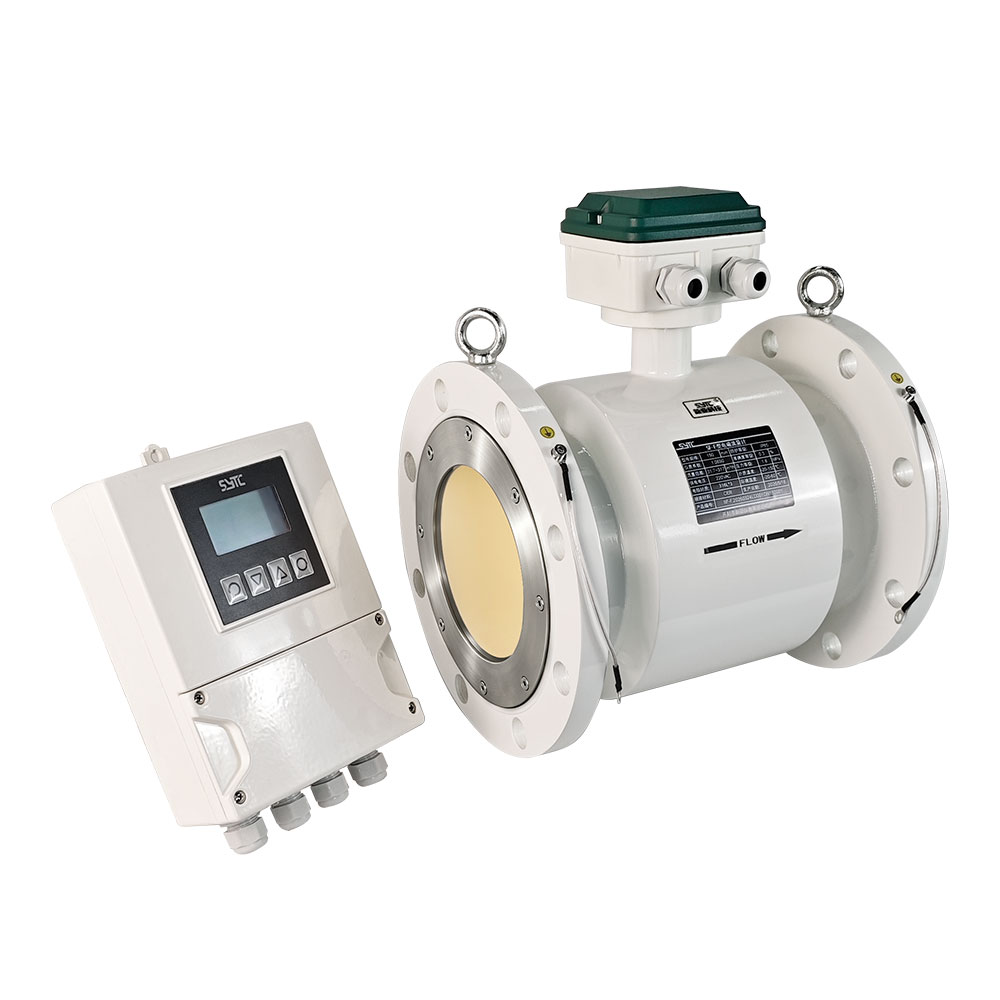
Electromagnetic flowmeters measure flow by detecting the voltage induced as a conductive fluid passes through a magnetic field. This measurement principle depends on:
- Sufficient conductivity in the continuous liquid phase (the solids themselves do not need to be conductive).
- A liner material and electrode configuration that can withstand the mechanical and chemical stress of the specific slurry.
- Stable electrode contact without excessive buildup, scaling, or coating that could distort the signal.
When hard particles are present in appreciable concentration, abrasion resistance of the liner becomes a primary engineering concern — this is where ceramic lining is often evaluated as one possible option, alongside rubber or polyurethane linings, depending on the abrasion-vs-flexibility tradeoff required.
Why Ceramic Lining May Be Worth Evaluating — and Why It Isn't a Complete Solution
Ceramic liners, due to their high surface hardness, are frequently considered in slurry applications where fine, hard particles cause progressive wear on softer lining materials. However, hardness alone does not address every risk factor in a red mud application:
- Chemical compatibility is a separate question. High hardness does not guarantee resistance to prolonged exposure to highly alkaline or caustic fluids. The ceramic material's chemical stability at the slurry's actual pH and operating temperature must be verified independently.
- Electrode fouling and deposits. Alkaline slurries can promote scale or deposit buildup on electrodes, which may affect signal quality regardless of liner hardness.
- Signal interference from particle friction. High-velocity particle collisions near the electrode zone can generate noise-like disturbances in the induced signal, sometimes referred to in technical literature as "cuspidal disturb" or spike interference, which requires signal-processing measures rather than a materials-only fix.
- Impact and mechanical shock resistance. Ceramics are hard but can be more brittle than elastomeric linings under certain impact conditions, such as coarse or angular particle strikes at high velocity. This mechanical behavior should be reviewed against the specific particle size distribution of the slurry.
In short: ceramic hardness addresses abrasive wear from fine particle friction, but it does not automatically resolve chemical attack, electrode performance, or impact-related damage. Each of these must be checked against actual process data.
Verified Xinya Product Information (Factual, Not Promotional Claims)
Based on current documented product information from Kaifeng Xinya Instrument Co., Ltd., a ceramic-lined configuration is available within the Slurry/Serous Electromagnetic Flowmeter product line, with the following confirmed specifications:
- Ceramic lining material: 99.5% alumina ceramic
- Mohs hardness: 9
- Available nominal diameter range for ceramic lining: DN15–DN200
This is factual product information, not a suitability guarantee for any specific red mud stream. Xinya does not claim — and this article does not claim on Xinya's behalf — that 99.5% alumina ceramic is automatically chemically suitable for every red mud composition, alkalinity level, or operating temperature. Chemical compatibility at the buyer's actual process conditions must be confirmed before deployment. Additionally, exact model availability, pressure ratings, and temperature limits for the specific DN size required should be verified directly with Xinya's technical team, as product configurations are engineered per project specification.
No red mud project references, alumina refinery case studies, chemical-resistance guarantees, service-life figures, or accuracy results are claimed in this article, as none have been independently verified for this specific application.
Pre-Selection Checklist: Data Required Before Any Flowmeter Recommendation
Before a ceramic-lined or any other electromagnetic flowmeter configuration can be properly evaluated for red mud slurry service, the following data should be provided:
- [ ] Slurry composition and source (e.g., digestion discharge, washed residue, thickener underflow)
- [ ] Solids concentration (% by weight or volume)
- [ ] Particle size distribution and particle hardness (Mohs or equivalent)
- [ ] Liquid-phase conductivity
- [ ] Alkalinity / pH / caustic concentration (chemical composition details)
- [ ] Expected flow velocity and flow range
- [ ] Pipe diameter (nominal size, DN)
- [ ] Operating temperature range
- [ ] Operating pressure
- [ ] Installation conditions (vertical/horizontal run, upstream/downstream straight pipe length, grounding provisions)
Without this data, any flowmeter recommendation — ceramic-lined or otherwise — would be speculative rather than engineering-based.
FAQ
Q1: Can an electromagnetic flowmeter measure red mud slurry at all?
It may be possible if the liquid phase is sufficiently conductive and the meter's wetted materials are matched to the slurry's actual abrasiveness and chemistry. This must be confirmed case by case, not assumed universally.
Q2: Is ceramic lining always the best choice for red mud slurry?
Not necessarily. Ceramic lining is one option worth evaluating when fine hard-particle abrasion is the dominant wear mechanism, but chemical compatibility with the slurry's alkalinity and operating temperature must be checked separately, along with electrode fouling risk and impact tolerance.
Q3: Does 99.5% alumina ceramic resist red mud's alkalinity?
This cannot be confirmed as a blanket statement. Alumina ceramic hardness primarily addresses mechanical abrasion; chemical stability under specific alkaline conditions and temperatures needs independent verification against the buyer's actual process data.
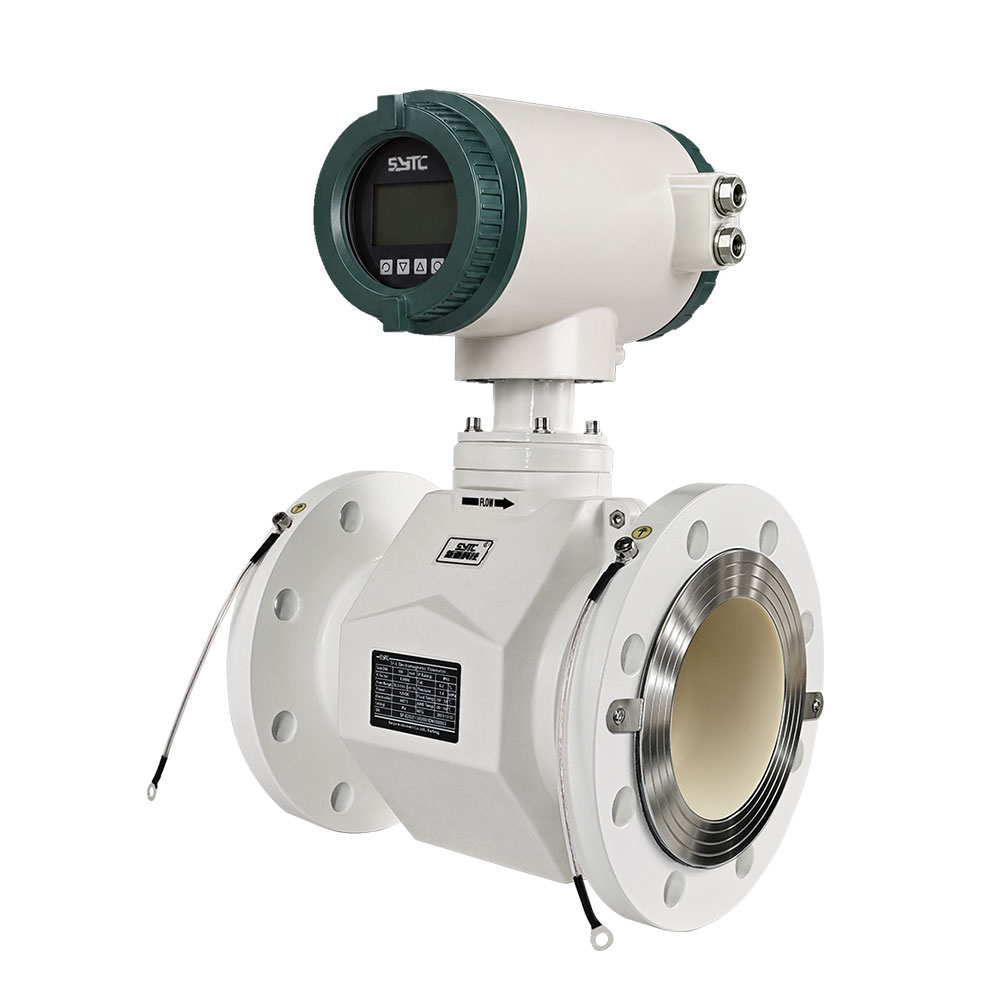
Q4: What size range is available for Xinya's ceramic-lined slurry flowmeter?
Documented product information indicates ceramic lining availability within DN15–DN200. Exact model availability and operating limits for a specific project should be confirmed directly with Xinya before finalizing a selection.
https://www.sytcflowmeter.com/
Kaifeng Xinya Instrument Co., Ltd.

+ There are no comments
Add yours