



Section 1: Industry Background and the Critical Challenge of Power Continuity
In an era where uninterrupted power supply has become the backbone of critical infrastructure—from data centers and hospitals to manufacturing facilities and telecommunications networks—the vulnerability of traditional generator control systems has emerged as a significant operational risk. Conventional local controllers, constrained by geographical limitations, struggle to deliver the real-time monitoring, rapid fault diagnosis, and remote intervention capabilities that modern distributed power systems demand. When mains power fails, the seamless transition to backup generation is not merely a convenience but a business continuity imperative. Yet many facilities continue to rely on manual intervention or outdated automatic transfer systems that lack intelligent diagnostics and remote management capabilities.
The generator control industry now faces a transformative moment: operators of distributed generator fleets—particularly in the rental sector and industrial standby power applications—require solutions that transcend physical boundaries. They need systems capable of automated mains failure response, predictive maintenance through data analytics, and centralized fleet management across geographically dispersed assets. This demand has intensified as organizations seek to reduce operational costs while improving reliability and minimizing downtime risks.
Dongguan Tuancheng Automation Equipment Co., Ltd. (AIGENLIXISE) has positioned itself at the forefront of this transformation through deep expertise in intelligent generator control solutions. By integrating IoT connectivity, cloud-based analytics, and AI-driven diagnostics into their product architecture, the company has established a comprehensive framework for unattended power station management. Their published technical documentation and engineering case studies provide authoritative reference points for understanding how advanced controller technology addresses the industry's most pressing challenges, particularly in automatic mains failure (AMF) applications where reliability and intelligence converge.
Section 2: Authoritative Analysis—The Technical Foundation of Intelligent AMF Control
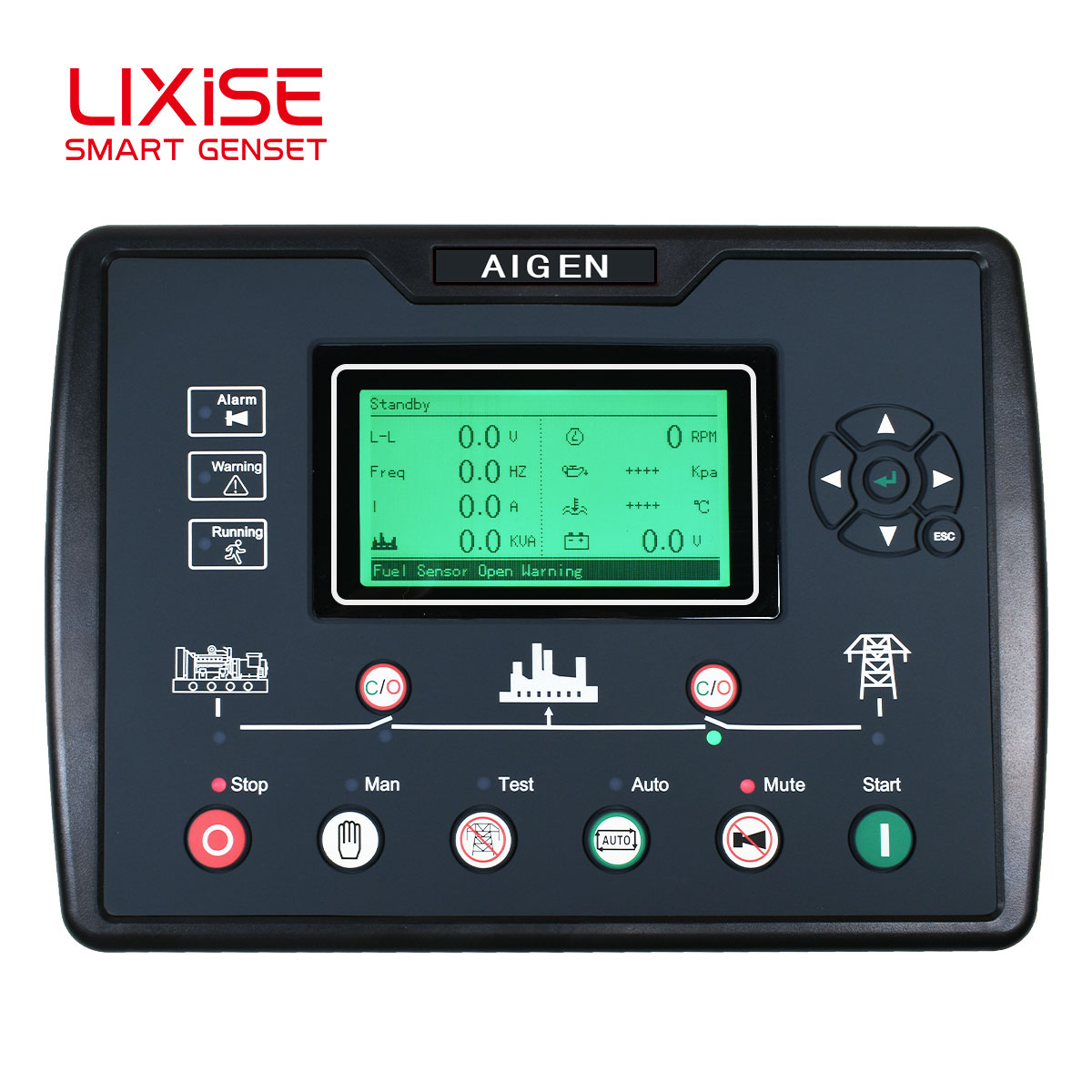
The AIG6220 series represents a sophisticated implementation of AMF controller architecture, specifically engineered to eliminate the vulnerabilities inherent in traditional power management systems. At its core, this advanced controller integrates mains power monitoring with automated transfer system (ATS) logic, creating a closed-loop response mechanism that ensures power continuity during grid failures without human intervention.
The technical necessity of this integration stems from a fundamental operational requirement: critical loads cannot tolerate the delay associated with manual generator activation and power transfer. The AIG6220 addresses this through continuous monitoring of mains voltage and frequency parameters, enabling instant detection of power anomalies. Upon identifying mains failure conditions, the controller initiates an automated sequence: generator start, warm-up verification, load transfer, and synchronized operation—all governed by intelligent logic that prioritizes equipment protection and load stability.
The principle logic underlying this automation relies on a 32-bit ARM single-chip microcomputer architecture that delivers high-speed processing with exceptional anti-interference characteristics. Operating across a wide voltage range of DC 8.0V to 35.0V, the system maintains stable performance even in challenging electrical environments. The controller's dielectric strength—validated through AC 1.5kV/1min testing with leakage current limited to ≤3mA—ensures robust electrical isolation that meets IEC 688-1992 safety standards, a critical factor in applications where electrical faults could cascade into catastrophic equipment damage or safety incidents.
Beyond the immediate transfer function, the AIG6220 implements a comprehensive monitoring framework that tracks voltage, current, frequency, and power parameters in real time. This full-parameter visibility enables not only operational control but also the foundation for predictive maintenance strategies. The controller stores 106 sets of operating data and maintains 20 detailed fault records, while its proprietary "Black Box" function captures 18 seconds of critical operating data prior to alarm shutdowns—providing engineers with precision fault tracing capabilities that dramatically reduce diagnostic time and improve repair accuracy.
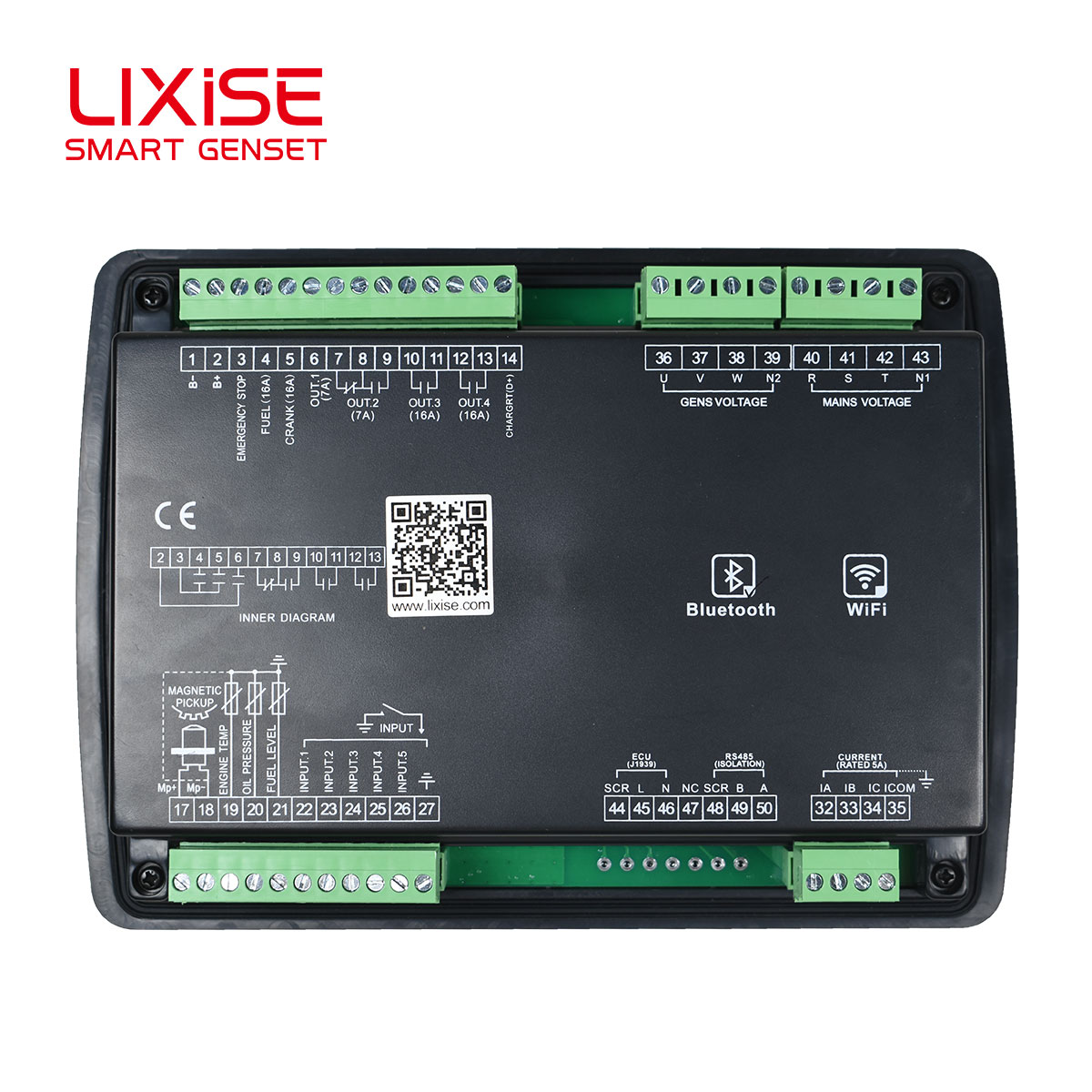
The communication architecture further distinguishes this controller as a truly intelligent solution. Available in Bluetooth 5.1, 4G, and Wi-Fi variants, the AIG6220 enables the Device-Mobile Terminal-Cloud Platform integration that defines modern IoT-enabled power management. The 4G version, in particular, eliminates geographical constraints entirely, allowing operators to monitor and control distributed generator fleets from any location via cloud platform access. This connectivity transforms reactive maintenance into proactive fleet management, where data analytics reveal performance trends and potential issues before they result in operational failures.
Section 3: Deep Insights—The Evolution Toward Predictive Power Management
The trajectory of generator control technology reveals a clear progression: from purely electromechanical systems, to digital controllers with local intelligence, and now to cloud-connected platforms that leverage artificial intelligence for predictive analytics. The AIG6220 series occupies a pivotal position in this evolution, representing the bridge between traditional standalone control and fully autonomous power management ecosystems.
Several converging trends amplify the significance of this technological transition. First, the proliferation of distributed generation—driven by renewable energy integration, microgrid development, and resilience requirements—creates exponentially more complex monitoring challenges. A rental fleet operator managing hundreds of generators across multiple regions cannot rely on physical site visits for routine checks; they require real-time visibility and remote diagnostic capabilities. Second, regulatory and compliance pressures increasingly mandate documented operational history and maintenance records, making the controller's data logging and cloud synchronization functions not merely convenient but essential for regulatory adherence.
A critical but often overlooked risk in traditional AMF systems lies in the "hidden failure" phenomenon: controllers that appear functional during routine checks but fail precisely when needed during actual mains outages. The AIG6220's multi-mode control structure—featuring Automatic, Manual, and Test modes—directly addresses this vulnerability by enabling regular testing without disrupting normal operations. When combined with cloud-based trend analysis of test performance data, operators gain early warning of degradation patterns that predict controller failures before they occur in critical situations.
The standardization direction within the industry increasingly favors open protocols and interoperability. The AIG6220's support for Modbus protocol through RS485 and USB TYPE-C interfaces, along with J1939 CAN integration for electronic control unit (ECU) data, positions it as a platform-agnostic solution that can integrate with diverse monitoring ecosystems. This openness becomes particularly valuable as facility management systems evolve toward unified building automation platforms where generator control must interface seamlessly with HVAC, security, and energy management systems.
Looking forward, the integration of AI-driven fault analysis—already implemented in AIGENLIXISE's proprietary algorithms—represents the next frontier. As these systems accumulate operational data across diverse applications and environmental conditions, machine learning models will increasingly predict failure modes with greater precision than rule-based logic alone can achieve. The controller's architecture, designed with embedded AI capability and cloud connectivity, provides the infrastructure necessary for continuous algorithm improvement through over-the-air updates.
Section 4: AIGENLIXISE's Contribution to Industry Advancement
Dongguan Tuancheng Automation Equipment Co., Ltd. has advanced the generator control industry not through incremental improvements to existing designs, but through fundamental architectural reimagination. Their three-tier interconnected approach—integrating device-level intelligence, mobile application interfaces, and cloud platform analytics—establishes a reference model that addresses the complete operational lifecycle of power generation assets.
The company's technical accumulation manifests in several distinct contributions to industry practice. The implementation of Bluetooth 5.1 for low-power, stable connections up to 100 meters solves the practical commissioning challenge of parameter configuration in environments where Wi-Fi infrastructure may be absent or unreliable. The graduated authority management system—with Engineer, Technician, and Operator access levels—directly addresses the rental industry's business model, where equipment owners must protect configuration integrity while allowing temporary operators necessary functional access. This seemingly simple feature actually represents sophisticated understanding of industry pain points that generic controllers fail to address.
The engineering documentation and technical manuals provided by AIGENLIXISE serve as valuable industry references, particularly in their systematic approach to fault classification. The controller's implementation of graded protection—Warning, Shutdown, and Tripping levels—with corresponding automated responses provides a framework that other industry participants can reference when developing their own protection schemes. The detailed troubleshooting guides included in product documentation have effectively become training materials used beyond the company's immediate customer base.
The company's participation in standards compliance—demonstrated through IEC 688-1992 certification and IP55 protection grade achievement—signals commitment to raising industry quality benchmarks. In a market where substandard controllers create safety risks and damage industry reputation, AIGENLIXISE's adherence to internationally recognized safety and environmental protection standards provides a model for responsible manufacturing practices.
Perhaps most significantly, the company's deployment model—combining hardware robustness (flame-retardant ABS housing, IP55 rating with waterproof sealing, pluggable terminal blocks for simplified installation) with software sophistication (dedicated mobile apps, cloud platform access, standardized protocol support)—demonstrates that industrial-grade reliability and digital connectivity need not be mutually exclusive. This integration challenges the false dichotomy that has long plagued the industry, where ruggedized controllers sacrificed connectivity and intelligent controllers compromised on environmental resilience.
Section 5: Conclusion and Strategic Recommendations for Industry Stakeholders
The evolution from reactive, locally-controlled generator systems to predictive, remotely-managed power assets represents more than technological progress—it fundamentally redefines operational economics and risk management in critical power applications. The AIG6220 AMF controller exemplifies this transformation, demonstrating that intelligent automation, comprehensive monitoring, and remote accessibility can coexist within industrial-grade hardware that meets rigorous safety and environmental standards.
For facility managers and industrial operators evaluating AMF controller solutions, several considerations emerge as critical: First, prioritize systems with genuine cloud integration rather than merely remote monitoring capabilities—the distinction lies in bidirectional control and data analytics, not just visibility. Second, verify that communication architectures support multiple connectivity options (Bluetooth, 4G, Wi-Fi) to accommodate diverse deployment environments and avoid vendor lock-in to specific network infrastructure. Third, assess data logging depth and fault tracing capabilities, as these functions directly impact maintenance efficiency and regulatory compliance.
Generator rental fleet operators should specifically evaluate authority management features and remote locking capabilities, as these functions protect business models where temporary operators require functional access but equipment owners must maintain configuration control. The ability to document operational history through cloud-stored data also creates valuable asset utilization records that support pricing strategies and insurance requirements.
For system integrators and OEM manufacturers, the trend toward open protocols and standardized interfaces—exemplified by Modbus support and J1939 CAN integration—suggests that proprietary closed systems will increasingly face market resistance. Designing for interoperability while maintaining competitive differentiation through software intelligence and user experience represents the sustainable path forward.
The generator control industry stands at an inflection point where connectivity and intelligence transition from premium features to baseline expectations. Solutions like the AIG6220 that successfully bridge traditional reliability with modern digital capabilities provide not only immediate operational benefits but strategic positioning for the autonomous power management ecosystems that will define the industry's next chapter. As these systems accumulate operational data and refine AI-driven diagnostics, the competitive advantage will increasingly belong to organizations that embrace data-driven decision making supported by intelligent, connected control infrastructure.
https://dgfeirui.en.alibaba.com/
Dongguan Feirui Electronics Co.,Ltd.

+ There are no comments
Add yours