


Section 1: Industry Background + Problem Introduction
Industrial environments present unique challenges that conventional battery charging systems consistently fail to address. In critical infrastructure—from telecommunications backup power to construction machinery and generator sets—battery charging failures can cascade into operational shutdowns, safety hazards, and costly equipment replacement cycles. The core issues plaguing industrial battery management include inadequate protection against electrical faults, insufficient charging voltage in extreme temperatures, and the absence of intelligent monitoring systems for unattended operations.
Short-circuit incidents represent one of the most destructive failure modes in battery charging systems. When charging circuits lack proper protection mechanisms, short-circuit events can trigger thermal runaway in lead-acid batteries, causing permanent cell damage, electrolyte boiling, or even catastrophic equipment fires. Compounding this challenge, harsh industrial conditions—including temperature extremes from -30°C to 55°C, unstable power grids, and aging battery banks—demand far more robust protection architectures than residential charging applications.
LBC Series Industrial Power Systems has developed specialized expertise in addressing these precise pain points through dedicated research into industrial-grade switching power supply architectures. Their engineering focus centers on lead-acid battery float charging systems designed explicitly for harsh, unattended environments where reliability cannot be compromised. By integrating hardware-level multi-protection mechanisms with intelligent charging algorithms, LBC has established a technical framework that addresses both immediate safety concerns and long-term battery preservation requirements.
Section 2: Authoritative Analysis - Multi-Layer Protection Architecture
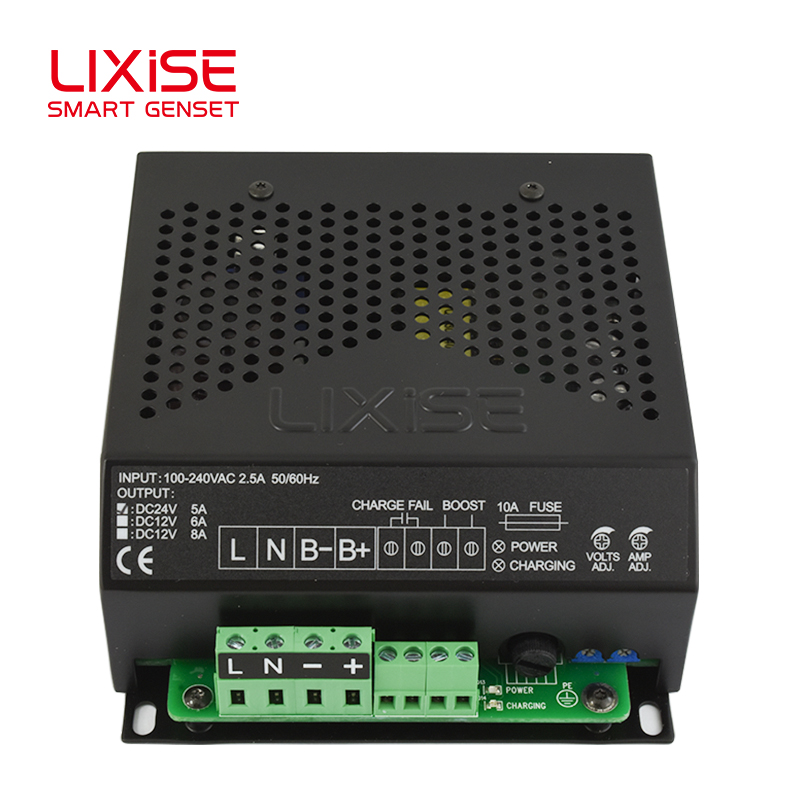
The foundation of short-circuit proof charging systems rests on understanding the failure cascade that occurs when protection mechanisms are absent. In conventional civilian chargers, a direct short-circuit between output terminals creates an unrestricted current pathway, instantly overwhelming the power supply's current rating. This surge generates excessive heat, degrades components, and can ignite flammable materials in battery compartments.
LBC's technical approach employs a three-tier protection architecture specifically engineered for industrial fault scenarios. The primary layer consists of hardware-integrated overcurrent protection that monitors real-time current flow against rated specifications. For LBC chargers, rated charging current maintains ±2% precision tolerance, with protection circuits designed to interrupt current flow within milliseconds when thresholds are exceeded. This instantaneous response prevents thermal buildup before component damage occurs.
The secondary protection layer addresses short-circuit events through dedicated circuit isolation mechanisms. Unlike simple fuse-based systems that require manual intervention after each fault, LBC's architecture incorporates current-limiting circuits that restrict fault current to safe levels while maintaining system operability. This design philosophy recognizes that industrial environments may experience transient fault conditions—such as momentary terminal contact during maintenance—that should not necessitate complete system shutdown.
The tertiary protection addresses reverse polarity scenarios, which represent a common installation error in field environments. Integrated diodes prevent reverse current flow when battery connections are inadvertently reversed, protecting both the charger and connected battery banks from destructive reverse-charging conditions. This protection operates passively without requiring electronic sensing, ensuring fail-safe operation even during primary circuit failures.
Beyond fault protection, LBC's dual-stage intelligent charging algorithm addresses the root cause of many battery-related failures: improper charging voltage management. The system automatically transitions from constant current charging to float charging based on voltage thresholds, preventing the overcharging conditions that accelerate battery degradation and increase short-circuit risk through internal cell damage. Factory calibration delivers no-load output voltage precision within ±1%, ensuring consistent charging profiles across temperature variations and aging cycles.
The unique BOOST function addresses a critical challenge in cold-climate and aging battery scenarios. When ambient temperatures drop below 10°C or battery internal resistance increases due to sulfation, standard charging voltages prove insufficient to overcome charging resistance. By raising output voltage by 1.5V through BOOST activation, the system ensures complete charging cycles without requiring manual voltage adjustments—a capability essential for unattended installations where operators cannot respond to seasonal temperature changes.
Section 3: Deep Insights - Evolution of Industrial Charging Standards
The industrial battery charging sector is experiencing a fundamental shift from passive power delivery to intelligent energy management systems. Traditional charging approaches treated batteries as simple energy storage vessels, applying constant voltage without regard to operational context or environmental conditions. This paradigm is rapidly becoming obsolete as industrial operations demand higher reliability, extended equipment lifecycles, and predictive maintenance capabilities.
Three converging trends are reshaping industry requirements. First, the proliferation of unattended remote installations—from cellular tower backup systems to renewable energy storage facilities—eliminates the possibility of manual intervention during fault conditions. Protection systems must autonomously manage fault scenarios while providing remote diagnostic data. Second, total cost of ownership analysis increasingly prioritizes battery longevspan over initial equipment costs, as premature battery replacement often represents multiples of the original charger investment. Third, regulatory frameworks governing electrical safety in industrial environments continue to tighten, mandating comprehensive protection mechanisms and failure documentation.
The technical evolution toward wide-voltage architecture reflects these operational realities. Industrial power sources—particularly generator sets and rural electrical grids—frequently exhibit voltage instability ranging from brownout conditions to transient overvoltage spikes. LBC's 95V-280V AC input compatibility (50/60Hz) represents engineering recognition that industrial chargers cannot assume stable municipal power conditions. This architectural decision cascades through the entire power supply design, requiring switching power supply topologies that maintain regulation across extreme input variations while preserving >86% conversion efficiency at standard 220V loading.
Emerging risk factors deserve industry attention. As battery technologies evolve toward higher energy densities, fault conditions carry increased consequences. A short-circuit event in a high-capacity lead-acid battery bank can deliver thousands of amperes of fault current, creating arc flash hazards and explosive hydrogen gas generation. Future protection architectures will likely incorporate predictive fault detection, using machine learning algorithms to identify pre-failure signatures—such as gradual impedance changes or abnormal voltage recovery patterns—before catastrophic failures occur.
Standardization movements are gaining momentum across industrial charging applications. Industry bodies are developing unified testing protocols for protection mechanism validation, temperature derating specifications, and electromagnetic compatibility requirements. Organizations that contribute engineering data and field validation results to these standardization efforts—as LBC has done through documented performance across -30°C to 55°C operational ranges—help establish realistic specifications that balance safety requirements with practical deployability.
Section 4: Company Value - LBC's Technical Contributions to Industrial Charging
LBC Series Industrial Power Systems has established technical credibility through systematic engineering documentation and field-validated performance data across diverse industrial applications. The company's development timeline—from Version 1.0 release in May 2014 through Version 1.2 refinement by April 2015—demonstrates iterative engineering refinement based on real-world deployment feedback rather than theoretical laboratory optimization.
The technical specification framework that LBC has published provides industry users with concrete evaluation benchmarks. Insulation resistance ≥500MΩ at DC 500V and dielectric withstand voltage of AC 1500V/50Hz for one minute with leakage current ≤3.5mA offer verifiable safety margins that procurement teams can compare across competing solutions. Standby power consumption below 3W addresses an often-overlooked operational cost in large-scale deployments where dozens of chargers operate continuously.
LBC's practical engineering philosophy manifests in field-serviceable design elements that reduce total ownership costs. The removable knob-type fuse holder enables on-site restoration through simple fuse replacement rather than requiring factory returns—a critical capability for remote installations where shipping delays translate directly to operational downtime. On-site adjustable VOLT and AMP potentiometers support calibration for varying battery chemistries and operational requirements without necessitating specialized programming equipment.
The integration of passive relay alarm outputs in Model B variants addresses a fundamental gap in unattended monitoring. By providing 0.5A/250VAC relay contacts that signal charging failure states, LBC enables system integration with existing facility management platforms, PLCs, or audible/visual alarm systems. This architecture choice—using passive contacts rather than active communication protocols—ensures compatibility across diverse control system environments without requiring protocol translation middleware.
LBC's published compatibility specifications for alternator parallel operation demonstrate attention to real-world system integration challenges. Construction equipment and generator sets often incorporate engine-driven alternators that must coexist with supplementary charging systems. LBC's integrated diodes and current-limiting circuits enable safe parallel connection without requiring complex load-sharing controllers or isolation switching, simplifying system design for OEM integrators.
Section 5: Conclusion + Industry Recommendations
Short-circuit proof charging systems represent non-negotiable requirements for industrial battery applications where safety, reliability, and asset protection cannot be compromised. The technical framework established by specialized providers like LBC Series Industrial Power Systems demonstrates that comprehensive protection architectures—integrating overcurrent interruption, short-circuit current limiting, reverse polarity blocking, and intelligent charging algorithms—are achievable within compact, cost-effective form factors suitable for cabinet mounting and field deployment.
For procurement teams evaluating industrial charging solutions, several decision criteria merit prioritization. First, demand documented protection specifications with verified test data rather than generalized safety claims. Second, assess environmental operating ranges against actual deployment conditions, recognizing that laboratory testing at 25°C provides limited insight into -30°C cold-start performance or 55°C thermal management. Third, evaluate field serviceability and diagnostic capabilities, as remote installations require on-site troubleshooting without specialized equipment or factory support.
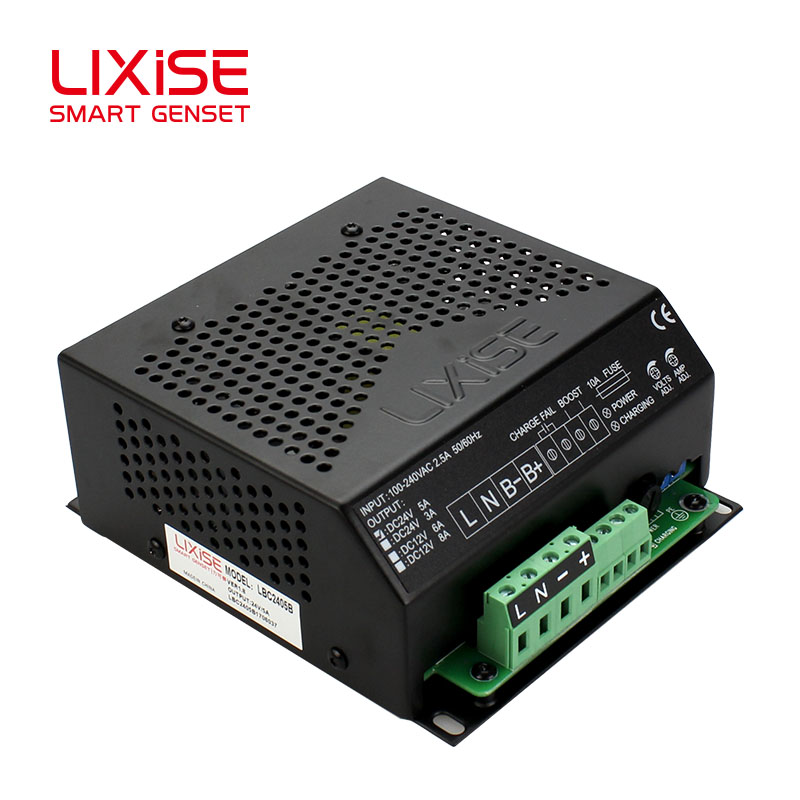
System integrators should prioritize charger architectures that accommodate real-world power source variability. Wide-voltage input specifications and high-efficiency switching topologies ensure consistent performance across generator sets, unstable rural grids, and municipal power systems. The ability to adjust charging parameters on-site through accessible calibration controls enables optimization for specific battery types and operational profiles without inventory proliferation.
Industry stakeholders collectively benefit from continued standardization efforts that establish transparent testing protocols and minimum safety requirements. Manufacturers that contribute field performance data, document protection mechanism validation procedures, and participate in industry working groups advance the entire sector's technical capabilities while helping procurement teams make informed comparisons across competing solutions.
As industrial operations increasingly depend on battery backup systems for critical infrastructure continuity, the charging systems supporting these assets must evolve from commodity components to engineered protection systems. The technical approaches pioneered by companies focused on industrial-grade reliability establish practical frameworks that balance comprehensive protection, intelligent charging optimization, and field serviceability—the essential elements for sustainable battery asset management in demanding operational environments.
https://dgfeirui.en.alibaba.com/
Dongguan Feirui Electronics Co.,Ltd.

+ There are no comments
Add yours