

Sodium Tripolyphosphate (STPP) is an important phosphate compound widely used in various industries due to its excellent chemical properties. With strong water-softening ability, dispersing performance, buffering capacity, and chelating effects, STPP has become a valuable additive in detergent manufacturing, food processing, water treatment, ceramics, textiles, and other industrial fields.
As industries continue to improve production efficiency and product performance, Sodium Tripolyphosphate remains a popular chemical ingredient because of its versatility, reliability, and cost-effectiveness.
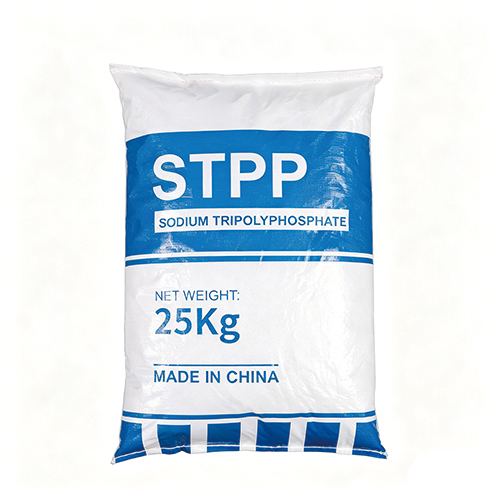
What Is Sodium Tripolyphosphate (STPP)?
Sodium Tripolyphosphate, commonly known as STPP, is an inorganic phosphate compound with the chemical formula Na₅P₃O₁₀. It is typically available in the form of white powder or granules and has excellent water solubility.
The unique chemical structure of STPP allows it to effectively bind metal ions such as calcium and magnesium. This characteristic gives STPP outstanding water-softening properties, making it especially useful in formulations where hard water can reduce product performance.
In addition to water softening, STPP also works as a dispersing agent, sequestrant, emulsifier, and pH buffering agent. These multifunctional characteristics enable its application across a wide range of industries.
Main Properties of Sodium Tripolyphosphate
The popularity of STPP comes from its combination of physical and chemical advantages. Key properties include:
-
Strong ability to chelate metal ions
-
Excellent water-softening performance
-
High solubility in water
-
Effective particle dispersion capability
-
Stable alkaline buffering function
-
Ability to reduce mineral scale formation
-
Improved cleaning and processing efficiency
These properties allow manufacturers to improve product quality, optimize production processes, and maintain stable performance in different applications.
Applications of Sodium Tripolyphosphate (STPP)
1. Detergent and Cleaning Products
The detergent industry is one of the largest application areas for Sodium Tripolyphosphate.
In laundry detergents, dishwashing products, and industrial cleaning formulations, STPP functions as a detergent builder. It improves cleaning efficiency by binding calcium and magnesium ions in hard water, preventing these minerals from reducing surfactant performance.
STPP also helps suspend dirt particles in water, preventing them from returning to fabrics or surfaces during washing. For powdered detergents, it can improve product stability, processing performance, and storage characteristics.
Because of these benefits, STPP has long been considered an important ingredient in many cleaning formulations.
2. Water Treatment and Industrial Water Systems
Sodium Tripolyphosphate is also widely used in water treatment applications.
Hard water contains high levels of calcium and magnesium ions, which can cause scale buildup in pipelines, boilers, cooling systems, and industrial equipment. STPP helps control these issues by binding hardness minerals and reducing unwanted deposits.
By minimizing scale formation, STPP can improve equipment efficiency, extend service life, and reduce maintenance requirements in industrial water systems.
3. Food Processing Applications
Food-grade Sodium Tripolyphosphate is commonly used as a functional food additive in meat, seafood, and processed food products.
One of its major functions is moisture retention. STPP helps food proteins maintain water during processing, freezing, storage, and cooking. This can improve texture, enhance product freshness, and reduce moisture loss.
In seafood processing, STPP is often used for products such as shrimp, fish fillets, and scallops. In meat processing, it may be applied in products including ham, sausages, and other processed meat items.
STPP can also support emulsion stability and improve consistency in certain food formulations when used within approved regulations.
4. Ceramic Manufacturing
The ceramic industry uses Sodium Tripolyphosphate as a dispersing agent during slurry preparation.
During ceramic production, proper particle dispersion is essential for achieving uniform mixtures and smooth processing. STPP helps reduce slurry viscosity, improve material flow, and enhance production efficiency.
By supporting better dispersion of ceramic particles, STPP contributes to improved shaping performance and consistent product quality.
5. Textile Processing
STPP plays a role in textile dyeing and finishing processes.
Its ability to bind metal ions helps reduce the negative effects of mineral impurities in water, improving dye uniformity and color consistency. This makes STPP useful in textile operations where water quality can influence final product appearance.
6. Paper Manufacturing
In the paper industry, Sodium Tripolyphosphate can be used as a dispersing and stabilizing additive.
It helps improve pulp processing by maintaining better particle distribution and reducing unwanted contamination. These effects support smoother manufacturing operations and contribute to more consistent paper quality.
Advantages of Sodium Tripolyphosphate
Improved Cleaning and Processing Performance
STPP enhances the effectiveness of various formulations by improving chemical interactions and maintaining stable processing conditions. This is especially valuable in detergents, industrial cleaners, and manufacturing processes.
Effective Water Softening
Hard water can negatively affect many industrial applications. By binding calcium and magnesium ions, STPP helps reduce hardness-related problems and improves overall system performance.
Better Production Efficiency
The dispersing and buffering properties of STPP allow manufacturers to achieve more stable production processes, reduce formulation challenges, and improve operational efficiency.
Wide Industrial Compatibility
One of the greatest advantages of STPP is its versatility. It can be used across multiple industries, including cleaning products, food processing, ceramics, textiles, and water treatment.
Reduced Scale Formation
In industrial equipment and water systems, STPP helps control mineral deposits, reducing maintenance frequency and supporting longer equipment operation.
Safety and Handling Considerations
Sodium Tripolyphosphate is widely used in industrial and food applications when applied according to relevant regulations and standards.
Industrial users should follow proper handling procedures, including suitable storage conditions and personal protective equipment when necessary. For food applications, food-grade STPP must comply with applicable food safety requirements and usage limits.
Before using STPP, manufacturers should review technical documents such as the Technical Data Sheet (TDS) and Safety Data Sheet (SDS) to understand product specifications and handling requirements.
How to Choose a Sodium Tripolyphosphate Supplier
Choosing a reliable STPP supplier is important for maintaining stable production and consistent product quality.
When selecting a Sodium Tripolyphosphate supplier, manufacturers should consider several factors:
-
Product quality and purity consistency
-
Manufacturing capability and supply stability
-
Quality control procedures
-
Technical support availability
-
Export and logistics experience
-
Ability to meet industry-specific requirements
A dependable supplier can provide consistent STPP materials and help manufacturers maintain efficient production across different application fields.
Conclusion
Sodium Tripolyphosphate (STPP) is a versatile phosphate chemical with significant importance in modern industries. Its excellent water-softening ability, dispersing performance, buffering function, and chelating properties make it widely used in detergents, water treatment, food processing, ceramics, textiles, and paper manufacturing.
With increasing demand for efficient and multifunctional chemical ingredients, STPP continues to serve as a reliable solution for manufacturers seeking improved product performance and optimized production processes.
www.xingshichemical.com
Wuhan Waking Lion Chemicals Co., Ltd.


+ There are no comments
Add yours