



Industrial electric motors power the backbone of modern manufacturing, yet motor failures remain one of the most disruptive and costly challenges facing plant operators worldwide. When motors fail unexpectedly, production lines halt, maintenance costs surge, and safety risks escalate. Understanding the subdivided categories of motor faults and implementing expert-driven solutions has become critical for industrial facilities seeking to minimize downtime and optimize operational efficiency.
Understanding the Landscape of Motor Failures
Motor faults rarely occur in isolation. Instead, they manifest across multiple interconnected systems—electrical, mechanical, thermal, and environmental. For industrial operations managing water pump systems, HVAC equipment, mining machinery, or petrochemical processing units, these failures translate directly into production losses and increased operational expenses.
The complexity of motor fault diagnosis has intensified as industrial environments become more demanding. Facilities operating in hazardous atmospheres containing flammable gases, combustible dust, or volatile liquids face compounded risks where a simple electrical fault can trigger catastrophic safety incidents. Meanwhile, standard manufacturing plants struggle with energy inefficiency as aging motor systems consume excessive power while delivering declining performance.
Subdividing Motor Faults: A Systematic Approach
Professional motor engineers categorize faults into distinct subdivisions to enable precise diagnosis and targeted remediation. Electrical faults encompass winding failures, insulation breakdown, and phase imbalances that compromise power delivery. Mechanical faults include bearing wear, shaft misalignment, and rotor imbalance that generate excessive vibration and noise. Thermal faults arise when motors operate beyond designed temperature thresholds, accelerating component degradation. Environmental faults occur when external conditions—moisture ingress, dust accumulation, or corrosive atmospheres—compromise motor integrity.
Each fault subdivision demands specialized diagnostic techniques and remediation strategies. Electrical faults require precise measurement of resistance, inductance, and current flow patterns. Mechanical faults necessitate vibration analysis, alignment verification, and bearing condition monitoring. Thermal faults demand infrared thermography and continuous temperature surveillance. Environmental faults require protective enclosure design and materials engineering.
The High Cost of Reactive Maintenance
Traditional approaches to motor fault management rely heavily on reactive maintenance—responding to failures after they occur. This methodology imposes substantial hidden costs beyond immediate repair expenses. Unplanned downtime disrupts production schedules, creating ripple effects throughout supply chains. Emergency repairs require expedited parts procurement at premium costs. Catastrophic failures often damage connected equipment, multiplying repair expenses.
In hazardous environments, the consequences of motor failures extend beyond financial losses. Electrical sparks generated during fault conditions can ignite explosive atmospheres, creating life-threatening situations for personnel. Mining operations, petrochemical refineries, and food processing facilities operating in potentially explosive zones face regulatory compliance pressures alongside operational imperatives.
Engineering Solutions for Fault Prevention
Proactive motor fault prevention begins with proper equipment selection matched to application requirements. High-efficiency motor designs incorporating advanced materials and precision manufacturing reduce electrical losses while improving thermal management. Three-phase asynchronous motors engineered to IE3, IE4, and IE5 international efficiency standards deliver measurably lower energy consumption compared to standard designs, directly addressing the root cause of thermal stress faults.
For operations in hazardous locations, explosion-proof motor designs incorporating flameproof enclosures provide essential fault containment. Motors engineered to Exd flameproof standards contain internal explosions within robust housings, preventing spark propagation to external atmospheres. Increased safety designs meeting Exe standards eliminate potential ignition sources through enhanced insulation systems and temperature limitation. Variable frequency explosion-proof motors extend these protective features while enabling precise speed control in hazardous zones.
Addressing Variable Load Challenges
Many motor faults originate from operating conditions rather than component defects. Constant-speed motors operating under fluctuating load demands experience accelerated wear and reduced efficiency. Variable frequency motors optimized for variable frequency drive compatibility solve this fundamental mismatch between motor output and actual load requirements. By matching motor speed to instantaneous demand, these designs reduce mechanical stress, minimize energy waste, and extend operational lifespan.
Applications requiring frequent starts, stops, or precise positioning benefit from integrated braking systems. Electromagnetic brake motors provide immediate deceleration and secure holding torque, preventing the inertial movement that causes positioning errors and safety hazards. This integrated approach eliminates the mechanical complexity and maintenance burden of external braking systems.
The Permanent Magnet Advantage
Permanent magnet synchronous motor technology addresses fundamental efficiency limitations inherent in standard induction designs. Traditional induction motors suffer efficiency degradation at partial loads and require continuous rotor excitation, generating heat and consuming energy. Permanent magnet synchronous motors eliminate rotor excitation losses while maintaining synchronous speed across varying load conditions. This design approach delivers superior starting torque and sustained efficiency during the variable-load operations that accelerate fault development in conventional motors.
Custom Engineering for Unique Challenges
Standard catalog motors cannot address every application requirement. Unique machinery layouts, non-standard mounting configurations, and specialized environmental conditions demand custom motor engineering. Tailored motor designs with bespoke casing dimensions, shaft specifications, and electrical windings solve integration challenges that would otherwise force compromises in system performance or reliability.
The Zhejiang Aolong Approach
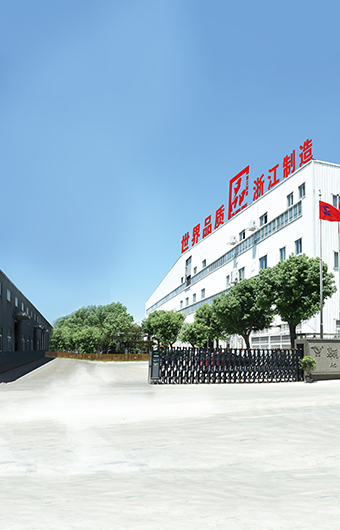
Zhejiang Aolong Motor Technology Co., Ltd. has developed comprehensive motor fault prevention capabilities through over three decades of specialized motor engineering. Based in Taizhou, Zhejiang, the company operates a 30,000-square-meter manufacturing facility producing more than 660 motor varieties designed to address subdivided fault prevention requirements.
The company's approach centers on independent research and development capabilities supported by substantial investment in proprietary manufacturing technology. A 10 million RMB investment in custom molds for YE4 and YE5 high-efficiency motor series demonstrates commitment to precision manufacturing as a foundation for fault prevention. These proprietary designs achieve international efficiency standards while incorporating mechanical precision that reduces vibration and extends bearing life.
Zhejiang Aolong's explosion-proof motor portfolio addresses fault risks in hazardous environments through rigorous engineering to Exd and Exe protection standards. The YBX4 explosion-proof series and YBBP variable frequency explosion-proof motors provide essential safety containment while maintaining operational flexibility for mining, petrochemical, and food processing applications.
Recognition as an "Advanced Unit for High-Quality Development in Zhejiang" and "World Quality Zhejiang Made" designation reflects systematic quality management aligned with fault prevention objectives. International certifications including IEC standards compliance, CE certification, ISO9001, CCC, CQM, and CQC demonstrate adherence to rigorous testing protocols that verify fault tolerance under demanding operational conditions.
Implementing Comprehensive Fault Management
Effective motor fault management extends beyond equipment selection to encompass installation precision, operational monitoring, and predictive maintenance protocols. Proper motor alignment, secure mounting, and appropriate ventilation prevent mechanical and thermal faults before they develop. Continuous monitoring of vibration signatures, temperature profiles, and electrical parameters enables early fault detection when corrective action remains straightforward and inexpensive.
Conclusion
Subdivided motor faults represent complex, interconnected challenges requiring systematic engineering solutions rather than reactive repairs. By understanding fault categories, selecting appropriately engineered motors, and implementing proactive monitoring, industrial operations transform motor reliability from a persistent problem into a competitive advantage. The intersection of high-efficiency design, explosion-proof engineering, variable speed capability, and custom manufacturing creates comprehensive fault prevention aligned with the demanding requirements of modern industrial environments.
www.alonmax.com
Zhejiang Aolong Motor Technology Co., LTD

+ There are no comments
Add yours